

NEWARK, N.J. (AP) — Simon Nemec scored on a wrist shot at 2:58 of overtime to give the New Jersey Devils a 3-2 win over the St. Louis Blues on Wednesday night.
New Jersey (15-7-1) has won a franchise-record nine of its first 10 home games.
Click to Gallery

St. Louis Blues center Robert Thomas (18) scores a goal in front of New Jersey Devils left wing Ondrej Palat (18) during the first period of an NHL hockey game, Wednesday, Nov. 26, 2025, in Newark, N.J. (AP Photo/Noah K. Murray)

New Jersey Devils goaltender Jacob Markstrom and defenseman Luke Hughes defend against St. Louis Blues right wing Mathieu Joseph during the third period of an NHL hockey game, Wednesday, Nov. 26, 2025, in Newark, N.J. (AP Photo/Noah K. Murray)

New Jersey Devils defenseman Simon Nemec (17) celebrates after scoring the game winning goal during overtime of an NHL hockey game against the St. Louis Blues, Wednesday, Nov. 26, 2025, in Newark, N.J. (AP Photo/Noah K. Murray)

St. Louis Blues goaltender Jordan Binnington (50) and defenseman Cam Fowler (17) react after the game winning goal by New Jersey Devils defenseman Simon Nemec (17) during overtime of an NHL hockey game, Wednesday, Nov. 26, 2025, in Newark, N.J. (AP Photo/Noah K. Murray)
Nico Hischier assisted on Nemec’s winner and finished with a goal and two assists. Hischier has nine points (five goals, four assists) in his last five games. Timo Meier added a goal and an assist for New Jersey, extending his goal-scoring streak to three games.
Can Fowler had a goal and an assist, and Robert Thomas scored on the power play for St. Louis (7-11-6).
Jacob Markstrom stopped 21 shots for the Devils. Jordan Binnigton had 26 saves for the Blues.
With the game tied at 2, New Jersey killed a four-minute penalty early in the third period, limiting the Blues to just four shots on goal. Ondrej Palat was called for high sticking Logan Mailloux.
Hischier tied the score at 2-all with a power-play goal, with assists from Meier and Luke Hughes, in the second period.
Thomas scored on a power play, his 12th point in the last 15 games, to give the Blues a 2-1 lead at 14:37 of the second.
Fowler gave the Blues an early 1-0 lead with his first goal of the season at 2:16 of the first. Meier tied it, with an assist from Hischier, at 11:02.
The Devils are 4-1 in overtime games this season. St. Louis, which is 0-5 in overtime, finished its longest trip of the season by going 1-1-3.
Devils: At Buffalo on Friday.
Blues: Host Ottawa on Friday.
AP NHL: https://www.apnews.com/hub/NHL

St. Louis Blues center Robert Thomas (18) scores a goal in front of New Jersey Devils left wing Ondrej Palat (18) during the first period of an NHL hockey game, Wednesday, Nov. 26, 2025, in Newark, N.J. (AP Photo/Noah K. Murray)

New Jersey Devils goaltender Jacob Markstrom and defenseman Luke Hughes defend against St. Louis Blues right wing Mathieu Joseph during the third period of an NHL hockey game, Wednesday, Nov. 26, 2025, in Newark, N.J. (AP Photo/Noah K. Murray)

New Jersey Devils defenseman Simon Nemec (17) celebrates after scoring the game winning goal during overtime of an NHL hockey game against the St. Louis Blues, Wednesday, Nov. 26, 2025, in Newark, N.J. (AP Photo/Noah K. Murray)

St. Louis Blues goaltender Jordan Binnington (50) and defenseman Cam Fowler (17) react after the game winning goal by New Jersey Devils defenseman Simon Nemec (17) during overtime of an NHL hockey game, Wednesday, Nov. 26, 2025, in Newark, N.J. (AP Photo/Noah K. Murray)
SEOUL, South Korea (AP) — South Korea launched its largest satellite yet on its nationally developed space rocket early Thursday in the fourth of six launches planned through 2027.
The three-stage Nuri rocket lifted off from a spaceport on an island off the southwestern coastal county of Goheung. Aerospace officials said the rocket placed a 516-kilogram (1,137-pound) science satellite and 12 microsatellites into a target orbit about 600 kilometers (372 miles) above Earth.
The Korea Aerospace Administration said the main satellite made contact with a South Korean ground station in Antarctica about 40 minutes after liftoff at 1:55 a.m., confirming normal function and deployment of its solar panels. The satellite later established links with ground stations in South Korea’s central Daejeon city and Svalbard, Norway, as well as further contact with the King Sejong Station in Antarctica.
Five of the 12 microsatellites had contacted ground stations as of Thursday afternoon, and the rest were expected to do so in a scheduled sequence.
Kyunghoon Bae, the country’s science minister, said the successful launch reaffirmed that South Korea had independent space launch and transport capability.
He said the launch was a turning point as the first time a private company, Hanwha Aerospace, assembled the rocket under a technology transfer from the Korea Aerospace Research Institute, the national space agency.
“Building on today’s success, we will steadfastly pursue the development of next-generation launch vehicles, lunar exploration and deep-space missions,” Bae said.
The main satellite launched Thursday is equipped with a wide-range airglow camera to observe auroral activity and separate systems for measuring plasma and magnetic fields and for testing how life-science experiments perform in space.
The dozen smaller “cube” satellites, developed by university teams and research institutions, include GPS systems to study Earth’s atmosphere, infrared cameras to track plastic in the oceans, and systems for testing solar cells or communication equipment.
Thursday’s event was the country’s first launch involving a Nuri rocket since May 2023, when it successfully placed a 180-kilogram (397-pound) observation satellite into orbit, and the fourth overall since its first attempt in October 2021, which failed to deliver a dummy device.
Further launches are planned in 2026 and 2027 to advance the country’s space technologies and industries, and to reduce the gap with leading Asian space powers, such as China, Japan and India.
Nuri is a three-stage rocket powered by five 75-ton-class engines in its first and second stages and a 7-ton-class engine in its third stage, which releases the payloads at the desired altitude. It’s the country’s first space launch vehicle built primarily with domestic technology, a core asset for a nation that had largely relied on other countries to launch its satellites since the 1990s.
The Naro Space Center, South Korea’s lone spaceport, saw its first successful launch in 2013 with a two-stage rocket built with Russian technology, following years of delays and repeated failures. The rocket reached its target altitude during its first test in 2009 but failed to deploy a satellite, and then exploded shortly after liftoff during its second test in 2010.
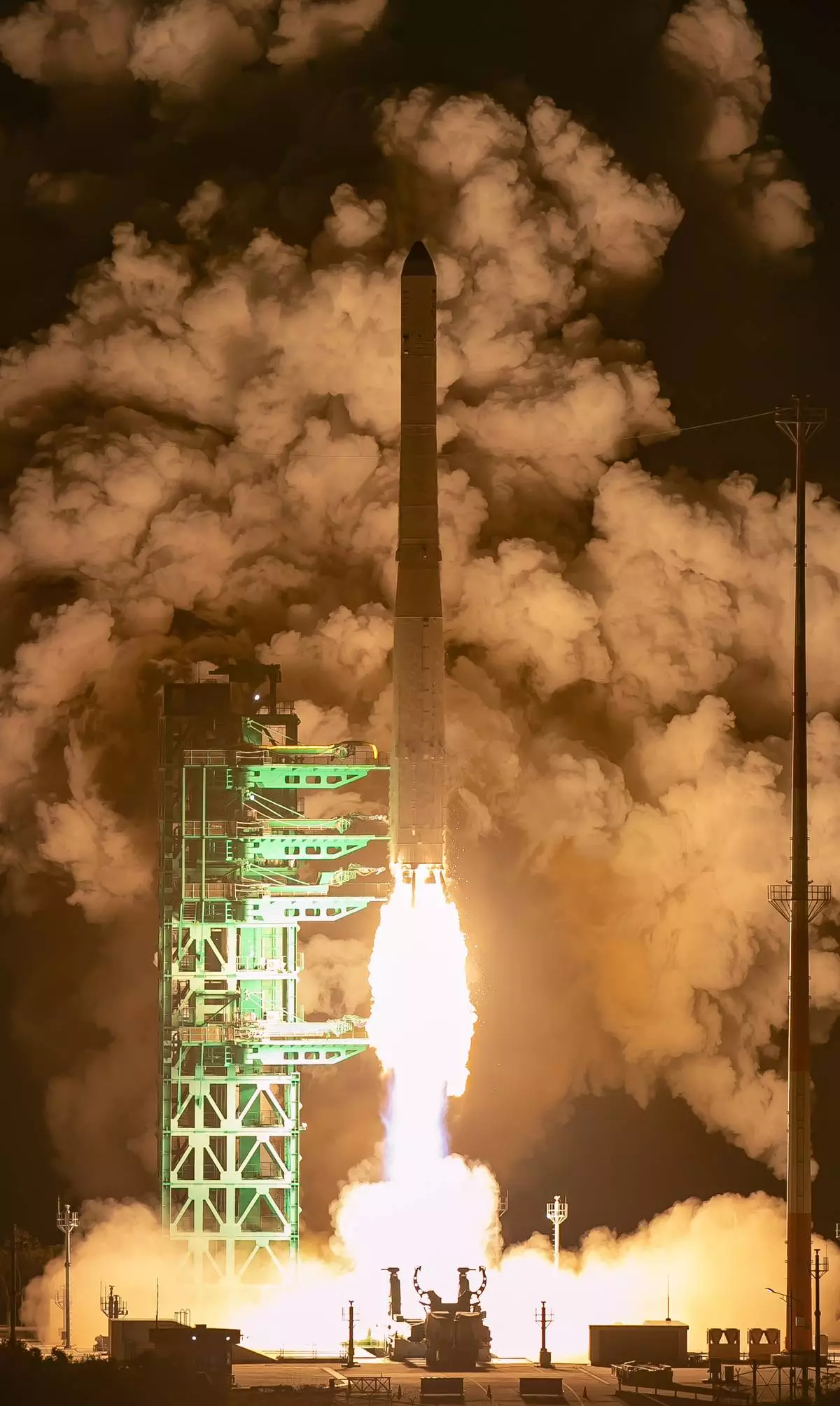
In this photo released by the Korea Aerospace Research Institute, the Nuri rocket lifts off from a launch pad at the Naro Space Center in Goheung, South Korea, Thursday, Nov. 27, 2025. (Korea Aerospace Research Institute via AP)

People watch the Nuri rocket taking off from the launch pad near the Naro Space Center in Goheung, South Korea, Thursday, Nov. 27, 2025. (Kim Hea-in/Yonhap via AP)
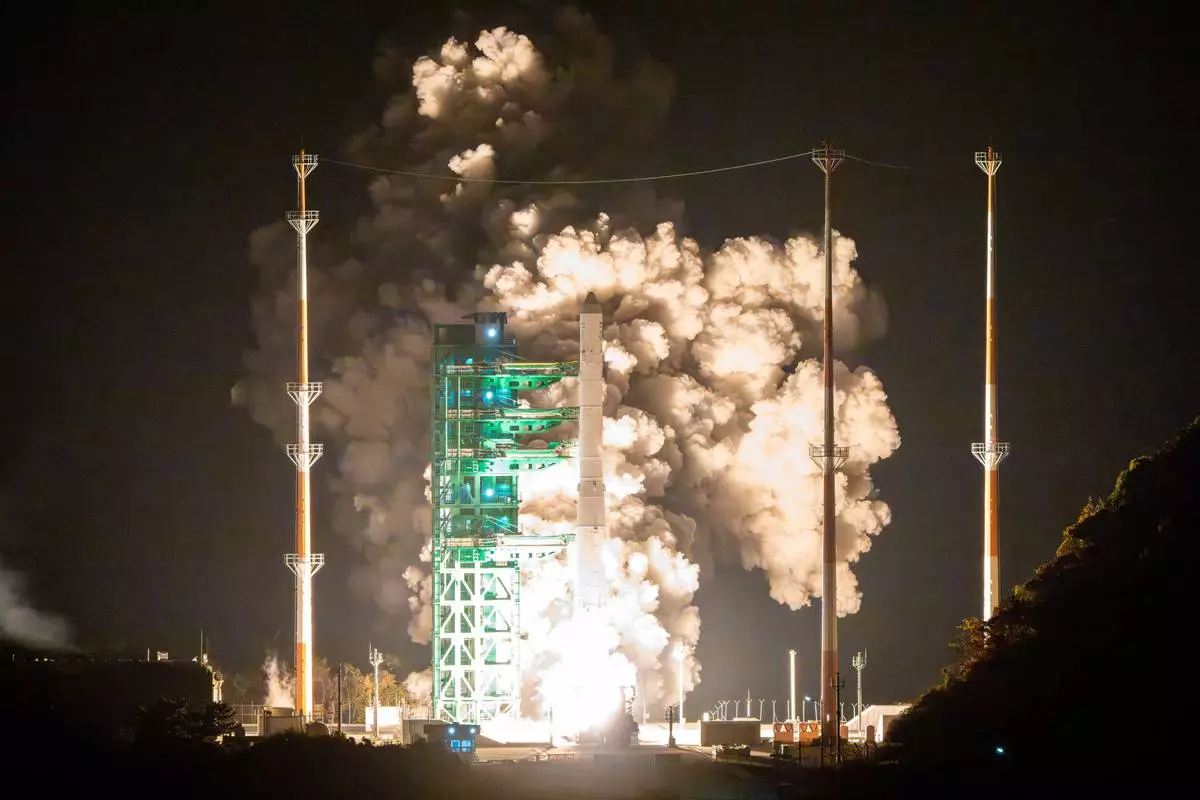
In this photo released by the Korea Aerospace Research Institute, the Nuri rocket lifts off from a launch pad at the Naro Space Center in Goheung, South Korea, Thursday, Nov. 27, 2025. (Korea Aerospace Research Institute via AP)
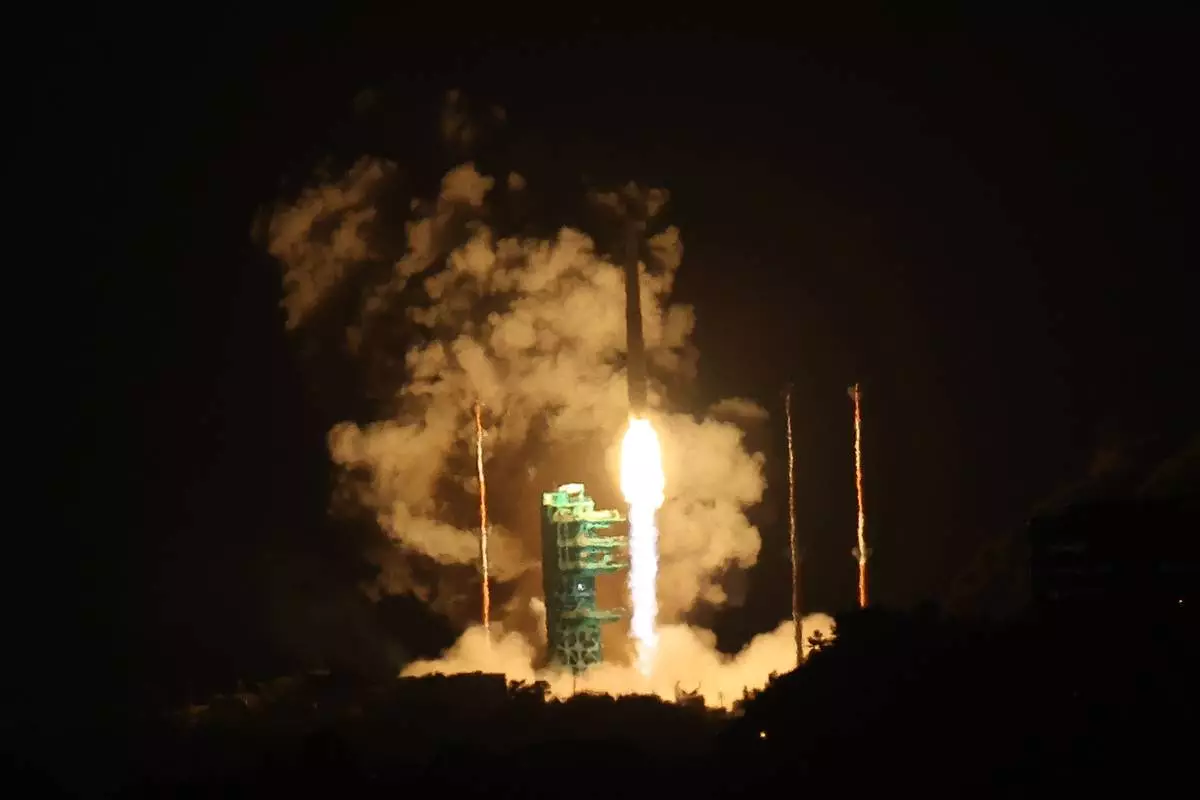
The Nuri rocket lifts off from a launch pad at the Naro Space Center in Goheung, South Korea, Thursday, Nov. 27, 2025. (Kim Sung-min/Yonhap via AP)