
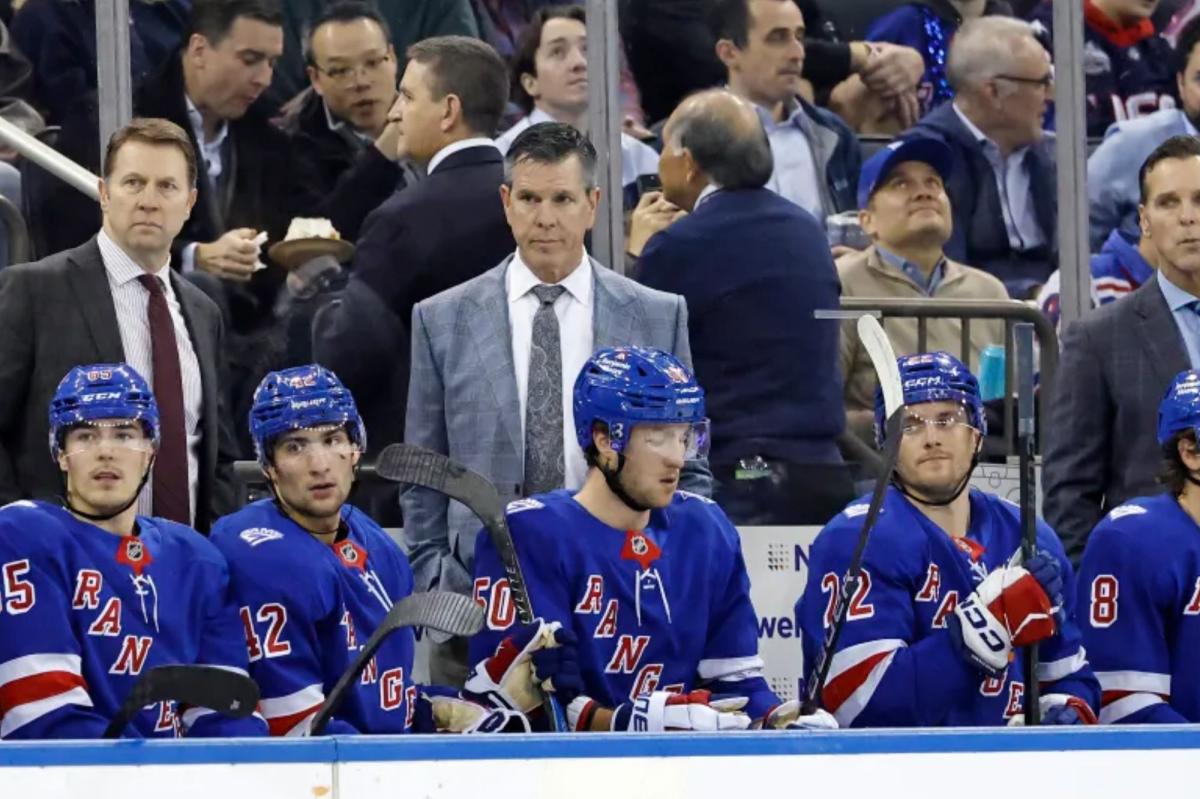
OTTAWA — The 2026 Winter Olympic games are just over two months away, and Rangers head coach Mike Sullivan has his Team USA responsibilities.
A Dec. 31 deadline looms for all 12 competing nations to submit their official rosters. Various reports of the main arena’s delayed construction and ice size concerns are making headlines. The NHL’s official return to hockey’s best-on-best international tournament — slated for Feb. 11-22 — is inching closer.
Thursday’s game against the Senators tugs at both Sullivan’s duties as head coach of the Rangers and Team USA.
With a player like Shane Pinto across the ice, a Long Island native who has played himself into USA’s roster conversation, Sullivan was asked if he assesses opponents as possible fits for his Olympic roster.
“Of course,” he said Thursday morning after an optional skate. “That takes place the next day, when I break the game film down. And then that way, I have the ability to control the timing of all that, I can rewind, and the pause button is amazing. I have the ability to watch both our team, but I can also key in on our opponents, and I do that all the time.”
The International Ice Hockey Federation approved a 196.85-foot by 85.3 foot sheet of ice in the 16,000-seat arena in the outskirts of Milan, according to The Athletic. That is more than three feet shorter than the NHL’s standard 200-foot by 85-foot dimensions.
The incorrect measurements are a violation of the agreement between the NHL, NHLPA and IIHF, which was signed in July to lock in NHL player’s return to the Olympics for the first time since the 2014 Games in Sochi, Russia.
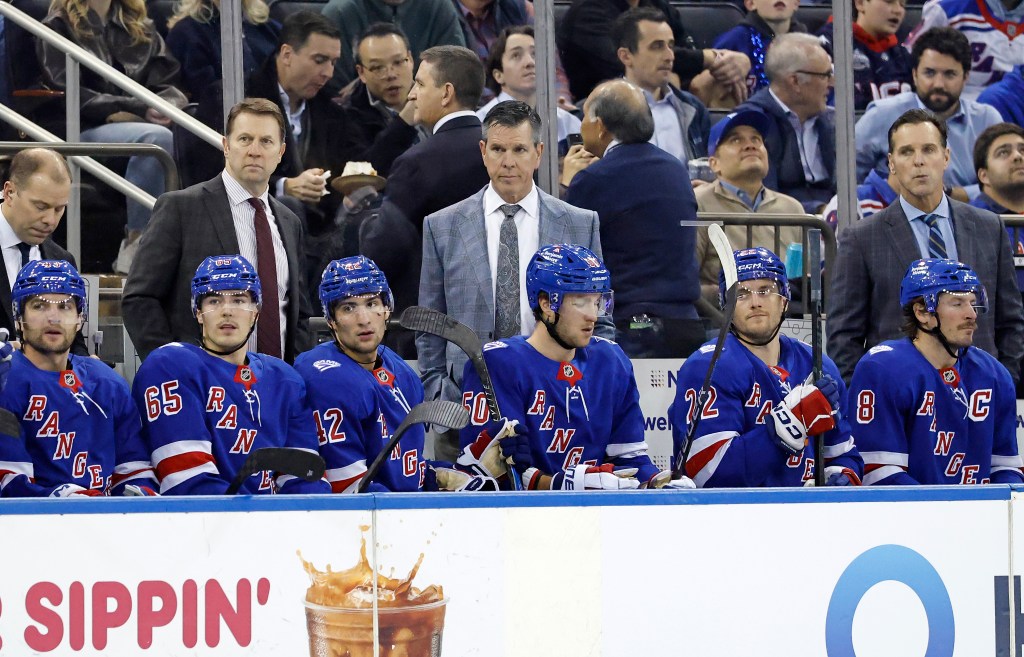 Rangers head coach Mike Sullivan reacts on the bench. JASON SZENES FOR NY POST
Asked if he had any thoughts about the projected size difference, Sullivan made his hopes clear.
“I don’t know that I have any,” he said with a smile. “I hope that’s not the case. I think the NHL rink is too small as it is. When you think in terms of the evolution of the game and the evolution of people, we’re playing on the same size ice surface that the players were playing in the ’50s, you know? The guys playing today are bigger, stronger and faster than they’ve ever been. By nature of that, the playing surface gets smaller. Even though, physically, it hasn’t changed. The playing surface gets smaller every single year.”
Sullivan admitted the ice sheet dimensions would certainly be a discussion.
Read the expert take on the Blueshirts
Sign up for Inside the Rangers, a weekly Sports+ exclusive.
Thank you
Noting that the ice would probably be shortened in either the neutral zone or from the goal line to the boards, the veteran coach pointed out that creating scoring opportunities off the rush might be more difficult.
When it comes to the construction of the roster, however, Sullivan only has one approach.
“Our objective is to put the best team together in the true sense of the word,” said Sullivan, who also stood behind Team USA’s bench at the NHL’s 4 Nations Faceoff tournament last season. “There’s a difference between an all-star team and a team. And what I mean by that is we need players that have the ability to bring different elements to the table, depending on what situations arise through the course of a game. We talk a lot about player deployment. Go through a game, virtually, in your mind, you know?
“Who’s first over the boards when you’re defending a 3-2 lead in the game and Team Canada pulls the goalie. Who’s first over the boards? Who’s going to take a faceoff on the left side? Who’s going to take a faceoff on the right side? What happens if that guy gets kicked out? What happens if that guy gets hurt? Who’s first over the boards in the penalty kill? Who’s first over the boards on the power play? Who’s going to defend, as a defense pair, play against [Connor] McDavid or [Nathan] MacKinnon or [Sidney] Crosby?
“Those are the types of conversations that we have a lot when you think in terms of what a team in the true sense of the word looks like. And that’s where I think it’s different than a, quote unquote, all star team. Good teams bring different strengths to the table. Kind of the whole being better than the sum of the parts, so to speak. That, I think, is what the ultimate objective is.”