
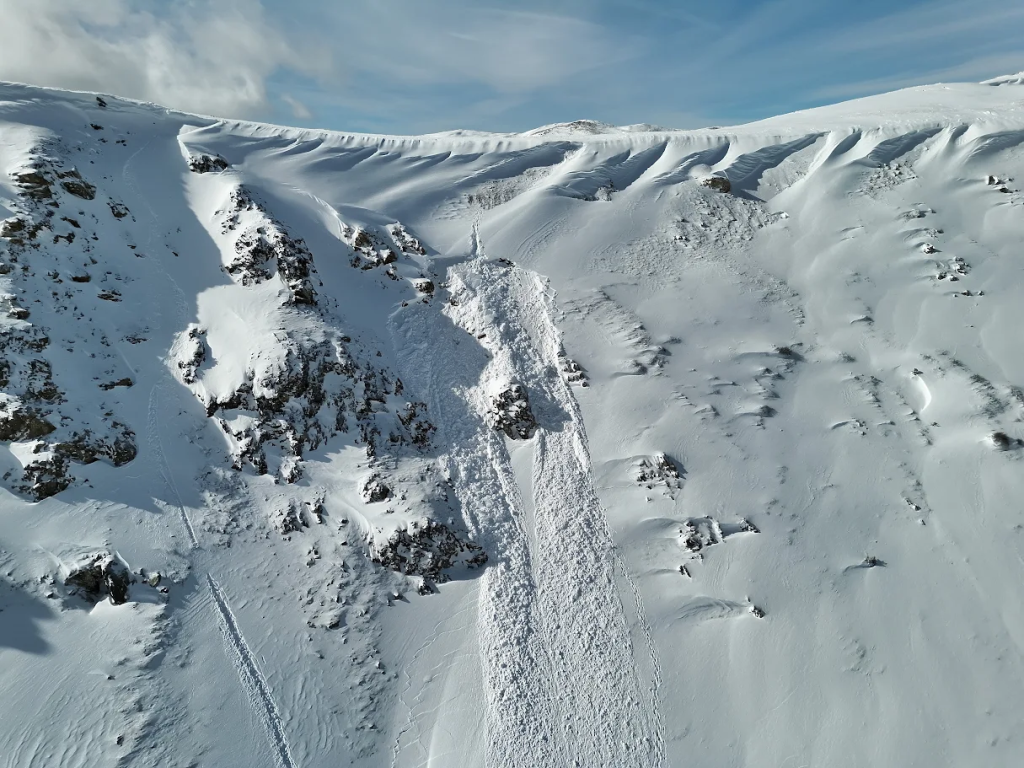
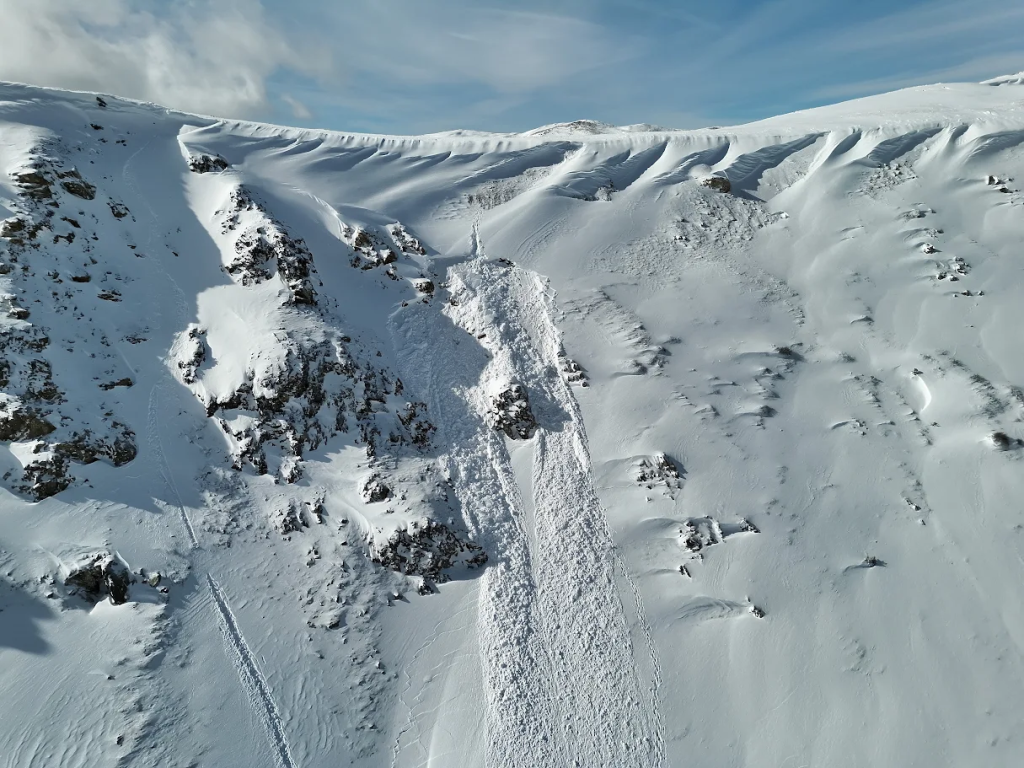
 An avalanche path is visible on Loveland Pass on Nov. 29, 2025. Colorado avalanche officials are warning that there will be a significant uptick in avalanche conditions as a snowstorm hits the northern and central mountains this weekend.
Colorado Avalanche Information Center/Courtesy photo
With a major winter storm in the forecast for this weekend, Colorado backcountry officials are warning that the fresh snow will lead to a significant increase in avalanche danger across the state.
Colorado Avalanche Information Center Deputy Director Brian Lazar said the dry start to the season has meant that avalanche risk remained low throughout most of November, due to the lack of snow. This upcoming storm will change that.
“It will certainly be helpful for our snowpack in the longterm,” Lazar said. “However, the short-term effects will be a dramatic uptick in avalanche danger as we start to rebuild our snowpack.”
Colorado’s northern and central mountains are expected to pick up between 1 to 2 feet of snow, with the potential for up to 3 feet of snow in parts of the Park Range and Flat Tops, according to the CAIC. The northern mountains include the Front Range, the Steamboat Springs area, the Vail area and Summit County, while the central mountains include the Steamboat Springs and Crested Butte area.
Lazar said that all of the new snow will fall on top of a weak layer of snow that has formed since last week’s snowfall. That will set off a natural avalanche cycle and could increase the avalanche danger considerably, he said.
“The saving grace here is that a lot of these avalanches are going to be small because the (existing) snowcover is still so thin, but that is a lot of snow,” Lazar said. “So we can’t rule out that these avalanches are going to grow in size and be big enough to be able to bury, injure or kill a person.”
As of Thursday, the avalanche center rated the danger in the northern and central mountains as low, Level 1 of 5, except in some areas above treeline where it was moderate, Level 2 of 5. Come Saturday and Sunday, Lazar said that the avalanche danger in these peaks could increase to considerable, Level 3 of 5, or high, Level 4 of 5.
Depending on how the storm plays out, he said there’s even the potential that the CAIC may issue avalanche warnings, which advise against traveling in or around avalanche terrain, for the places that pick up the most snow.
“The concerning thing this time of year is that the most dangerous slopes will often be those that are most attractive for riding, as they have the best coverage,” Lazar said. “So people will naturally be drawn toward potentially the most dangerous slopes, which are existing on northerly and east-facing slopes near and above treeline.”
So far this season, Colorado’s southern mountains have “led the pack” with the most snowfall, and some southern mountain ranges are already experiencing considerable avalanche danger, Lazar said. He noted that the southern mountains are a “precursor of what’s to come” for the northern and central mountains.
While the lack of snowfall so far this season could result in smaller avalanches, Lazar said that due to the shallow snowpack, there are more exposed rocks and other obstacles, so even a small avalanche could be dangerous.
“The snow cover is so thin. Even if you got knocked off your feet you’re getting dragged across rocks, downed timber, boulders, that kind of thing,” he said. “So even a small ride could end your season prematurely or worse, it could end in pretty bad injury even if these avalanches aren’t big enough to bury you.”
The snowstorm is expected to be accompanied by high winds, which could create a wind slab avalanche problem, where the wind deposits snow on the leeward side of peaks, forming a stiff slab, Lazar said. When these wind-drifted slabs pile up on top of a weak layer, “you’ve got all the ingredients for avalanche activity,” he said.
There’s also the potential for remote trigger avalanches — or avalanches that can be triggered from a distance, including from below a slope — with the new snow this weekend, Lazar said. He noted that the avalanche center has recorded multiple remote trigger avalanches in the southern mountains since last week’s snow.
That means everyone headed out into the backcountry this weekend, including hikers and snowshoers, should check the avalanche forecast at Colorado.gov/avalanche. Avalanches are possible anytime a slope is about 30 degrees or greater.
Backcountry officials also advise that anyone entering avalanche terrain carry a transceiver, probe and shovel, know how to use those tools and travel with a partner who is also carrying those tools and knows how to use them.
Those looking to brush up on avalanche education can take the free online Avalanche Aware curriculum that the CAIC launched this year in collaboration with the American Institute for Avalanche Research and Education.
“This is the first time so far this season that we’re going to see widespread avalanche conditions,” Lazar said. “So, it’s time for people to really start taking the avalanche season really seriously.”