
If you wanted a microcosm of the San Jose Sharks’ entire rebuild process, you didn’t need to look at the whole season. You just needed to watch the last seven days.
The stretch from Nov. 29 through Dec. 5 offered a definitive, if dizzying, clinic on the volatility of a young roster. It was a week characterized by the highest of highs—a glimpse of a potent, playoff-contending future—immediately followed by a sobering regression to the mean.
The Sharks finish this four-game set with a 1–3–0 record, slipping to .500 at 13–13–3. While sitting fifth in the Pacific Division isn’t a disaster for a team in transition, the manner in which they arrived there this week demands some scrutiny. Let’s break down the surges, the collapses, and the roster shuffling that defined this rollercoaster week.
A Competitive Loss in Vegas
The week kicked off on Nov. 29 with a hard-fought 4–3 loss to the Vegas Golden Knights, a game that set a deceptive tone for the rollercoaster to come. While the result was a check in the loss column, the performance itself offered plenty of optimism, particularly from the stick of Will Smith. The youngster tallied two goals, serving as a bright spot and signaling the offensive creativity he would display throughout the week. Despite falling short against a heavy Pacific Division rival, the Sharks kept it competitive, suggesting—at least initially—that they were ready to hang with the league’s upper echelon before the wheels began to wobble later in the stretch.
When It Clicks, It Clicks: The Utah Blueprint
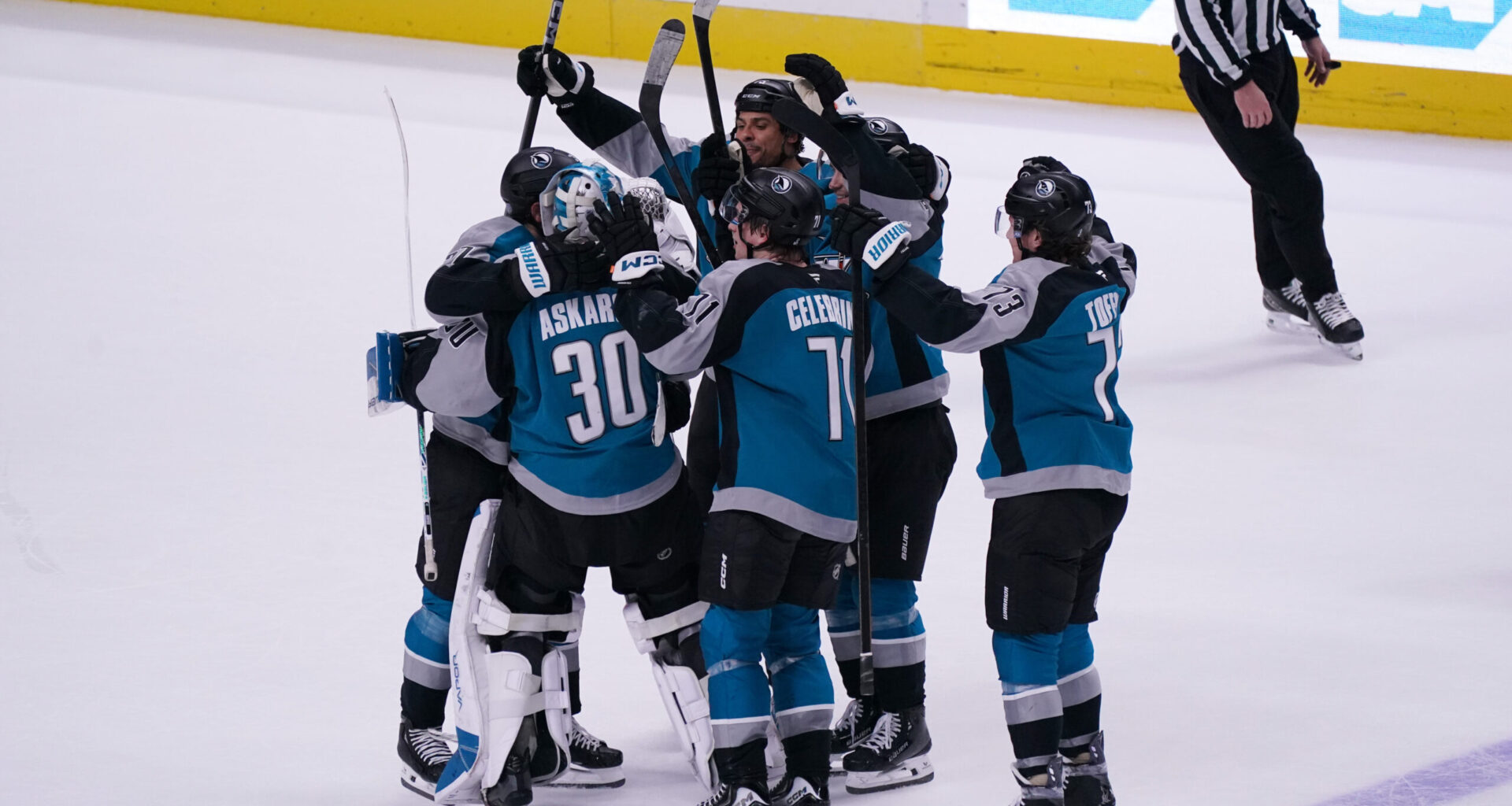
The week’s narrative arc peaked early, specifically on Dec. 1. If you were at the tank for the 6–3 victory over the Utah Mammoth, you saw the blueprint of what general manager Mike Grier is trying to build.
 San Jose Sharks center Will Smith reacts after scoring his second goal of the game against the Utah Mammoth (Justine Willard-Imagn Images)
For two periods, the Sharks looked like a legitimate playoff threat. They potted three goals in each of the first two frames, showcasing an offensive aggression that has been sporadic at best this season.
This game was significant not just for the two points, but for who secured them.
Related – Sharks’ Celebrini Is Already a Top 5 Center in the NHL
Will Smith was electric. He tallied two goals, but it was the sequence leading to his second marker that had the press box buzzing—a display of hands and vision that suggests his transition to the pro game is accelerating. Tyler Toffoli finally snapped a month-long drought with a pair of goals. For a team that needs its veterans to shelter the kids, getting Toffoli back on the scoresheet is crucial. Pavol Regenda, fresh off a recall from the Barracuda, slotted in and scored immediately.
For a brief moment after this win, San Jose occupied a playoff spot. It was a fleeting high, but a necessary proof of concept: when the offense starts on time, this team can run up the score on anyone.
The Reality Check: Capital Punishment
If Sunday was the dream, Tuesday was the cold bucket of water. The optimism generated by the Utah win evaporated 48 hours later in a 7–1 drubbing by the Washington Capitals.
This loss was more than just a bad night; it was a systemic failure. Washington controlled the pace across all three periods, exposing the Sharks’ defensive gaps in transition. But the primary storyline was in the crease.
 Yaroslav Askarov, San Jose Sharks (Photo by Keith Gillett/IconSportswire)
Yaroslav Askarov has been nothing short of sensational throughout November, boasting an 8–2–0 record that arguably masked some defensive deficiencies in front of him. On Tuesday, he hit a wall. Askarov surrendered four goals on just 12 shots before getting the hook.
Related – Sharks’ Best Players in Franchise History
It’s a reminder that relying on a young goaltender to be Superman every night is not a sustainable strategy. When Askarov isn’t standing on his head, the Sharks’ margin for error shrinks to almost zero. The lone bright spot? Regenda scored again, preventing the shutout, but it was little consolation in a game where the Sharks were thoroughly outclassed.
The Dallas Fade: A Lesson in Closing
The week concluded Thursday with a 4–1 loss to the Dallas Stars, a scoreline that feels deceptive if you didn’t watch the game. Unlike the Washington blowout, the Sharks were in this fight until the very end.
Heading into the third period tied 1–1—courtesy of a Collin Graf goal—the Sharks were positioned to steal points from a heavy Western Conference contender. Instead, the final frame highlighted a recurring issue: the inability to execute in high-leverage moments.
 Collin Graf, San Jose Sharks (Photo by Andreea Cardani/NHLI via Getty Images)
The special teams collapsed, with the Sharks going 0-for-4 on the power play. Against a team like Dallas, you simply cannot squander four opportunities with the man advantage and expect to win. The defense crumbled late in the game, with the Stars striking three times in the third, including goals from Sam Steel and Mikko Rantanen.
Askarov stabilized after the Washington disaster, making 20 saves, but the offense provided him no runway.
The Verdict
The Sharks began the week proving they can skate with playoff teams (Vegas and Utah) and ended it showing why they aren’t one yet. The 11 goals allowed in the final two games against Washington and Dallas exposed the fragility of a team that is still learning how to win when the goaltending isn’t perfect.
They are a .500 hockey team. In the context of a rebuild, that is progress. But as this week showed, holding onto that .500 mark is going to be a daily grind.
AI tools were used to support the creation or distribution of this content, however, it has been carefully edited and fact-checked by a member of The Hockey Writers editorial team. For more information on our use of AI, please visit our Editorial Standards page.
