
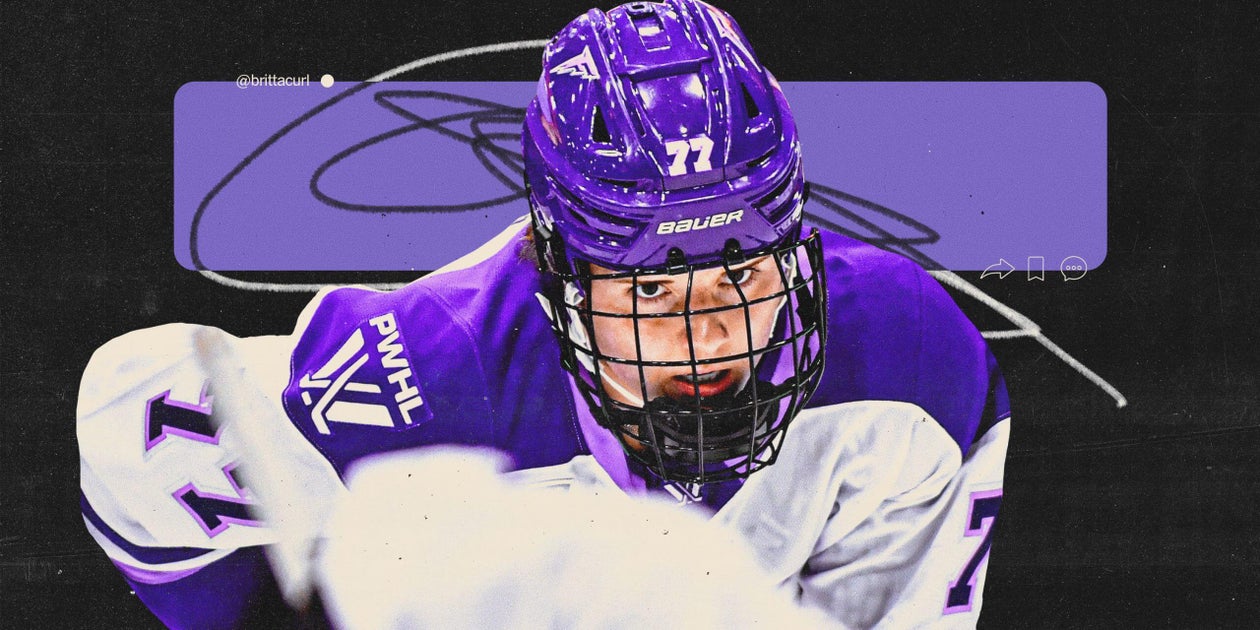
SAINT PAUL, Minn. — When the Minnesota Frost beat the Ottawa Charge in Game 2 of the Professional Women’s Hockey League finals in May, the home team’s fans made it clear what they thought of the star of the game.
Britta Curl-Salemme was met with a chorus of boos every time she touched the puck at TD Place Arena in Ottawa. She scored the game-tying goal, and then the game-winner in overtime. At one point, during a rare rinkside interview, fans booed Curl-Salemme so loudly that it was audible on the television broadcast.
That type of negative fan reaction — loud opposition, distinct from the usual atmosphere at a women’s hockey game — followed Curl-Salemme throughout her first pro season. Her sophomore season began last month, and the booing has continued, including during visits to Ottawa and Boston.
Curl-Salemme is likely to be part of the U.S. Olympic team that heads to Milan next year and is a core member of the Frost; she was one of four players the team protected in the PWHL’s first-ever expansion draft and is tied for the league lead in scoring three weeks into the 2025-26 season.
But since being selected in the second round of the 2024 PWHL Draft, Curl-Salemme has become the most hated player in the PWHL — and it’s not close. Her past social media activity has been criticized by many within her sport’s largely progressive fan base as transphobic and politically polarizing.
At a time when transgender athletes’ rights are being loudly debated and discarded, Curl-Salemme has been vilified by progressives, and championed by those who support what they believe to be her worldview.
But what does she really think? Apart from a brief, and vague, public apology a few days after she was drafted, Curl-Salemme has never addressed the controversy — until now.
Over her five-year career at the University of Wisconsin, Curl-Salemme established herself as one of the top young players in women’s hockey.
She won three national championships with the powerhouse Badgers and built a reputation as a well-rounded, hardworking forward with the kind of size (5-foot-9) and skill that could translate to the pro level. She was a rare two-time captain of the Badgers — only one of four going back to the debut of the program in 1999 — and someone legendary “Miracle on Ice” coach Mark Johnson said was among the best captains the team has ever had.
“She’s genuine, she’s real, she’s considerate, she thinks of other people before herself,” Johnson said. “When people get to know her and understand who she is and how real she is, she attracts people to her space.”
In her final college season, Curl-Salemme scored 62 points — good for fifth in the nation — represented Team USA at the 2024 women’s world championship and was poised to be taken early in the 2024 PWHL Draft.
But in the weeks leading up to the June draft, Curl-Salemme’s past “likes” on X, as well as a post she wrote herself, resurfaced. Between 2021 and 2023, when she was between 21 and 23 years old, Curl-Salemme had “liked” posts that criticized Target for selling LGBTQ+ products, criticized vaccine mandates and appeared to show support for the acquittal of Kyle Rittenhouse, who fatally shot two people and wounded a third during unrest in Kenosha, Wis., in the wake of George Floyd’s murder. A tweet sent in June 2023 from Curl-Salemme’s personal account unambiguously supported the barring of transgender women from women’s sports.
Screenshots of Curl-Salemme’s social media activity were shared on platforms such as Reddit. Amid a storm of controversy, there was speculation that she would drop in the draft. Instead, she was selected ninth by Minnesota.
The selection was met with boos by home fans at the Roy Wilkins Auditorium in Saint Paul, and drew criticism online from others, some of whom threatened to boycott the team. A few days later, Curl-Salemme posted a video on X apologizing for the “hurt” caused by her social media activity.
“I specifically recognize that my social media activity has resulted in hurt being felt across communities, including LGBTQ+ and BIPOC individuals, and I just want to apologize and take ownership of that,” Curl-Salemme said.
Despite the apology, the booing continued throughout Curl-Salemme’s rookie season, especially in road cities, and was never louder than in Ottawa.
“I realized it was every time she would touch the puck,” said Frost forward Kelly Pannek. “You would look around and you would see people actively making signs against her. I remember getting on our bench and someone had a sign that said ‘Britta Curl’s not our girl.’”
While Curl-Salemme did speak with media at times throughout her rookie season, she never talked in specifics about her social media activity or fans’ reaction to her.
Directly addressing the controversy for the first time, Curl-Salemme told The Athletic she believes the perception of her is a “misunderstanding.”
“If I was actually the way people say that I am, I would hope they would boo me. But it’s just not accurate,” she said. “The person that has been painted and what has been shared, that sounds like a s—-y person. Someone who’s racist, transphobic, hateful and wants people to not exist, I wouldn’t like them either.”
The 25-year-old grew up in Bismarck, N.D., the capital city of North Dakota, in a Catholic household. Her mom, Gretchen, is a physician and her dad, Bill, retired early to help raise their four kids: Bryne, Cullen, Brenna and Britta.
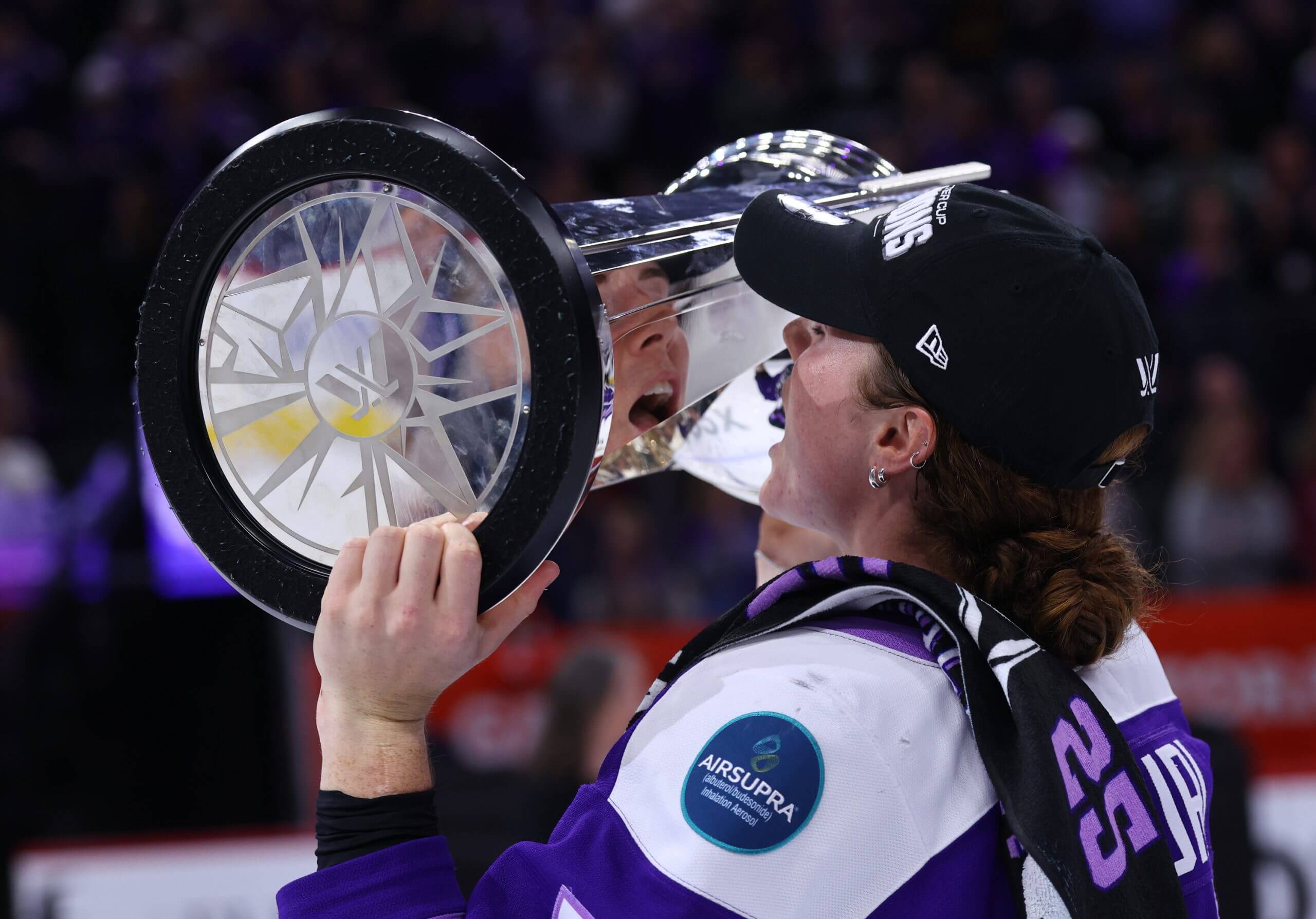
Britta Curl-Salemme, who won the PWHL’s Walter Cup earlier this year, has drawn ire for her past social media activity, which includes liking a post by conservative commentator Candace Owens, who has been known to promote conspiracy theories. (Adam Bettcher / Getty Images)
While she grew up in a historically red state, Curl-Salemme said she doesn’t fit perfectly in any political party and instead views issues through the lens of her Catholic faith. She said she does not agree with multiple conservative talking points, and specifically denounced the current administration’s mass deportations of immigrants, citing Catholic teachings of respect for life and compassion for others.
Why, then, did she engage in social media activity that might suggest otherwise?
Curl-Salemme insisted that she used her “likes” to save or bookmark posts to read later and that she didn’t necessarily agree with the views expressed.
The “likes” in question include a tweet about “discrimination based on vaccine status,” and a viral video that attempted to invalidate the need for COVID-19 passports, falsely claiming that Pfizer did not properly test its COVID-19 vaccine.
Curl-Salemme clarified that she is, and was, vaccinated against COVID-19, which was a requirement to take part in Team USA’s 2022 Olympic residency program. She said she believes in science, not conspiracy theories about vaccinations. Her issue, she said, was the division that occurred based on people’s vaccine status during the COVID-19 pandemic.
“It’s just about respecting other people’s decisions,” she said. “I didn’t think we needed more reason to hate each other.”
She also liked a tweet from right-wing political commentator Candace Owens, who called Target “perverted” for selling tuck-friendly swimwear she claimed was being marketed to children as part of its Pride Month collection. Curl-Salemme said she liked the tweet in reaction to Owens’ misinformation and said she does not think stores that carry LGBTQ+ products are “perverted.”
Curl-Salemme also clarified that she does not endorse Rittenhouse’s actions, though she acknowledged that she might not have understood all the facts of the case when she liked the post breaking the news of his acquittal.
“I regret the insensitivity that came across on some of the tweets I liked,” Curl-Salemme said. “(These are) real people and it’s going to hurt somebody to see that.”
There has always been an element of ambiguity to “liking” something on X, but the primary issue for many PWHL fans has been what Curl-Salemme put in her own words.
In June 2023, she endorsed Jocelyne and Monique Lamoureux’s statement to the Independent Council on Women’s Sports, a non-profit known as ICONS that has become the pre-eminent organization in the trans-sports-ban movement. The tweet read: “Females protecting female players on the female players association board? Thank you (Lamoureux twins).”
The twin Lamoureuxs won an Olympic gold medal for the U.S. women’s national hockey team in 2018 and have been vocal in their support of so-called “fairness” in women’s sport. ICONS was founded amid the furor over Lia Thomas, a transgender female swimmer who placed first in the 500-yard freestyle during NCAA championships in 2022. ICONS has bankrolled three major lawsuits against the NCAA, its conferences and teams, arguing that trans-inclusive sport policies discriminate against women.
Trans women competing in women’s sports has become a hot-button political issue. The NCAA rescinded its transgender inclusion policy in the wake of U.S. President Donald Trump’s “Keeping Men Out of Women’s Sports” executive order. According to a report in The Times last month, the International Olympic Committee is also moving toward a complete ban on transgender women in female events.
Riley Gaines, a former NCAA swimmer turned conservative activist and ally of Trump, regularly makes headlines as an outspoken critic of transgender women competing in women’s sports. But unlike Gaines, whose rhetoric is defined by an anti-trans viewpoint and even misgenders trans women as “men,” Curl-Salemme insists that she is only focused on the “issue” of competitive fairness in women’s sports.
“My goal is not to bring war to someone’s life and the way they feel and the choices they make,” she said, adding that transgender people deserve “to be loved and respected” and to “choose to live whatever life they want.”
Despite the intense public debate about transgender women’s participation in women’s sports, professional hockey has so far welcomed very few transgender athletes. There has been just one transgender woman in women’s professional hockey. Jessica Platt played defense in the Canadian Women’s Hockey League from 2016 to 2019 and tallied two goals in 49 career games.
Harrison Browne came out to his teammates as transgender in his second year on the University of Maine women’s hockey team, but delayed his medical transition until after he retired from professional hockey in 2018. His jersey was among the most popular in the now-defunct National Women’s Hockey League.
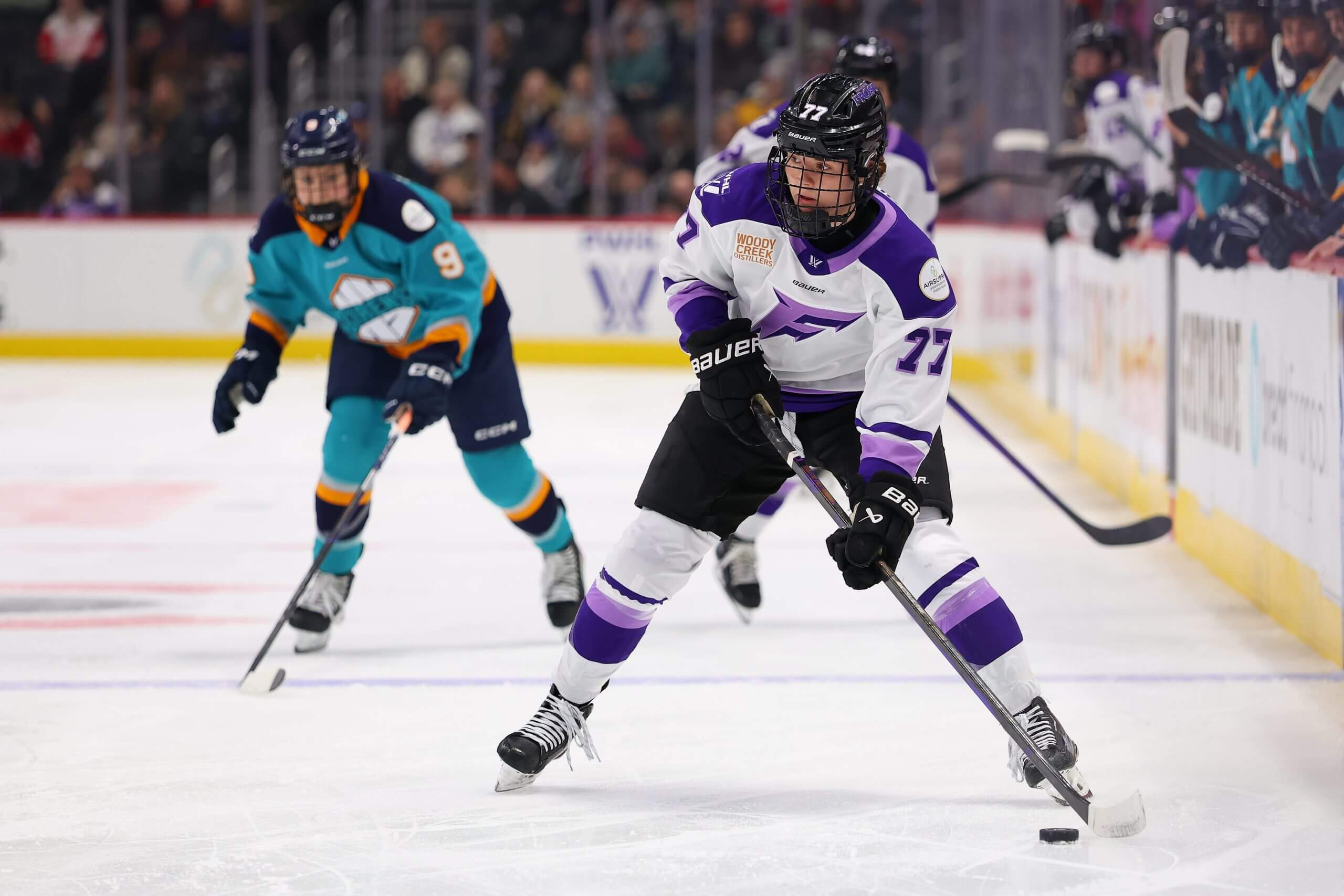
Britta Curl-Salemme, who is expected to represent Team USA at the Olympics in February, said she has spent time having conversations with teammates who offered different perspectives. (Gregory Shamus / Getty Images)
“I always felt really safe and included,” he said in an interview with The Athletic. “The support that the fans have for the LGBTQ+ community and the trans community in women’s hockey is so profound. And I think that that’s why we’re seeing a lot of backlash against somebody like Britta Curl.”
There is also no wealth of evidence suggesting that “fairness” is even in question.
A 2024 study financed by the IOC found that transgender female athletes showed greater handgrip strength — an indicator of overall strength — but lower jumping ability, lung function and relative cardiovascular fitness compared with women whose gender was assigned female at birth.
“This is not the first time trans people have been attempted to be barred from society,” said Browne. “We saw it with the bathroom bills, but for some reason sports has been this issue that people can latch on to (with) this fairness fallacy.”
Despite the lack of evidence suggesting that fairness is in question, Curl-Salemme isn’t alone in her views. A Pew Research Center survey released in February found that the majority of Americans (66 percent of those surveyed) favor or strongly favor laws and policies that require trans athletes to compete on teams that match their sex assigned at birth.
In the National Hockey League, players who express conservative viewpoints face much less backlash compared to the PWHL. One of the faces of the league, Matthew Tkachuk, was named a member of President Trump’s “Council on Sports, Fitness and Nutrition,” alongside NHL commissioner Gary Bettman, and Hall of Fame forward Wayne Gretzky, among other athletes.
The council, according to an August news release, is responsible for, among other things, “keeping men out of women’s sports.” There was little blowback to the announcement, and just days later, Tkachuk was unveiled as one of the cover stars of this year’s EA Sports NHL game.
While she is well-liked by teammates — who say she is respectful of others with different views — Curl-Salemme has not flown under the radar in quite the same way with fans. Online discussion about her has continued to be heated in her second PWHL season. When the Frost announced that Curl-Salemme had signed a two-year extension, dozens of replies criticized her and the organization. Some people online have defended Curl-Salemme, though they often use their defense to push anti-trans rhetoric, something Curl-Salemme said she does not condone.
“It’s just so gross and hateful,” she said. “If you’re just coming here to be rude or hateful towards someone, I don’t want you defending me.”
When asked about the backlash Curl-Salemme has faced, the PWHL reiterated to The Athletic a statement released the week she was drafted:
“Our commitment remains steadfast: to build an inclusive league that develops, supports, and elevates the best women’s hockey players in the world while fostering a safe and welcoming environment for our growing, diverse and devoted fan base.”
The PWHL does not yet have a gender inclusion policy, something fans have criticized the league for since its inception in 2023. Its predecessor, the Premier Hockey Federation, had a progressive policy stating that transgender and nonbinary athletes had equal opportunity to compete in the league.
The PWHL does have at least one nonbinary player in the league but said its official gender inclusion policy remains a work in progress.
Curl-Salemme’s critics argue that suggesting trans women should not compete with cisgender women is harmful — and a suggestion that trans women are not in fact “real” women.
“This rhetoric that goes around that women’s spaces need to be protected from trans women or suggesting that trans women aren’t women and need to be excluding from women’s spaces, isn’t just harm in the fact that the words hurt,” said Ash Tifa, a legal consultant who works for OutFront Minnesota, an LGBTQ+ advocacy group in the Twin Cities. “This is something that actively makes the world trans women live in more dangerous.”
She added: “There’s a difference between hate and recognizing someone’s existence. But at the end of the day, whether it comes from a place of hatred or not, the language still has the same effect.”
Understanding that harm, Curl-Salemme said, is part of the internal work she’s been doing over the 19 months since coming under fire. She said she has had many conversations with teammates who offered different perspectives, and has become more understanding and empathetic, particularly to the lived experience of trans people and members of the LGBTQ+ community. “I understand this is personal to a lot of people and this is their life,” Curl-Salemme said. “And that’s where I’ve learned to have compassion.”
Browne initially denounced Curl-Salemme’s selection in the PWHL Draft and questioned why a women’s hockey league would allow her to join.
Women’s hockey was my safe space as a trans person.
Super disappointing to see someone enter the league that would make my community feel anything but welcome.
Trans people belong in sports. Trans women are women. https://t.co/4FEcik2frv
— Harrison Browne (@Hbrowne24) June 11, 2024
He now sees this as an opportunity to foster conversation and further education about trans people and trans athletes.
“Everybody is entitled to their own opinions,” he said. “I just hope that people educate themselves before being an armchair expert on things that they probably have not done the research on. That’s where it becomes the most harmful.”
While Curl-Salemme said she has focused on internal “work,” she has done very little to outwardly make amends.
She said she’s had positive interactions with transgender fans of the Frost and members of the LGBTQ+ community and is eager to show people they are welcome at the rink and in the spaces she’s in.
Last month, she attended a fundraiser at A Bar of Their Own, a women’s sports bar frequented by queer and trans women in Minneapolis. She acknowledged the importance of not just internal growth, but being visible in the community.
Tifa was heartened to hear Curl-Salemme had made the effort. Still, her apology in June 2024 is the only thing Curl-Salemme has done to publicly make amends.
“A lot of queer and trans folks are going to hold onto — and have reason to hold onto — her past comments,” she said. “And it’s going to be on her to bridge that gap.”