

The visuals were tough to watch. During a sequence that felt all too routine for a player with his motor, Logan Cooley drove the net against the Vancouver Canucks, looking to make something happen for a Utah Mammoth team desperate for a spark. He didn’t find the back of the net; instead, he found the post.
The collision was violent. Cooley’s knee hit the iron first, appearing to bend backward in a way knees simply aren’t designed to move. The silence that followed — both in the arena and among the fanbase watching at home — was deafening.
The official word from the team came down shortly after: Cooley is out indefinitely with a lower-body injury. But for anyone who has been following this team’s inaugural campaign as the Mammoth, the diagnosis feels like more than just a medical update. It feels like the first true crisis of the franchise’s new era.
A Breakout Season Interrupted
To understand the severity of this loss, you have to look beyond the highlight reels. Yes, Cooley has been electric. With 14 goals and 23 points in just 29 games, he hasn’t just been the team’s best youngster; he’s been their offensive heartbeat. He is the guy who carries the puck through the neutral zone when the trap is set. He is the one who creates space on the power play.
 Logan Cooley, Utah Hockey Club (Jess Starr/The Hockey Writers)
He has been, in every sense, the offensive catalyst for a team that often struggles to generate high-danger chances without him.
The timing couldn’t be worse. The Mammoth are currently mired in a legitimate dogfight for a playoff spot, but the trend lines are concerning. Over their last 21 games, Utah holds the worst record in the NHL, going 6-12-3. They were already taking on water before their captain of the offense went down. Now, they have to navigate the storm without a rudder.
Related – Trade Destinations for Predators’ O’Reilly & Stamkos
While the team is keeping the specifics close to the vest, medical experts observing the mechanism of the injury have painted a concerning picture. The hyperextension into the post points toward potential PCL damage, a significant bone bruise, or a capsular injury. While a torn ACL — the dreaded three-letter acronym that ends seasons instantly — is considered rare in these specific collisions, it hasn’t been ruled out entirely.
We are likely looking at a long-term absence. The silver lining, if you can call it that, is the schedule. With the NHL shutting down for the Christmas break later this month and a three-week pause for the Olympics on the horizon, the actual number of games Cooley misses might be mitigated. But for a team sliding down the standings, even a few weeks can be the difference between a playoff berth and an early golf season.
The Internal Shuffle
So, where does Utah go from here?
The immediate pressure shifts to the room. When you lose a player who drives possession like Cooley, you can’t simply plug in a replacement and expect the same results. You have to manufacture offense differently. The artistry is gone; now comes the grind.
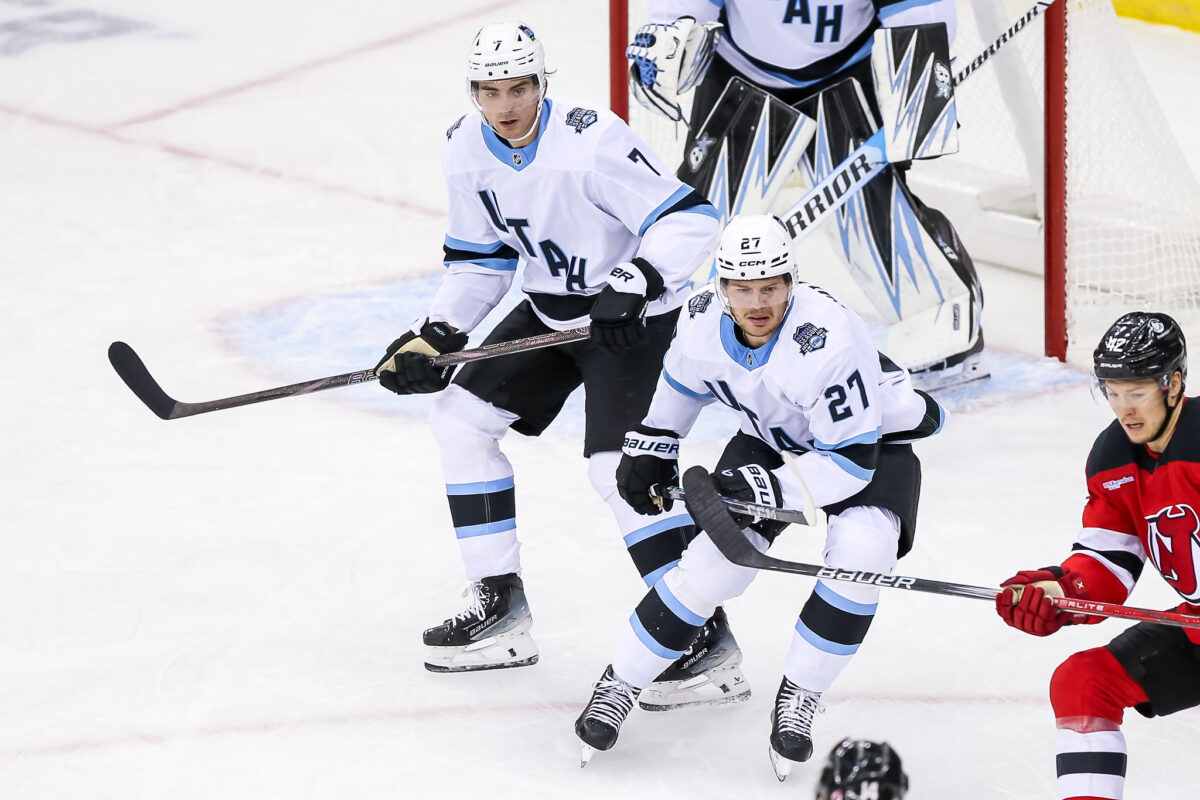 Michael Kesselring and Barrett Hayton of the Utah Hockey Club (Jess Starr/The Hockey Writers)
Expect to see Barrett Hayton thrust into a much larger spotlight. This is the opportunity Hayton has arguably been waiting for, though surely not under these circumstances. He will likely be asked to anchor the top six and shoulder the heavy lifting in transition.
But one player cannot fill the void. The onus is now on the team’s depth forwards to stop being passengers. We need to see smarter puck management — less trying to beat defenders one-on-one and more dump-and-chase, grinding out cycle shifts. Special teams, which have been inconsistent at best, need to find a rhythm without their primary playmaker. The margin for error just evaporated. If the Mammoth want to stay in the hunt, they can’t win 5-4 anymore. They need to learn to win 2-1.
The Trade Market Gridlock
Naturally, the conversation has already turned to external solutions. Can management go out and find a replacement?
If this were late February, maybe. But right now, the trade market is frozen solid.
Related – Panthers Break Tie in Last Minute to Beat Mammoth
We are seeing a unique parity in the league this season. Almost every team is technically still in the playoff hunt, or at least believes they are. General managers are notoriously risk-averse, and nobody wants to be the first to sell off assets when they are only four points out of a wild card spot. It is a total gridlock.
Sources indicate that teams looking for top-six centers are finding the prices astronomical or the phone lines dead. Utah’s front office needs to be patient. The reality is that major deals likely won’t materialize until after the Olympic break, once the pretenders finally separate themselves from the contenders. Until then, Utah has to survive with what they have. Panic trading now would likely cost them premium assets for a stop-gap solution, a move that could hurt the franchise long-term.
The Temperature Is Rising
This brings us to the most uncomfortable aspect of the situation: the heat on management and the coaching staff.
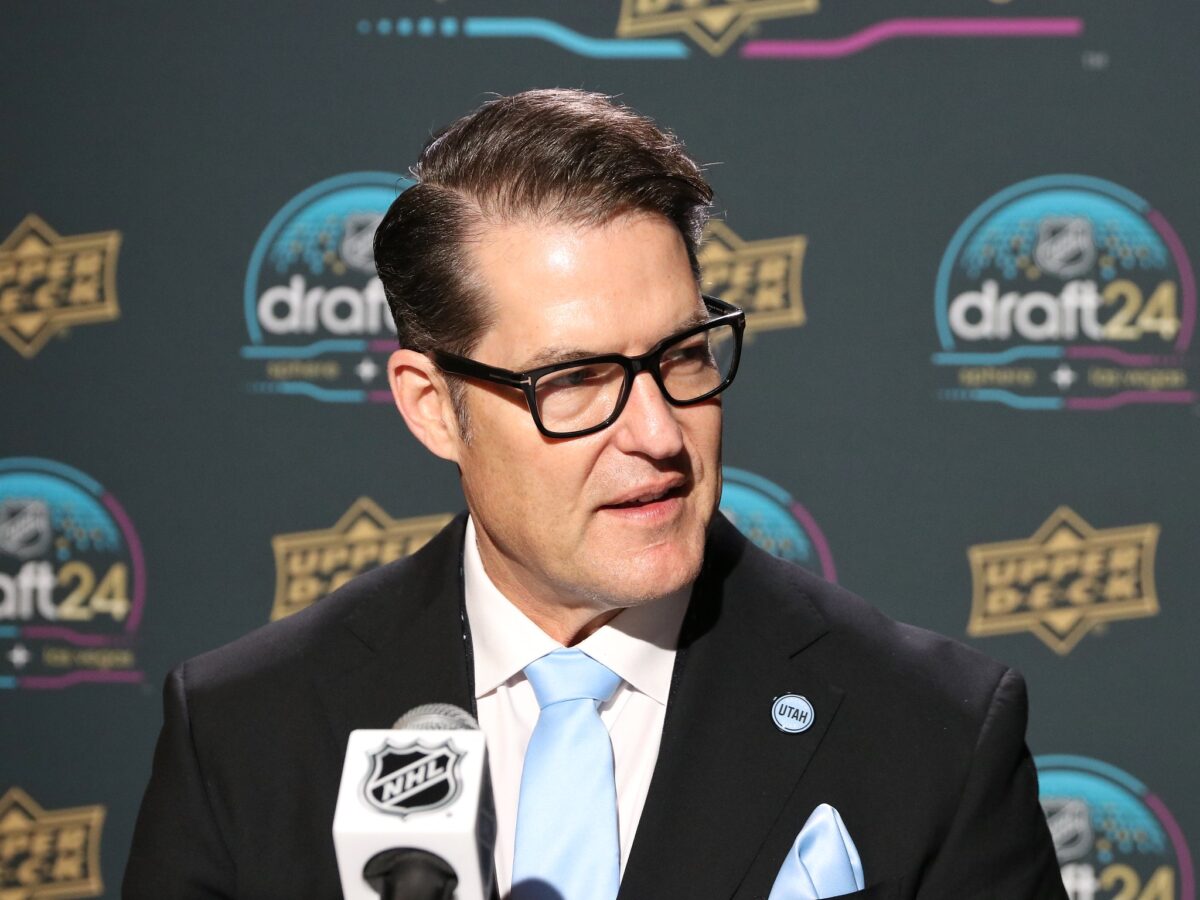 Bill Armstrong, General Manager of the Utah Mammoth (Amy Irvin / The Hockey Writers)
Let’s be honest—the slide started well before Cooley hit the net post. A 6-12-3 run is unacceptable for a team with this level of talent, regardless of injuries. The injury provides a convenient excuse, but it doesn’t mask the underlying issues of structure and consistency that have plagued the Mammoth for two months.
Management is now under a microscope. Do they try to salvage this season by overpaying for a trade? Or do they ride it out, risking a freefall in the standings that could sour the inaugural season vibe?
There are already whispers regarding the coaching staff. When a team underperforms for a quarter of the season, the coach is usually the first to feel the heat. If the Mammoth can’t rally around Cooley’s absence and show some structural resilience, the conversation might shift from “How do we replace Cooley?” to “Who should be leading this team?”
The next ten games are critical. Utah needs to find an identity, and fast. They’ve lost their star, but if they aren’t careful, they’re about to lose their season.
AI tools were used to support the creation or distribution of this content, however, it has been carefully edited and fact-checked by a member of The Hockey Writers editorial team. For more information on our use of AI, please visit our Editorial Standards page.
