
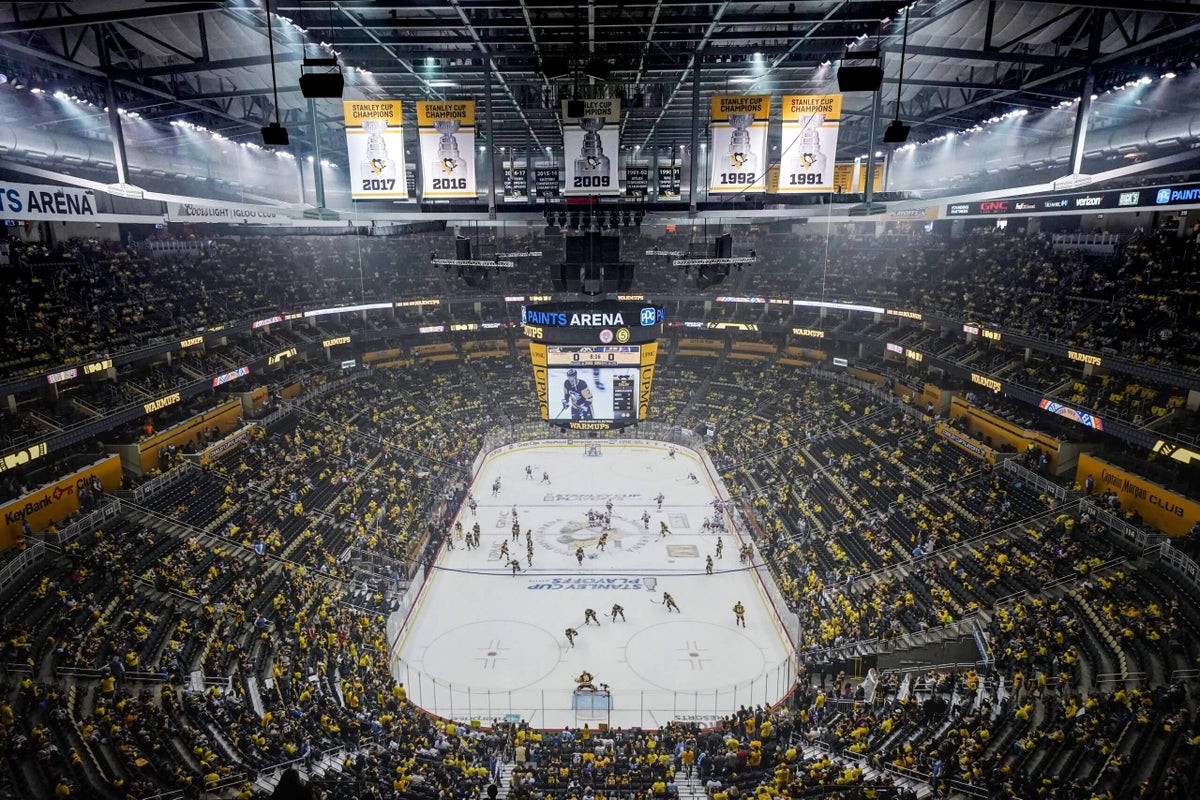
PITTSBURGH — After trying for many months, the Chicago-based Hoffmann family has reached a deal to purchase the Pittsburgh Penguins from Fenway Sports Group.
While the Hoffmann family doesn’t have as much money as FSG — the Hoffmanns’ purchase effort hit a snag in November because they needed to front more cash — this is an opportunity for the Penguins to better themselves, but also for the Hoffmanns to integrate themselves in Pittsburgh in a way FSG never did.
FSG’s appointees to run the Penguins are not bad people. However, they’re businesspeople first and hockey people second — or third, or fourth — and that was always the problem.
FSG has an enormous amount of money and isn’t afraid to spend it. But the Penguins were never FSG’s priority the way the Boston Red Sox and Liverpool are. From the very beginning, it was clear the Penguins were an investment, not a passion. FSG was about business, not setting roots in a community. From a hockey standpoint, FSG didn’t do much wrong. It has always given the Penguins’ general manager the allowance to spend to the NHL’s salary cap. It has treated players perfectly well, by all accounts. When it was time to fire previous GM Ron Hextall, it did. Its hire of Kyle Dubas as GM and president of hockey operations was a move in the right direction.
No, FSG wasn’t a disaster. But it made a mistake that doesn’t tend to fly in Pittsburgh: It was corporate with a capital C. For the past year, the Boston-based group hasn’t had anyone from ownership living in Pittsburgh. That’s not good for business. And although the Penguins ended up being a sound financial investment for FSG, which bought the team for around $900 million in 2021 and is said to be selling it to the Hoffmanns for around $1.7 billion to $1.8 billion, its ownership never made a dent in the Pittsburgh community.
Following an ownership group that included Mario Lemieux, a franchise legend and one of the NHL’s best players of all time, was an impossible task, but FSG could have made more of an effort. It never did. It was about cold, hard business, and the moment it realized it could nearly double its investment, it did.
Good business? Sure. If you’re a Penguins fan, did that leave you feeling a little hollow inside? Yep.
That trickled down throughout the organization, too. The Penguins’ players were always well taken care of and never complained about ownership, at least publicly. PPG Paints Arena workers, Penguins staff members and other people behind the scenes did, though.
This may come off as petty or blown out of proportion, but an email I received a couple of years back stuck with me because so many fans told me they felt the same way: “The Penguins hosted a function for season-ticket holders,” the fan wrote. “It was fine, but there wasn’t even food. Mario always had sandwiches, snacks and drinks for us.”
Yeah, Mario. It always goes back to Mario. No athlete in history has been more synonymous with a franchise than Lemieux is with the Penguins. Of course he plays a role in this situation. The Hoffmanns have a chance to take advantage of FSG’s mistakes and snuggle themselves right into your hearts.
Some advice for the new owners:
• Show your passion for hockey. Just like FSG, the Hoffmann family is, from what I can tell, a bunch of wealthy people who like owning sports teams. However, the Hoffmanns have a history with hockey. That’s important. With hockey, you either get it or you don’t. FSG didn’t. The Hoffmanns sound like they love hockey. Let’s see it. People will notice, and it will make a difference.
• Call the guy who used to wear No. 66. FSG’s relationship with Lemieux has been frosty for many years, which is why Lemieux hasn’t been seen at too many games over the past few years. Sure, to some extent, he wanted to get away from hockey and was worn out from being an owner for more than 20 years. God knows Lemieux, who saved the team from dissolving or moving to another city, doesn’t owe Pittsburgh a thing. But wouldn’t it be nice to have him around or even part of this venture?
A source close to Lemieux told me he would be willing to talk to the Hoffmanns. If you want to get on Pittsburgh’s good side, get on the big guy’s good side. It’s very simple. FSG and Lemieux had a financial dispute behind closed doors for close to a year. When it was over, FSG offered him money to make public appearances at local Pittsburgh businesses. David Ortiz made similar appearances in Boston after his retirement, but Mario isn’t Big Papi, and Pittsburgh isn’t Boston. FSG either never understood that or never cared. Big mistake.
Getting Mario on your side changes everything. Pittsburgh fans just want him to be around in some capacity. That was one of FSG’s biggest failings.
• Spend money. A lot of it. If you don’t have it, you shouldn’t have bought the team. Edward DeBartolo, when he was the owner of the Penguins almost 40 years ago, famously said, “As an investment, a hockey team stinks.”
FSG would disagree with that, but the point is simple: Don’t be like notoriously cheap Pittsburgh Pirates owner Bob Nutting. Don’t expect to make a lot of money on this team until you sell it someday. Try to win. If you win, the barn will be sold out every night, and you’ll become Pittsburgh royalty.
• Lower ticket prices as soon as you can. At least for the time being. The Penguins are rebuilding. They’re having trouble selling tickets. Yet, their tickets remain absurdly expensive. Lowering ticket prices will help get some real fans back in the building and will establish the kind of trust Lemieux will always have, and that FSG never had. Pittsburgh still loves its hockey team, whether the building is sold out or not. That love could be intensified behind an ownership group that isn’t perceived as greedy.
The Penguins’ sale introduces several other question marks. Among them:
• Under Dubas’ direction for the past two years, the Penguins are suddenly trending toward a bright future on the ice. That said, they haven’t made the playoffs in the past three seasons and, despite their hot start to this season, are on a six-game losing skid. Ticket sales are down. Dubas was hired on a seven-year contract by owners who bought into his methodical rebuild. Will he face pressure to change his plan under new ownership?
• Sidney Crosby hates change more than anyone. For the first 16 years of his career, Lemieux and Ron Burkle were the only owners Crosby knew. Then came Fenway. Now, more change. Will the Hoffmanns be on the same page with the resident living legend?
• Penguins games in Pittsburgh largely air on SportsNet Pittsburgh, a TV network owned by FSG. So, how will that work? Though the Hoffmans are quite wealthy, they aren’t FSG wealthy. Do they have enough money to buy the network? Will they bring on other investors to make it happen? Will they simply pay FSG to continue running the operation?
These are all very pressing questions that will start to be answered soon. But we already know that FSG didn’t foster a family atmosphere around the organization the way Lemieux did. In Pittsburgh, the Steelers are a religion and have fans around the world, but during the Crosby era, I’d argue the Penguins have been the most-beloved team in Western Pennsylvania. The city related to them and adored them. It still does, but nothing has felt the same since Lemieux left. There has been a cold, corporate malaise. FSG knows business, but I’m not sure it knew Pittsburgh that well.
Pittsburgh is all about people and trust. The Hoffmanns have an opportunity to address FSG’s weaknesses. Getting Lemieux on board would be a good start, but treating Penguins fans like they’re people, not economic opportunities, would be a fine start.