

The Pittsburgh Penguins are on the verge of a significant transition off the ice. According to multiple reports, Fenway Sports Group (FSG) has agreed in principle to sell the franchise to the Hoffman family at a reported valuation of $1.7 billion. If approved by the NHL’s Board of Governors, the deal would mark another ownership change for a franchise that has experienced stability, championships, and uncertainty in different eras.
While ownership changes often trigger emotional reactions from fan bases, they also come with tangible pros and cons that can shape a franchise’s long-term trajectory. For a team like the Penguins — balancing an aging core, cap constraints, and future competitiveness — the implications of this sale extend far beyond the business side.
Here’s a detailed breakdown of the advantages and drawbacks of FSG selling the Penguins at this point in time.
Pro: Massive Increase in Franchise Valuation Signals Market Strength
One cool thing is what the sale price shows. Fenway Sports Group bought the Penguins in late 2021 for about $900 million. Now, just a bit later, it’s worth almost twice as much, around $1.7 billion.
Related: Penguins’ 3rd Period Fragility Could Cost Them the Season
That jump proves Pittsburgh is a solid hockey town, even if it’s not huge. It shows the team’s brand is strong because they’ve won a lot, had amazing players, and have really loyal fans. This kind of deal helps all NHL owners because it pushes team values up and makes the whole league look better financially.
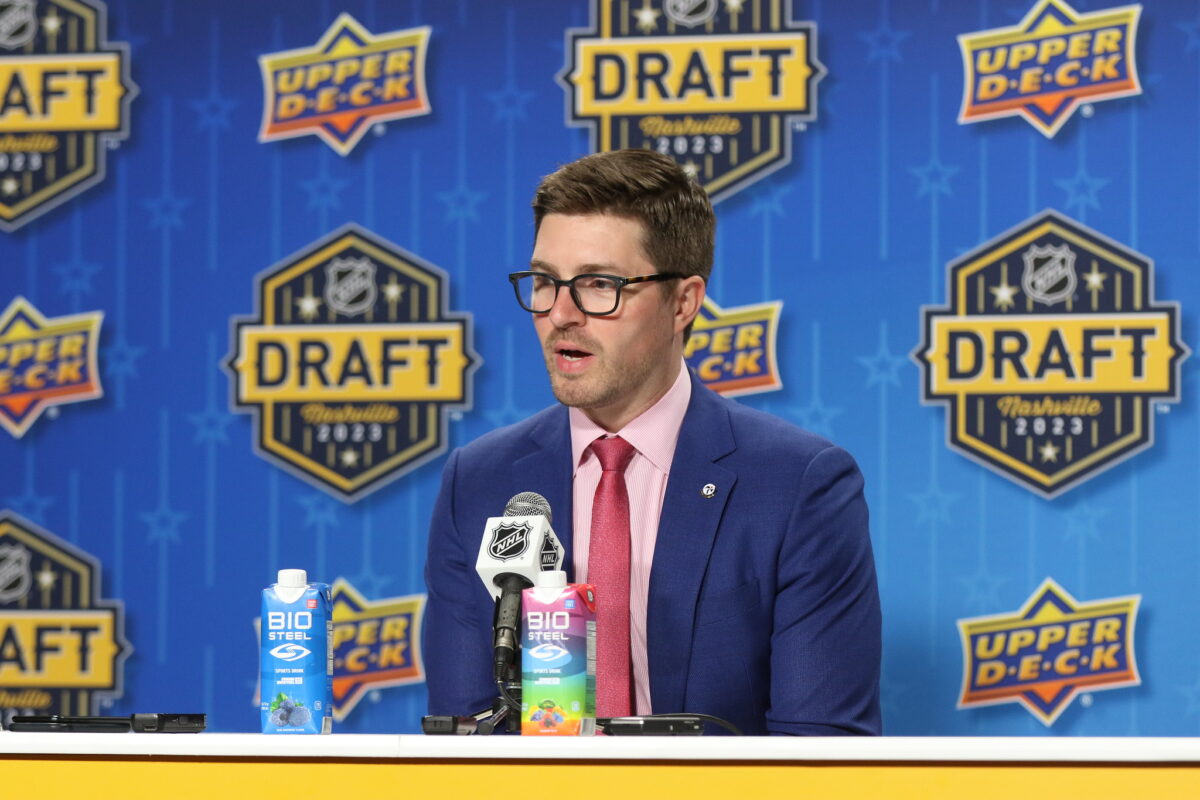 Kyle Dubas, Pittsburgh Penguins President of Hockey Ops (Amy Irvin / The Hockey Writers)
For Penguins fans, the price says it all: this team is still top-notch and worth putting money into.
Pro: A Potentially More Hockey-Focused Ownership Group
Fenway Sports Group operates a vast global sports portfolio, including teams across multiple leagues and continents. While FSG brought financial stability and professional management, the Penguins were never the centerpiece of its empire.
The Hoffman family, by contrast, already owns the ECHL’s Florida Everblades — a franchise with a strong on-ice track record, including three consecutive Kelly Cup championships from 2022–24. That history suggests a hands-on approach and a willingness to invest in competitive success at the hockey level.
A more hockey-centric ownership group could translate to clearer priorities, stronger alignment between management and ownership, and a renewed emphasis on player development, scouting, and organizational depth.
Pro: Fresh Strategic Vision at a Critical Crossroads
The Penguins are at a pivotal point in their franchise timeline. The core led by Sidney Crosby, Evgeni Malkin, and Kris Letang remains competitive but is undeniably aging. Decisions over the next few seasons will determine whether Pittsburgh attempts to extend its competitive window or pivots toward a longer-term retool.
New owners usually rethink how things are going. This doesn’t have to mean a rebuild right away. But it can cause the team to have clearer goals, be more patient, and be okay with making hard choices, even if it means moving on from past players.
A new owner might bring a new view, which could help give the team direction. Right now, not knowing what the plan is could hurt more than picking one and sticking to it.
Pro: Opportunity for Increased Infrastructure Investment
When a team changes owners, it can free up funds for investments that were put on hold before. This could mean better training facilities, bigger stats departments, improved sports science, or new ways to get fans involved.
Since hockey is becoming more about data, owners who focus on long-term improvements can create lasting advantages that are more valuable than just quick player changes. If the Hoffmans see Pittsburgh as a key investment in the NHL, instead of just another asset, the team could see more money spent on things that directly improve their play on the ice.
Con: Loss of Stability During an Uncertain Competitive Window
One downside of changing owners is that it can mess things up, even if it goes well. The Penguins are in a tough spot competitively right now. Getting new owners, different ideas, and maybe changes in how choices are made could make things feel unsure when they need to be clear.
Fenway Sports Group kept things steady, especially when other teams had problems with their owners. Any change, even if it’s meant to be good, could make the players, coaches, and staff feel unsure.
For a team with a lot of experienced players who do best when things are steady, even small changes can cause problems.
Con: Unknown Appetite for Spending at the NHL Level
The Hoffman family has done well in the ECHL, but owning an NHL team is a whole different ball game money-wise. The Penguins are already spending up to the limit, with a lot of money tied up in their main players.
There’s no sure thing that new owners will spend as much — or more — on things like contracts where the money’s paid early, trades where the team keeps paying part of a player’s salary, or buying out contracts. Fans usually think new owners will spend more, but that’s not always what happens.
Until we know how the Hoffmans plan to spend in the NHL, it’s tough to say how much financial wiggle room the Penguins will have in the tough Eastern Conference.
Con: Potential Shifts in Front Office Philosophy
New team owners usually bring in their own people to run things, sooner or later. They want folks in charge who see things the same way they do.
 Pittsburgh Penguins head coach Dan Muse (James Carey Lauder-Imagn Images)
If the sale goes through, expect some changes in how the team is run. It could be good down the road, but things might be shaky for a bit, especially if the owners and current managers don’t agree on stuff.
For a team that likes to keep things steady, even little changes can feel like a big deal.
Con: Emotional Impact on a Loyal Fan Base
The Penguins have always been a stable team thanks to consistent owners. So, when the team gets sold, fans get worried. Change can be scary – will the new owners mess with the culture, what the team cares about, or even their drive to win?
Even though the team isn’t moving and will still be called the Penguins, supporters still ask questions. Will the team still try hard to win? Will famous players still get the respect they deserve? Will the Pens keep being awesome?
These worries won’t just go away. The new owners will need to be open with everyone and gain their trust.
The Bigger Picture: Risk and Opportunity in Equal Measure
The Penguins being sold is a gamble with potential upsides. The price shows how strong the team is, but the change in owners comes when they need clear guidance.
If the new owners do things right, they could bring fresh ideas, a clear plan, and invest for the long haul. This could help Pittsburgh move on after their glory days. But if they mess it up, it could make things shaky at a bad time.
A lot depends on how involved the Hoffmans want to be, if they agree with the team’s leaders, and how well they tell the players and fans what they want to do.
Final Thoughts
Fenway Sports Group selling the Penguins is neither inherently good nor bad — it’s consequential. The pros suggest opportunity, investment, and a fresh perspective. The cons highlight uncertainty, risk, and the potential loss of continuity.
As the sale awaits approval from the NHL’s Board of Governors, the Penguins stand at a crossroads that will shape the next chapter of the franchise. Whether this transition becomes a catalyst for sustained success or a period of adjustment will depend on what follows — not just the sale itself, but the decisions made after the ink dries.
