
Sea Cow, CC BY-SA 4.0 , via Wikimedia Commons
Save
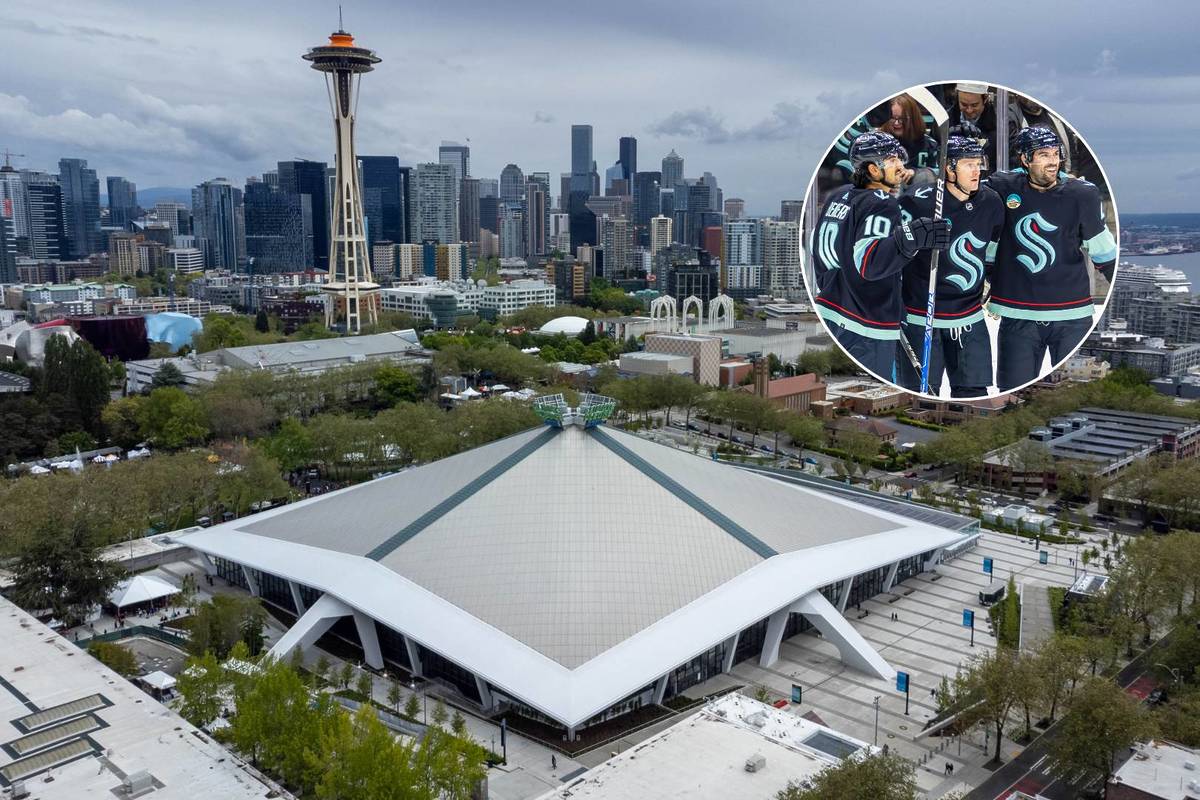
If there is one thing we have in abundance here in the Pacific Northwest, it’s rain. But while most of us spend our winters dodging puddles around Pike Place Market or debating whether we really need an umbrella (true locals say no), our home team is doing something revolutionary with the weather. At Climate Pledge Arena, the connection between the Seattle Kraken and ice has taken on a whole new meaning.
The Science Behind The Seattle Kraken And Ice Innovation
It sounds like something out of a science fiction novel, but the process is surprisingly grounded in our local geography. The system is fittingly called “Rain to Rink,” and it capitalizes on the massive surface area of the arena’s historic roof.
Instead of allowing millions of gallons of annual rainfall to wash away into the city’s storm drains, the arena has been designed to capture it. The rainwater runoff is funneled directly from the roof into a colossal 15,000-gallon underground cistern.
This isn’t just a backup bucket; it’s a sophisticated reservoir that anchors the building’s water systems. From there, the water is pumped through an advanced filtration system to strip away any impurities before it is chilled and frozen. The result? When the puck drops, the players are literally skating on frozen Seattle rain.
A “Greener” Sheet of Ice
This initiative isn’t just about being cool. It is a major reason why Climate Pledge Arena was able to become the first zero-carbon-certified arena in the world. By harvesting what falls from the sky, the arena significantly reduces its reliance on the city’s municipal water supply.
In a world where sports venues are often criticized for their environmental footprint, this system sets a new global standard. It proves that sustainability doesn’t have to be a compromise—it can be integrated into the very surface the game is played on.
Why The Seattle Kraken And Ice Are A Perfect Match
Here is the wildest part: the rain actually makes for better hockey. According to the ice technicians at the arena, recycled rainwater is naturally purer than standard tap water, which is often treated with various chemicals and contains dissolved minerals.
When water containing minerals freezes, it can create a softer, more sluggish surface. However, because the harvested rainwater is filtered and mineral-free, it freezes into a much denser, harder sheet. In hockey terms, this is “fast ice.” It allows skates to glide with less friction and the puck to move with greater speed and precision.
So, when you see the home team flying down the wing, they are getting a literal boost from the local elements. It gives “home-ice advantage” a completely literal definition. The Seattle Kraken and ice made from Seattle rain are a match made in hockey heaven.