
By James Mirtle, Jonas Siegel and Joshua Kloke
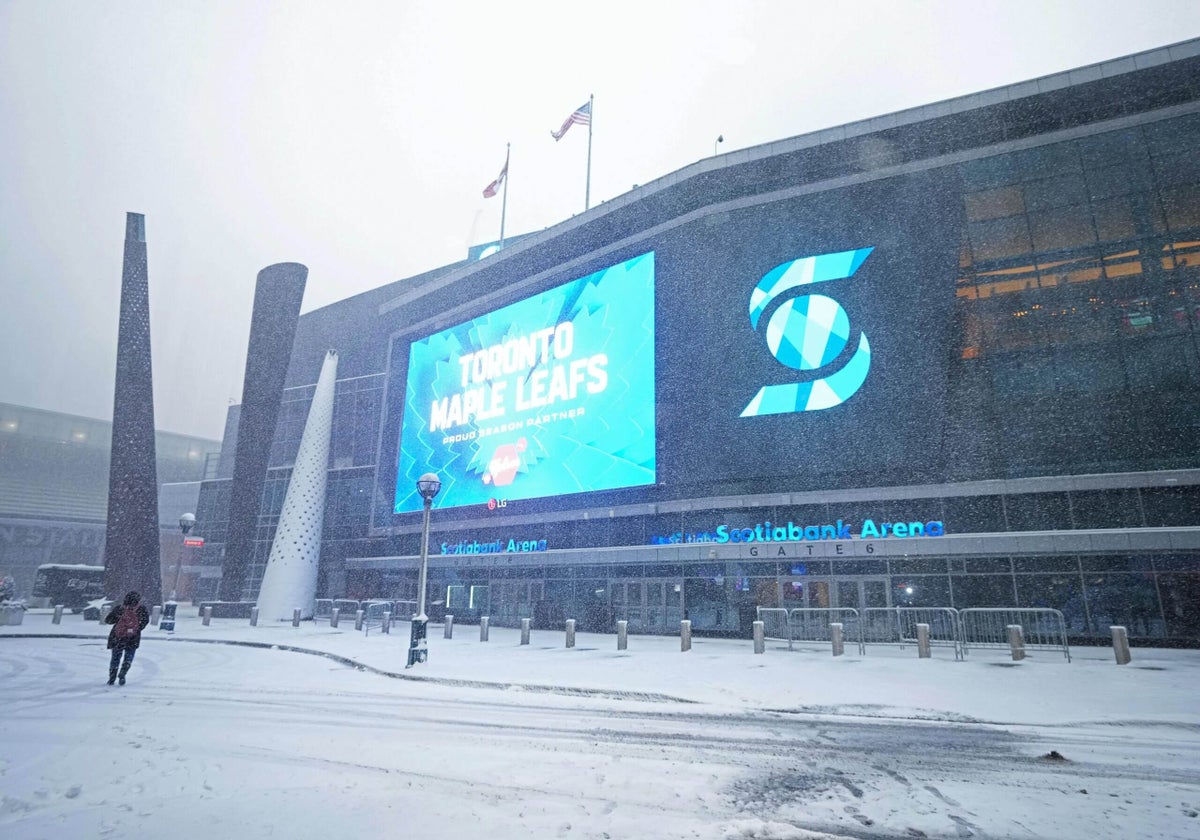
Something strange is happening at Scotiabank Arena: The Toronto Maple Leafs are no longer selling out.
Not every night. Not anymore.
The Leafs, a team that once sold out every home game for more than a decade, have sold out only six of their first 20 home games this season.
Capacity at Scotiabank Arena is 18,819. But the team announced below-capacity crowds of 18,438 for the Nov. 20 game against the Columbus Blue Jackets, 18,353 for the Nov. 18 game against the St. Louis Blues, and 18,305 for the Nov. 13 game against the Los Angeles Kings.
Early in the season, the Leafs had a rare competitor in the market as the Toronto Blue Jays’ playoff run stretched into November, but all the examples above came after the Jays’ World Series pursuit ended.
Even a matchup with the Tampa Bay Lightning, a division rival, earlier this month didn’t result in a sellout; announced attendance was 18,520.
On Oct. 14, meanwhile, the Leafs drew a season-low 18,124 with the Nashville Predators in town. The Blue Jays were notably off that night.
The Leafs’ average attendance of 18,607 so far this season would be the lowest mark in the history of Scotiabank Arena — not including the two seasons affected by the pandemic.
“It’s not something that we’re really, really concerned with,” Tom McDonald, senior vice-president of ticket sales and service with Maple Leaf Sports and Entertainment, said in an interview this week.
The belief within MLSE, according to McDonald, is that the team’s home-heavy early schedule, in a season condensed by the Olympics, led to some “over-saturation” within the market. McDonald noted that the Leafs had 15 home games in October and November alone, more than a third of the home schedule in just two months, and well above the league-low nine home games of the Edmonton Oilers. “There’s only so many nights out in one week you can have,” he said.
The other factor in all this, McDonald said, was the Jays’ “unbelievable, exciting” run and the oxygen it soaked up in the city.
“We expect that in the New Year and beyond — and we’ve already seen on some of these recent games — that attendance will pick up again,” McDonald said. “It’s just a blip.”
Players are noticing a difference during games.
The Leafs’ longest-serving player, defenceman Morgan Rielly, was asked if he has noticed a change in the atmosphere at Scotiabank Arena.
“Yes,” Rielly said. He showed little interest in expanding on his answer.
“Sometimes it’s more calm. We acknowledge that,” defenceman Simon Benoit added. “A bit more quieter. But we haven’t been great so far. I’m sure once we start pumping the wins, it’s going to come back for sure.”
The Leafs have regularly stuffed well over 19,000 fans into the building when the demand is there. They can accommodate more than capacity in suites and standing-room sections.
All seven home games during last season’s postseason drew over 19,000, including a high of 19,438 in Game 5 of the first round against the Ottawa Senators.
“We feed off emotion,” Benoit said. “When there’s emotion in the building, you use that. In the playoffs, it’s so f—ing loud, you feel that.”
This season, the team drew sellout, over-capacity crowds of 19,037 for the Oct. 8 opener against the Montreal Canadiens and 19,023 in the the first matchup of the season against Connor McDavid and the Edmonton Oilers on Dec. 13.
McDonald noted that with the resale market, no games are actually ever sellouts.
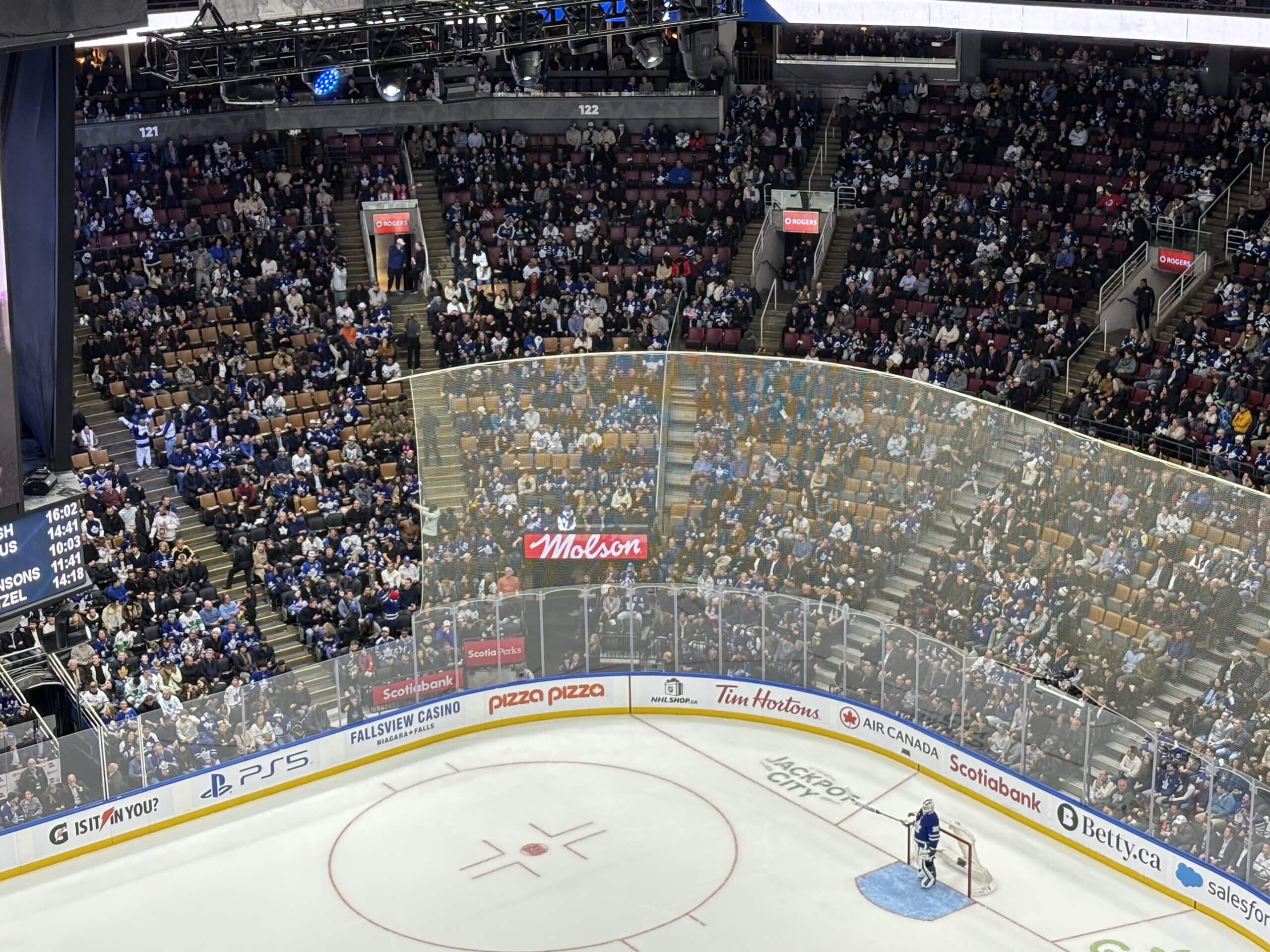
Empty seats spotted from the press box during a recent Leafs game. (Jonas Siegel / The Athletic)
The Leafs, the NHL’s most valuable team, are on average filling 98.9 percent of their building’s capacity, which ranks 12th in the NHL. Their other sellouts this season came against the Red Wings in the third game of the season on Oct. 13, the Penguins on Nov. 3, the Bruins on Nov. 8, and the Canadiens once more on Dec. 6.
The Leafs have historically been a ticket that was both difficult and expensive to procure.
In fact, for 13 years in a row, the Leafs sold out every home game. That run came to an end on March 23, 2015, when the team reported a crowd of 18,366, then the lowest in the 16-year history of what was known as the Air Canada Centre.
The Leafs have already seen attendance fall below that mark five times this season.
This is the lowest attendance figure (18,366) the #leafs have reported in the 16-year history of Air Canada Centre.
— Chris Johnston (@reporterchris) March 24, 2015
It was a messy time for the Leafs back in 2015 as the team nosedived out of playoff contention. The Leafs still averaged 19,158 fans that season and surged to 19,764 on average two seasons later when an exciting young team led by Auston Matthews, Mitch Marner and William Nylander emerged.
They have been below 19,000 on average in each of the past four seasons.
During a recent Saturday-night home game against Montreal, the stands were filled with an unusually large contingent of fans wearing Canadiens sweaters.
That might have been due to the relative ease with which tickets can be purchased, both at face value as well as on the secondary ticket market. As late as the afternoon of a Dec. 8 game against the Lightning, plenty of seats were still available and at prices that would have once seemed unthinkable.
Two tickets in the 300s were listed for $78 each, including fees.
Ticket prices have risen in recent years. (John E. Sokolowski / Imagn Images)
Season ticket holders who spoke to The Athletic earlier this month said they have found it more difficult to resell their unused tickets for the price they paid for them, which has led to some cancellations and others reluctant to continue to buy season seats year after year. A sharp rise in prices at the end of the last season didn’t help on that front.
Season seat holders have also noticed more empty seats around them in the arena, primarily those owned by other season ticket holders who have no-showed for games.
The rise in prices for Leafs tickets has been dramatic in recent years. In 2010-11 for example, a season ticket holder could purchase some of the best upper-bowl seats for $90 apiece and then resell them for up to $500 a ticket for marquee games against rivals such as Montreal.
MLSE has since introduced dynamic pricing for all tickets, meaning more in-demand games and arena locations are now sold to season ticket holders for a much higher face value than other games and areas. In this way, the Leafs have attempted to recapture the bulk of their tickets’ value — revenue that used to be picked up by season-ticket holders or resellers on the secondary market. But this change appears to have contributed to having more seats go empty at times.
Amid the decline in attendance has come an apparent attempt to forge a deeper connection between fans and the team.
Under the leadership of Keith Pelley, MLSE launched “Fan Access” last spring, a platform they said would give fans “the opportunity to access unique benefits such as tickets, VIP experiences, discounts, exclusive content and more.”
“MLSE’s teams are blessed with some of the best fans in the world, and our goal is always to explore every opportunity to bring them closer to the action and create a closer connection to their favourite teams,” Pelley said in a statement at the time.
And while it’s free to join Fan Access (though there are paid tiers), and there are opportunities to score free tickets, the program also sells pricey experiences dubbed “Plus Ups.”
The cost to be the on-ice flag bearer before that Dec. 8 game against the Lightning, for example, was $956.83.
The cost to sit in the penalty box for warm-ups was $637.89. A postgame photo on the bench came in at $127.58.
None of those experiences include a ticket to the game, which is required.