
Coming off the firing of an assistant coach and sitting last in the Eastern Conference after losing three straight/five of their previous six, the Maple Leafs’ pre-Christmas break matchup against the Penguins felt more significant than the typical game #36 on the NHL schedule.
While he played just 17:23 and showed the completely expected signs of rust early on (including an extra-large pizza to Anthony Mantha at the end of the first period, bailed out by Joseph Woll), the return of Chris Tanev to the lineup was an uplifting development/vibe shifter amid a dark week in Leafland. Tanev is an emotional leader on the team and a top puck mover and shutdown defender on the blue-line unit (with evident chemistry alongside Jake McCabe, whom he played with tonight after the first period). While it’s highly debatable if Philippe Myers should be in the group of six, Tanev’s return helps align the Leafs‘ blue line with three lefties/three righties, which should theoretically improve the ailing puck movement/breakouts off the backend. Most of all, after his scary injury in Philadelphia and the long road to recovery since, it’s simply outstanding to see Tanev back competing and doing what he loves.
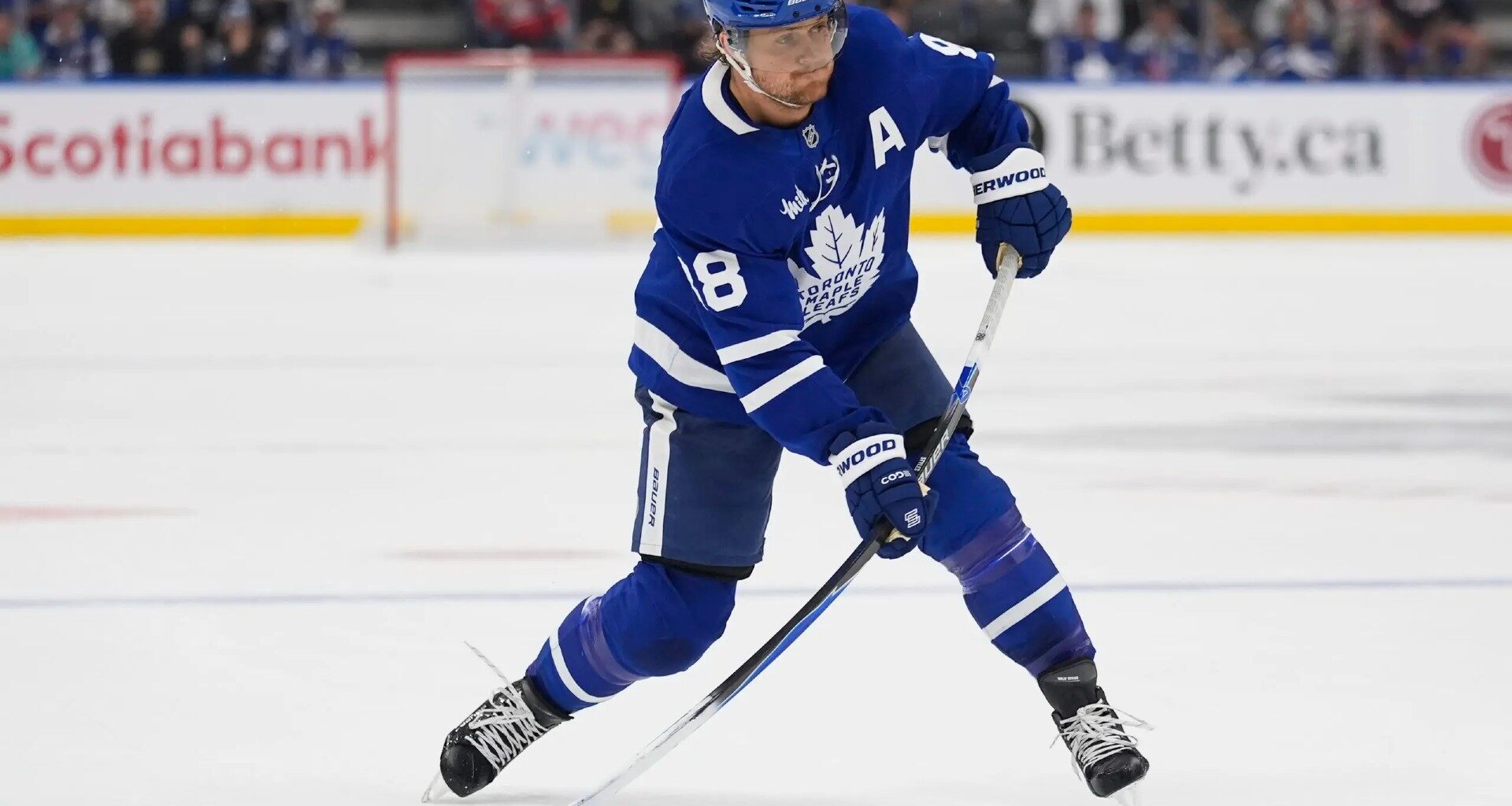
Also a major uplift was the real William Nylander standing up. Mired in an 11-game goal-scoring drought and a minus-10 (!) in his last five games, Nylander was engaged, had his legs and confidence with the puck, and was firing on all cylinders offensively. He went on multiple full/partial breakaways largely of his own creation, finished one of them, assisted on two other Leaf goals, and added an empty-netter. It was a star performance from one of the team’s stars, something the Leafs have sorely lacked of late.
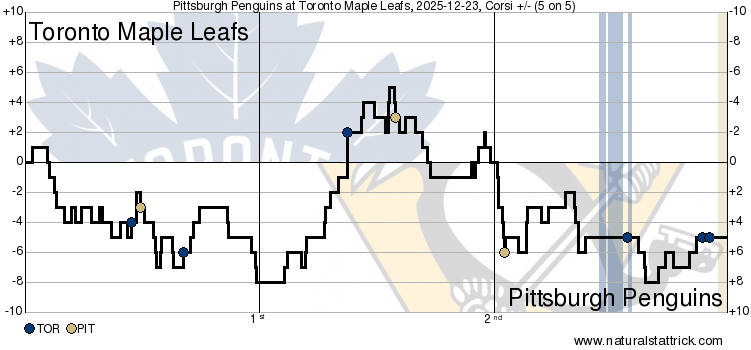
This was a fairly evenly contested game from start to finish at five-on-five, with minimal special-teams time (if the Leafs knew they’d barely touch the power play tonight, maybe they’d have waited to fire Marc Savard until after Christmas). The Leafs, after struggles bearing down in Dallas, were dangerous in transition and opportunistic finishers. Outside of a fortunate bounce for a Matias Maccelli goal on a hopeful pass off the wall, the Leafs‘ offense otherwise came from nice individual efforts off the rush/breakaways.
Nylander started it off in the first period by swatting a puck down at the defensive blue line and finishing confidently past Stuart Skinner when in alone. In the second period, Steven Lorentz stripped Erik Karlsson at the defensive blue line for a breakaway and scored (hilariously) on his own second rebound. Max Domi’s game-winner at four-on-four in the third period was a brilliant solo rush effort, and the Leafs added a couple of empty-netters via Bobby McMann and Nylander to seal the win.
Joseph Woll wasn’t at his absolute sharpest in net, just as Dennis Hildeby wasn’t exactly a show-stopper in Dallas, but it was nice to see the Leafs provide enough run support that it didn’t matter in the end. The Leafs didn’t dominate the game by any stretch, and it didn’t look like two elite teams going at it by any means, but the Leafs needed this one badly — not just for the points in the standings but to spare them the indignity of entering the Christmas break below .500 and in last place in the Eastern Conference.
When a slumping team plays well and loses, as the Leafs did in Dallas, you’re hoping it’s the cliche scenario of a “good loss” preceding a turnaround in fortunes. Given their current situation, it would’ve been pretty devastating if the Leafs followed it up with yet another loss to stew on until after the break. After a really tough stretch of scheduling, they can now take a breath and reset mentally over the next few days, with the team very close to full health and Brandon Carlo expected back in the new year.
Shoot me for saying it, and perhaps it’s the holiday rum-nogs talking, but maybe there is a small glimmer of light at the end of this tunnel?
Post-Game Notes
– If there was a particularly frustrating part to this game for me, it was the key moments where the game nearly swung against the Leafs with the top line on the ice. Immediately after going ahead 1-0 — a key shift within a game — they gave up a tying goal where Bobby McMann made a brutal play in the high slot of the offensive zone for a turnover, leading to a breakaway goal for Bryan Rust. Entering the third period with the Leafs up 3-2, the top line was tilted on the opening shift of the period, leading to a defensive-zone shift for the John Tavares line and a tying 3-3 goal.
Herein lies the rub for me with the Leafs’ lineup construction and deployment strategy under Craig Berube right now. Matthews, now at four games without a point, definitely has to take ownership for his own well-below-expectations play/production, but they were also playing him with McMann and Max Domi in this game while almost exclusively matching him up against the Crosby line all night on home ice (with a team-leading six d-zone draws, too). In general, Berube isn’t prioritizing getting Matthews advantageous mismatch opportunities with any consistency whatsoever.
When Nick Robertson is on Nic Roy‘s line, it doesn’t make for a line that can take on any of the toughs in high-leverage situations (what is a Knies-Roy-Robertson line, in general?). The current bottom-six lines aren’t trusted enough in those situations, and the current line construction doesn’t really allow for it. If the Leafs united Scott Laughton and Roy with, say, Dakota Joshua, and built a soft scoring fourth line around Domi and Robertson (Easton Cowan is back in the lineup in this scenario), they might feel good about deploying a Joshua-Roy-Laughton checking line in some of those high-leverage situations, freeing up #34. Instead, it all falls on Matthews’ line, and on a night when the Penguins didn’t have much of anything lined up below Crosby due to the Evgeni Malkin injury (Rust and Rakell were both loaded on Sid’s line), it doesn’t tilt the matchup game in the Leafs’ favour enough. It makes this game more of a toss-up/very Nylander-dependent, versus the Leafs creating proper matchup headaches with both their Matthews and Nylander lines against a shallower Penguins lineup.
– Especially knowing the Leafs’ issues with goalie injuries this season, someone has to step in on Justin Brazeau for taking the shovel out on Joseph Woll in the first period, leading to the disallowed goal. Woll appeared to get up gingerly after, too, although he may have been attempting to sell the (obvious) call on the no-goal.
– The other interesting aspect of the lineup changes tonight was Matthew Knies shifting down to Roy’s line, which barely played tonight (9:50 TOI for Roy). Knies grabbed a secondary assist on Nylander’s empty-netter, but he played just 12 minutes and had one point in his previous eight (minus-five). It appears to me that he may have fallen into the trap that some young, bigger-bodied “power” types do early in their careers of adding weight at the expense of footspeed (before hopefully finding his way back to a happy medium at his ideal playing weight). There were many examples last season when Knies separated with his speed, none better than his breakaway goal against the Senators in Game 4 of the playoffs. He isn’t creating as much space or getting to his spots as quickly as he did last year. With Matthews’ speed down and Knies’ as well, it contributes to the Leafs’ overall pace of play problems, on top of some of the structural issues in the team’s game.
– The Maccelli-Tavares-Nylander line is probably going to be eventful at both ends so long as it is together. Whether it can forecheck and handle its defensive details well enough to stay together long term remains to be seen, but they can definitely hang onto the puck and create plays, and they’re up 8-5 in goals this season while carrying 63% of the expected goals. In the last three games alone, they’re at 3-3 in goals at five-on-five while owning 64% of the XG.
– Last but not least, a very Merry Christmas and Happy Holidays to all of our MLHS readers.
Game Flow: 5v5 Shot Attempts
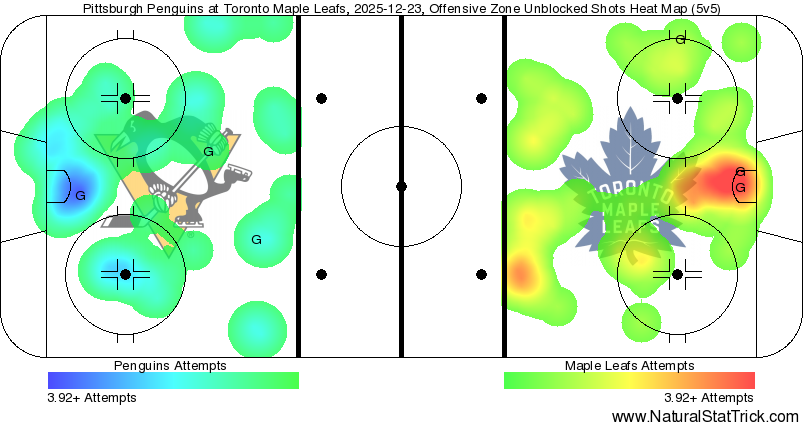
Heat Map: 5v5 Shot Attempts
Game Highlights: Maple Leafs 6 vs. Penguins 3