
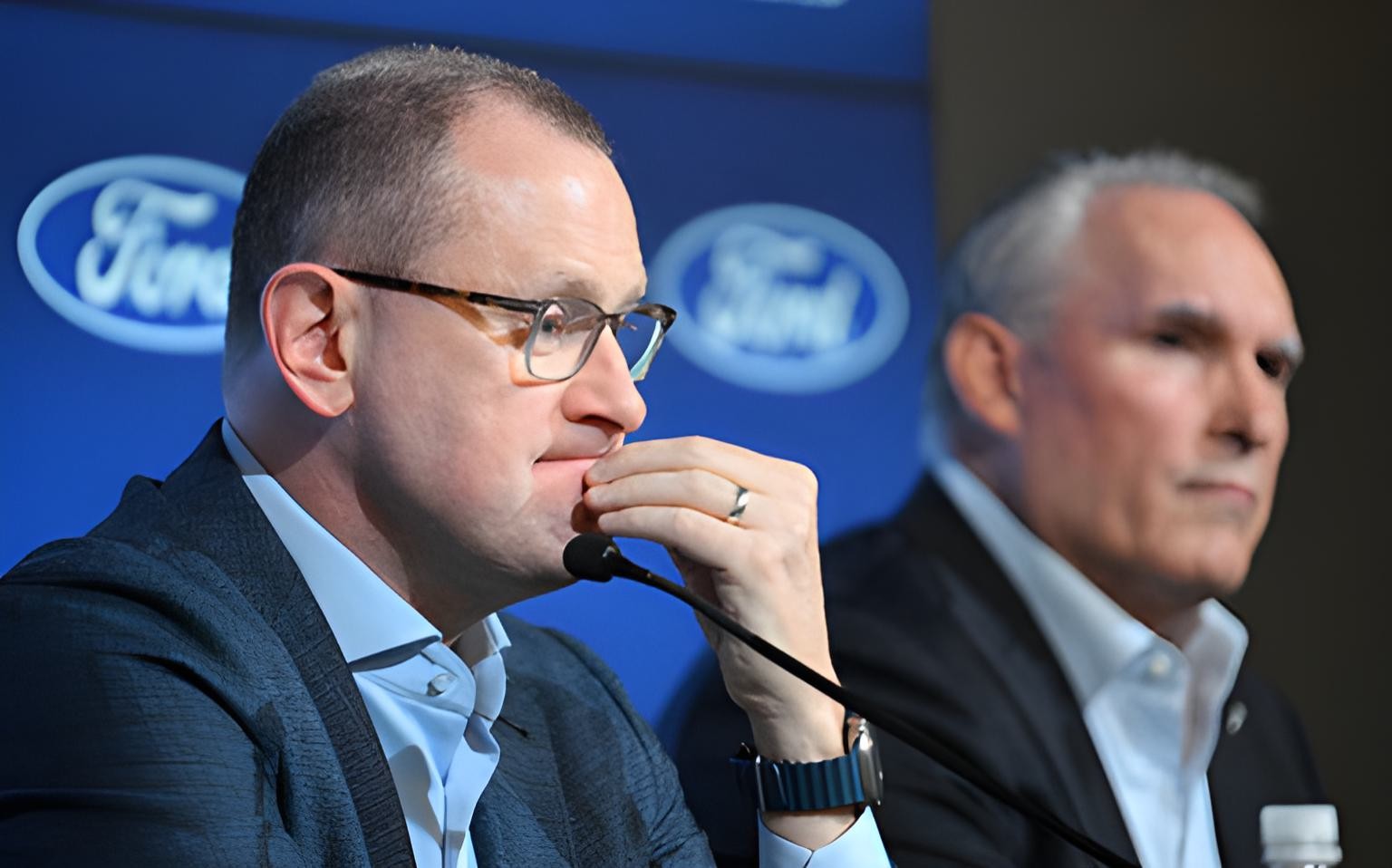
Christmas time is here, although the mood is anything but merry right now for the Toronto Maple Leafs. They officially sit second-to-last in the Eastern Conference as of this writing, and their overall game is trending in the wrong direction.
Almost every key performance indicator for this team points to a bottom dweller. They are the third-worst five-on-five possession team and 21st in expected goals. Their goaltending, a saving grace last season, sits 25th at five-on-five. Their power play needs no introduction for anyone who has watched even one Leafs game this season. They are ninth in goals per game and 25th in goals against per game. Only San Jose (one of the league’s youngest teams, undergoing a full-on rebuild) allows more shots on net per night than the Leafs.
Individually, most of the performances leave us wanting. Auston Matthews is trending under a point per game as the second-highest-paid player in the league this season. Matthew Knies signed a major extension and isn’t even on pace to break 20 goals. Anthony Stolarz, now injured with no proper update provided (only God knows why), is sporting an .884 save percentage in a team-leading 13 games played. Seemingly the only player yelled at on the bench over the last few months, William Nylander just ended an 11-game goalless drought. Ridiculously, Max Domi is the team’s fifth-highest-paid forward, and the coaching staff is finally recognizing that he should actually be a regular healthy scratch.
The list goes on and on and on. We could do this for essentially every Leaf not named OEL, Nick Robertson (what a redemption story!), Easton Cowan (in part because he’s a 20-year-old rookie), and Joseph Woll when he’s healthy. You could argue Scott Laughton, Dakota Joshua, and Nic Roy have turned it around lately, if you’re feeling generous.
Most damning of all is, of course, the play of captain Auston Matthews.
The Matthews Mystery
The most straightforward path to hedging some of the void left by Mitch Marner was always Matthews returning to superstar form. He wasn’t particularly good last season, but this season, he is trending towards mediocrity. We could probably make a reasonable argument that he’s not performing at the level of a top-75 player in the league at the moment.
This market loves a narrative, and one seems to be forming that Matthews is the fanbase’s new “whipping boy.” But he has been objectively underwhelming relative to his salary. He has earned criticism and scrutiny for not playing anywhere close to expectations. He can’t drive a line, he can’t produce to expectations, and he can’t even make the power play at least average, let alone dangerous. Whenever he’s asked about his play, he deflects and makes it about the team – a lack of accountability that matches his play on a nightly basis.
Whipping boys are blamed for others’ incompetence. The Matthews criticisms to date are squarely focused on his play, something mostly under his control.
It is worth noting that before the Leafs hired him, Craig Berube had never coached the type of high-end talent at the top of the Leafs’ roster. Matthews, in particular, has steadily trended down since Berube took over behind the bench. To be clear, it is at least in part due to injury (which is obviously out of Berube’s control). But now Nylander is trending down, Matthews looks way off, and even Matthew Knies isn’t really progressing (I would argue he is actively regressing at this rate; you barely notice him most games).
Former St. Louis Blue Pat Maroon recently discussed his experience with Berube on TSN Overdrive:
“[Berube] sent the message loud and clear for us. Listen, we’re not the fanciest team, we don’t have any big hitters, but we have the type of team that can wear teams down throughout the course of a playoff run and throughout the season.”
It’s great that Berube’s message resonated with his St. Louis team. This Leafs team is not that team, no matter how hard Berube wishes it were. He deployed Matthews as essentially the league’s toughest matchup center last season and has continued to match him up this season, despite the GM acquiring Nic Roy and referencing the Winnipeg deployment model this past summer.
Matthews’ struggles, coupled with the team’s overall playoff futility during the Matthews era and a potentially chronic injury that might be diminishing his physical abilities, make it easy to recommend a rebuild. But when trading a 28-year-old who has generally been a face-of-the-franchise, superstar-level 1C, without complete control of the next two first-round picks, the Leafs better be damn sure of what they’re doing and retrieve commensurate value. I don’t know how they’d pull that off right now, given that Matthews is rotting under the current coaching staff.
14 years ago, after the Washington Capitals hired Dale Hunter, Alex Ovechkin saw his ice time reduced significantly. He produced a meager 65 points in 78 games, but the team advanced to the second round. Ovechkin owned the highest cap hit in the league that season at $9.538 million. In fact, nobody was even close to Ovechkin’s AAV, as the next highest was Sidney Crosby and Evgeny Malkin at matching $8.7 million cap hits. Ovechkin’s AAV at the time actually occupied more of the salary cap than Matthews’ does now.
Washington stuck with their proven superstar instead of the coach, won the Cup, and recently watched him set the league record for goals, something Matthews has been on pace to surpass since he entered the NHL.
Similar to the Washington scenario, the Leafs absolutely must evaluate Matthews under a new coaching staff. Otherwise, they are at significant risk of making the type of mistake that sets a franchise back a half-decade or more. Matthews has never looked this mediocre under any other coach. For all the chatter about letting the players off the hook, it still doesn’t address the underwhelming job the coaching staff has done in a vacuum, and it really doesn’t make logical sense anyway, considering the coaching situations in the Matthews era to date.
Babcock was fired partly for his personality flaws, and the team responded accordingly. I reflect on much of what Babcock preached and instilled from a hockey perspective and still believe he was on the right course strategically/systemically, but there were clearly issues with off-ice player management, and not just in Toronto (he couldn’t even make it to preseason in Columbus).
Sheldon Keefe had a five-year run, and when he was ultimately fired in 2024, I don’t think anyone thought it let the players off easy. The Leafs couldn’t get over the playoff hump during Keefe’s lengthy tenure, and it was what it was after a certain point.
Notably, Connor McDavid has played under five different NHL coaches, and his current one is his hand-picked former OHL bench boss. But the Leafs should trade Matthews before even considering a fourth?
The Time for (Real) Change Behind the Bench
To be clear, a new coach wouldn’t suddenly make the Leafs a contender, and nobody should be under any illusions to the contrary. But this Leafs roster absolutely shouldn’t be in the conversation for the league’s worst team.
Berube and his staff have done an objectively poor job. The power play is in complete shambles, and now the assistant in charge of it has been fired. I don’t think we need to write much more about the man advantage; it’s clearly been poorly coached, there is no clear plan of attack, the entries aren’t innovative, there are no repercussions for poor execution, and so on. Special teams is all about coaching, and the penalty kill has become a decent unit with a better scheme courtesy of Derek Lalonde.
Ultimately, the biggest concern is the team’s style of play. The ice is tilted against the Leafs most nights for several reasons, but mainly because they can’t break out cleanly or sustain offensive-zone time consistently. They are clearly coached to send the puck high off the glass, and the gap between their forwards and defensemen is too wide. When they lose games, it looks ugly due to the poor brand of hockey on display. The recent loss to Dallas, as well as an early loss to Detroit, were the only times when we watched the Leafs lose and felt they genuinely deserved better. Otherwise, the team is usually dominated when it loses or outplayed when it wins. It was the same story last season; the difference is that the team’s power play got red hot and they rode elite goaltending, both of which have completely dried up this season.
How can a coaching staff even solve the problem if they can’t identify it correctly? Berube continues to talk about mindset when there are clear tactical issues at play. It’s often pointed out he isn’t entirely honest in his pressers – and there is probably some truth in that – but he’s consistently repeated the same mantras for a year and a half running, and the on-ice product looks the exact same. When we see glimpses into his message to the players in the room, it doesn’t make much sense. Exhibit A, just a week ago:
Character win 🫡 pic.twitter.com/q8MQefOZPE
— Toronto Maple Leafs (@MapleLeafs) December 17, 2025
Berube is kidding himself if he thinks the late-comeback victory against a mediocre Chicago team missing its franchise player and top-producing defenseman (due to a healthy scratch) was a “character win.” That is an analysis I’d expect to hear at the pub from a fan well into the double digits in drinks imbibed, not the head coach of an NHL team. Berube wasn’t putting on a show for the cameras, either (he isn’t a professional actor). His message after the game was way off the mark; the team should have handled that Chicago lineup from wire to wire, especially coming off a poor showing the game before against Edmonton. Instead, late heroics staved off criticism for a few nights.
Listening to the post-game remarks afterward, the correct performances weren’t even recognized. Berube talked up the first line, seemingly because Matthews won a faceoff leading to an Oliver Ekman-Larsson goal? The individuals who played with a real motor in the game – Robertson, Laughton, Joshua (who scored the game winner), Roy – weren’t mentioned. Laughton is one of the few Leafs even registering on the give-a-shit meter on a nightly basis, and yet his minutes are almost always too low. For all the talk about the “team” and moving past the “Core Four,” Berube is bending over backwards for his top players. The only difference is that they at least played like stars when Sheldon Keefe did the same thing.
If Berube were clearly saying and doing the right things, this would not be a discussion point. As it stands, the messaging is off the mark, the lineup decisions are head-scratching, the structure is nonexistent, the power play should start declining opposition penalties at this point, and essentially every player on the team is underperforming relative to expectations. This is what happens when a team plays without structure: everyone looks worse.
To take it a step further, for those in the “retool” camp, this isn’t a coach the organization should want overseeing a retool. It’s not like this is a young, high-upside coach the franchise should be happy to grow and learn with. Berube is what he is, and the Leafs can’t make franchise-altering decisions in their current state. It shouldn’t even need to be written, but we’ll reiterate anyway: siding with the coach over proven, prime-aged (or, in the case of Matthew Knies, young) stars is sheer lunacy.
Paths Forward Ahead of the Trade Deadline
Complicating matters: The Leafs don’t have full control over their next two first-round picks, and GM Brad Treliving shouldn’t be allowed to make franchise-altering moves like trading away core players, given an honest assessment of his tenure to date.
If the Leafs owned their first-round pick(s) outright, they could live with this in a pretty straightforward scenario, but the chances of them dropping a top-10 pick to Boston, one that is not quite high enough for the Leafs to retain it themselves, are pretty high. The teams below them – Calgary, Vancouver, Seattle, Nashville, and now Chicago, who are without Bedard and Nazar for a while – have much easier paths to tanking. So does St. Louis. There is no benefit to bottoming out only to hand Boston the seventh-overall pick (or whatever) while selling off the team’s top players for pennies on the dollar.
The most reasonable plan at this point is a fairly straightforward one. It is quite clear that the head coach – not just his assistant – needs to go immediately. Mike Van Ryn’s defense has routinely punched below its weight under his watch, although immediately hiring three new coaches midseason may be a tricky proposition. Derek Lalonde takes a strange amount of heat in the market, but his penalty kill has arguably been the most consistently good thing the coaching staff has produced this season.
The NHL trade deadline falls on Friday, March 6. Given the Olympic break, the Leafs really have two months to evaluate the team under a new structure. This won’t be a spring teardown the way some hope/think. Treliving shouldn’t be allowed to execute one anyway, nor should a new GM; the new hire wouldn’t have had sufficient time to properly evaluate the organization from top to bottom.
Come the trade deadline, ideally with a new coach taking over as soon as possible, the question will be as follows:
Are the Leafs a bad enough team that a top-five pick is a realistic possibility? Did the Leafs climb up the standings enough to ensure Boston will receive a non-top-five pick?
Either way, the GM clearly won’t buy. This team doesn’t deserve it, even if they go on a heater from now until March. The Leafs have no assets to trade, either, so at best, they’re looking at hockey trades, and has Brad Treliving shown the ability to pull one of those off?
We’ll talk about it more as time progresses, but obviously, gleaning some value for their pending UFAs (Scott Laughton and Bobby McMann) will likely be a must, and I’d spend a lot of time working to remove certain players from the roster as additions by subtraction (Max Domi and Morgan Rielly). If the Leafs could sell high on OEL this season as well, it could be worth their while. These moves will not fully restock the shelves, but they will return some value. If they could also clear out those two aforementioned veterans with term who are net negatives, it would make for a successful deadline.
Right now, the Leafs are struggling enough to believe that a top-five pick is a viable option, and maybe they’d consider something like shutting down Matthews down the stretch after the Olympics to help get them there. There is a scenario in which the Leafs could thread the needle to secure a top pick, add a top prospect like Keaton Verhoeff as a franchise cornerstone on defense, flip pending UFAs for additional picks to restock the cupboards, sell high on OEL, and shed some dead weight. They could come back fully healthy next season (including Matthews, Chris Tanev, and Anthony Stolarz), with a new head coach, and immediately turn this around, making the next two first-round picks they will be forced to hand over relatively inconsequential.
There is a real temptation there, but I still find it hard to picture. They’d need to get to the deadline in a bad spot and start to neuter the team to seal the deal, and even then, they’re beholden to lottery balls.
There is also a scenario in which the Leafs climb to the middle of the pack in the standings, relinquish a pick in the 13-20 range, and open up a lot more flexibility moving forward, as they would only have a top-10-protected pick to work around. It wouldn’t be as sexy as the first scenario, but getting out of the current trap while owning potentially some high draft picks (their future picks would not be protected, were they to keep this year’s pick) has a real appeal. Again, tanking just to watch conference rivals benefit from those picks makes no sense.
Between Christmas and the trade deadline, the Leafs play 27 games. They won’t make major trades between now and then, and again, Treliving shouldn’t be permitted to do so, given his tenure to date. They can make the coaching change at their disposal – and seek out a tactical staff capable of finding solutions – or they can ride it out with the current group that has tried nothing and is all out of ideas. We’ll either be contemplating life in the messy middle by the deadline or wondering how to be bad enough to maximize the chances of picking in the top five.
Personally, I’d like to see this group under a different coach in those 27 games and evaluate the team from there. We’ve been saying it for months now, and it’s only gotten progressively worse under the current staff. Calls for a coaching change are only getting louder, so will they stubbornly hold off or finally pull the trigger?
There is a case to be made for not dismissing the coach or GM right now — to wait to clean house in the offseason, rather than hiring a coach today and a new GM in the offseason. It’s a reasonable take, but it doesn’t address the bigger priority of helping the players improve under a better system in the meantime.
Marc Savard did an objectively poor job and deserved to be fired, but he was a scapegoat of sorts, and it appears the management group really, really does not want to move on from Berube. They might get healthier and smooth out their play/power play on a path into the NHL’s mushy middle, but it’s hard to picture this Berube brand of hockey winning them four straight seven-game series as they’re tilted 60/40 at five-on-five regularly. And isn’t winning the Cup the whole point here?
Keith Pelley suggested the Leafs were in a contention window last offseason, but they aren’t even close to contention status this season. I’m not sure how he can justify continuing to trot out the current product. However, when the former CEO of the PGA European Tour is now the de facto President of the NHL’s Toronto Maple Leafs, it’s awfully hard to know – or have any default confidence in – the thinking of those at the top of the chain of command.