
Denis Brodeur/Getty Images
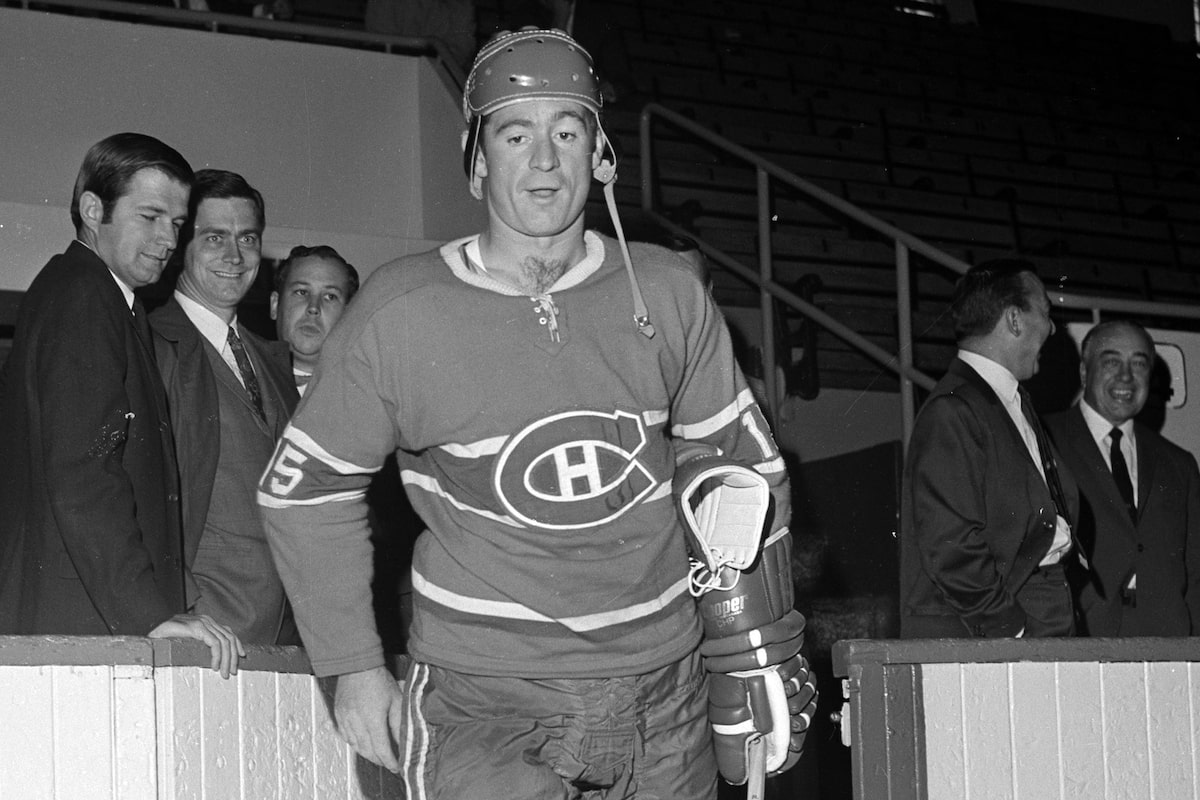
Bobby Rousseau was an unsung stalwart of four Stanley Cup championships won by the Montreal Canadiens in the 1960s.
A smooth skater among the fastest of his generation, the right winger was blessed with an accurate slapshot and an uncanny ability to make a timely pass.
Mr. Rousseau played in six Stanley Cup finals (five with Montreal, one with the New York Rangers) in a 15-season career. He earlier had won a silver medal at the 1960 Winter Olympics.
He became a regular with the Canadiens at the start of the 1961-62 season, a campaign in which he won the Calder Trophy as the NHL’s rookie of the year. From then until the end of the 1969-70 season, only captain Jean Béliveau scored more points for the team than Mr. Rousseau, 543 to 519.
Mr. Rousseau, who has died at 85, was overlooked in his lifetime by the Hockey Hall of Fame. A key player on the Canadiens dynasty of the late 1960s, he was overshadowed by Mr. Béliveau and others in a star-studded lineup. Eleven teammates on the Canadiens’ 1968-69 championship team (five forwards, three defencemen, three goalies) have been inducted into the Hall.
“I know I could not be a Béliveau,” he once said. “He is a great centre and a big man. Me, I play mostly right wing and am a little fellow.”
With a hangdog expression belied by puppy-dog eyes, the boyish forward stood at just 5-foot-10, 178 pounds (178 centimetres, 80 kilograms), relying on speed rather than power to rush headlong toward the opposing net. A high-strung and nervous player, he developed an ulcer in his rookie season. His teammates on the Rangers nicknamed him Inspector Clouseau, the bumbling French detective portrayed by Peter Sellers in the Pink Panther movies.
The skater found solace in the pages of The Power of Positive Thinking, a motivational guide written by Norman Vincent Peale. He picked up a copy at a drugstore while the Canadiens were in Fort Wayne, Ind., to play an exhibition game.
“I’ve always been a pessimist,” he once told hockey writer Jim Hunt, “and looked on the dark side of things even when I was doing well. The book has connected me to look at the bright side of life.”
He credited the lessons of the book for easing his self-doubt, which he said made it possible for him to score five goals in a game, one of the greatest performances in NHL history.
Former NHL player Bobby Rousseau and his wife Huguette sit with Yusuf Ahmed, top left, Saif-Ullah Khan, Aadam Ahmed, Adam Ahmed, David Matthews, bottom left, Adam Ahmed, and Alia Mohamed,in Ottawa, as the families of children and youth who keep getting stopped because their names match ones on security lists meet, in November, 2017.Justin Tang/The Canadian Press
Jean-Paul Robert Rousseau was born in Montreal on July 26, 1940, to the former Éliane Lord and Oscar Rousseau, a mechanic. He was one of 13 children, 12 of whom survived infancy: Anne-Marie, Fernand, Roland, Denise, Jacques, Guy, Jean, Gilles, Robert, Hélène, Louise and Michel. The family lived in the working-class neighbourhood of Saint-Henri, the setting for Gabrielle Roy’s novel The Tin Flute about life in the slums, before moving to Saint-Hyacinthe, a small city serving an agricultural region east of Montreal.
The Montreal newspaper Le Devoir profiled the family in 1955 with a full-page feature and five photographs, by which time all eight sons were playing hockey while the daughters were training to be figure skaters. Two of Bobby’s older brothers played briefly for the Canadiens before he joined the team – left winger Guy (four games, one assist) and defenceman Roland (two games, no points). Both had lengthy careers in the minors. That season, Bobby scored 53 goals in 44 games for the St-Jean Braves, a junior-B team.
At 16, he began playing junior-A hockey with the Hull-Ottawa Canadiens, winning a Memorial Cup championship with the team in 1958. Mr. Rousseau scored five goals and four assists in five games, as the Canadiens defeated the Regina Pats in six games.
In 1960, Mr. Rousseau, by then playing in Ontario for the Brockville Jr. Canadiens, was added to the roster of the Kitchener-Waterloo Dutchmen, who were to represent Canada at the Winter Olympics hockey tournament at a California ski resort.
The teenager suffered a three-stitch gash to his left eyelid after being high-sticked by a defenceman as Canada defeated Sweden 5-2. The winger then scored four goals in a 19-1 shellacking of Japan, as the Canadians fired 95 shots.
He picked up two assists in a 12-0 drubbing of West Germany before going scoreless in a 4-0 defeat of Czechoslovakia and a 2-1 loss to the United States, which went on to win a gold medal before a home crowd.
Mr. Rousseau scored a goal and an assist in a 6-5 come-from-behind victory over Sweden, then added an assist in a 8-5 victory over the Soviet Union, which gave Canada the silver medal.
He signed with the NHL Canadiens before the 1960-61 season, his $7,000 contract written by hand on a sheet of lined paper by general manager Frank Selke Sr.
He spent most of the season in the minors, scoring just one goal and two assists in 15 games with the parent club.
The following season he scored 21 goals and 24 assists on a line with Mr. Béliveau and Gilles Tremblay to win rookie honours, besting Olympic teammate Cliff Pennington of the Boston Bruins and defenceman Pat Stapleton, also of the Bruins.
While he was a productive forward, team management thought the lean player was too wary of physical contact. They also thought he was too enamoured of his slapshot (“a slave to it,” as Red Fisher wrote in the Montreal Star). Awarded a penalty shot, Mr. Béliveau suggested the player shoot the puck instead of trying to deke the goalie; Mr. Rousseau shocked his teammates and, happily, the opposing goalie, when his slapshot from just over the blueline found the twine.
On Feb. 21, 1964, fresh from reading the motivational book, Mr. Rousseau had the game of a lifetime, scoring five times against Detroit Red Wings goalie Roger Crozier in a 9-3 win that delighted the crowd at the Montreal Forum. He had heard the first boos of his career earlier in the season when disgruntled fans thought his erratic slapshots were wasting scoring chances.
“Yes, I heard the boos,” he told Mr. Fisher after the game. “I heard them and I was annoyed. Sure, I was annoyed. But I always have used the slapshot. With me, it is a natural movement. It is in my head. Three of my goals were slapshots. The people yelled. I didn’t hear any boos.”
The Canadiens won four Stanley Cups in five seasons to close out the decade. They would have won five straight had they not lost in six games to the Toronto Maple Leafs in the Centennial Year of 1967.
By then, Mr. Rousseau had blossomed into a top scorer. In 1965-66, he finished the season tied for second in the NHL scoring race with Stan Mikita behind Bobby Hull, both Chicago Black Hawks. He was named to the NHL’s Second All-Star Team behind Gordie Howe.
After Montreal missed the playoffs in 1970, Mr. Rousseau was traded to the Minnesota North Stars. His production fell sharply, as he scored only four goals after having scored 24 for Montreal the season before. The move also disrupted family life, as his francophone wife and children were uprooted to live in an entirely English-speaking community.
In the off-season, he was traded to the New York Rangers, where he became a power play specialist. His finesse helped take the Broadway Blueshirts to the Stanley Cup finals in 1972, though they lost in six games to the Bruins. The veteran scored 17 points in 16 playoff games.
He retired from hockey after undergoing spinal fusion surgery.
In 942 NHL games, he scored 245 goals with 458 assists. In 128 playoffs, he scored 27 goals, including a remarkable nine game-winners, while also recording 57 assists.
A coaching stint with the Sorel Éperviers of the Quebec Major Junior Hockey League lasted just 17 games (4 wins, 12 losses, 1 tie).
He then dedicated himself to a career as a golf professional, which had been his summer occupation during his playing career. He once shot a club record 66 at the Joliette Golf and Country Club. He later owned golf clubs in Grand-Mère and Louiseville, where he lived.
He won the Gil Julien Memorial Trophy and $1,000 as the best French-Canadian professional athlete of 1966. Moe Racine of football’s Ottawa Rough Riders came second, while major-league pitcher Claude Raymond was third.
Mr. Rousseau died on Dec. 13 at Trois-Rivières Regional Hospital. He had been diagnosed with Alzheimer’s disease. He leaves his wife, Huguette Lacroix, their three children (Anne, Richard, Pierre), eight grandchildren (including William Rousseau, a goaltender who won a Memorial Cup with the Quebec Remparts in 2023), two brothers and two sisters.
His golf duties once brought him into touch with royalty. The cross-country site for the 1976 Olympic equestrian eventing competition ran through the Bromont golf course, where he served as pro. With Princess Anne in competition, it fell to Mr. Rousseau to drive Queen Elizabeth and Prince Philip in a golf cart tour of the course. At one point, the queen tested the solidity of a log by giving it a light kick, while the prince asked Mr. Rousseau for a turn at the wheel.
You can find more obituaries from The Globe and Mail here.
To submit a memory about someone we have recently profiled on the Obituaries page, e-mail us at obit@globeandmail.com.