
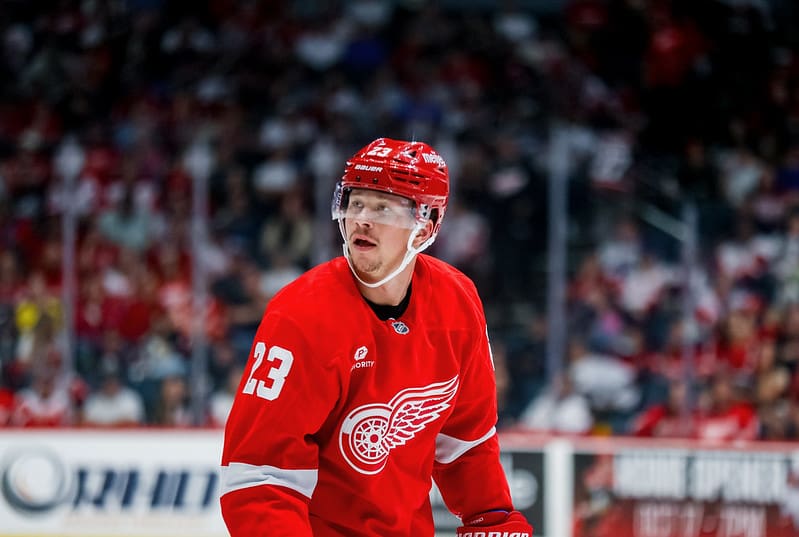
After opening the New Year with two losses to the Pittsburgh Penguins, the Detroit Red Wings decided that their offense was in need of a new look. They sent down rookie Nate Danielson and brought back John Leonard to rejoin the main club after only a week in Grand Rapids (then back down again). Most surprisingly, to some, Marco Kasper has found himself back on Detroit’s top line with Dylan Larkin.
Kasper ended last season playing with Larkin and Lucas Raymond on the Red Wings first line, with 17 goals and 12 assists to total 29 points in the second half of last season. Those 17 goals led all rookies last year in scoring after the New Year.
Fast forward to this season, and Kasper’s been looking like he’s seeing ghosts.
Initially centering the second line with Patrick Kane and Alex DeBrincat, with Emmitt Finnie taking his spot on the top line. So far this season, Kasper has three goals, all of which came before the end of October, and three assists.
Snakes and Ladders
Why then, did he seemingly take Raymond’s spot on the top line? Raymond has taken the team lead in points with 46, though only 12 of those are goals. He’s now on Detroit’s third line with J.T. Compher and James van Riemsdyk.
When watching the Red Wings play so far this January, the answer seems to lie in Head Coach Todd McLellan’s desire to get some of the Red Wings forwards up to speed, and playing at a higher level. In Kane’s 500th goal game with the Red Wings playing against the Canucks, Kasper struggled early in the game to make an impact on play like he has in many games this year.
Late in the first period Kasper fielded a pass near the Canucks bench with the opportunity to pass up to an open man, but he danced with his feet and ended up allowing a turnover. In an earlier sequence in the Red Wings defensive zone, Kasper started climbing uphill after seeing Finnie get the puck behind John Gibson. Except, the pass ran along the boards to where he had been, not where he was going. Another turnover.
In the third period Raymond did a lot of the dirty work on Compher’s goal, even though he wouldn’t end up being credited with an assist on the play. There’s not a way to really measure it other than the eye test, but Compher and JVR both look like they’re playing faster with the wily young winger. Placing Raymond on the third line has allowed the team to dictate the pace of play across more shifts on ice.
Why then, is Kasper on the top line now, and not a more proven scorer?
Hit Me
Well, Kasper establishes a presence on the ice. By giving Kasper more top line minutes, McLellan is giving Kasper the opportunity to make an impact by acting as the setup man in Raymond’s place, while giving the top line a potentially more secure defensive look. After all, Kasper is second on the team in hits.
Late in the second period Finnie lost control of the puck on a breakaway chance in the Canucks zone and Kasper headed off the Canucks defenseman chasing after, bullying him past the net and into the boards while Detroit’s other forwards caught up on the line change.
Moments later, with the puck still behind Vancouver’s net, JVR floated a backhand pass to Compher who ripped it into the net to get the Red Wings up 3-1. Kasper wasn’t on ice, but the play he made before he left allowed the Red Wings to regain a 2 goal lead.
Last year Kasper’s move to the top line playing with Larkin and Raymond led to 29 points in the second half of last season. That doesn’t look likely to happen this year. But he’s already got one assist in January. It’s time to get more.
For the young Austrian centerman, the game has slowed down in his second year in Detroit, and he’s seemingly redefining “sophomore slump” for Red Wings fans. Kasper, for all his tools and ability, needs to stop looking at and expecting the play to happen, and start making the aggressive choices to make them happen.