
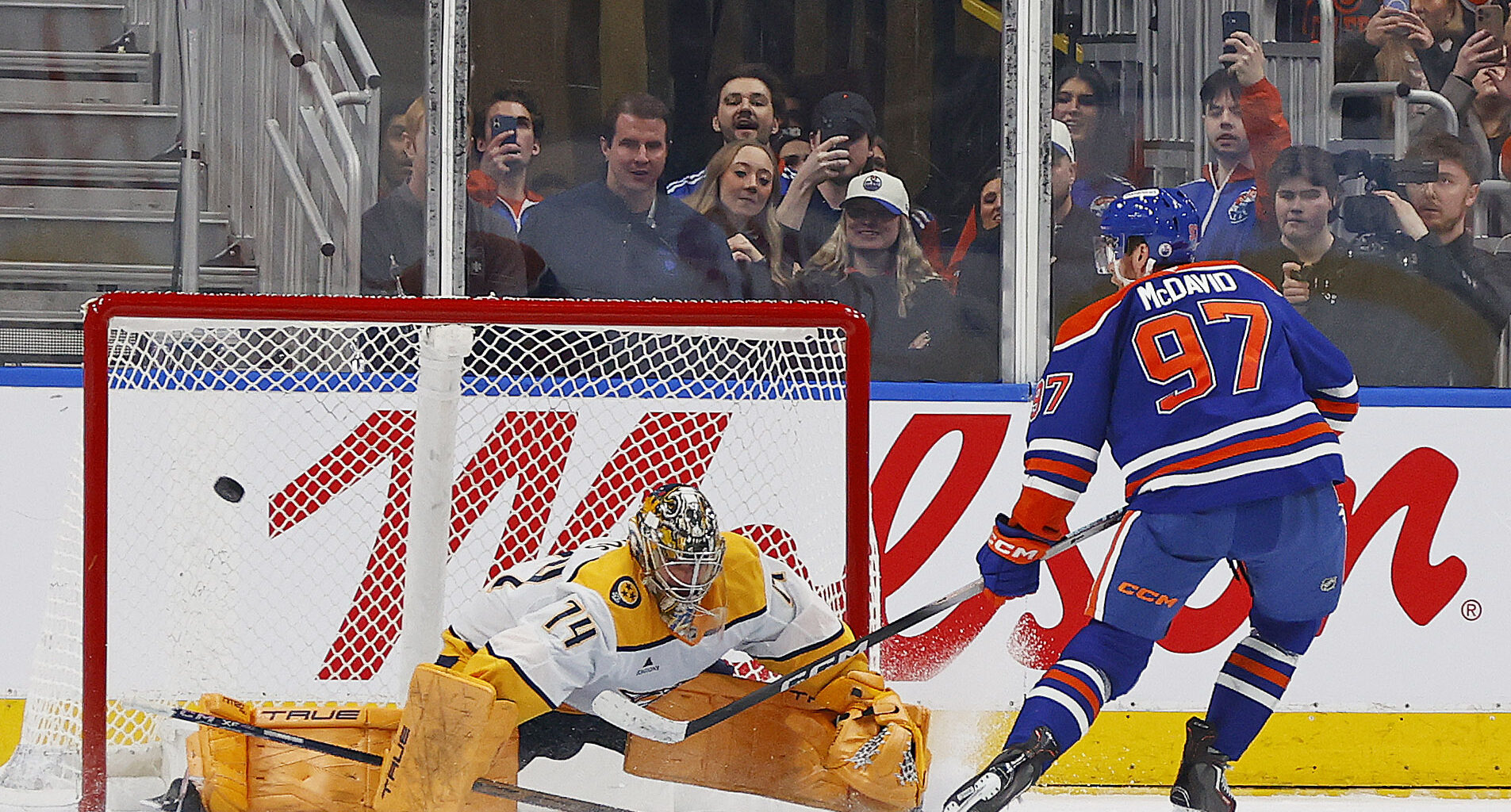
The Connor McDavid era of the Edmonton Oilers seems to be chasing the ghosts of the past Oilers dynasty. They’ve come close to finishing first in the NHL’s Pacific Division the past few seasons, and have made the Stanley Cup Final in 2024 and 2025, but will 2026 finally be their breakthrough?
It’s hard to say because this is a team that continues to evolve. Halfway through the 2025-26 NHL season, the Oilers find themselves in a familiar but frustrating paradox. Despite flashes of dominance and a roster boasting the league’s most elite talent, they are locked in a Pacific Division dogfight that they should, by all accounts, be leading comfortably.
Remarkably, the Oilers have not won three consecutive games all season. Yet, they sit tied for first place with the Vegas Golden Knights. This statistical anomaly says as much about the parity of the Pacific as it does about Edmonton’s missed opportunity to put the division in a stranglehold.
For a franchise with Stanley Cup aspirations, “treading water” at the top isn’t enough. The Oilers haven’t hung a division title banner since the 1986-87 season—the height of the 80s dynasty. With the Olympic break looming, the urgency to establish themselves as the clear frontrunner is very high.
A Wide-Open Pacific Is Edmonton’s to Lose
The Pacific Division is competitive, but it lacks a “final boss” outside of Northern Alberta. Vegas remains a perennial threat, and the Los Angeles Kings remain a strong contender. Even the Seattle Kraken, San Jose Sharks, led by phenom Macklin Celebrini, and the Anaheim Ducks are all within striking distance of first; however, none of these teams has truly pulled away.
This is the vacuum where a true contender asserts its dominance. Edmonton’s inability to stack wins—failing to string together three straight victories over 40-plus games—is a massive red flag. Elite teams find ways to “ugly win” their way through Tuesday nights in January. If the Oilers want to avoid a gruelling first-round matchup against a wildcard giant, they must turn these divisional four-pointers into statements of intent.
McDavid and the Core Are Doing Their Part
The primary reason Edmonton is even in the hunt is the play of Connor McDavid. The captain is having a Hart Trophy-calibre season. He’s playing a more “mature” brand of hockey—explosive as ever, but increasingly relentless in the defensive zone. Some nights, it seems McDavid is dragging this team into the win column through sheer force of will.
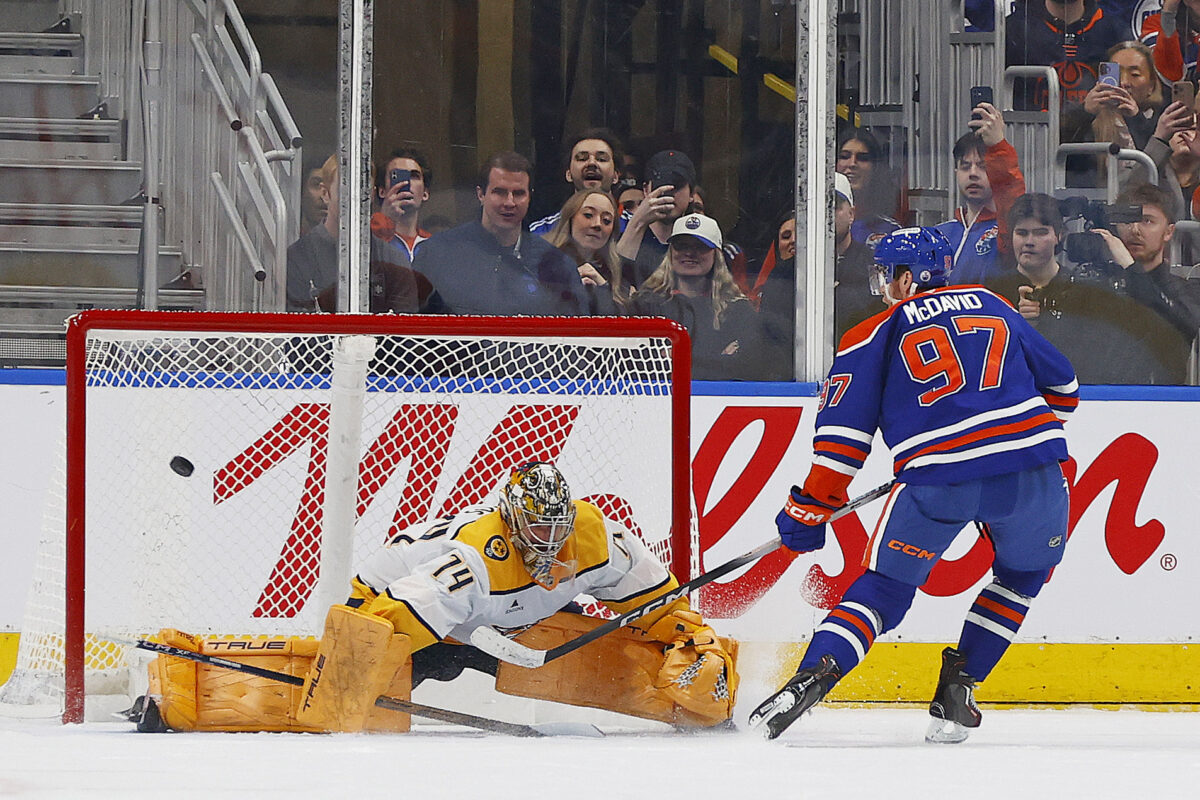 Edmonton Oilers forward Connor McDavid scores on a penalty shot against Nashville Predators goaltender Juuse Saros (Perry Nelson-Imagn Images)
Complementing him is Leon Draisaitl, who continues to punish opponents for over-committing to McDavid. Meanwhile, Zach Hyman remains the league’s premier “net-front nuisance,” and Evan Bouchard has evolved into a legitimate Norris Trophy-calibre weapon on the back end. His “Bouch-bomb” from the point remains the engine of the NHL’s most feared power play. You also can’t forget about the resurgent play of long-time Oilers forward Ryan Nugent-Hopkins. He is currently averaging a point per game and is showing no signs of slowing down.
The “Million Dollar” Bottom Six
Where the Oilers will truly find separation is through their depth. Championship rosters aren’t built on stars alone; they are built on third lines that tilt the ice.
There is cause for optimism here. The trio of Ike Howard, Jack Roslovic, and Matt Savoie has flashed legitimate chemistry. Their combination of Howard’s youth, Roslovic’s veteran speed, and Savoie’s playmaking provides a look that opponents haven’t had to scout in Edmonton for years.
If Oilers head coach Kris Knoblauch can resist the urge to blend these lines, this unit could be the X-factor that provides the scoring cushion the Oilers desperately need during McDavid’s rare “off” nights. Knoblauch also needs to find the right combination of talent for the fourth line. This seems to be a bone of contention for the club, as the different combinations of lines they’ve put together have not produced the results the team has needed.
The Three-Headed Monster in Net
The goaltending situation remains a big “if” in Northern Alberta. The impending return of Tristan Jarry from injury creates a fascinating, albeit crowded, crease.
Tristan Jarry: The presumed No. 1 who provides the veteran stability Edmonton paid for.
Calvin Pickard: The ultimate pro who has earned the locker room’s trust with his “calm under fire” play style.
Connor Ingram: A high-upside option who has shown he can be strong when the defense breaks down.
The Oilers will eventually have to pick a lane. Carrying three goalies is a short-term fix, but as the trade deadline approaches, general manager Stan Bowman may need to use one of these assets to bolster the blue line and add to his bottom-six forward combinations.
Related: Calvin Pickard Continues to Prove His Value to the Edmonton Oilers
Perhaps, Bowman can package Andrew Mangiapane together with a goaltender to improve the team before the March 6 NHL Trade Deadline. Regardless of the personnel, the Oilers need a save percentage above .915 to truly separate from Vegas and the rest of the pack in the Pacific.
The Verdict: Now or Never
The Oilers don’t need to reinvent the wheel. They need to refine, commit, and finish. With McDavid playing at an MVP level, Draisaitl and Hyman delivering nightly, and secondary pieces beginning to emerge, the foundation is already in place.
What’s missing is separation—three-game winning streaks, dominant division performances, and the ability to put distance between themselves and the rest of the Pacific. If Edmonton can find that consistency before the Olympic break, they won’t just be tied for first place. They’ll be setting the tone for the rest of the NHL.
For a team tired of chasing its past, this season represents a chance to finally define its present.
