
The Blackhawks took plenty of heat for their atrocious performances in the second halves of back-to-back sets earlier this season.
They deserve credit for recently figuring out a better approach to those types of games and turning their results around.
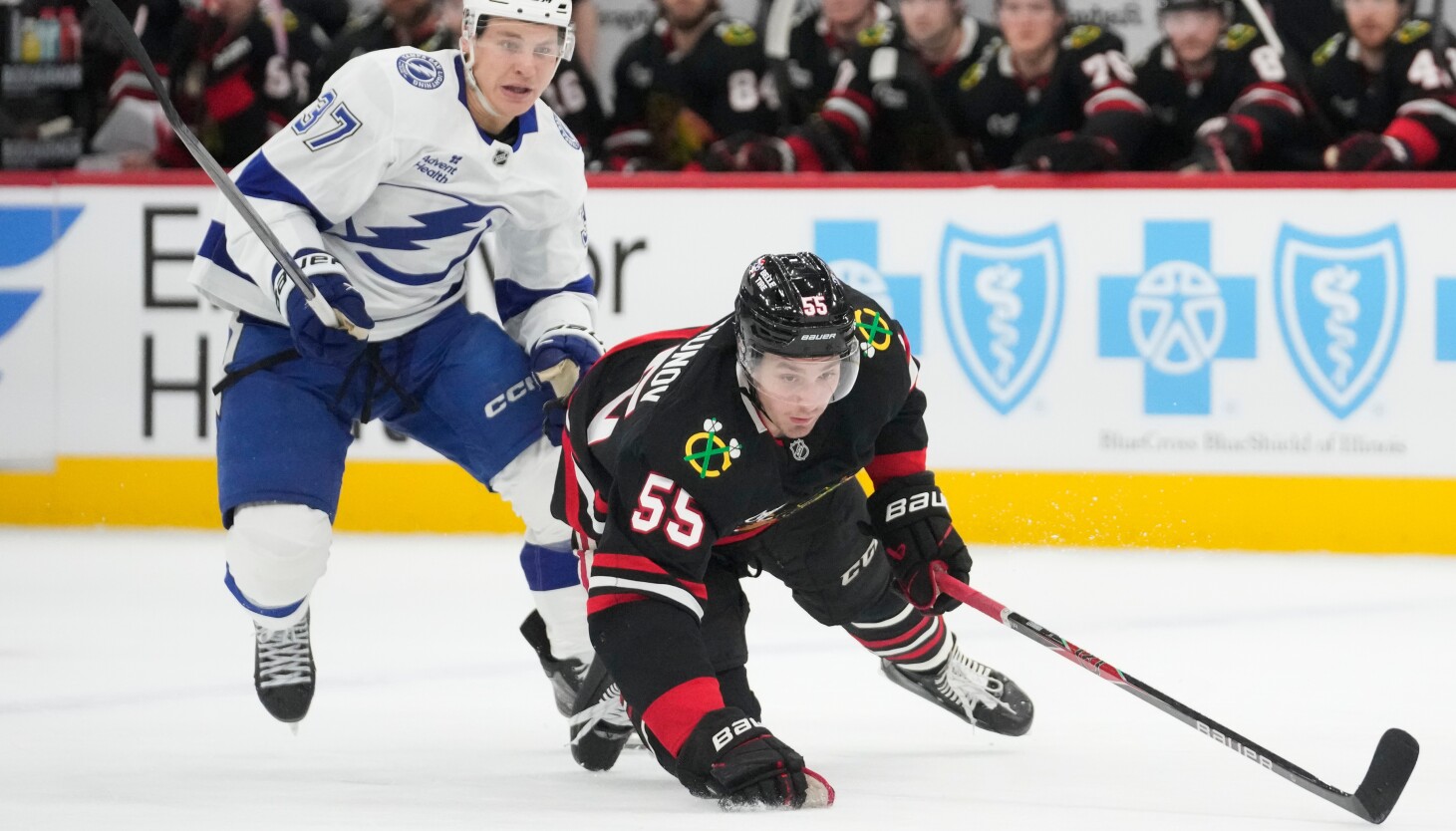
They’ve gone 2-0-1 in the second halves of their last three back-to-backs, including a 3-2 overtime win Jan. 4 against the Golden Knights, a 3-0 win Jan. 10 against the Predators and a 2-1 shootout loss Friday against the Lightning.
Before this month, the scores in those situations looked dramatically different: a 9-3 loss to the Sabres, a 7-1 loss to the Ducks, a 4-0 loss to the Red Wings and a 7-3 loss to the Penguins.
Coach Jeff Blashill brought this up Sunday as an encouraging example of his team’s maturation.
“I went through this with our guys today…and went through the chances for and against,” Blashill said. “There was a huge difference in the Buffalo game. We got out-chanced heavy, heavy, heavy. Huge difference, especially in Grade A [chances], in the Anaheim game. Heavy, heavy difference. Since then, it’s been even to minor differences, including last game. We got leaned on [by the Lightning], but we didn’t give up lots of Grade As.
“Certainly we don’t want to spend that much time in our end, but there was a maturity in the sense that we didn’t compound mistakes with another mistake. There weren’t that many big-time Grade As against, and that’s a huge improvement from earlier in the year.”
At the end of their two-game road trip this week (the team’s “mom’s trip”), they’ll encounter another back-to-back situation with travel: Thursday at the Penguins and Friday against the Blue Jackets. After the Olympic break, there are four back-to-back sets left on the schedule.
Shootout surge
The Hawks’ shootouts against the Hurricanes and Lightning marked their sixth and seventh shootouts of the season. They’ve gone 3-4 in them.
This is already the Hawks’ most shootout-heavy season since 2021-22. In fact, around the NHL, the most controversial way of ending games is clearly on the rise again.
Entering Sunday, 77 games had gone to shootout, already tying the number from all of last season. That equates to 9.4% of games going to shootout, up from an all-time low of 5.9% last season. And 36.3% of overtime games are going to shootout, up from 28.4% last season.
Why is this happening? Teams have learned to play more conservatively than they used to during three-on-three overtime, valuing possession above all else.
That leads to long stretches of circling around the ice to wear out opponents instead of actively attacking the net, which obviously burns clock. The number of shot attempts per minute during three-on-three play is at its lowest point in the past decade, per TSN.
There’s a push for the league to consider rule changes to inject more excitement back into overtimes. One popular idea: a basketball-style “over-and-back” rule preventing teams from exiting the offensive zone once they’ve entered it.
Notes
Teuvo Teravainen (upper-body injury) skated in a non-contact jersey Sunday and is expected to practice with the team Monday.
Checking in on Lukas Reichel in British Columbia: He has just six points (and a minus-six rating) in 15 AHL games for Abbotsford, the Canucks’ affiliate, since getting sent down in mid-December.