
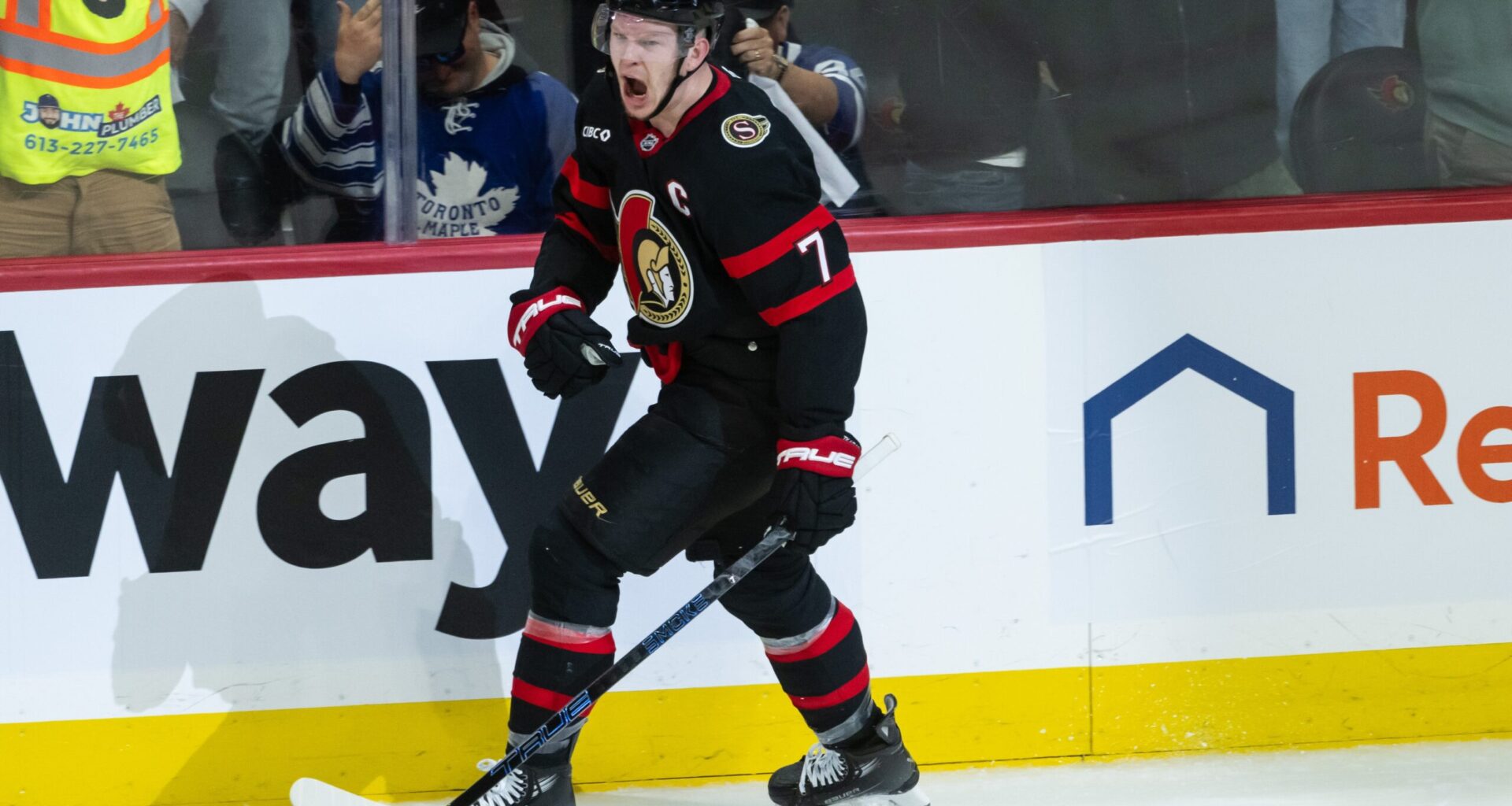
If you watched the Ottawa Senators dismantle the Vegas Golden Knights 7-1 recently, you saw the blueprint. You saw the speed, the physicality, and the high-end skill that general manager Steve Staios envisions for this group. But if you look at the standings this morning, you see the other side of the coin: a 24-21-7 record and a team stuck in the NHL’s most dangerous territory — the mushy middle.
We are approaching a critical juncture for the organization. While the front office’s preference is to “stick to the plan” — which involves adding a top-four defenseman or a top-six forward to bolster a playoff push — the underlying numbers are screaming caution. MoneyPuck’s latest models give Ottawa just a 21.3% chance of qualifying for the postseason.
This creates a tension that will define the next six weeks. Staios wants to buy. The room believes they can buy. But unless they go on an immediate, sustained run, the math may force them into the one thing they desperately wanted to avoid: a pivot to asset management.
The “Forced Seller” Reality
The term circulating around the league right now regarding Ottawa is “forced seller.” It’s a limbo state where the GM’s hand is forced not by philosophy, but by probability.
Related – Senators Week Ahead: Schedule & Storylines – Wild Card Pressure, Ullmark’s Return, Injuries and More
The dilemma is straightforward. If the Senators hit a rough patch between now and March 6, the gap to the wild card will widen to a point where holding on to depreciating assets becomes negligent. The organization is currently towing an invisible line; they are unwilling to sacrifice roster players for draft picks yet, but they are pragmatic enough to know that standing pat with a sub-25% playoff probability is poor management.
The Rental Market: Veterans on the Block
If the pivot happens, the first dominoes to fall will be the pending unrestricted free agents (UFAs). These are the “easy” moves — pure rentals for contenders.
The biggest name, without question, is Claude Giroux. At 38, he remains a productive, high-IQ player, and his $2 million cap hit is tailor-made for a contender’s books. However, this isn’t a standard trade chip situation. Giroux holds a full no-movement clause (NMC). He controls the entire process. If he decides he wants one last crack at a Stanley Cup, he immediately becomes one of the market’s top targets. If he prefers to stay home, he stays.
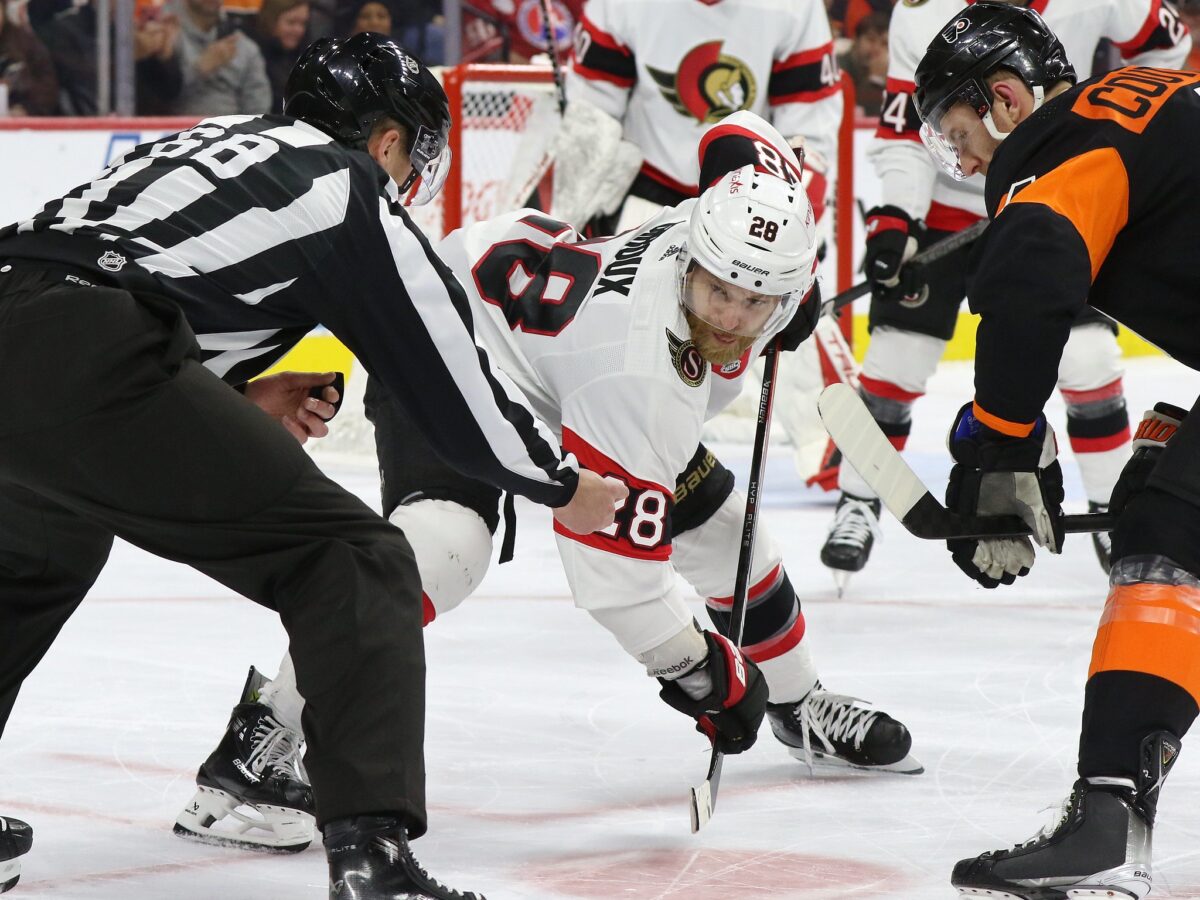 Claude Giroux of the Ottawa Senators digs in for a face-off (Amy Irvin / The Hockey Writers)
Beyond Giroux, the Senators have a suite of depth veterans who could return mid-round picks. Lars Eller, David Perron, and Nick Cousins all fit the mold of bottom-six insurance that playoff teams covet. On the back end, Nick Jensen offers the kind of right-shot stability that always fetches a return at the deadline.
The “Hockey Trade” Market: Core Shake-Ups
The more intriguing conversations — and the ones that would signal a true shift in strategy — involve players with term remaining. These aren’t just rentals; these are “hockey trades” designed to reconfigure the roster’s DNA.
Artem Zub is the name generating the most legitimate chatter. The right-shot defenseman has one year left at $4.6 million, and crucially, he lacks trade protection. In a market always starved for top-four right-handed defencemen, Zub is a liquid asset. If Staios decides the current defensive mix isn’t working, Zub is the easiest lever to pull to bring back significant value.
Then there is Drake Batherson. The Edmonton Oilers have reportedly kicked tires here, drawn to his consistent 25-goal potential and his team-friendly $4.975 million contract. However, don’t expect a move just for the sake of it. Staios will not be inclined to move a cost-controlled top-six producer unless the return is substantial — think a first-round pick and a high-end prospect.
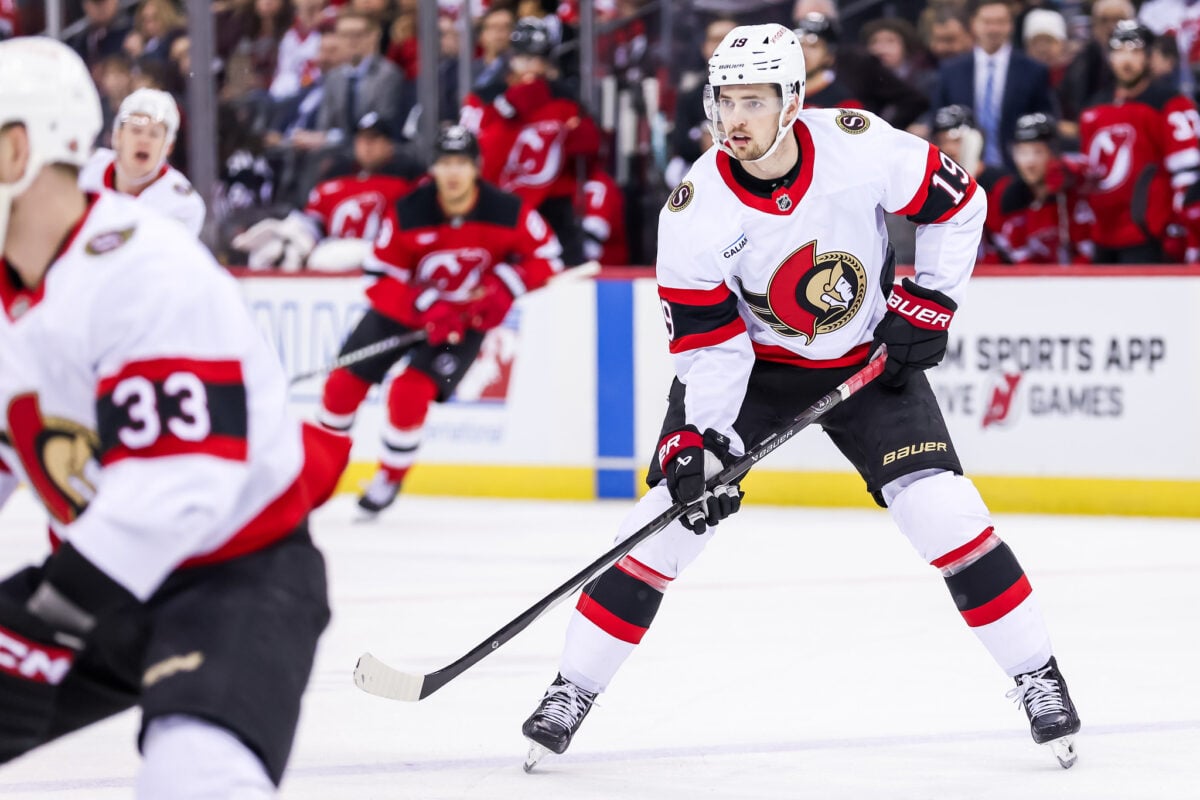 Drake Batherson, Ottawa Senators (Jess Starr/The Hockey Writers)
Another name to watch is Fabian Zetterlund. A physical middle-six forward with term and a reasonable cap hit, he represents the type of player contenders want not just for a spring run, but for the next few seasons. If Ottawa decides to re-tool the supporting cast around the core, Zetterlund could be moved for assets that align better with the team’s long-term vision.
The Long Game: The Captain’s Patience
Looming over all of this is the “Superstar Factor.” While no one expects Brady Tkachuk to be moved at this deadline, the context of his contract (running through 2027-28) is becoming a talking point.
Related – Senators’ Penalty Kill Shakeup Signals a Defining Moment for Their Season
Analysts are noting the trend line. We are now eight seasons into Tkachuk’s career without consistent team success. While he is the heartbeat of the franchise, the reality of the modern NHL is that prolonged mediocrity eventually leads to friction. If the Senators miss the postseason again, the clock starts ticking a little louder. The fear isn’t an immediate trade request, but the gradual erosion of buy-in that occurs when a prime player spends his best years chasing a playoff spot rather than a Cup.
Summary of Strategy
For now, the Senators are in a holding pattern. They are trying to win their way out of the decision. But the March 6 deadline does not care about intentions — it cares about leverage. If the standings don’t improve rapidly, the market for Ottawa’s veterans and cost-controlled assets like Zub and Batherson will heat up, and Staios will be forced to prioritize the future over the present, yet again.
AI tools were used to support the creation or distribution of this content, however, it has been carefully edited and fact-checked by a member of The Hockey Writers editorial team. For more information on our use of AI, please visit our Editorial Standards page.
