
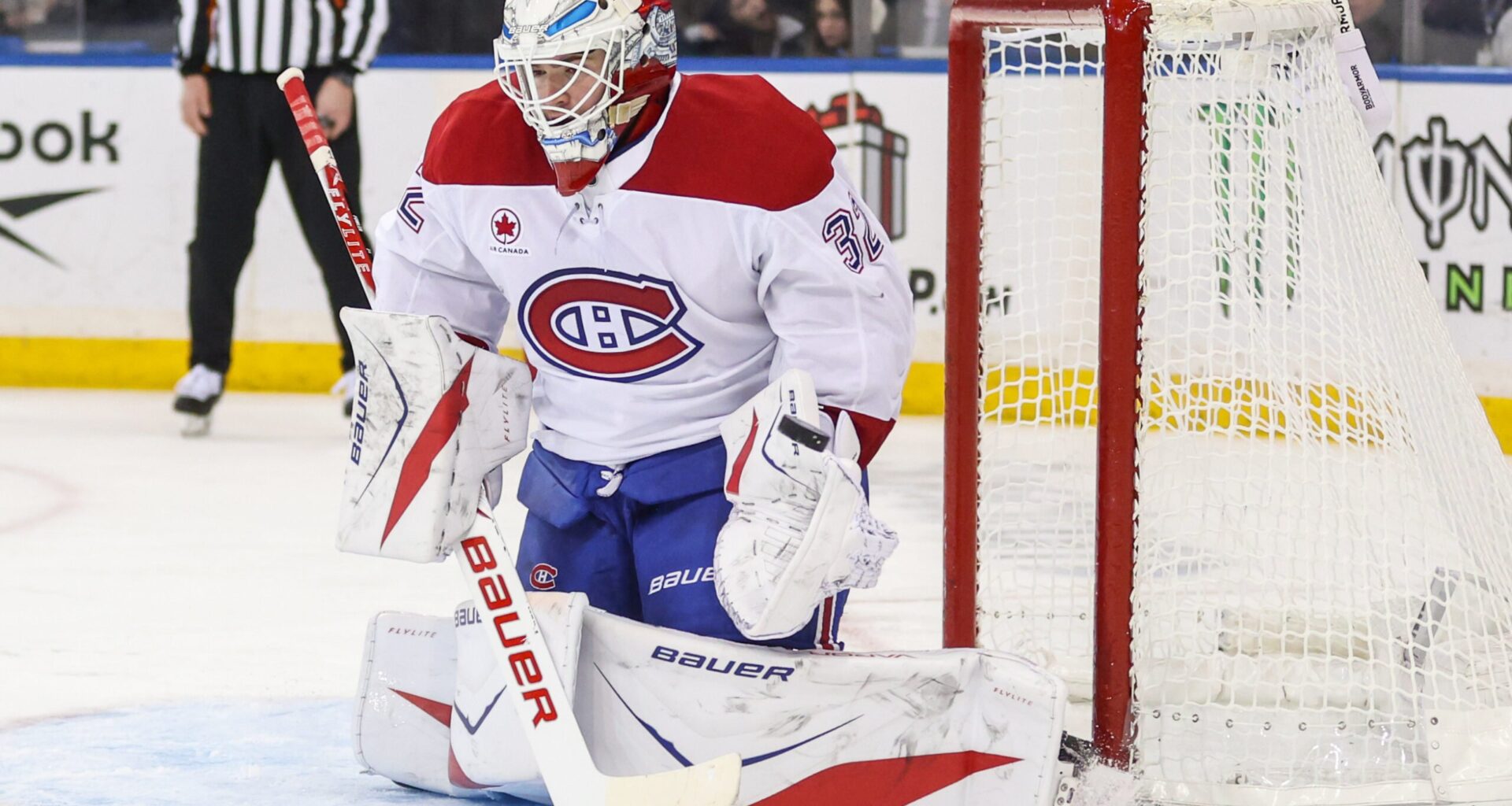
As the Montreal Canadiens are soon heading into the Olympic break, one intriguing option quietly sits on the table: bringing Jacob Fowler back to Montreal to finish the season following the break. It’s not a flashy move, and it’s not about chasing headlines. Instead, it’s about development, structure, and making sure the organization maximizes the value of its most important long-term asset in net.
Fowler’s Season
By almost every measurable standard, Fowler has been the most effective goaltender the Canadiens have iced this season. In 10 appearances in Montreal, the 21-year-old owns a 4-4-2 record with a 2.62 goals-against average (GAA) and a .902 save percentage (SV%). While those raw numbers may not jump off the page, context matters. Among Montreal’s three goalies, Fowler leads the group in both goals-against average and save percentage, despite playing behind a young, inconsistent defensive structure.
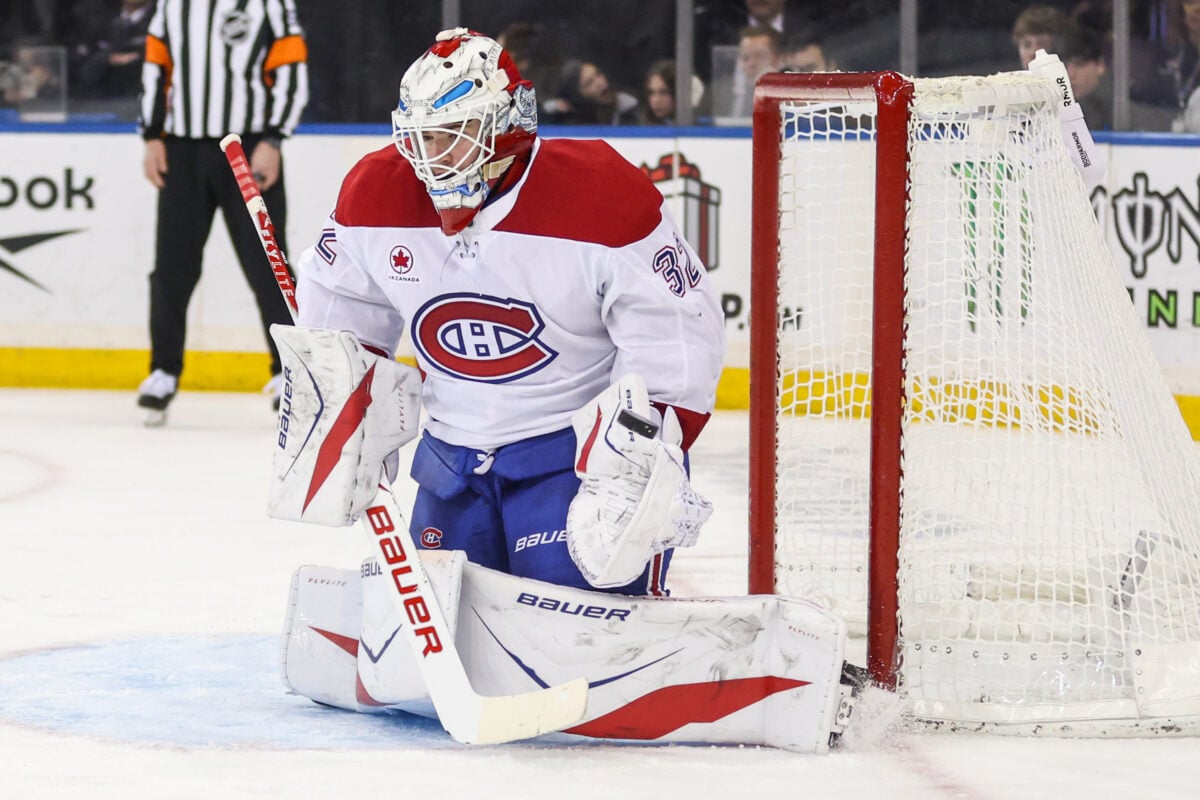 Jacob Fowler, Montreal Canadiens (Wendell Cruz-Imagn Images)
What stands out most isn’t just the statistics, but how Fowler gets there. His game is calm, controlled, and technically sound. He rarely looks rattled, manages rebounds well, and doesn’t rely on desperation saves to stay competitive. For a rookie goaltender adjusting to the NHL pace, that level of composure is significant.
His time with the Laval Rocket only reinforces that evaluation. With the Rocket, Fowler has posted a 12-7-0 record, a 2.35 GAA, and a .912 SV%. Those are excellent numbers for a first-year pro, especially considering the workload and the grind of the American Hockey League (AHL) schedule. Fowler has shown he can handle volume, back-to-backs, and the mental side of being “the guy” for stretches.
At this point, there’s little left for him to prove statistically at the AHL level. The question becomes less about performance and more about development environment.
The Marciano Factor
One of the most overlooked storylines in Montreal right now is behind the bench. With Eric Raymond no longer serving as goaltending coach and Marco Marciano making the jump from Laval to Montreal on an interim basis to finish the season, the development structure has shifted.
Marciano has been directly involved in Fowler’s growth this season. He knows his tendencies, his technical checkpoints, and the areas where refinement is still needed. That continuity matters, especially for a young goaltender at a critical stage of development.
Related: The Canadiens Need to Pursue Jesper Wallstedt
Meanwhile, Laval now faces uncertainty in that department. With Marciano in Montreal, the Rocket’s goaltending development setup is in transition. While Laval remains a strong environment, the question becomes whether Fowler is better served staying there without his primary development voice or continuing his progression alongside Marciano at the NHL level.
That’s where the idea of bringing Fowler back after the Olympic break gains traction. It’s not about thrusting him into a full-time starter role. It’s about aligning coaching, communication, and daily habits at the highest level.
It’s About Development
The Canadiens are not asking Fowler to save their season. This isn’t a playoff push riding on a rookie goalie’s shoulders. Instead, this is about controlled exposure, learning moments, and building a foundation that will matter far more in two or three years than it does in May.
By bringing Fowler back, Montreal can manage his starts, keep his workload reasonable, and expose him to NHL shooters, NHL systems, and NHL pressure in a structured way. Practices, video sessions, and day-to-day habits matter just as much as game action, and those are areas where Marciano’s presence could be invaluable.
There’s also a mental component. Fowler has already shown he belongs. Letting him finish the season in Montreal reinforces confidence without rushing expectations. From an organizational standpoint, this move also provides clarity. Montreal continues to evaluate its goaltending depth, while ensuring Fowler’s development remains the priority, not short-term results or depth-chart politics.
In the end, bringing Fowler back after the Olympic break isn’t about making a statement. It’s about making the right developmental decision. With strong numbers at both levels, a trusted goalie coach now in Montreal, and no reason to rush or stall his progress, the path forward seems increasingly logical.
