
Tuesday night felt like one of those midseason checkpoints where Canadian teams weren’t so much chasing identity as revealing it. The games themselves were close enough to create drama, but the outcomes hinged on which teams handled pressure moments with discipline rather than emotion.
Two Canadian clubs found themselves on opposite ends of that equation. Ottawa showed flashes of pushback but ultimately paid for one mistake too many. Toronto, meanwhile, looked like a group beginning to understand how narrow the margin is between climbing back into contention and sliding out of it.
If there was a shared theme across the night, it was this: structure under stress. The teams that managed chaos, particularly on special teams and late-game decisions, dictated results more than raw talent or shot totals. At this point in the season, that distinction is rarely accidental.
Carolina Hurricanes 4, Ottawa Senators 3
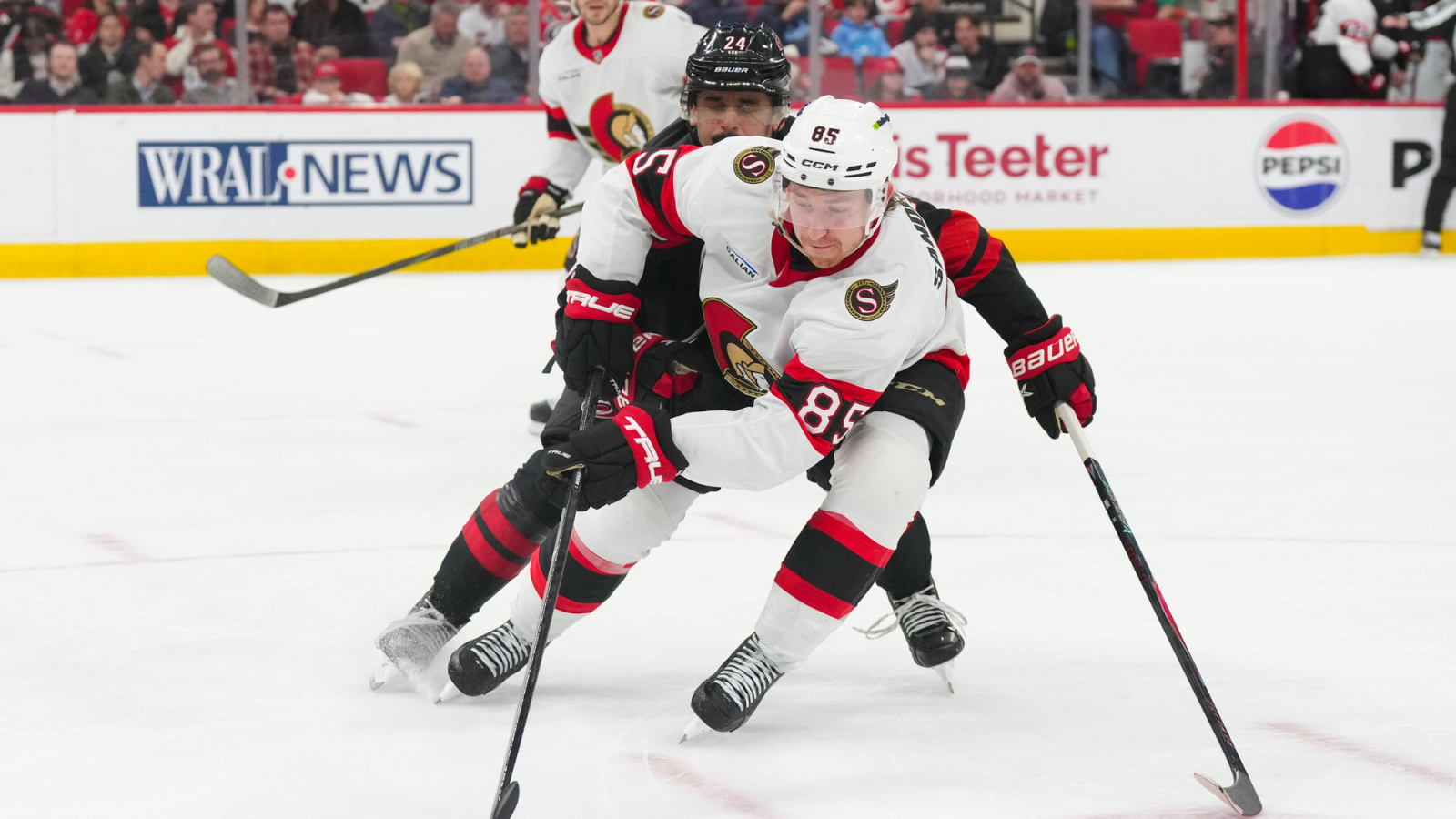
For the Ottawa Senators, this loss carried more weight than the scoreline suggests. Falling 4-3 to Carolina wasn’t about effort or competitiveness — Ottawa matched both — but it reinforced how fragile games become when puck management slips at the wrong moment.
Jordan Staal was the decisive player. His third-period goal, created directly from a neutral-zone turnover, illustrated the Hurricanes’ veteran awareness. When Nikolaj Ehlers turned the puck up ice, Staal didn’t hesitate. The shot itself was clean and clinical, but the real damage was psychological. Ottawa had just clawed back into the game on special teams, only to hand momentum away through one misread transition.
The Senators’ defining moment actually came earlier, when Tim Stutzle and Jake Sanderson helped erase Carolina’s 3-1 lead with power-play execution and controlled offensive pressure. Ottawa’s ability to achieve those goals spoke to the development of offensive confidence, particularly among younger players willing to take responsibility in key situations.
However, Ottawa’s inability to protect the middle of the ice late proved costly. Linus Ullmark was not overwhelmed, nor was Ottawa territorially dominated. Instead, Carolina capitalized on efficiency. Brandon Bussi’s late diving save against Sanderson during a 6-on-5 sequence symbolized the difference between teams comfortable defending leads and teams still learning how to finish games.
Ottawa continues to show growth, but this result suggests the Senators remain in the phase where lessons are learned through losses rather than banked through consistency.
Toronto Maple Leafs 5, Edmonton Oilers 2
For the Toronto Maple Leafs, this victory meant something tangible: stability. A 5-2 win over Edmonton pushed Toronto into the Olympic break riding a three-game winning streak and, perhaps more importantly, demonstrating controlled, situational hockey that had been missing during their recent slump.
Matias Maccelli was the game’s defining presence. His two goals — particularly the power-play strike early in the third period — flipped the game’s trajectory. That goal arrived immediately after Edmonton tied the game, turning what could have been a momentum swing into a decisive Toronto advantage.
The actual turning point, however, was Edmonton’s collapse in discipline. Consecutive penalties to Matthew Savoie and Mattias Janmark created the two-man advantage Toronto exploited with surgical efficiency. John Tavares also converted another power-play opportunity, and suddenly, Toronto controlled both the scoreboard and the tempo.
Anthony Stolarz deserves recognition as the stabilizing backbone of the win. His diving save on Leon Draisaitl late in regulation prevented Edmonton from cutting the lead and preserved Toronto’s composure. It wasn’t spectacular goaltending for highlight reels — it was timely, which matters more.
Toronto’s offensive depth also contributed. Matthew Knies provided secondary scoring support, while Bobby McMann’s empty-net goal reinforced Toronto’s willingness to finish games aggressively rather than defensively.
The Maple Leafs are not fully clear of their inconsistency concern. Still, their recent structure — especially on special teams — suggests the club is rediscovering its sense of order during a crucial stretch of the schedule.
Closing Thoughts for the Senators and Maple Leafs
Tuesday’s results offered a reminder that the NHL season often turns not on dominance but on discipline. Ottawa continues to look like a team building toward reliability, but not yet living up to it. Toronto looks like a team rediscovering itself at precisely the right moment.
As the Olympic break approaches, momentum becomes as much psychological as statistical. Toronto enters the pause with direction and reinforcement. Ottawa enters with proof it can compete — and a reminder that competing and closing remain very different skills.