
By Ryan Sederquist, Vail Daily
Avalanche danger is declining across Colorado amid a dry spell and a season with a record-low snowpack, but recent avalanche accidents highlight the need for continued caution in the backcountry.
Colorado Avalanche Information Center Director Ethan Greene said that with low to moderate avalanche danger across the state, backcountry skiers and snowboarders are still getting out despite the lack of snow.
“It does seem like some people are getting out there to make the most of what’s available, which is great to see,” Greene said. “From an avalanche perspective, it’s not that common for us to see large swathes of the mountain at low danger in February. A lot of that is just driven by the lack of snow.”
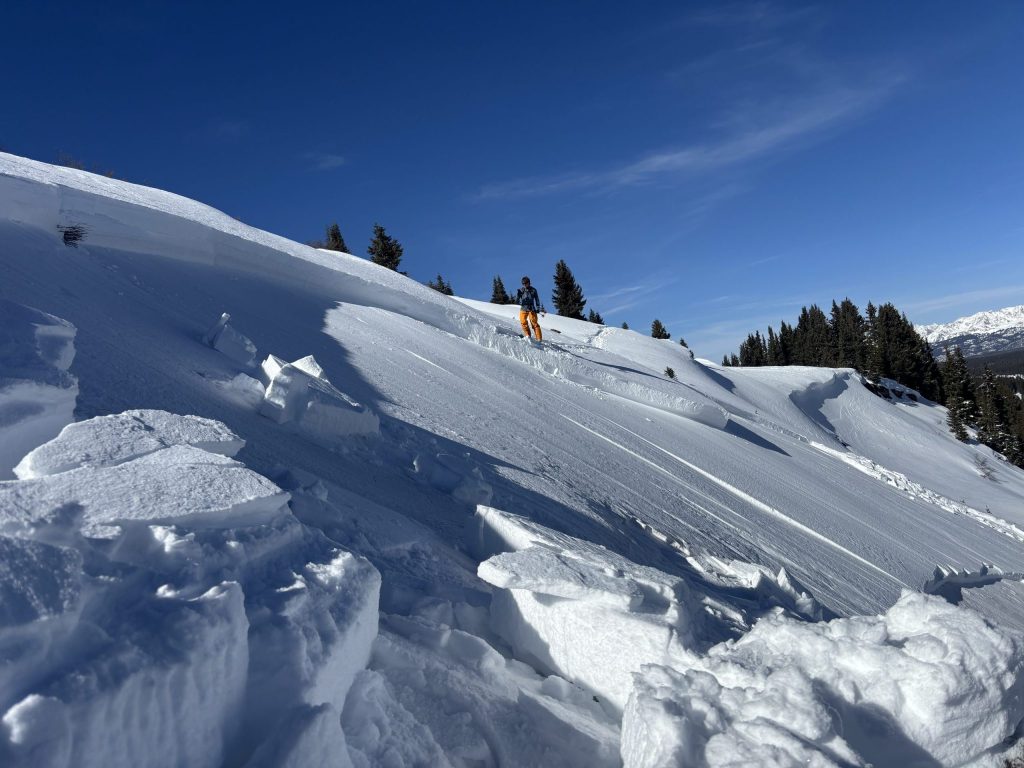
While there have been no avalanche deaths recorded in Colorado so far this season, there have been serious accidents and several close calls. On Thursday, Jan. 29, a backcountry skier sustained a “pretty serious injury” after being caught in an avalanche in the Montezuma area near Keystone, Greene said. Another skier was able to extricate themselves from the snow, uninjured, after triggering an avalanche big enough to bury, injure or kill someone near Vail Pass on Sunday, Feb. 1, according to a field report filed with the avalanche center.
Across much of Colorado’s northern and central mountains, there is a persistent slab avalanche problem, especially on steep, wind-drifted slopes, Greene said. Persistent slab problems, which occur when a weak layer is buried in the snowpack beneath a cohesive slab of snow, are difficult to predict, making them especially dangerous, according to the avalanche center.
Read the full story on vaildaily.com.