
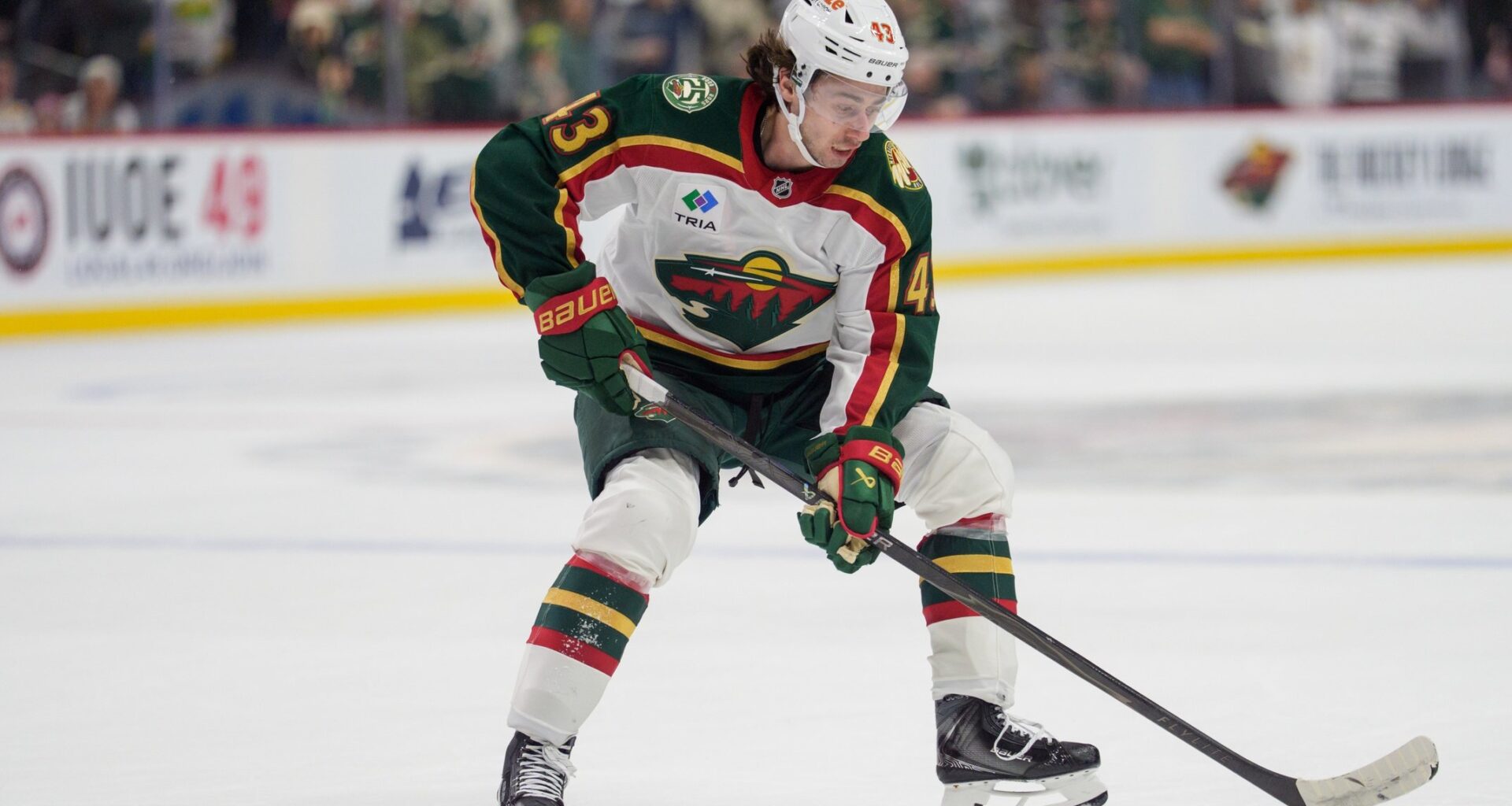
Quinn Hughes’ elite puck handling has transformed the Wild’s blue line from solid to downright terrifying, and his recent eight-game point streak is the clearest proof yet that Minnesota landed a true game-breaker on defense.
When the Wild pried Hughes out of Vancouver in a blockbuster deal on December 12, 2025, it signaled an organizational shift from cautiously competitive to fully all-in. Minnesota surrendered a haul of young talent and a first-round pick because you simply do not often get a chance to add one of the NHL’s premier offensive defensemen in his prime.
Hughes arrived with a Norris-caliber resume, already known league-wide for his skating, deception, and ability to dictate play from the back end. The bet was straightforward: give this roster an elite puck mover, and the entire five-man unit becomes harder to defend and easier to deploy in every situation.
What separates Hughes from most defensemen is how early his puck-handling kills take over a play, often before the opposition even realizes the breakout has started. He uses tight edgework and quick hands to shake off the first forechecker high in the defensive zone, turning what looks like a 50-50 retrieval into a clean possession exit.
One deceptive shoulder fake, a quick handle to his backhand, and he’s walking a forechecker up the boards before threading a middle-lane pass that springs the Wild into transition. For a team that has sometimes struggled to move the puck efficiently out of its own end, Hughes’ ability to escape pressure on his own stick has been a cheat code. Instead of chipping pucks out or rim-and-hope clears, Minnesota is suddenly stringing together controlled exits, leading directly to more zone time for the top forwards.
Once Hughes crosses the red line with possession, he essentially becomes a fourth forward, and that’s where his hands really start to bend defensive structures. He’ll drag defenders wide, pull the puck through his feet, then cut back into space, forcing coverage to collapse and opening seams for shooters like Kirill Kaprizov and Matt Boldy.
His ability to walk the blue line, puck on a string, head-up turns routine point touches into high-danger looks. He can change the shooting angle with a quick handle and fire, or slide a backdoor pass at the last second.
On the power play, Hughes calmness with the puck has stabilized Minnesota’s top unit. He can recover errant passes, handle pressure at the line, and still deliver a tape-to-tape feed without ever looking rushed. That poise has helped the Wild generate more sustained pressure and second-chance opportunities, which is exactly what you want when your blue line is stacked with offensive threats like Hughes and Brock Faber.
All of those skills showed up on the scoresheet during his recent eight-game point streak, where Hughes piled up 13 points (two goals, 11 assists) and rewrote the Wild record book for defensemen. By extending his run to eight straight games with at least a point, he set the franchise mark for the longest point and assist streak by a Minnesota defenseman, passing Matt Dumba, Jared Spurgeon, and Ryan Suter.
The streak included a standout performance in a 7-3 victory over the Edmonton Oilers, where Hughes scored once and added an assist while driving the pace from the back end all night. His production hasn’t been empty, either. The Wild have banked wins and climbed the Western Conference standings during this stretch, underscoring how tightly his offense is tied to the team’s success.
What makes Hughes so valuable to Minnesota isn’t just the points. It’s the way his puck handling has reshaped the identity of the entire defensive corps. Pairing him with emerging star Brock Faber has given the Wild a top pair that can both shut down and create, seamlessly flipping from defense to offense without a panic play between them.
With Hughes running the show, Minnesota’s transition game looks more modern, quicker, and more connected. It’s also far more dangerous off the rush. His eight-game point streak is a milestone, but it feels more like a preview of how high this blue line’s ceiling really is with an elite puck handler at its core.
Paying the steep trade price is already being justified for the Wild every time Hughes picks up the puck in his own zone, beats the first man, and turns a routine touch into another scoring chance.
Think you could write a story like this? Hockey Wilderness wants you to develop your voice, find an audience, and we’ll pay you to do it. Just fill out this form.