
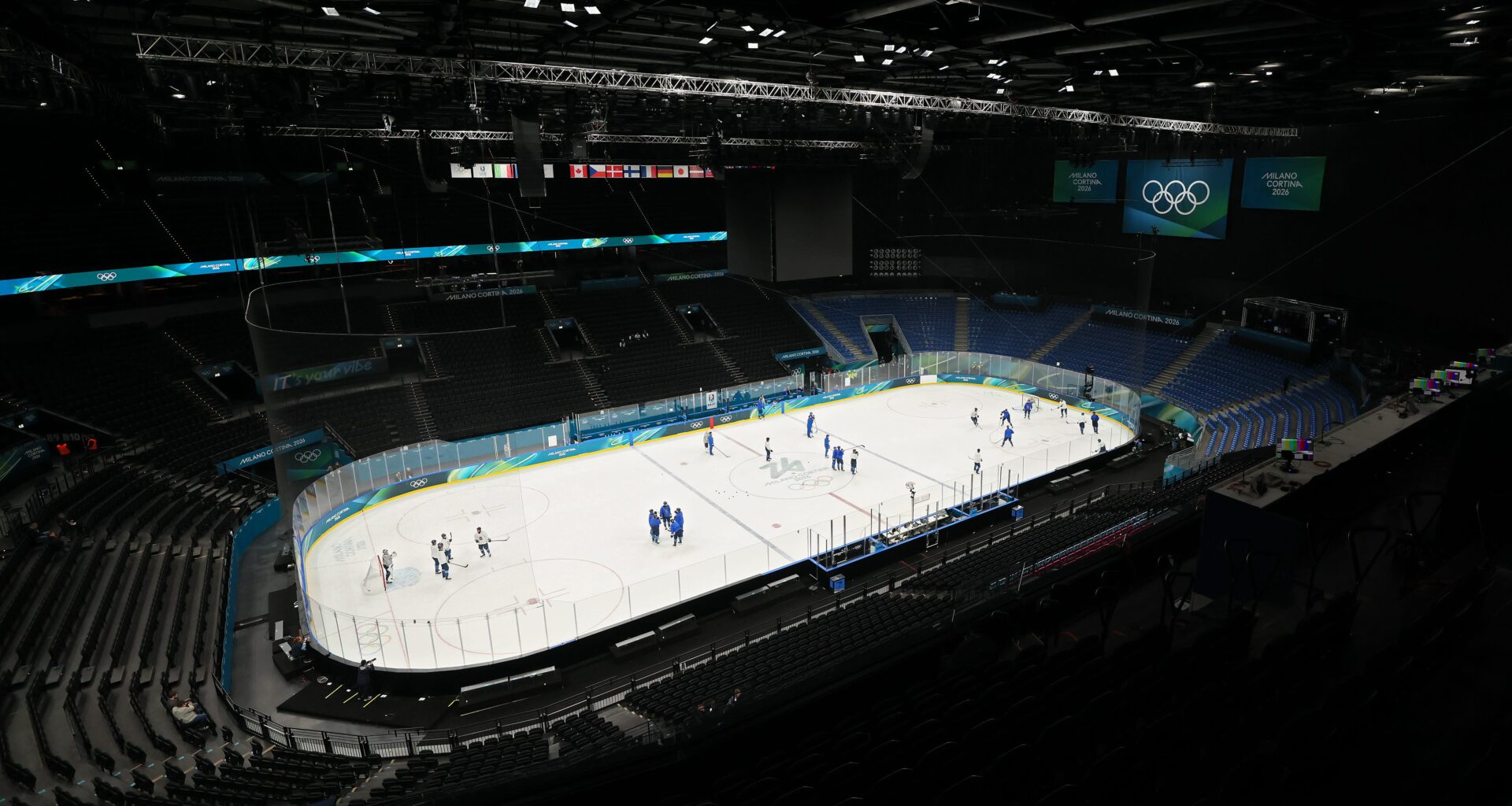
Buffalo, N.Y. (WGR Sports Radio 550) – It’s been 12 years in the making, but finally, National Hockey League players are back competing in the Winter Olympics in, arguably, the top best-on-best tournament in the world.
Whether or not one may feel the Winter Olympics should be left to the amateur players like in years past, there is no denying the benefit of having the world’s best hockey players on the biggest international stage. Even more eyes from around the hockey world will be glued to the Olympic Games that haven’t seen NHL players competing since the 2014 Winter Games in Sochi, Russia.
It also helps that the Milano Cortina 2026 games are only six hours ahead of the Eastern portion of the United States and Canada, compared to the last two Winter Olympics that were 14 hours ahead in Pyeongchang, South Korea and 13 hours ahead in Beijing, China.
Not only is the attention enhanced and the competition more stiff at the Olympic Games with NHL players returning, but the name recognition is boosted and national pride is only accelerated.
Think about it: Some of the best names in today’s game – Connor McDavid (Edmonton Oilers), Nathan MacKinnon (Colorado Avalanche), Auston Matthews (Toronto Maple Leafs), Jack Eichel (Vegas Golden Knights), David Pastrnak (Boston Bruins), Mikko Rantanen (Dallas Stars), Leon Draisaitl (Oilers) – have yet to compete in a best-on-best competition like the Olympics. Some got the chance to compete with the teaser that was the 4 Nations Face-Off last year February, but nothing can truly compare to the stage that is the Winter Olympic Games.
Then there are the names like Sidney Crosby (Pittsburgh Penguins), Drew Doughty (Los Angeles Kings), Roman Josi (Nashville Predators), Erik Karlsson (Penguins) and Gabriel Landeskog (Avalanche) that return to the international stage after captivating fans 12 years ago in Sochi.
Or how about the young and up-and-coming stars like Macklin Celebrini (San Jose Sharks), Tim Stutzle (Ottawa Senators), Lucas Raymond (Detroit Red Wings), Juraj Slafkovsky (Montreal Canadiens), Simon Nemec (New Jersey Devils) and Alberts Smits (2026 NHL Draft eligible) making even more of a name for themselves on the international stage.
To be the best, you have to beat the best. That’s what the Olympics is about.
Let’s break down the rosters, and look at which teams may have the best chance at coming away with medals at the Milano Cortina 2026 games in Italy:
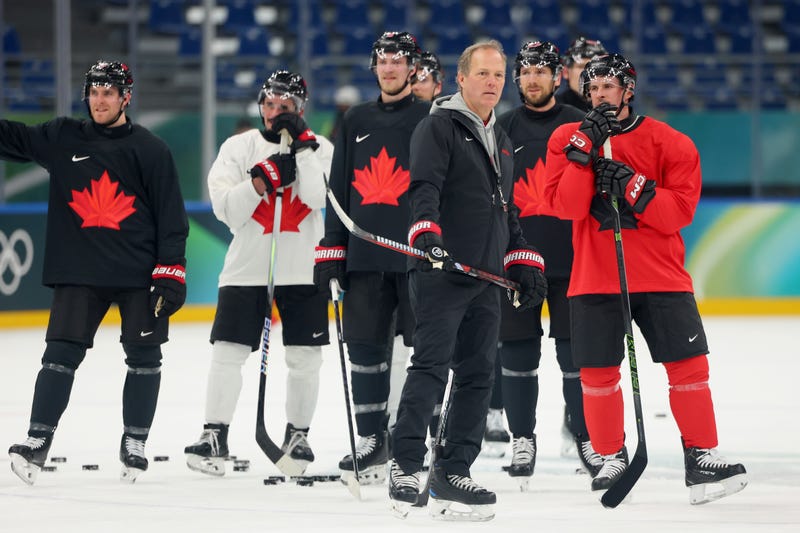
Photo credit Gregory Shamus – Getty Images
Group A:
There’s no doubt Canada will be the heavy favorites in Group A, given the firepower they have up front, but they may still face some stiff competition in their group.
It’s ridiculous that a team will feature a forward group with McDavid, MacKinnon and Crosby as the top-three centers. Then when you throw other forwards like Celebrini, Sam Reinhart (Florida Panthers), Nick Suzuki (Canadiens), Mark Stone (Golden Knights), Brad Marchand (Panthers) and Mitch Marner (Golden Knights) into the mix, it’s a lethal combination bound for offensive domination.
On the back end, Canada features a combination of youth and skill, along with experience and grit. You have the offensive prowess of a Cale Makar (Avalanche), Thomas Harley (Stars) and Josh Morrissey (Winnipeg Jets), while also having anchors like Doughty, Colton Parayko (St. Louis Blues) and Devon Toews (Avalanche) that will more so take care of the defensive end.
The biggest question mark – and it’s a huge one – lies in net for the Canadians. Can they get the Jordan Binnington (Blues) that carried them to a 4 Nations title last year, or will they have to turn to the likes of a Darcy Kuemper (Kings) or Logan Thompson (Washington Capitals) to stabilize them in the crease?
One of the sleeper teams in this year’s tournament could be Czechia, who will, once again, bolster a lineup that makes life difficult for opposing teams with a strong, physical presence.
While one of the older teams in the tournament, Czechia provides plenty of experienced players on all fronts, including Radko Gudas (Anaheim Ducks) on the blue line, as well as Roman Cervenka and Ondrej Palat (New York Islanders) up front – all of whom played on the Czech roster in the 2014 Sochi games.
The firepower up front will likely come courtesy of Pastrnak, Martin Necas (Avalanche), and Tomas Hertl (Golden Knights), while others like Palat, David Kampf (Vancouver Canucks), Radek Faksa (Stars), and former NHLers like Ondrej Kase and Dominik Kubalik will serve as some nice complimentary pieces.
Where the Czechs may be more weak is on the back end with a lack of speed and more offensive-minded pieces. The group will feature NHL players like Gudas and Filip Hronek (Canucks), as well as a prospect like David Spacek (Minnesota Wild) and former NHLers like Jan Rutta and Michal Kempny.
Much of the youth for Czechia comes in goal with the likes of Lukas Dostal (Ducks), Karel Vejmelka (Utah Mammoth) and Daniel Vladar (Philadelphia Flyers) all vying for playing time in the crease. It’ll be interesting to see how the Czechs go about their situation between the pipes throughout the tournament.
Switzerland is another interesting group mixed with current NHLers and other professionals representing their home country on the biggest stage.
The Swiss are led by Josi on the back end, as he will be their captain for this year’s Olympics in his second tournament. Another leader on the roster returning for his second Olympics with Switzerland is Nino Niederreiter (Jets).
Switzerland does have some decent offensive talent up front with the likes of Nico Hischier (Devils), Kevin Fiala (Kings) and Timo Meier (Devils), but can also be a solid two-way team that plays responsibly in their own end. Other notable players on the roster includes Philipp Kurashev (Sharks), Pius Suter (Blues) and former NHLers Denis Malgin and Sven Andrighetto.
Along with Josi on the blue line includes J.J. Moser (Lightning) and Jonas Siegenthaler (Devils), and former NHLer Dean Kukan.
The net for Switzerland should belong to Akria Schmid (Golden Knights), but he will be backed up by a pair of veteran Swiss goalies in Leonardo Genoni and former NHLer Reto Berra.
Rounding out Group A is France, who features a small handful of players with NHL experience on the roster. The only current French player on an NHL roster is forward Alexandre Texier (Canadiens), while former NHLer Pierre-Edouard Bellemare will serve as team captain.
Stephane Da Costa and Yohann Auvitu are the only other players on France’s roster with NHL experience.
Prediction:
1.) Canada (3-0-0-0)
2.) Czechia (2-0-0-1)
3.) Switzerland (1-0-0-2)
4.) France (0-0-0-3)
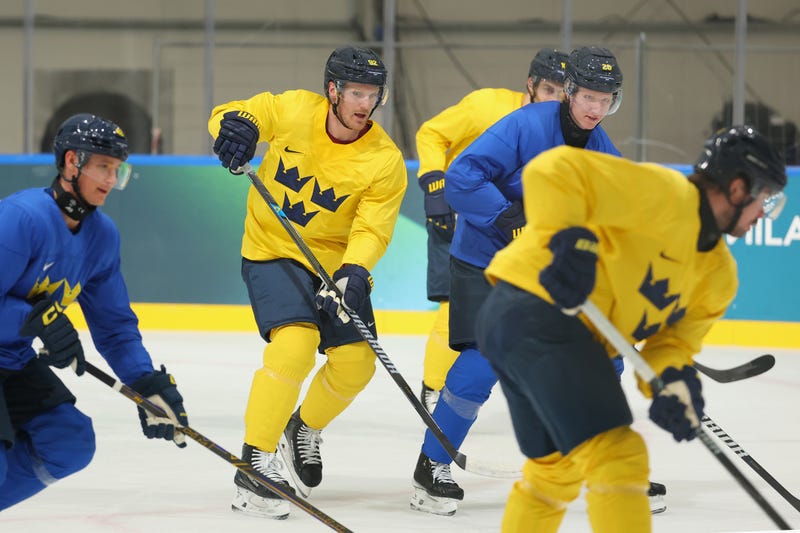
Photo credit Gregory Shamus – Getty Images
Group B:
While Sweden is seen as the favorites to come out on top of Group B, their rival in Finland is certainly ready to give them a run for their money.
This year’s Swedish group is, arguably, the deepest in the tournament from top-to-bottom, with talent aplenty at both ends of the ice.
Landeskog will lead the group up front, serving as team captain in his second Olympics representing the Swedes. Also returning to play for Sweden at the 2026 Olympic Games that played for Sweden in 2014 includes Marcus Johansson (Wild) and Oliver Ekman-Larsson (Maple Leafs).
And while the group may not feature as sexy of names that Canada presents, names like Raymond, Adrian Kempe (Kings), Elias Pettersson (Canucks), Jesper Bratt (Devils), William Nylander (Maple Leafs) and Mika Zibanejad (New York Rangers) make up a formidable offensive group.
It will be very interesting to see how the Swedish defensive group lines up with the likes of Victor Hedman (Lightning), Karlsson, Gustav Forsling (Panthers), Philip Broberg (Blues) and Rasmus Andersson (Golden Knights) available on the back end.
And, of course, there is Buffalo Sabres captain Rasmus Dahlin, who will be taking part in his second Olympic Games and first since becoming a full-time NHLer. The defenseman was 17-years-old when he suited up in two games for Sweden at the 2018 Winter Olympics in Pyeongchang, South Korea.
Dahlin also took part with Sweden at last year’s 4 Nations Face-Off, where he averaged 17:46 of ice-time and scored a goal in three games played. However, he didn’t get much of a look on the Swedish power play, and he was used sparingly in some key moments in the tournament.
It will be interesting to see how much Dahlin will be a factor for the Swedes in the Olympics, as he should be seen as a weapon on the power play and a player that can eat some significant minutes on the blue line.
Sweden has, maybe, the second-best group of goaltenders in this tournament, with Jacob Markstrom (Devils) being the veteran of the group and Filip Gustavsson (Wild) and Jesper Wallstedt (Wild) also vying for playing time in goal.
Finland is missing a key piece of its roster for the Olympics in Aleksander Barkov (Panthers), who has not played at all this season due to a torn ACL suffered during training camp. Despite the loss of their likely captain for the tournament, a number of players are looking to make a difference on the Finnish roster in Milan.
Among the group of notable forwards providing some offensive firepower includes Rantanen, Anton Lundell (Panthers), Sebastian Aho (Carolina Hurricanes), Roope Hintz (Stars), Artturi Lehkonen (Avalanche) and Teuvo Teravainen (Chicago Blackhawks). Other players to watch up front for the Finns includes Eetu Luostarinen (Panthers), Kaapo Kakko (Seattle Kraken) and Oliver Kapanen (Canadiens).
Returning for their second go-around at the Olympics in 2026 includes Mikael Granlund (Ducks), Olli Maatta (Mammoth), Eeli Tolvanen (Kraken) and former NHLer Mikko Lehtonen, who will take part in his third Olympic Games.
Finland’s defensive group is led by the dynamic two-way presence of Miro Heiskanen (Stars) and solid stay-at-home presence of Niko Mikkola (Panthers), but is arguably weak after those two with others like Lehtonen, Maatta, Esa Lindell (Stars), Henri Jokiharju (Bruins) Rasmus Ristolainen (Philadelphia Flyers) and Nikolas Mantipalo (Senators) rounding out the group.
In goal, Finland will likely lean heavily on Juuse Saros (Predators), because their other two options in Kevin Lankinen (Canucks) and Joonas Korpisalo (Bruins) have been quite up-and-down this season in the NHL.
The Finns will miss not having the services of Sabres goalie Ukko-Pekka Luukkonen, who was forced out of the tournament due to a lower-body injury.
Another dark horse team that could surprise some at this year’s Olympics is Slovakia, even though they have a bronze medal they earned without NHLers in 2022, as well as a fourth place finish with NHL players in 2010.
It will be longtime NHLer Tomas Tatar leading the Slovaks in the tournament, as the 35-year-old now playing in Switzerland is taking part in his second Olympics.
Tatar is joined by a number of current NHL players up front, including Slafkovsky, who starred at the 2022 Beijing Olympics with seven goals and a tournament MVP honor to boot. That came during his draft year that helped him vault up the rankings in his class and land him No. 1 overall to the Canadiens.
Among the other notable forwards on the Slovak team this year includes Dalibor Dvorsky (Blues), Martin Pospisil (Calgary Flames), Pavol Regenda (Sharks) and former NHLers Peter Cehlarik and Adam Ruzicka.
The second overall pick in that 2022 NHL Draft class, Nemec, also makes his second appearance in the Olympics after playing with Slafkovsky on that 2022 bronze medal squad. He picked up an assist in seven games played on the Slovak blue line.
The defensive group for Slovakia is actually a fairly solid group that includes Erik Cernak (Lightning), Martin Fehervary (Capitals) and former NHLer Martin Marincin.
The Slovak crease is fairly young, featuring 24-year-old Samuel Hlavaj (Wild) and 21-year-old Adam Gajan (Blackhawks), with Stanislav Skorvanek serving as the grizzled veteran at age 30.
As for the host nation Italy, their roster is comprised of players entirely playing professionally in Europe, with one player – Thomas Larkin – having been the first Italian-trained player to ever be selected in the NHL Draft. He was a fifth-round pick of the Columbus Blue Jackets in 2009.
Prediction:
1.) Sweden (2-1-0-0)
2.) Finland (2-0-1-0)
3.) Slovakia (1-0-0-2)
4.) Italy (0-0-0-3)
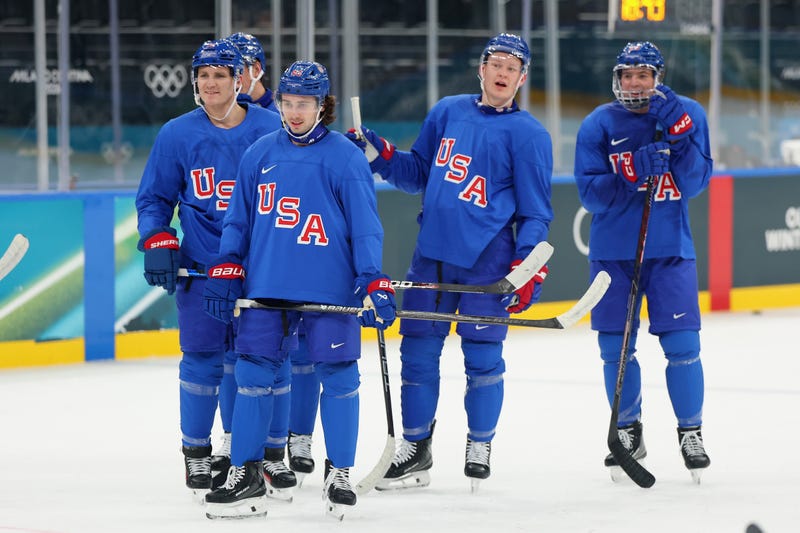
Photo credit Gregory Shamus – Getty Images
Group C:
Of all the teams in the 2026 Winter Olympics, the United States seems to have the easiest path of any in group play. However, there’s no denying that Team USA may be right there with Sweden as having the deepest roster in the entire Olympics.
Youth and skill is the name of the game for the Americans, led by the likes of Eichel, Matthews, Dylan Larkin (Red Wings), Jack Hughes (Devils), Kyle Connor (Jets), Matt Boldy (Wild), Clayton Keller (Mammoth) and Brady (Senators) and Matthew Tkachuk (Panthers).
Also among the younger group of players in the U.S. lineup is Sabres forward Tage Thompson.
Thompson’s journey to the Olympics is quite remarkable after having been left off the Team USA roster for the 4 Nations Face-Off last year February. Despite that, Thompson continued to persevere, and played a key role in the U.S. winning gold at the IIHF World Championship this past May in Sweden.
It was Thompson scoring the Golden Goal for the Americans in overtime of a 1-0 win over Switzerland in the Gold Medal Game. It capped of a nine-point effort (6+3) in 10 games played at the tournament, and helped Team USA to a gold medal in the tournament for the first time in more than 90 years.
It also played a huge factor for his bid to make the U.S. Olympic team, as general manager Bill Guerin elected to take Thompson to Milan over a player like Chris Kreider (Ducks), who played for the Americans at the 4 Nations Face-Off.
The youth up front is complimented by the veteran presence of names like Jake Guentzel (Lightning), Brock Nelson (Avalanche), J.T. Miller (Rangers) and Vincent Trocheck (Rangers).
On the back end, it will be Quinn Hughes (Wild) and Zach Werenski (Blue Jackets) as the dynamic offensive threats that can quarterback a power play, or just be a menace on the ice with the puck on their sticks.
Joining them in the defensive group includes veterans like Jaccob Slavin (Hurricanes), Charlie McAvoy (Bruins) and Noah Hanifin (Golden Knights), as well as a couple other young names like Jake Sanderson (Senators), Brock Faber (Wild) and Jackson LaCombe (Ducks).
Perhaps the Americans’ strength in this tournament is their presence in net with the likes of reigning Vezina Trophy and Hart Trophy winner Connor Hellebuyck (Jets), as well as Jake Oettinger (Stars) and Jeremy Swayman (Bruins). It may be tough for Swayman to get much action for the U.S., and it will likely be a battle between Hellebuyck and Oettinger to see who gets more minutes in-between the pipes.
As for the other teams in Group C, it includes a pair of nations on the rise in the hockey world, and another nation trying to make a name for itself at the top level of international competition.
Germany is packed with some loaded talent up front, led by Draisaitl, who will serve as captain of the squad in his first Olympics. Draisaitl helped the Germans qualify for the 2018 Winter Olympics in Pyeongchang, but was not a part of the group that stunned the hockey world with a silver medal finish.
Among the other big names competing for Germany at the 2026 Winter Olympics includes Stutzle, Moritz Seider (Red Wings), JJ Peterka (Mammoth), Nico Sturm (Wild), Philipp Grubauer (Kraken) and Lukas Reichel (Canucks).
There are also a couple of former NHL players taking part for Germany, including a pair of former Sabres in Tobias Reider and Dominik Kahun.
Latvia is another team that has the potential to surprise some at the Winter Olympics, and have proven to be a tough out at the tournament over the years.
Former NHLer Kaspars Daugavins will captain the Latvian squad at the Olympics, with former Sabres forward Zemgus Girgensons (Lightning) and Uvis Balinskis (Panthers) rounding out the leadership group.
Other NHL players on the Latvian roster this tournament includes Sandis Vilmanis (Panthers) and Teddy Blugers (Canucks) at forward, and a solid duo in net in Arturs Silovs (Penguins) and Elvis Merzlikens (Blue Jackets).
A couple of other notable young players on the Lativan roster in this tournament includes Dans Locmelis in the Bruins prospect pipeline, as well as Smits, who is the youngest player in the tournament and potentially set to be a top-10 or top-5 draft pick in the 2026 NHL Draft from the back end.
Smits is currently playing professionally in the Finnish Liiga with Jukurit.
Finally rounding out Group C is Denmark, making just its second appearance ever in the Olympics.
The Danes will feature four current NHL players on their roster – Lars Eller (Senators), Oliver Bjorkstrand (Lightning), Nikolaj Ehlers (Hurricanes) and Frederik Andersen (Hurricanes) in goal.
Backing up Andersen for Denmark will likely be Mads Sogaard, who has a handful of games experience in the NHL with the Senators, and is still a member of their AHL affiliate in Belleville.
Oskar Molgaard is another young player set to play for the Danes in Italy, who’s a prospect of the Kraken playing with their AHL affiliate, the Coachella Valley Firebirds. He has also appeared in three NHL games this season with Seattle.
Prediction:
1.) United States (3-0-0-0)
2.) Latvia (1-1-0-1)
3.) Germany (1-0-1-1)
4.) Denmark (0-0-0-3)
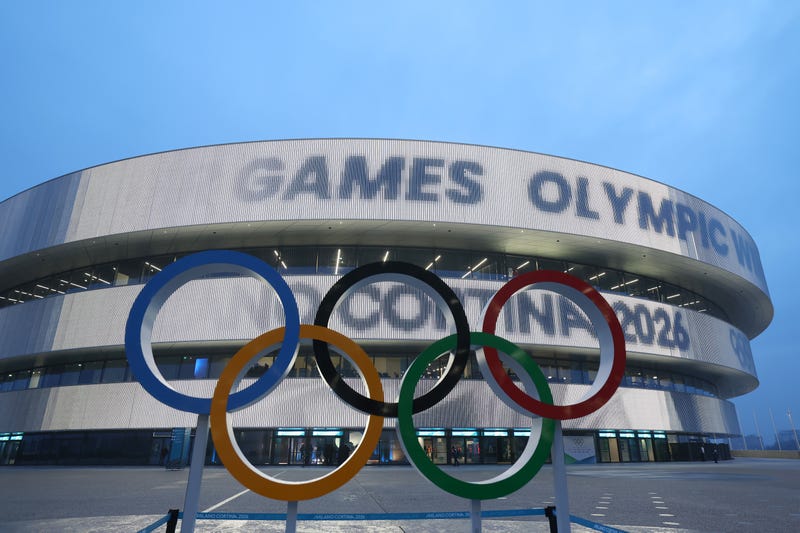
Photo credit Maja Hitij – Getty Images
PLAYOFF PREDICTIONS
Knockout Round:
5 – Czechia over 12 – Italy
6 – Latvia over 11 – France
7 – Germany over 10 – Denmark
8 – Slovakia over 9 – Switzerland
Quarterfinal Round:
1 – United States over 8 – Slovakia
2 – Canada over 7 – Germany
3 – Sweden over 6 – Latvia
5 – Czechia over 4 – Finland
Semifinal Round:
1 – United States over 5 – Czechia
3 – Sweden over 2 – Canada
Bronze Medal Game:
Canada over Czechia
Gold Medal Game:
Sweden over United States
RESULTS:
Gold Medal: Sweden
Silver Medal: United States
Bronze Medal: Canada
———-
It’s important to note that this year’s Olympic Games will not feature a pair of countries that likely would have competed in this year’s tournament had it not been for a ban from the International Ice Hockey Federation (IIHF) and the International Olympic Committee (IOC): Russia and Belarus.
This ban stems from both countries’ involvement in the invasion of Ukraine that started in 2022, shortly after the completion of the Olympics in Beijing.