
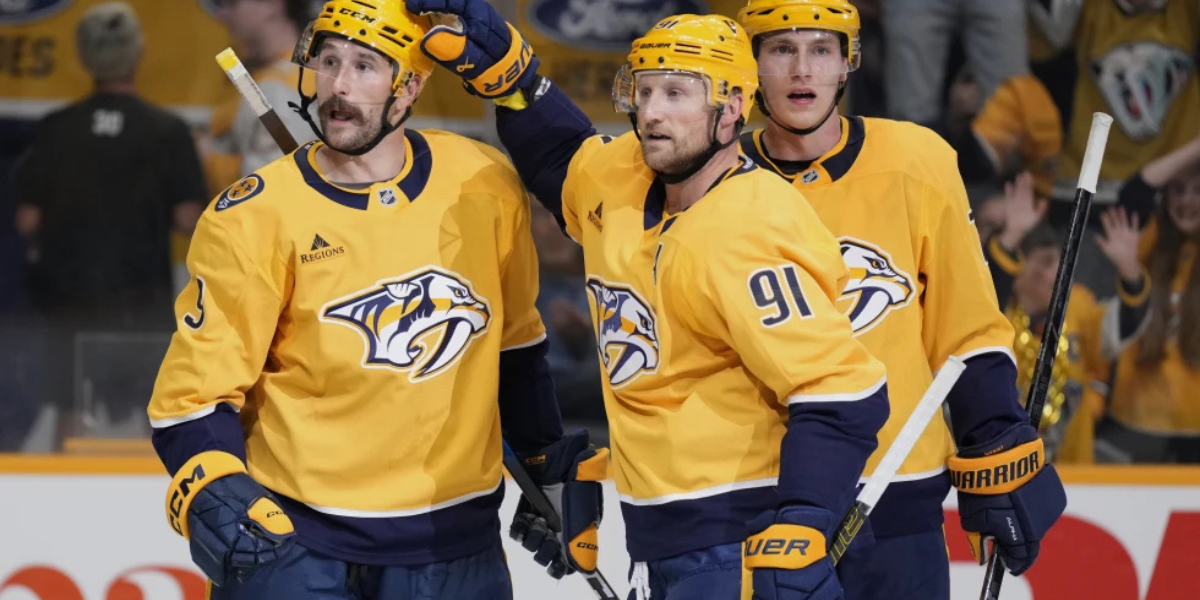
The Nashville Predators are stuck in the NHL’s “mushy middle” — competitive enough to hang around the playoff race, inconsistent enough to raise real doubts. At 26-24-7 and just four points out of a Western Conference Wild Card spot, the standings suggest hope. But a -29-goal differential and a 3-4-3 record over their last 10 games tell a more complicated story. They have the talent; they just have not been as consistent as needed on the ice to date. With the Nashville Predators’ Olympic roster freeze lifting on February 22, General Manager Barry Trotz faces a defining decision: invest in this roster for a push, sell strategically, or attempt a middle-ground correction. The situation is even muddier, given that Trotz is holding the position until a replacement is found, most likely after the season ends. Will be stepping away from the job, looking to spend more quality time with his family. What approach will the GM take, considering he knows the roster he tweaks and assets he moves or receives will be for the future General Manager of the team? Will he make bold moves, or will he play it safe on his way out?
Purchase tickets via Ticketmaster
Predators at a Crossroads: The Numbers That Matter
Before choosing a direction, the data paints a clear picture:
Pathway 1: Aggressive Buyers
If Nashville chooses to buy following the Olympic roster freeze, the most logical upgrade is on defense. The Predators rank near the bottom of the league in goals against per game (3.47), and outside of Roman Josi, consistency on the blue line has been an issue. One high-level target profile would be a top-pairing defenseman capable of stabilizing the second unit and strengthening the power play. A name like Dougie Hamilton could fit that description if New Jersey were willing to discuss options. With nearly $28 million in projected deadline cap space, Nashville could absorb Hamilton’s $9 million AAV without requiring salary retention. From the Devils’ perspective, moving long-term salary could create future flexibility if they choose to recalibrate. A framework involving a top prospect and a 2026 second-round pick would represent a significant investment — and a clear signal that Trotz believes the Stamkos–Forsberg–Josi core still has a legitimate window. The risk is obvious: committing premium assets to a team carrying a -29 goal differential requires confidence that underlying issues are correctable.
Pathway 2: Strategic Sellers
A full rebuild is unlikely given the no-movement clauses held by Filip Forsberg, Steven Stamkos, and Roman Josi. But selective selling remains a realistic option. Michael Bunting, an expiring contract known for his net-front presence, could draw interest from contenders seeking playoff-style depth. Moving him would prevent losing an asset for nothing while adding to Nashville’s already strong 2026 draft capital. The more complex decision involves Ryan O’Reilly. Unlike Nashville’s other veteran leaders, O’Reilly does not carry trade protection. His $4.5 million cap hit becomes even more attractive if Nashville retains salary to maximize return. A contender such as Colorado — perpetually aggressive in pursuit of depth behind Nathan MacKinnon — could view O’Reilly as an ideal postseason addition. If the return escalates to a first-round pick plus a high-end prospect, the Predators would have to weigh short-term leadership against long-term roster health. Selling does not mean surrendering. It means resetting the competitive timeline while preserving flexibility.
Pathway 3: Hockey Trades and Targeted Tweaks
If Nashville avoids both extremes, a hockey trade may offer a middle path. The Predators’ most glaring weakness remains center depth. Among bubble teams, their depth down the middle has drawn increasing scrutiny. Defenseman Justin Barron, still an RFA with arbitration eligibility, could benefit from a change of scenery. A move involving a team like Montreal or Detroit — organizations seeking defensive upside — could bring back a reliable bottom-six center while preserving long-term assets. Similarly, if Jonathan Marchessault were open to waiving his no-movement clause for a contender, Nashville could rebalance its roster without committing to a full sell-off. These types of moves would not signal a teardown. Instead, they would address structural imbalance while maintaining cap flexibility.
The Smartest Move After the Nashville Predators Olympic Roster Freeze
The fact of the matter is, the trade deadline is March 6th at 3:00 PM EST. The Predators have five games between the time they return from the Olympic break and the deadline.
2/26 vs Chicago
2/28 @ Dallas
3/2 vs. Detroit
3/3 @ Columbus
3/5 vs. Boston
Of these five contests, the Blackhawks are the only team currently under 65 points. Columbus is four points behind the Bruins for the 2nd wild card spot. Detroit is third in the Atlantic with 72 points, and Dallas is third in the Western Conference with 77 points this year. Nashville’s decision moving forward will have to be based on what the rest of the Western Conference bubble teams do and how they play coming out of the break. They have six games left against the Kings, the Ducks, and the Kraken, all teams ahead of them in the standings. Barring any unfortunate injuries suffered at the Olympic Games that lead to either a need for Nashville or a dire need for a contender, that would provide a huge haul in return. I think the best course of action is as follows.
The Nashville Predators’ Olympic roster freeze creates clarity more than urgency. With a negative goal differential and inconsistent five-on-five play, an aggressive buying strategy carries long-term risk. The underlying numbers suggest this team may be competitive — but not necessarily a true Stanley Cup contender. The most disciplined approach may be selective selling: move pending UFAs such as Bunting, listen seriously on O’Reilly, and preserve the projected $40 million in 2026-27 cap space. Keep the foundational leadership. Accumulate future assets. Maintain flexibility. The Predators are not far from relevance. But they must be honest about where they stand.
Conclusion
The Predators have the talent to grab a Wild Card spot, they have the draft capital and young assets to make aggressive moves to try and close the gap in the Western Conference, but realistically, how far can they go if they do get in? Is it worth tossing away draft capital and a young prospect or two for a second-round exit? I believe the first five games back will dictate the direction of the Predators’ front office. The team is better off moving a piece only for the right return that favors them; they are not in a full rebuild, so a fire sale is not needed. They are not desperate; they need to be realistic and strategic during this Trade Deadline.
Discover more from Inside The Rink
Subscribe to get the latest posts sent to your email.