
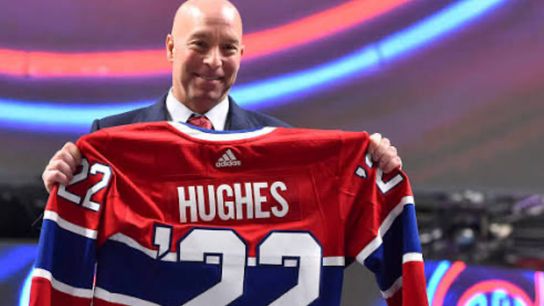
The Evolution of Kent Hughes: Inside the Trade DNA of the Canadiens’ GM
When Kent Hughes took over the Montreal Canadiens on January 28, 2022, he stepped into one of the most difficult jobs in hockey. A team coming off a almost completely random Stanley Cup Final appearance… A roster built for a different era…. And a system that needed a major talent injection.
Whenever I hear the Montréal Canadiens are rebuilding I laugh. This is the city that breathes hockey more than any other that I’ve ever been to. Sorry Toronto, but Montreal takes the cake for me. And this is the city that loves it stars more than any city I’ve ever seen. maybe in any sport. Remember how emotional Alexei Kovalev’s departure was.
And this is why I chose Kent Hughes next in this series…He did this in a very magical way. It was pretty clear and open, which is hard to do in Montreal. The only sleight-of-hand may have been naming Martin St. Louis as a surprise Coach…. That really shifted the pressure a bit, and St. Louis handled it like a juggernaut.
Unlike some rebuilds that follow a straight line, Hughes’ tenure has been layered, aggressive, and constantly adjusting. And when you study every trade he’s made since taking the job, you can see something fascinating: His identity as a general manager didn’t arrive fully formed. It evolved. And that evolution tells you exactly what kind of GM he is becoming.
Phase 1: The Reset (2022)
Every new GM has a first decision to make: Patch it… or tear it down. Hughes chose direction immediately.
He moved key veterans for futures:
• Tyler Toffoli
• Ben Chiarot
• Artturi Lehkonen
• Brett Kulak
This wasn’t hesitation. This was a clear signal. The Canadiens were starting over. But even early on, you could see the Opportunist tendencies forming. These weren’t panic moves — they were value-driven moves, timed around peak return windows.
Toffoli early while his value was strong.
Phase 2: Targeted Youth (Summer 2022 – 2023)
Once the teardown began, Hughes shifted gears quickly. This wasn’t just about collecting picks. It was about identifying specific young players to build around.
• Turning Romanov into Kirby Dach
• Acquiring Justin Barron in the Lehkonen deal
• Later targeting Alex Newhook
This is where the Builder side of Hughes started to show. He wasn’t just stripping the roster down. He was trying to accelerate the rebuild by betting on young players who hadn’t hit their ceilings yet.
Phase 3: Cap Space as a Weapon (2022–2024)
This might be the most defining stage of Hughes’ tenure so far. Few GMs leaned into cap flexibility the way Montreal did.
The Sean Monahan deal became the blueprint:
• Take on a contract
• Get a premium asset
• Wait for the right moment
• Flip the player later for even more value
That’s not just rebuilding. That’s market manipulation in the smartest sense. It showed patience, timing, and confidence in long-term planning. And it’s the clearest example of why, to me, Hughes fits the Opportunist archetype more than any other.
Phase 4: Controlled Risk (2024–2025)
Once the Canadiens stabilized, the moves started to shift again. Now it wasn’t just about selling.
It was about calculated swings.
• Taking a chance on Patrik Laine’s upside
• Reshaping the defense through multiple smaller trades
• Gradually adding NHL-ready pieces to the mix
These weren’t win-now moves. But they weren’t pure rebuild moves either. They were positioning moves. You could see Hughes testing where the team stood.
Phase 5: The Pivot Toward Competing (2025–Present)
The most recent phase may end up defining his tenure.
• Targeting a top defenseman like Noah Dobson
• Reintroducing proven veterans into the mix
• Balancing youth with experience
The Canadiens aren’t just rebuilding anymore. They’re preparing for the next step. And this is where a GM’s true instincts show.
Does he stay patient? Or does he push?
So far, Hughes has done what he always does:
What This Evolution Tells Us
Some GMs follow one philosophy from Day 1. Hughes hasn’t. He’s adapted. And that adaptability is the strongest indicator of his identity. At his core, he is:
An Aggressive Builder second.
• Moves quickly when value appears
• Targets upside aggressively
• Uses flexibility as an asset
• Isn’t afraid to change direction
That combination makes him incredibly hard to predict. And incredibly dangerous in a rebuild.
Moving Forward it WILL get evenHarder
The early years were about tearing down. The middle years were about collecting and building. Now comes the hardest phase: Turning potential into a contender. This is where many rebuild GMs struggle. It’s easier to sell than it is to add at the right time. But if Hughes’ track record tells us anything, it’s this:
And when the right opportunity presents itself… He’ll strike.