
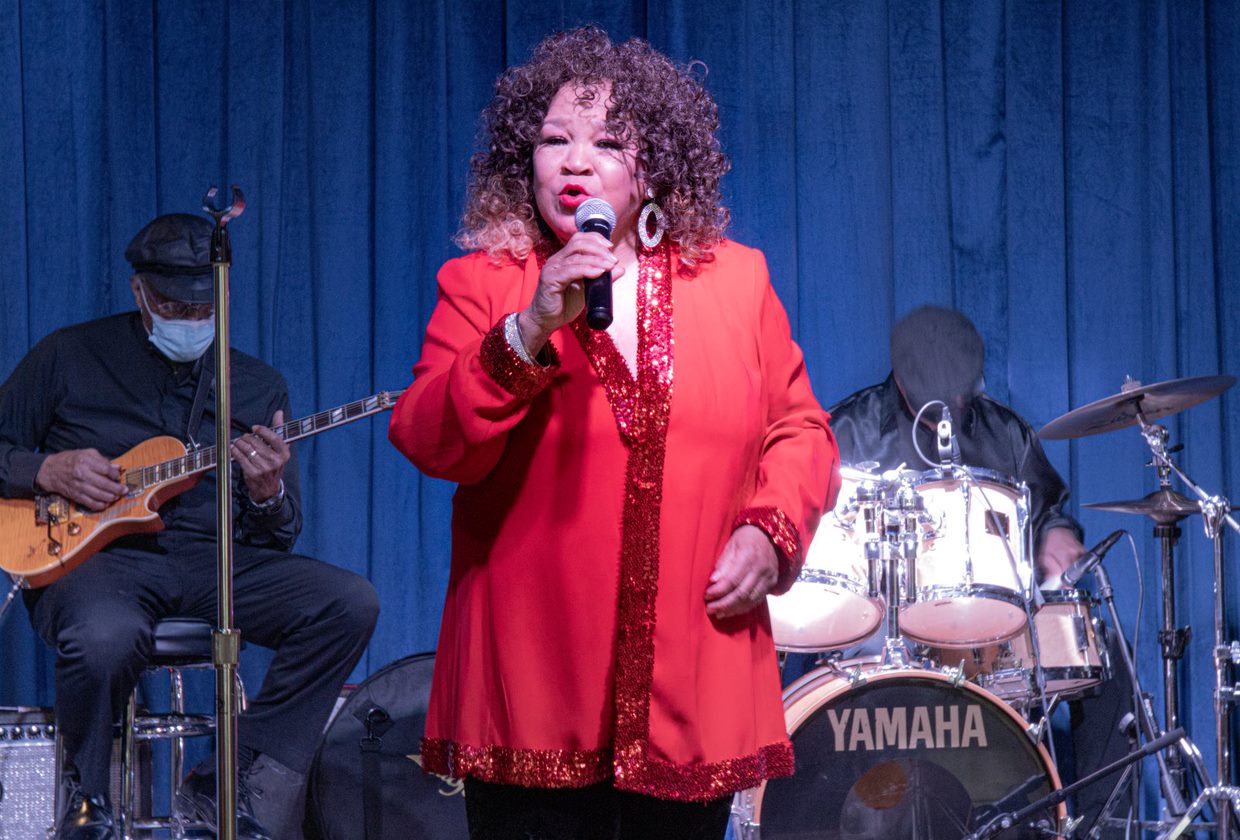
For more than half a century, the St. Louis music scene carried the unmistakable sound of Marsha Evans — a powerhouse vocalist whose voice, presence, and spirit became woven into the fabric of the city’s cultural identity. Evans died on Tuesday at the age of 75.
As a child in the 1950s, she and her sister Cheryl Bolar Slaughter became the first Black children to perform on the stage of the Kiel Opera House, now the Peabody Opera House.
Her career began while she was still a student at Northwest High School in the late 1960s. In 1969, Evans joined Laurene Bennet and Brenda Boyd to form the Georgettes, an offshoot of The Parameters — the group that featured future “Abbott Elementary” star William Stanford Davis. Their 1971 single “Would You Rather” became a moderate hit and later reached new generations when it was sampled by Migos rapper Quavo on his track “Wall to Wall.”
But Evans was never defined by a single moment. She simply never stopped working.
From her early days singing background at Oliver Sain’s legendary Archway Studios to her decades commanding stages across the region, Evans stood firmly in the lineage of St. Louis’ great musical architects. Her big voice, bigger curls, and megawatt smile became a signature entertainment element of The St. Louis American Foundation’s Salute to Excellence in Education Scholarship and Awards Gala, where she performed each year as a featured soloist with the Jazz Edge Orchestra.
Her artistry was rooted in family legacy. Her mother, Justine Bolar, was one of the first Black women to perform on the Muny stage in “Show Boat.” Bolar and Evans’ aunts were among the earliest members of the Legend Singers under the iconic Kenneth Billups. Evans carried that lineage forward — singing in choirs at Sumner and Northwest, performing with the Paramettes, the Georgettes, and the Young Disciples out of East St. Louis.
She learned early how to make an audience feel something. As a child in the 1950s, she and her sister Cheryl Bolar Slaughter became the first Black children to perform on the stage of the Kiel Opera House, now the Peabody Opera House.
By the 1960s, Evans was spending her days at Sain’s Archway Studios, absorbing everything she could. “I sang background for whomever Oliver was working with,” she told the St. Louis Blues Society. “It was a good learning period. I learned that I wanted to be an entertainer. I knew it all along, but that showed me how much fun it could be.”
It was there that she met St. Louis legend Fontella Bass. “I thought I’d died and gone to heaven,” Evans said. The two would go on to record, tour, and build a lasting friendship.
Her friend Jacqui Staton — then performing with Sain — asked Evans to fill in for a two‑week gig. Staton never returned, and Evans became a permanent fixture in Sain’s lineup, serving as his main vocalist from the 1990s until his death in 2003.
“I started with Oliver then,” she said, “and went through to the end.”
Music was also a family affair in her personal life. Her late husband, acclaimed bassist Jimmy Hinds, was a member of Ike Turner’s Kings of Rhythm. The two performed together for years, blending their talents into a sound that honored the deep roots of Black music.
The National Blues Museum joined the St. Louis arts community this week in honoring her legacy.
“Marsha Evans embodied the resilience and brilliance of St. Louis blues,” said Dr. Robert Nelson, the museum’s executive director. “Her voice carried history, dignity, and power. The spirit she helped sustain will continue to guide this city and the national blues community forward.”
In a statement, the museum called her “a vital contributor to the story of American roots music,” noting that her artistry “strengthened the cultural spine of St. Louis and affirmed the enduring power of women in blues leadership.”
She is survived by her daughter Kris White (Darren) and grandsons Nathan White and Nickolas White. She also leaves behind a community that adored her, a musical family that learned from her, and a legacy that will continue.
Final arrangements will be announced when they become available.
Related