
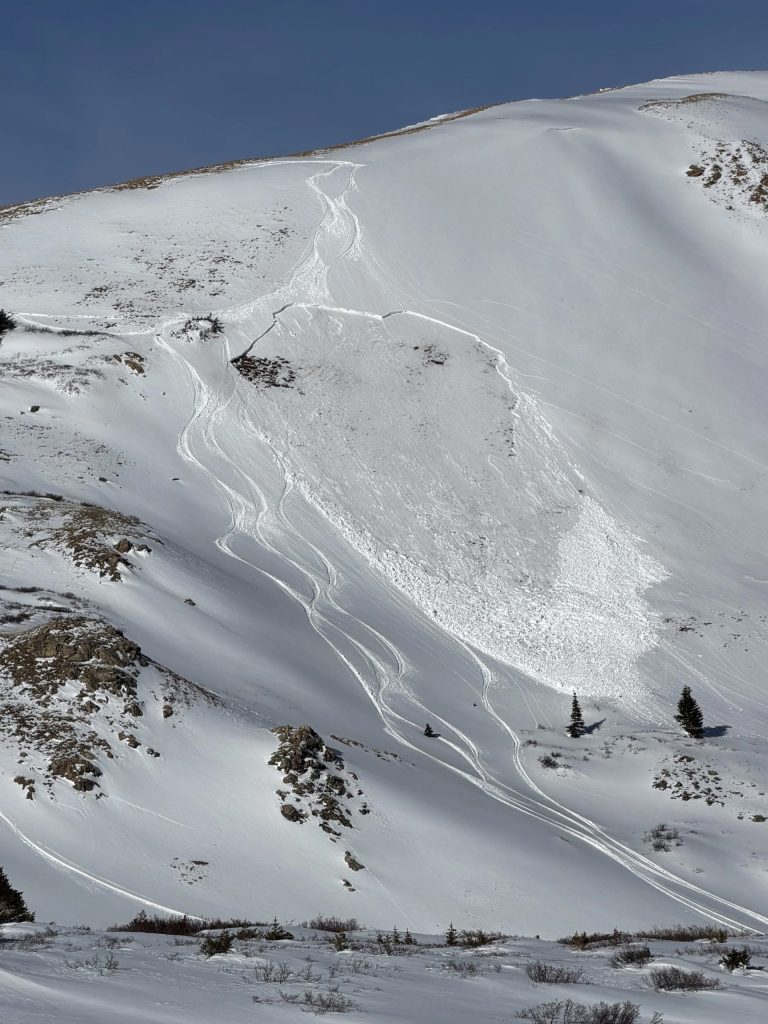
 A member of the public submitted this photo of an avalanche on Loveland Pass on Feb. 4 or 5, 2026. The Colorado Avalanche Information Center is warning that the avalanche danger will increase ahead of the Presidents Day weekend, which historically has seen more avalanche accidents than other times of the year.
Colorado Avalanche Information Center/Courtesy photo
Colorado avalanche officials are warning backcountry travelers that avalanche danger will increase ahead of the Presidents Day weekend, which historically has been one of the busiest weekends for avalanche accidents.
Avalanche danger will be considerable, Level 3 of 5, across the state’s northern and central mountains as of Friday morning, and is expected to remain elevated through the weekend, according to the avalanche center.
“Holiday weekends bring more people into the backcountry at the same time avalanche danger is rising,” Colorado Avalanche Information Center Director Ethan Greene said. “Plan ahead, check the forecast, and make sure everyone in your group has the training and rescue equipment needed to enjoy the weekend and get home safely.”
Historically, February is the deadliest month for avalanches in Colorado, according to the center. Over the past decade, officials say 10 avalanche accidents have killed a total of 13 people around the Presidents Day weekend. A snowmobiler survived for an hour after being buried in an avalanche last year on Vail Pass over the holiday.
The most dangerous terrain this weekend will likely be those places that receive the most snow on Saturday and Sunday, according to avalanche officials, who recommended checking the avalanche forecast frequently to adjust plans as conditions evolve.

Support Local JournalismDonate
A persistent slab avalanche problem — where a persistent weak layer is buried by additional layers of snow — remains an issue across much of the northern and central mountains, according to the avalanche forecast.
The center describes persistent slab avalanches as “especially dangerous and tricky,” since the weak layer can remain for weeks and produce avalanches that break in “surprising and unpredictable ways.” These avalanches can even be triggered remotely, or from a distance, including from flat ground below avalanche terrain, which includes slopes steeper than about 30 degrees.
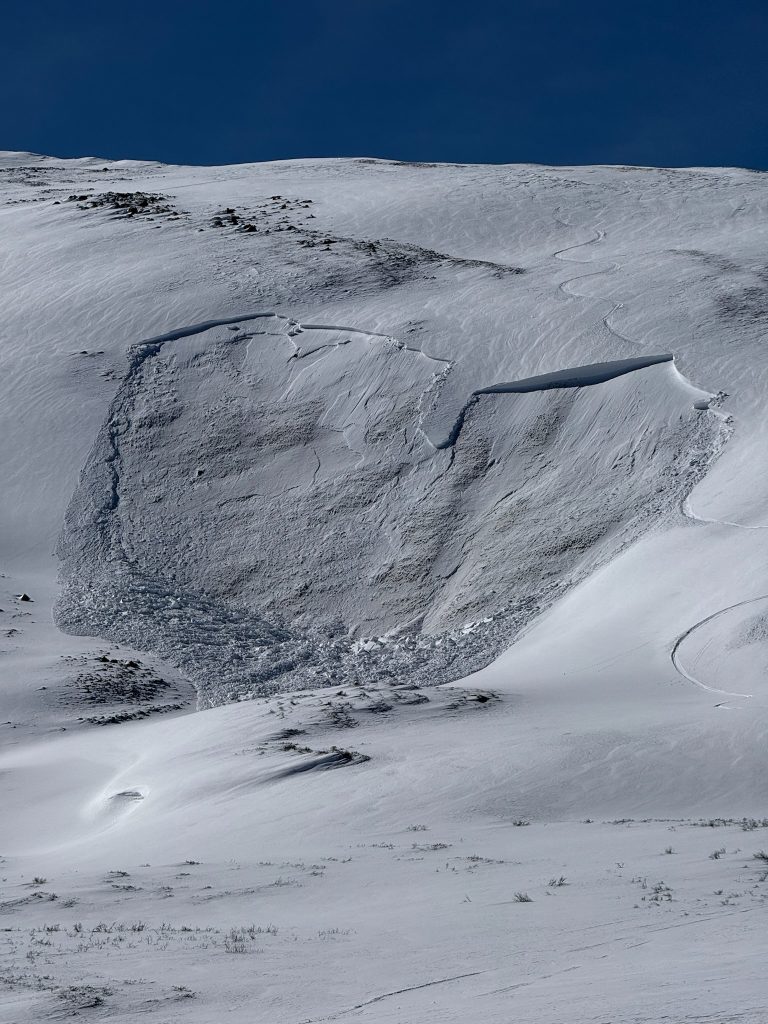 A skier triggered this persistent slab avalanche on a northeast-facing aspect in a backcountry area near Vail and Summit County on Feb. 8, 2026. No one was caught, buried or injured in the avalanche.Colorado Avalanche Information Center/Courtesy photo
Most recent avalanches have occurred on east, southeast or south-facing slopes, but a close call on a northeast-facing slope near Vail Pass shows there can be “problematic drifts” there as well, according to the forecast.
With the low snow totals so far this year, avalanche officials are reminding backcountry travelers to be conscientious about their terrain choices and not let their excitement for fresh snow cloud their judgement.
“Seek out safer slopes to enjoy the new snow,” the forecast states. “Don’t let your pent-up powder energy put you onto a suspect slope.”