
We’re finally watching Olympic best-on-best hockey for the first time in 12 years. And so far, it kind of rules.
The last time the league sent its players to an Olympics, I wrote a piece where I picked the ten best NHL Olympians. The idea was to weigh both sides equally – NHL success and Olympic success – and rank the best of the best. It’s been so long that I’d completely forgotten about that piece, and only stumbled on it recently. And it kind of made me want to revisit it.
Of course, there’s a problem: All these years later, we don’t have much in the way of new information to work with. So clearly, another top ten won’t do. We have to do what we do best around here: take something that should be simple, and make it more complicated for no good reason other than it seems fun.
Today’s task: Make the best six-man all-star team that we can of NHL Olympians, using the following rules:
• No more than one player from any given country.
• We keep the 50/50 criteria from that old post. Players are being judged equally based on their NHL careers and their Olympic experience.
• We need three forwards, two defensemen and a goalie.
• And just to add a completely unnecessary degree of difficulty: None of our players can have ever been teammates in the NHL.
Does that last one make this too complicated? Absolutely, but it’s Friday and we’ve got best-on-best hockey to watch today, so it’s not like you were planning to get any work done. Let’s do this.
My guess is that there are going to be a few ways to approach this, and we may need to take a few swings to get it right. So I’m going to come up with three teams of my own, without any repeat players. Then I’ll turn it over to you in the comments, at which point you will immediately come up with something better and ruin my whole weekend.
Team 1
Like all great teams, we’ll want to build from the net out. And when it comes to goalies who were great in both the NHL and the Olympics, there’s really one name that stands out above all the others: Dominik Hasek, arguably the best to ever do it.
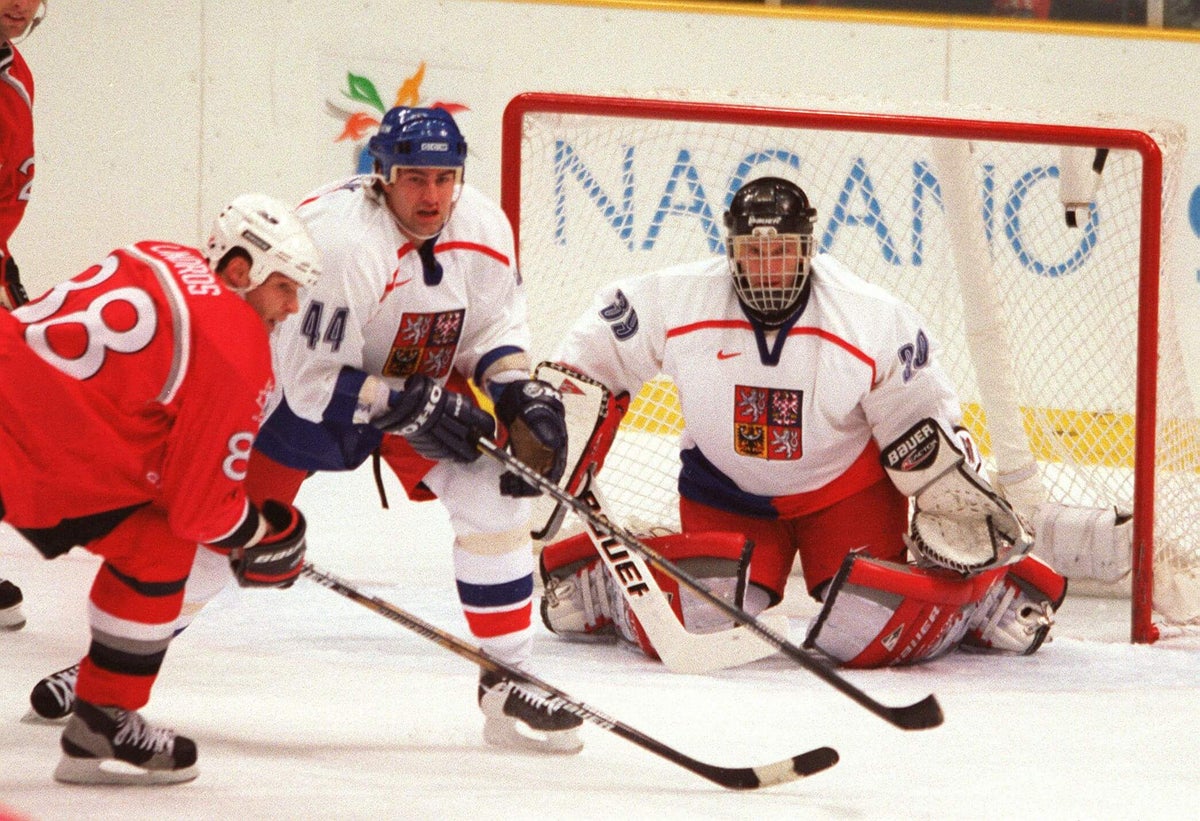
With six Vezinas and two Harts, his NHL resume speaks for itself. His Olympic resume is a bit weird and includes a forgotten stint as a virtual unknown at the 1988 Olympics and the 2006 appearance, where he immediately got hurt. He played well in 2002, but this pick is really about 1998, when he almost single-handedly won gold for the Czech Republic with one of the greatest goaltending performances ever seen, anywhere, at any level.
So Hasek’s an easy pick. Except that by taking him, our “no NHL teammates” rule wipes out a ton of options. That list includes names like Jeremy Roenick from the Chicago Blackhawks, Alexander Mogilny from the Buffalo Sabres and Daniel Alfredsson from the Ottawa Senators. But the real damage comes from Hasek’s two stints in Detroit, especially the loaded 2002 squad that was stacked with Hall of Famers. Taking Hasek means we can’t use Nicklas Lidstrom, or Sergei Fedorov, or Brett Hull, or Pavel Datsyuk, or Chris Chelios. Canadian stalwarts like Steve Yzerman and Brendan Shanahan are out, too.
That’s a high price to pay. Is it worth it for one of the all-time greats? I think so, but let’s find out. Hasek is the goalie for Team 1.
Moving up front, there’s another name I want to grab: Sweden’s Peter Forsberg. He played in three Olympics in the NHL era, plus one before that, when he introduced us to a new shootout move back in 1994. Mix in his fantastic NHL career, and he’s a must-have. But he comes at a cost, too, because using him means we have to say goodbye to Avalanche teammates like Joe Sakic and Patrick Roy. Worse, that one weird 2003-04 season in Colorado means we also miss out on Paul Kariya and Teemu Selanne. The latter really hurts, but we have two more teams to use him.
Our next question: Which Russian winger do we use? In theory, this is an easy one: Alexander Ovechkin, who combines the greatest NHL career the country has ever produced with three trips to the Olympics. Those appearances weren’t especially productive, though, yielding just eight goals and 11 points in 17 games. Does that open the door for Pavel Bure, who combines a Hall-of-Fame NHL career with 11 goals in 12 Olympic games, including an immortal five-goal performance in the 1998 semifinal?
It’s a close call, at least if you’re my age and grew up thinking Bure was just about the coolest player in the world. But for this team, at least, I’m going to give the edge to Ovechkin, whose one-team NHL career doesn’t cost us much in the way of other options. Team 1’s second forward is Alexander Ovechkin.
OK, enough stalling, let’s get a Canadian in there. I don’t think we need to think too hard on this one, so let’s just grab Sidney Crosby. He costs us a few names, but we already have a Russian, so we can afford to lose Evgeni Malkin and four-time Olympian Sergei Gonchar. I’ll admit losing Phil Kessel hurts, but that’s life in the overly complicated roster game world.
That leaves us with our blue line, and we still haven’t picked an American. Chelios is out thanks to Hasek, but that’s OK, because passing on Bure means we can pick Brian Leetch here. He was teammates with Bure on the 2002-03 Rangers, but he avoids the rest of our roster, so we’ll grab his two Norris Trophies and two Olympic appearances in the NHL era. And like Forsberg and Hasek, we even get a bonus appearance, as a college-aged Leetch was part of Team USA at the 1988 tournament.
We’re down to our last spot, and we can assume this will be the trickiest part of this exercise. We’ve used a Canadian, an American, a Russian, a Swede and a Czech. For a minute, I thought we could grab Slovak Zdeno Chara, but he played with Hasek in Ottawa. We could also grab Roman Josi, who’s been fantastic in the NHL but only has one so-so Olympic appearance back in 2014. And our Finnish options would include names like Teppo Numminen (but not Kimmo Timonen, who played with Forsberg in Nashville).
In the end, I’m going to go with Roman Josi, but I don’t love it. It’s possible the lesson here is to be more careful with seemingly obvious picks that wipe out too many teams. Will we learn that lesson for our next team? Let’s find out.
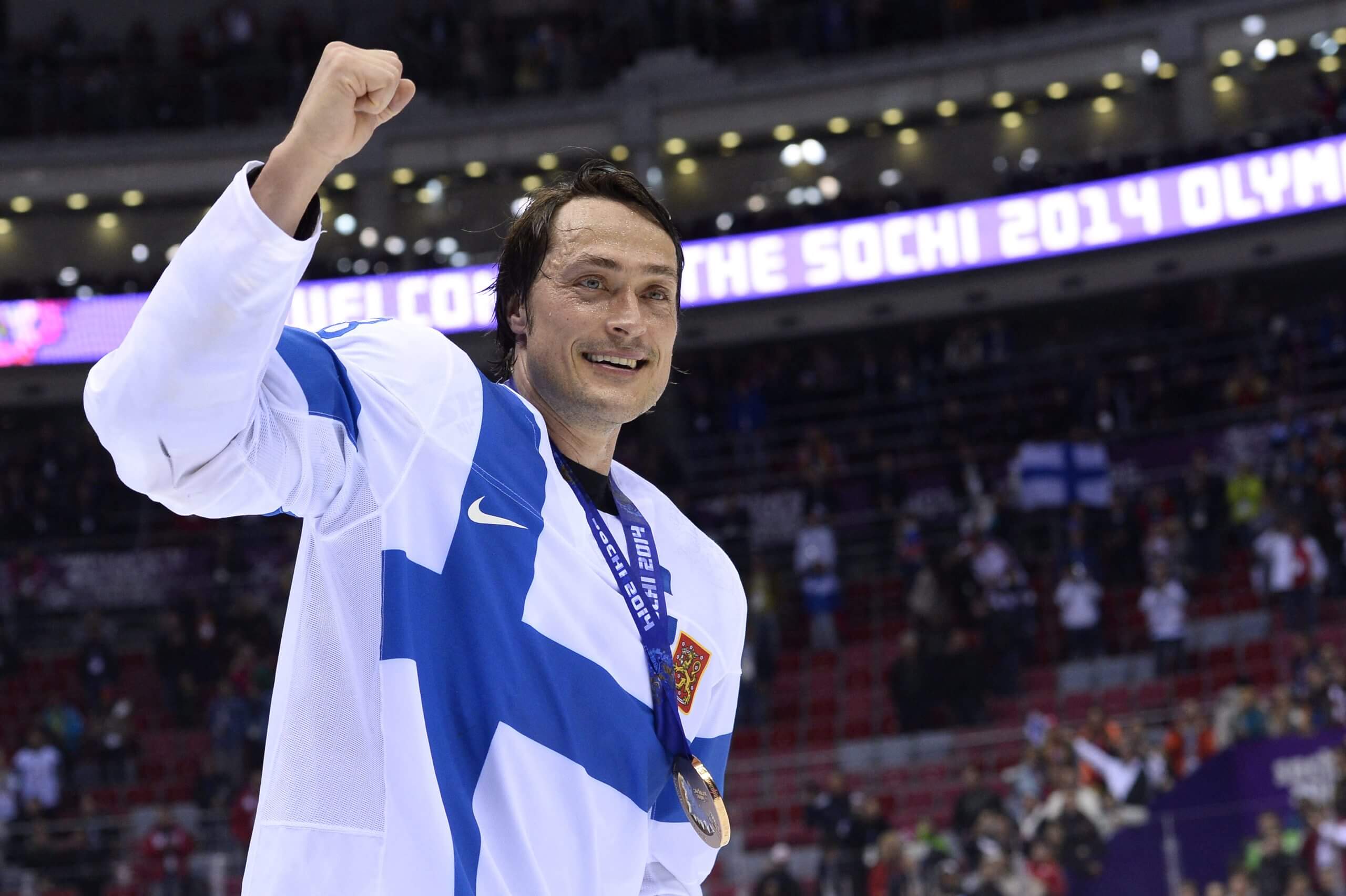
Teemu Selanne has the most goals by an NHLer at the Olympics. (Jonathan Nackstrand / AFP via Getty Images)
Team 2
I know exactly where I’m starting with this squad, and it’s not just because we managed to snub Finland the last time around. Give me Teemu Selanne, who I ranked as the top combined NHL/Olympics star in that list from 2014. He’s the all-time leading scorer among NHL Olympians, in both goals and points, along with almost 700 NHL goals. Easy call.
He did bounce around the league enough to cost us several excellent players, including Sakic, Kariya, Joe Thornton, Chris Pronger and Scott Niedermayer. But what are the odds that that will matter down the line, he asked, completely forgetting the lesson from the previous section.
On the other wing, I’ll take the Russian sniper I didn’t get last time: Pavel Bure.
And at center, another personal favorite. For the second straight time, we’ll turn to a Canadian center who only ever played for the Penguins. That’s right: Shane Endicott gets the call, as we … wait, I’m being told the actual pick is Mario Lemieux. Sure, I guess that works too. He only played in one Olympics, but he did that as the alpha on the best team ever. Combined with his unmatched NHL production, he’s a perfect fit.
Moving on to the blue line, I’m going to go ahead and grab the immortal Nicklas Lidstrom. He wipes all of the same Red Wings as Hasek did, but that’s OK, because Bure and Lemieux didn’t cost us all that much beyond Eric Lindros and a few others. Lidstrom gives us four Olympic tournaments, one back of Selanne for most ever. And we can finish our blue line with another player who shakes free because we don’t have Hasek or Ovechkin this time: We’ll take Zdeno Chara, who went three times.
We’re cooking now, with just one spot to fill and plenty of options available. Or at least, you might think that, until you start digging into the goaltending ranks and realize it’s by far the most limited position. Hmm. Maybe we should have done the goalie first like we did with Team 1. Too late now.
So far, we’ve used players from Finland, Russia, Canada, Sweden and Slovakia, so the obvious absence here is Team USA. But there are only four goalies who’ve played a game for Team USA in the Olympics era, and one of them is Connor Hellebuyck’s one game yesterday. Are any of the other three even available?
Mike Richter is the first option, both chronologically and in terms of total games, with eight. He’s also the only American goalie to ever win a best-on-best, back at the 1996 World Cup. But we lose him to Bure’s brief stint with the Rangers.
Luckily, I think both of the other options qualify. While Jonathan Quick and Ryan Miller played for a combined seven NHL teams, they manage to avoid any overlap with the five players we already have. That’s a relief, because I’m pretty sure our only other option would have been Czech goalie Tomas Vokoun. Quick vs. Miller is actually a pretty fascinating debate, but I’ll lean towards the Vezina and silver medal winner. Team 2’s goalie is Ryan Miller.
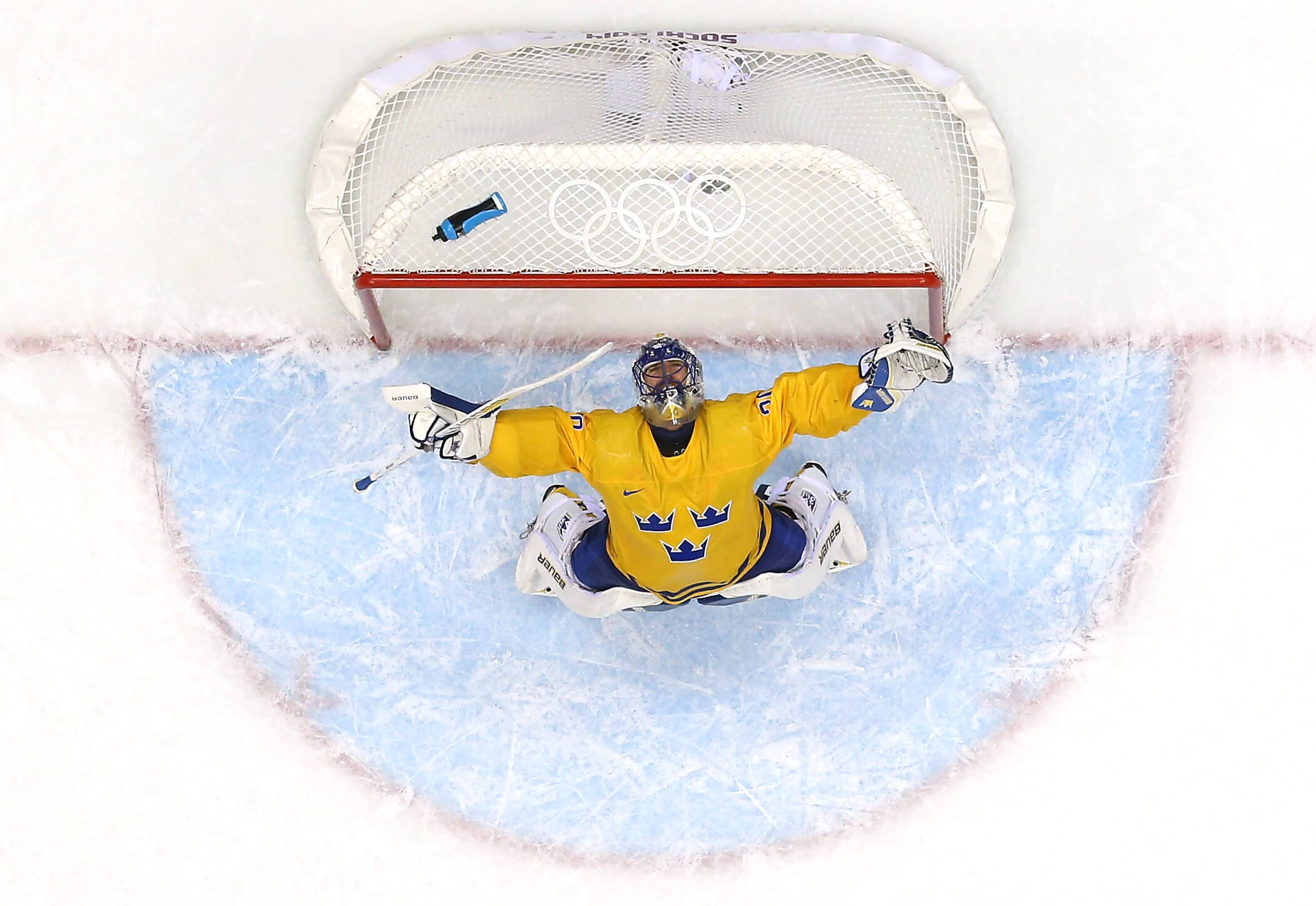
Henrik Lundqvist was a legend for both the Rangers and Sweden. (Martin Rose / Getty Images)
Team 3
One more team and then it’s over to you. And this time, we can begin applying some strategy lessons from the first two rosters. Starting with: Take your goalie first.
Let’s do that. Team 3 will go with Sweden’s Henrik Lundqvist, a Hall of Famer who also happens to be a gold medalist with more Olympic wins than any other NHL goalie by some distance.
Lundqvist also doesn’t cost us too much in terms of other options. We lose out on Artemi Panarin, for example, but we can live with that. I doubt we were going to use our Canada spot on Martin St. Louis or Eric Staal. And of course, we miss out on a Norris winner in Adam Fox, who’d no doubt be a dominant force at the Olympics. (Too soon?)
Lundqvist also costs us one more name, and it’s one you might have been wondering about: Jaromir Jagr, who competed at four Olympics and ranks in the top five for all-time scoring at tournaments involving NHLers. Would he be a good pick? Probably! Am I willing to even entertain the degree of complexity involved in taking a guy who played for nine different NHL teams in this sort of exercise? I am absolutely not. And now, thanks to Lundqvist, I don’t have to.
Up front, we have three Russian centers who haven’t found their way to a team yet in Sergei Fedorov, Pavel Datsyuk and Evgeni Malkin. You really can’t go wrong with any of them, but I’ll go with Evgeni Malkin, if only to keep our Penguins theme going. I’ll play him with one of the most underrated NHL stars of his era, who also happened to be tied with Jagr for fourth on the Olympic all-time scoring list: Saku Koivu, who represented Finland four times (including in 1994, before he made his NHL debut).
And for our last forward spot, I’m going to throw a bit of a curveball: Let’s reach back into history and grab Peter Stastny. His 15-year NHL career earned him a spot in the Hall of Fame, but it ended well before the league started sending players to the Olympics. That’s OK, because he still managed to make appearances in both 1980 and 1994. And he was dominant in those two tournaments, racking up 23 points in just 14 games. The fact that he’s an easy fit because his career barely overlapped with any of our other candidates is a nice bonus.
We haven’t used an American yet, so let’s give a blue line spot to one of the best ever: Chris Chelios is on the squad. He’s easily right there with Leetch as the best American defenseman ever, and he played in four Olympics spanning 22 years from 1984 to 2006. We wouldn’t have been able to use him if we’d taken Datsyuk or Fedorov. Gosh, it sure is lucky for us that we chose Malkin before we had to rewrite this section roughly three dozen times.
I have one last blue line spot to fill, and I’ve yet to use a Canadian. Is it possible that I could somehow work my new co-worker, Chris Pronger, into the team, despite his well-travelled NHL career that saw him play for five different teams? Somehow, yes — the nearest miss is in Anaheim, but Pronger arrives right after Fedorov leaves and is off to Philadelphia right before Koivu arrives. Chris Pronger is on the team. I’ll let him know the next time he steals my lunch out of the office refrigerator.
Here’s what I ended up with.
Team 1
FORWARD
FORWARD
FORWARD
Peter Forsberg (SWE)
Sidney Crosby (CAN)
Alexander Ovechkin (RUS)
DEFENSE
DEFENSE
GOALIE
Brian Leetch (USA)
Roman Josi (SUI)
Dominik Hasek (CZE)
Team 2
FORWARD
FORWARD
FORWARD
Teemu Selanne (FIN)
Mario Lemieux (CAN)
Pavel Bure (RUS)
DEFENSE
DEFENSE
GOALIE
Nicklas Lidstrom (SWE)
Zdeno Chara (SLO)
Ryan Miller (USA)
Team 3
FORWARD
FORWARD
FORWARD
Peter Stastny (SLO)
Evgeni Malkin (RUS)
Saku Koivu (FIN)
DEFENSE
DEFENSE
GOALIE
Chris Pronger (CAN)
Chris Chelios (USA)
Henrik Lundqvist (SWE)
I like all three squads, but it’s fair to say that we seemed to hit some diminishing returns by Team 3. Twist my arm, and I think I take Team 2 over Team 1 by a hair.
Now it’s over to you. Feel free to mix and match from my three teams and see if you can come up with a better combo. Or if you’re really feeling it, ramp up the difficulty by using six new names. (A few suggestions that I wasn’t able to work into my teams: Marian Hossa, Sergei Fedorov, Patrick Roy and Brett Hull). See if you can get Jagr onto a team. Or go completely nuts and build out as much of a full 20-man roster as you can.
Or just hang out in the comments and criticize everyone else’s attempts, including mine. It’s up to you. The main thing is that you don’t get any work done today.