
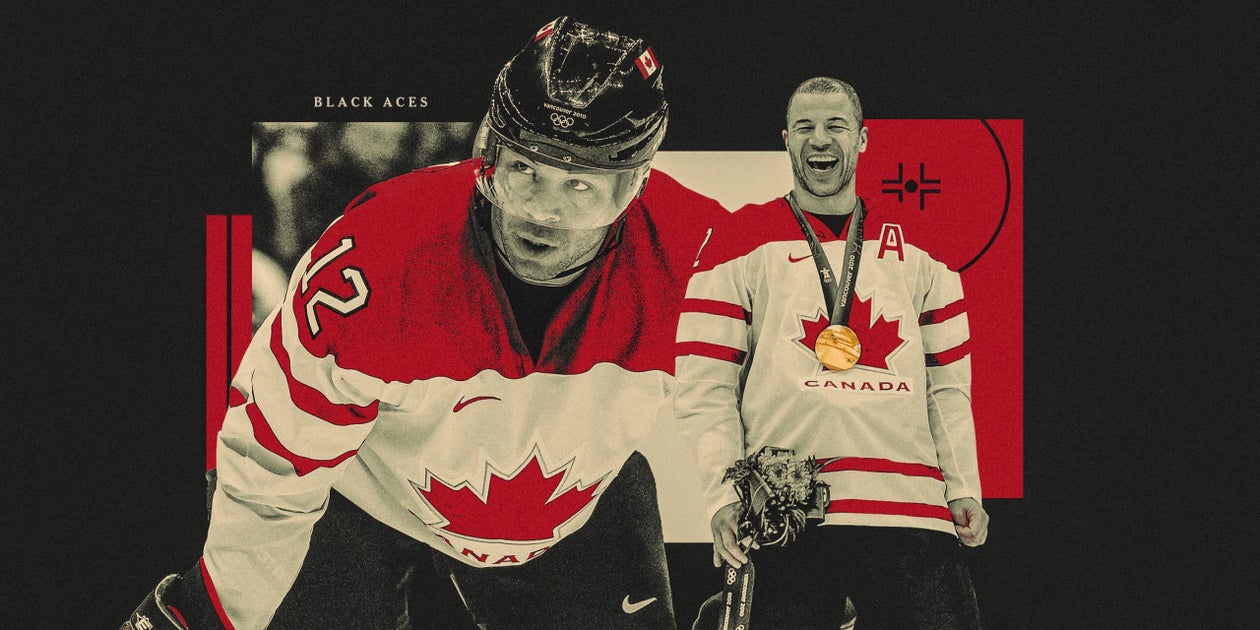
The following is an excerpt from “Black Aces: Essential Stories from Hockey’s Black Trailblazers” by The Athletic’s Julian McKenzie, copyright @2026 and reprinted with permission from Triumph Books. All rights reserved. The book is available for purchase here.
The party began once Jarome Iginla got to his feet on a Sunday evening in February 2010.
Sidney Crosby’s hands were already in the air, his gloves floating above his head as he jumped with jubilation. The weight of an entire nation was thrown off his back. Crosby’s teammates, Scott Niedermayer and Drew Doughty, were the first to catch him once gravity brought him back down. Iginla soon joined the growing dogpile of red-and-white sweaters, with each man achieving Olympic immortality.
Many remember the gold medal, overtime-winning moment as the “Golden Goal.”
“It was one of the coolest memories because it was everything. It was relief, it was elation. You can’t believe it. It was like a minor hockey moment, like in peewee, where you imagine when you’re on the outdoor rink. It’s over. In overtime. Guys throwing their gloves everywhere. It was awesome,” Iginla said.
“It was four-on-four, and I had a rush,” Crosby said, reliving the goal. “It was kind of like a one-on-two, I think. It got broken up. The puck went in the corner. I tried to take it up the wall. Just kind of got stuck along the wall. And when it was stuck, Jarome was coming there to help out … I just jumped to the middle and called for it. Just tried to get it away as soon as it hit my stick, and it went five-hole.”
In the prior game, the Canadians needed a shootout-winning goal from Crosby to upend Switzerland. In the semifinals, Canada needed late saves from Roberto Luongo to preserve a 3-2 win to advance to the final. And just when it looked as if Canada would win over the U.S. in regulation, Zach Parise’s last-second goal sent it to overtime. The Canadians weren’t exactly dominant in 2010, and Crosby bore a significant chunk of that pressure despite playing at his first Olympic Games.
Iginla knew everything about the pressure, having experienced something similar in 2002 when he joined Team Canada at the Olympics as the NHL’s leading scorer at the time. Following a tournament-opening loss to Sweden, Iginla swapped lines to join Joe Sakic and Simon Gagné. Iginla credits Sakic as the savvy veteran who helped him find his place on the team. In 2010, Iginla was able to extend that comfort to the Pittsburgh Penguins’ superstar.
“The whole Olympics, it didn’t seem like goals were coming easy,” said Crosby, who scored four goals and seven points in seven tournament games. “And he just said stay with it, keep going. And he was really supportive. As a young player at the time, and obviously a lot of pressure playing in Vancouver at home at the Olympics, he was just so good to me. So, to be able to connect with him on that goal was pretty big.”
Iginla is the first Black male athlete ever to win a Winter Olympics gold medal when he won in 2002 with Team Canada. Iginla’s worldly assist on the Golden Goal in 2010 wasn’t even his first time delivering in an Olympic gold medal game.
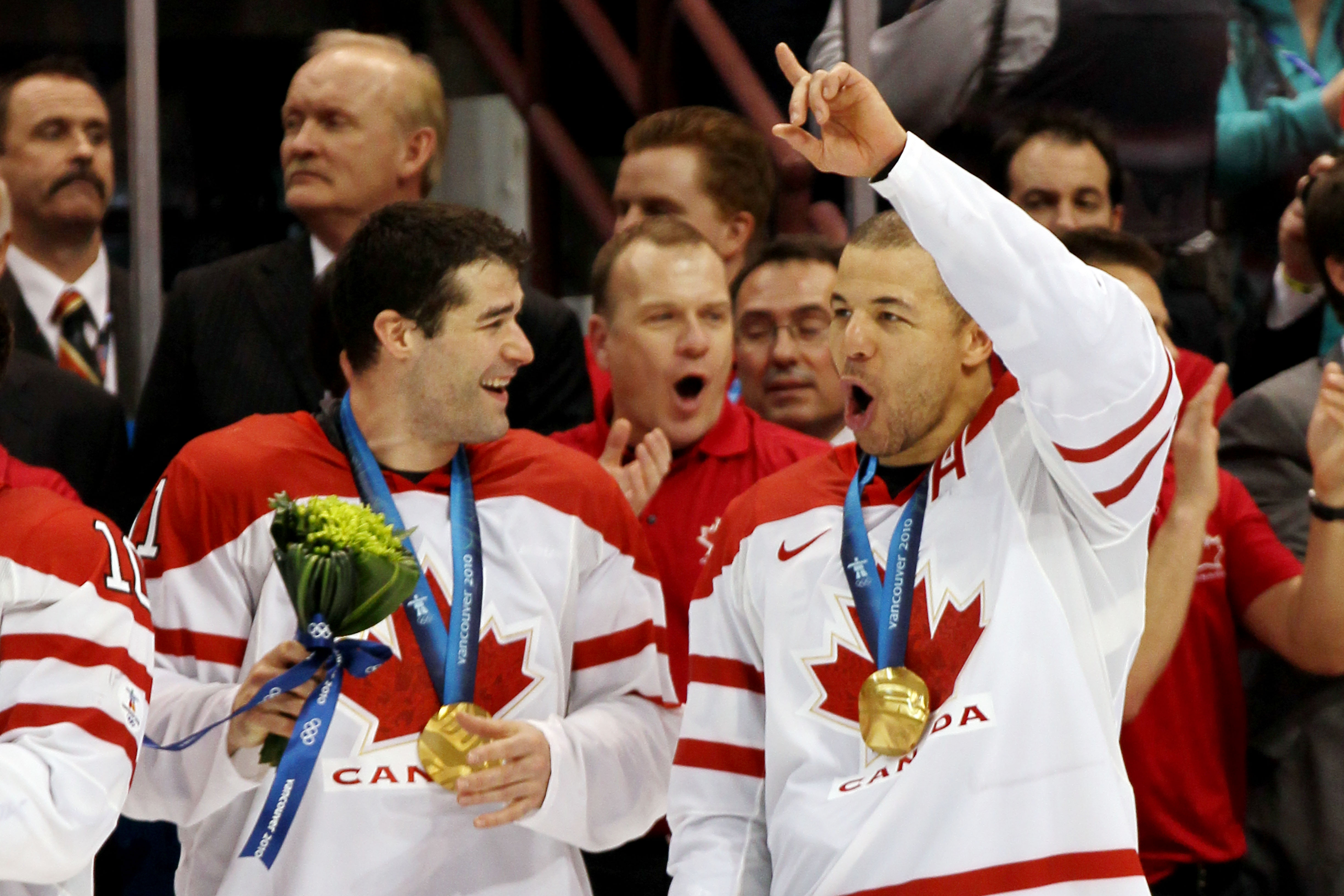
Jarome Iginla (right) and Patrick Marleau celebrate after receiving gold medals following the 2010 Winter Olympics men’s gold medal hockey game between Canada and the U.S. (Bruce Bennett / Getty Images)
Iginla saved his best performance of the 2002 tournament in the gold medal game, a matchup against rival and host United States. Iginla gave the Canadians their first lead of the game in the first period. Sakic fed Iginla with a pass from the faceoff circle. Camped in front of the goal, Iginla swiped at the puck and beat Team USA goalie Mike Richter with less than 90 seconds to play in the first period.
The Canadians spent much of the third period clinging to a one-goal advantage. But it was Iginla who gave Canada the breathing room it needed. Sakic rushed up ice and entered the offensive zone. As two defenders closed in on him, he passed the puck back to Steve Yzerman. The then-Detroit Red Wings captain sidestepped around a defender before finding a wide-open, streaking Iginla, who immediately shot the puck toward the goal. Richter tried to catch it with his glove but couldn’t hold it cleanly.
“It went up in the air, and it barely rolled over the line against Richter,” Iginla said.
When the puck crossed the line, Canadian fans celebrated in the stands and across the world. Members of Canada’s executive team, including Wayne Gretzky, hugged one another. Gretzky pumped his fists in celebration as he looked down onto the ice.
In victory, Iginla became the first Black male athlete to win a Winter Olympics gold medal. Following in the footsteps of Darren Lowe and Claude Vilgrain, who played in the Olympics before him, Iginla succeeded.
“You think back to all the things that fall into place from starting hockey to my grandparents’ support and getting to be a part of it,” Iginla said. “(Hockey’s) not just a sport for me. It’s been my life, and it’s been an awesome thing to be a part of.”