
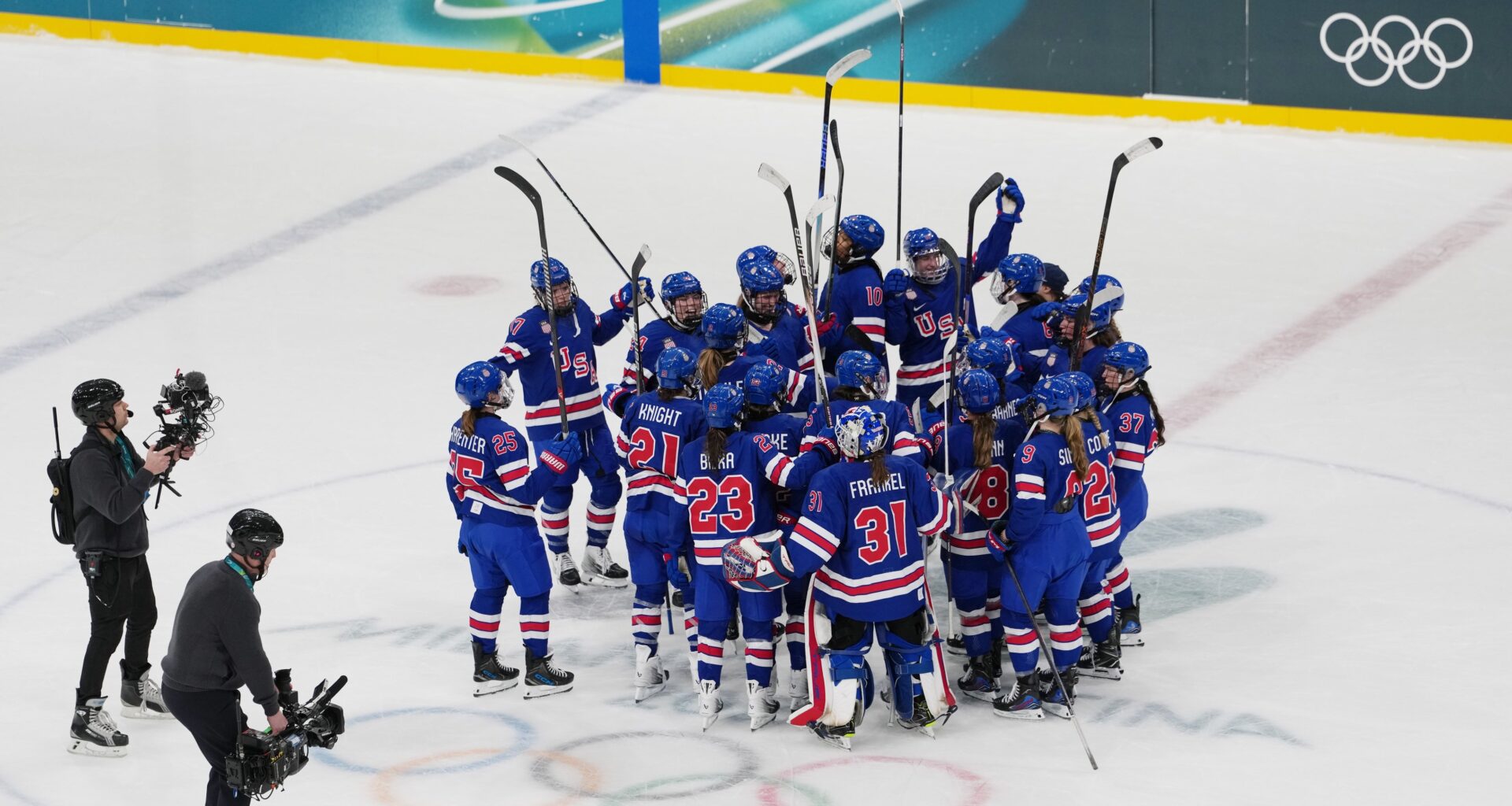
Team USA’s women’s hockey team is storming through the 2026 Winter Olympics, and the heartbeat of this run has a distinctly Minnesota pulse. With an unbeaten record and a berth in the semifinals already secured, players with ties to the State of Hockey are driving the tempo, scoring, and the standard.
Through the quarterfinals, the U.S. has ripped off five straight wins, outscoring opponents by a combined 21-2 and posting four shutouts in five games. The Americans opened with a 5-1 win over Czechia, then stacked dominant performances against Finland (5-0), Switzerland (5-0), and another preliminary win before blanking host nation Italy 6-0 in the quarters.
It’s been an absolute clinic in pace, depth, and defensive suffocation. The 51-6 shot differential against Italy summed up just how tilted the ice has been. That control has allowed USA head coach and staff to roll four lines and three pairs, keeping legs fresh while the Minnesota core leads the way in key moments. As the tournament shifts into medal territory, the U.S. has looked less like a team searching for its identity and more like a group simply refining how dominant it can be.
No state has more representation on this U.S. women’s roster than Minnesota, and it shows in every zone. Four players with Minnesota hometown roots, defender Lee Stecklein (Roseville) and forwards Kelly Pannek (Plymouth), Grace Zumwinkle (Excelsior), and Rory Guilday (Chanhassen), headline a broader group of eight women with Minnesota ties, including multiple Minnesota Frost standouts from the PWHL.
For a program built on continuity and culture, having so many players who grew up in the same rinks and college programs has created instant chemistry. Stecklein, the four-time Olympian and longtime blue-line anchor, is again the quiet stabilizer of the back end, eating heavy minutes and leading a defensive group that has allowed just two goals all tournament. In many ways, the U.S. identity starts with her: long reach, calm puck movement, and a knack for killing plays before they become chances.
Up front, Minnesota forwards are doing what they’ve done for years in high school, the WCHA, and now the pro ranks: tilt the ice. Pannek, playing in her third Olympics, has stepped into a veteran center role, helping drive a top-six that can play both matchup and attack minutes while chipping in on both special teams units. Her playmaking and puck support have been a key reason the U.S. has rolled through the preliminary round without ever really looking threatened.
Zumwinkle brings the heavy, north-south game that fits Olympic ice perfectly, a strong side, a quick release, and the willingness to live at the top of the crease. She has been a focal point of the U.S. forecheck, pressuring opposing defenders into rushed decisions that quickly turn into zone time and scoring chances. Add in Lake City product Taylor Heise, another Minnesota Frost star making her Olympic debut, and the American attack suddenly looks like a Gophers alum game with world-class pace.
What makes this run feel uniquely Minnesotan isn’t just the number of players, but the roles they occupy. Stecklein is the veteran pillar, Pannek the cerebral center, Zumwinkle and Heise the attacking engines, and Guilday a rising two-way defender now getting her first taste of Olympic pressure minutes.
Many of them came through the same high school programs, won titles at the University of Minnesota, and now carry that shared DNA into the biggest stage the sport offers. For fans back home, every U.S. game in Milan feels a bit like a statewide reunion: Roseville, Plymouth, Excelsior, and Lake City all stitched into the same red, white, and blue crest.
With the semifinals looming and the Americans chasing a return to the top of the Olympic podium, the expectation in Minnesota isn’t just that “our” players are there, it’s that they’ll be central figures when the medals are handed out. If the first five games are any indication, the 2026 U.S. women’s Olympic run is being written with strong Minnesota ink, and the last, most important chapters are still to come.
Think you could write a story like this? Hockey Wilderness wants you to develop your voice, find an audience, and we’ll pay you to do it. Just fill out this form.