
The Athletic has live coverage of Canada vs. Switzerland in the 2026 Olympic women’s hockey semifinals.
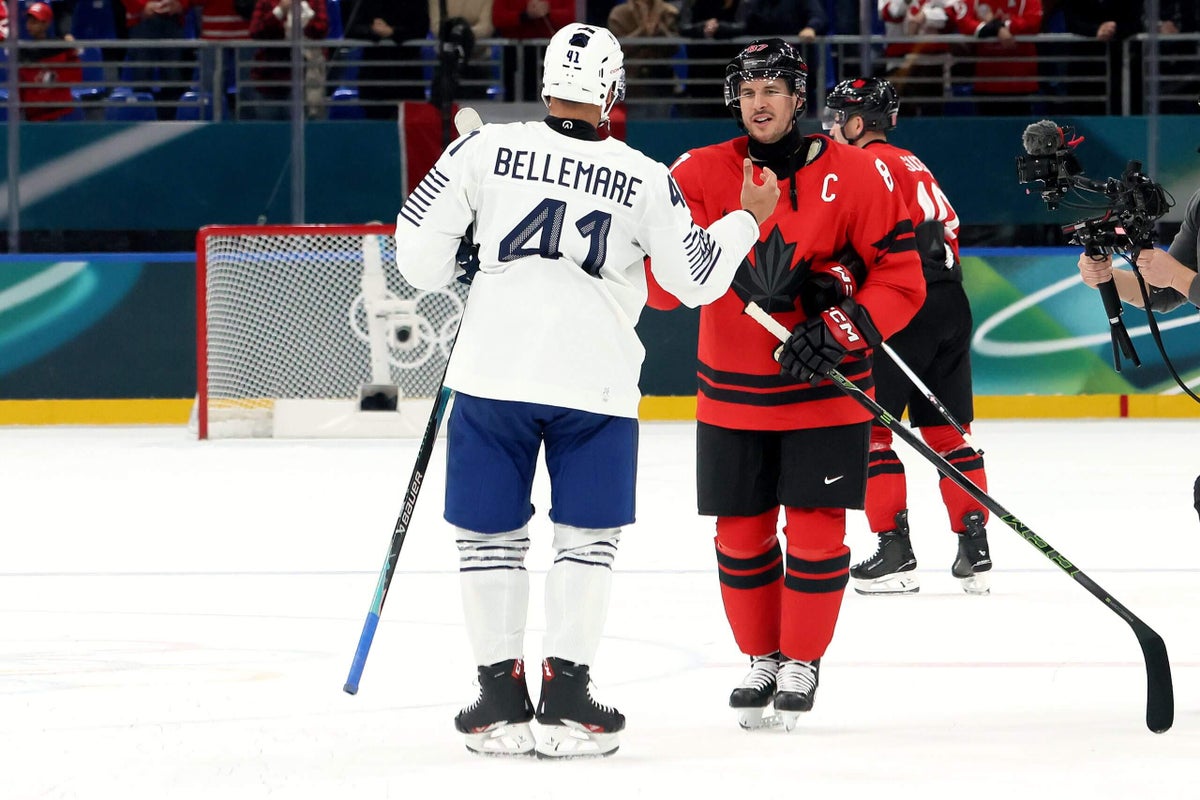
MILAN — I could sit here and wax poetic about what it means for France to be on the global hockey stage. I could spin 1,200 flowery words about how awe often overwhelms opportunity when you look up at a faceoff circle and see Connor McDavid, or Nathan MacKinnon, or Macklin Celebrini, or — gulp — all three. I could throw in a bunch of colorful adverbs to underline just how momentous it was when France scored three goals in five minutes on Friday afternoon to take a 3-2 lead on the Czech Republic, a traditional hockey power.
Or I could just let Pierre-Édouard Bellemare do it. He’s better at it, anyway.
“We came here to earn respect,” the 40-year-old elder statesman of French hockey said after the Czech Republic pulled away for a 6-3 win. “There was never talk about a medal. For us, we try to explain it to all our newspapers at home that don’t know the game, that don’t know our team. They compare us to handball or soccer or basketball, rugby — we are not there. In the international level, France is nowhere near the 12th (best team). That’s the truth. We’re in a tournament where this is supposed to be the 12 best nations in the world. We knew it was going to be difficult, but we always said whatever the talent that we’re facing, they cannot have more heart than us and more legs. Play like dogs and we’ll see at the end of the game. I feel like we’ve done this. It’s just unfortunate that a couple mistakes there and there, and then the score looks like we were totally out of the game, when actually, even if they had triple the amount of shots, it was 4-3 before the second. If you would have told me that two years ago, I would have signed a contract, no-brainer.”
I could listen to Bellemare talk all day. That was true two years ago when he was wrapping up a 10-year NHL stint with the Seattle Kraken, and it’s still true now that he’s wearing the captain’s “C” for his native country. There’s a reason he’s the captain. There’s a reason he’s content to stand and answer questions at length even though he’s a middle-aged man whose body is breaking down, and standing in the mixed zone talking to reporters after a 60-minute game is tantamount to torture. At one point, he had to lean on the waist-high barrier just to brace himself for a moment.
Bellemare is French hockey. He’s a national institution who helped put his country on the hockey map. He was on the national team that attempted — and failed — to qualify for the Olympics way back in 2004. And 2008. And 2012. And 2016. And 2021. And 2024. But Russia’s exclusion from the 2026 Olympics opened the door for France, and here they are. And here Bellemare is. Finally. So if you think he’s going to skip right through the mixed zone to rest his aching knees, his balky back, you just don’t understand what this all means to him. He wants to talk about it, to revel in it, to make others — back home and abroad — understand.
France isn’t here to win. France is here to learn. To experience. To soak it all in. And Bellemare isn’t here to win, either. He’s here to teach. To connect. To ensure his young teammates do soak it all in.
Alexandre Texier is the only current NHLer on the French roster, but maybe in four years there’ll be more. That’s Bellemare’s hope. And after a solid but unmemorable NHL career, maybe that could become his legacy.
“I see myself coming into the World Championship in two thousand — I’m not gonna say the date,” Bellemare said with a smile. “And I was a youngster, 18 years old. You try something (on the ice) and it goes straight back into your face, right? This is the moment that can mold a generation. This is the moment that can force kids to see OK, we’re never going to play against guys like this in our league in France. So this is the moment where you’re playing the best. It’s a privilege to do that. And those mistakes, if you don’t see them as a lesson, then there’s no point in playing this game that we all love so much. That’s how I see it.”
Roman Červenka, the venerable captain of the Czech Republic, is a little different. Like Bellemare, he’s 40 years old. Like Bellemare, he’s beloved back home for his ceaseless devotion to his native country. But unlike Bellemare, he’s in his fifth Olympics. And unlike Bellemare, he is here to win. He has to win — a rivalry game, a medal, something. It’s been nearly three decades since Dominik Hašek led the Czechs to the gold medal in Nagano in 1998. In Červenka’s time, Czechia has finished seventh, sixth, fourth, and ninth.
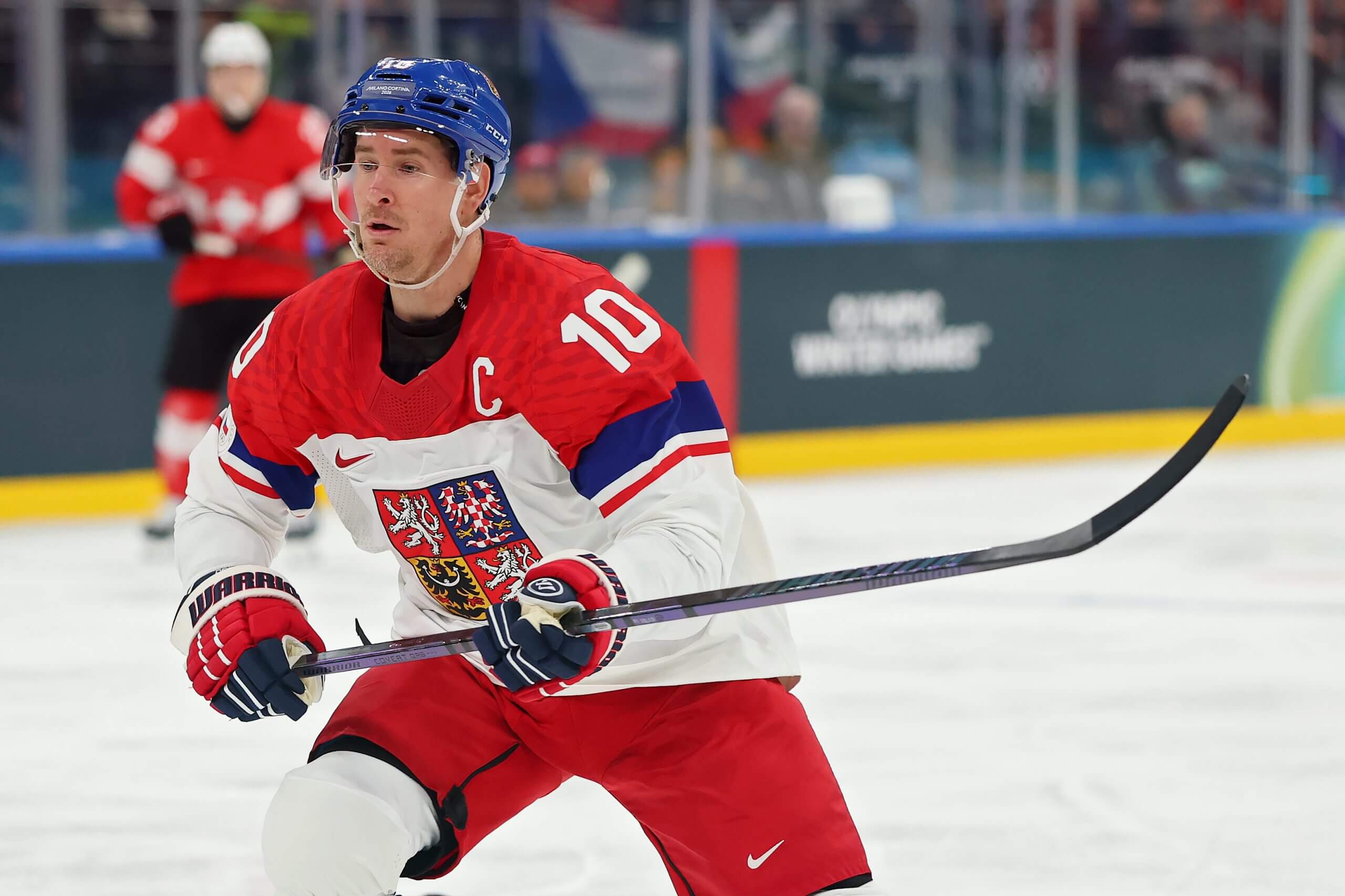
Roman Červenka is beloved in his native Czechia. This is his 34th event representing his homeland, dating back more than 20 years. (Gregory Shamus / Getty Images)
This year’s team — with three strong NHL goaltenders, and two star forwards in David Pastrňák and Marty Nečas — has a real chance to leave Milan with a medal. Even after Sunday’s overtime loss to Switzerland left a difficult road ahead, there isn’t a team in this tournament that the Czechs don’t think they can play with.
Červenka scored a goal in that France game. That mattered to him. While he understands his role as the venerable veteran, he wants to be more than just a mascot, a father figure.
“It means a lot,” he said. “Every game for the national team means a lot, and I’m proud I can be here and I’m really glad. I still believe I can help the team. I enjoy every game, every second in this jersey.”
That’s why Červenka is so beloved back home. While every player in this tournament wants to represent his country well, those from North America, Sweden and Finland are just dabbling during a two-week break from the NHL. For so many Europeans, international hockey comes first. Always has, always will. This is the 34th event in which Červenka has worn the shield of Czechia, dating back more than 20 years.
He’s been through the pride of playing for the bronze medal in PyeongChang in 2018, and he’s been through the humiliation of flaming out in Beijing. The passion of Czech hockey fans is extraordinary. You can feel it inside Milano Santagiulia Ice Hockey Arena when they’re jumping in unison, chanting and singing at big moments of the game. But that passion can also be a crushing weight.
“It’s a pleasure,” Červenka said when asked what it’s like being a national hero. “But it’s not always like this. It depends (on our results).”
Asked if they’ve been hard on him in the past, Červenka didn’t even pause to think about it: “For sure,” he said.
But playing without them in Beijing, during the pandemic, was disorienting. There was no way Červenka was going to let that be his last Olympic experience. He owed them a better performance, and he owed himself one last chance to earn their love.
“I think we have the best fans in the world,” he said. “It’s always strange without them. We are happy they are here. Big energy from them.”
Then there’s Sidney Crosby. He’s not quite 40, but at 38, he’s pretty close. Crosby couldn’t be more different than his fellow aging captains. He’s one of the most accomplished players of all time, with three Stanley Cups and two Olympic gold medals, one of which he won on home soil by scoring the golden goal in overtime. Virtually nothing could befoul Crosby’s legacy in Canada at this point. Certainly nothing that could happen on the ice in Milan.
And yet, he feels the magnitude of the moment every bit as much as Bellemare and Červenka. That thin little “C” stitched on your jersey can feel heavy as hell.
“Playing for Team Canada over the years, that’s something you learn is part of it — that expectation and that responsibility,” he said.
Like Bellemare and Červenka, Crosby is no longer burdened by being the top threat on his team. But his contribution still means something. He had two assists in the opener against Czechia, a goal the next day against Switzerland, and added an assist against France. He might not have the speed of McDavid, or the strength of MacKinnon, or the youth of Celebrini, but he still competes as hard as anybody. He still matters. He’s still the one Canada will look to in the medal round, when the pressure mounts and heartbeats rise and breath shallows.
Crosby is Canadian hockey. Just as Červenka is Czech hockey. Just as Bellemare is French hockey.
The expectations are different, the goals don’t align, and the glare of the spotlight varies wildly. One seeks respect, one redemption, one reaffirmation. But one way or the other, the weight of a nation rests on their shoulders. Which is exactly where they want it.
It’s about pride. And pride is universal — whether you’re on top, stuck in the middle, or mired all the way at the bottom.
“You can hear it in the locker room, when guys are talking about which teams are going to be there, and then they’re like, ‘Oh, we’re playing France,’ and one guy’s laughing about it and then the other guy’s like, ‘No, we played them last time — it was a nightmare,’” Bellemare said. “This is the kind of respect that you get to earn. Is the media going to give us that type of respect? I don’t know. We don’t have McDavid. We don’t have anyone fancy. And we are a small country. But at the end of the day, if we can be here and show our value to our countrymen and show them that, OK, these guys are working their nuts (off)? I’ll be happy. Happy with that.”
With that, Bellemare straightened up, twisted this way and that to loosen up his 40-year-old spine, and limped off to the next batch of reporters, the next set of questions, the next opportunity to talk about the game he loves, the country he loves, and what it means to bring them together for the whole world to see.