
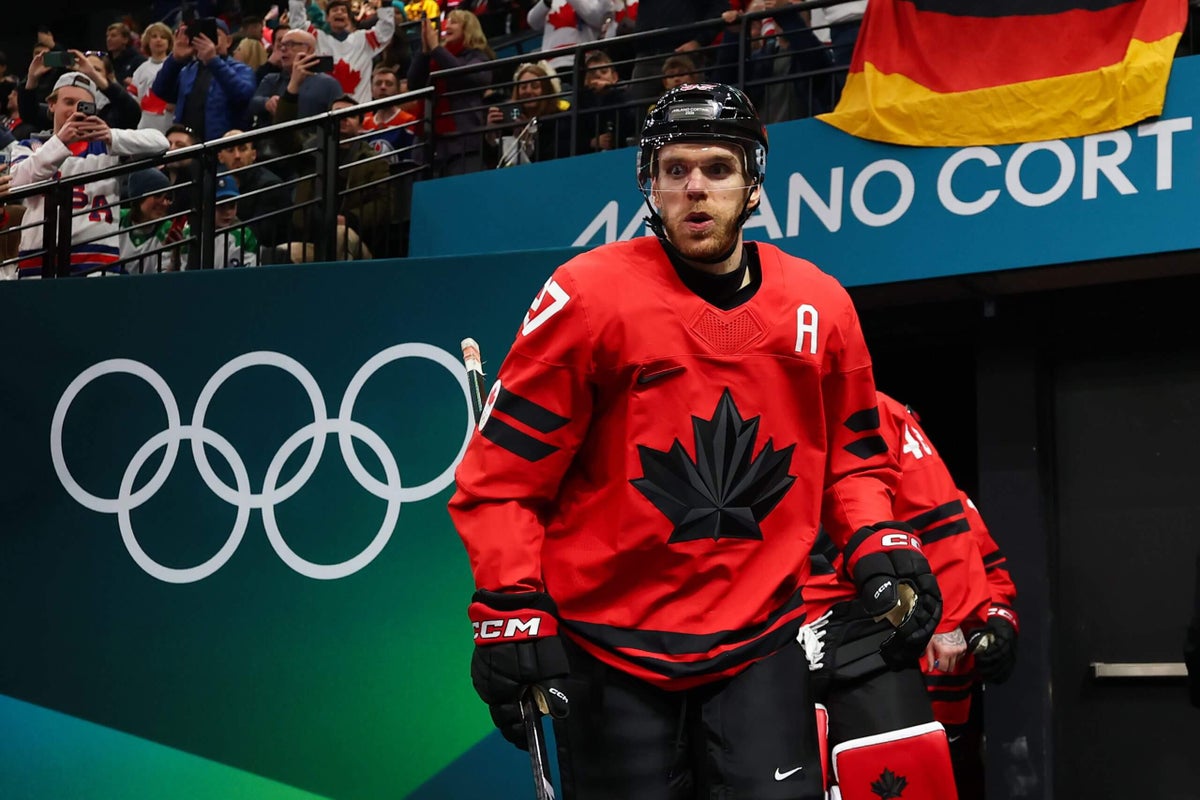
Chris Pronger is a guest columnist for The Athletic during the 2026 Milan Cortina Olympics.
There were a couple of years with Team Canada when we weren’t sharp at the start of the Olympic tournament, and went on to win gold. I was also on a team that swept through the round-robin round in 1998 in Nagano, and we fell short of a medal.
This is the thing you have to keep in mind when you’re talking about the round-robin stage of the Olympics. It just represents a good start, nothing else.
At this stage of the tournament, I see five teams with a path to winning gold. Canada has dominated. Slovakia looks like a threat. Finland looks gritty and hard-nosed, as usual. The United States and Sweden, though, haven’t been as consistent. As a result, they look likely to match up against one another in the quarterfinals.
Sweden has been sleepy and out to lunch. They’ve honestly looked disinterested at times. They’re better than they’ve played, but they’re running out of time to prove that.
For the United States, it’s obvious that they’re one of the best teams in this tournament, but there were moments during round-robin play when I was watching them thinking they needed everybody to get their s— together.
It looked like they felt their way through the first two games and then really got back to their identity of being in your face, and playing physical with an edge, on Sunday against Germany. After looking slow and deliberate in their first two games of the tournament, suddenly against Germany, the U.S. looked more like the team we saw at the 4 Nations Face-Off.
This can be the tough part about trying to figure out this tournament, because underdog teams do hang around.
When you face some of those nations that aren’t counted among the traditional hockey powers, those players have a lot of pride and swagger. They’re playing for their country, they’re playing for honor, and you can see them doing everything in their power to try and knock off a Goliath on the world stage.
The problem for those teams, and we’ve seen it over the past week in Milan, is that they just don’t have the depth to skate with Canada and the USA, and with Finland and Sweden, too.
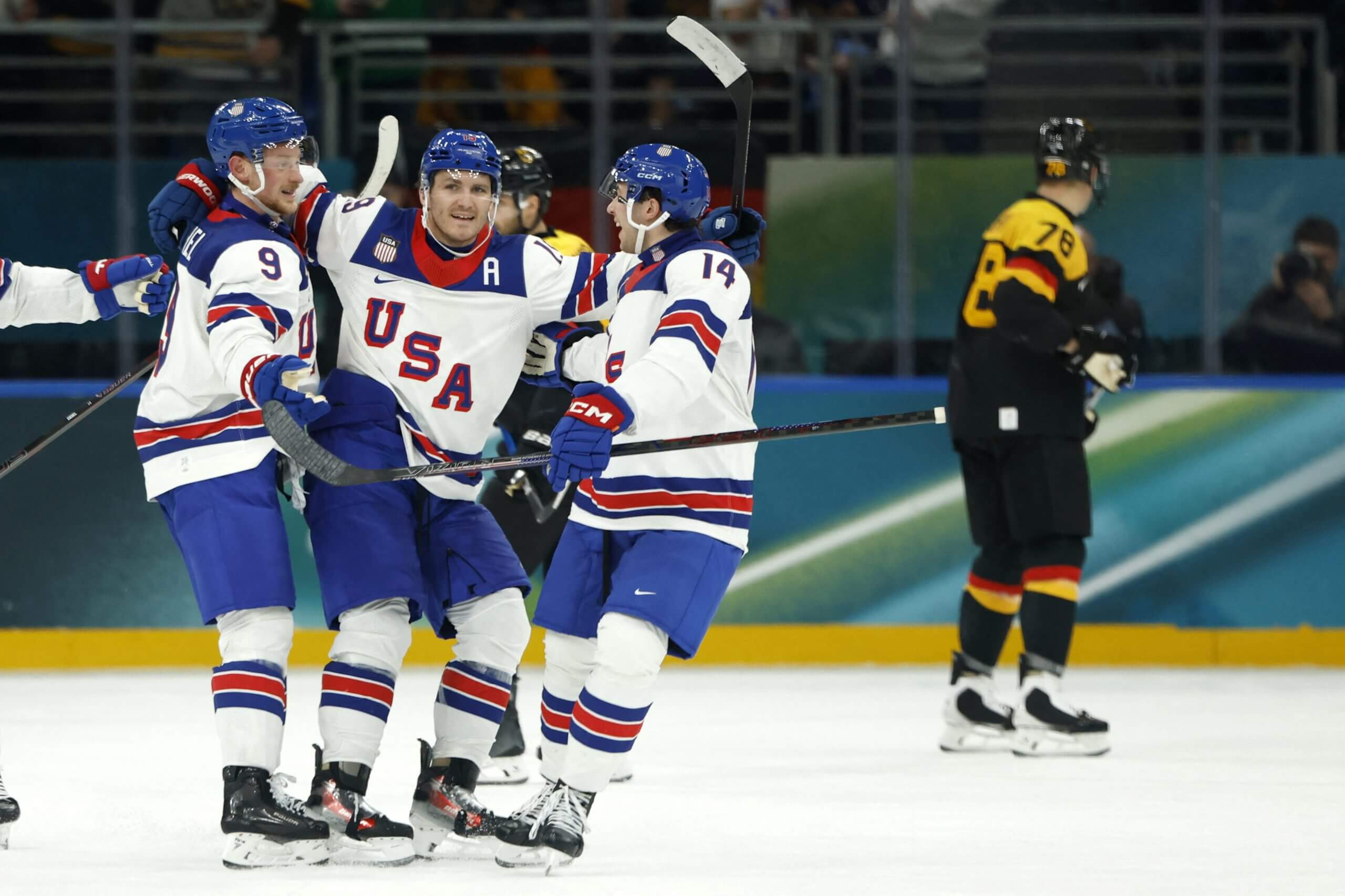
The tournament is about to get more intense for the United States. (Geoff Burke / Imagn Images)
Especially Canada and the USA, they just come at you with wave after wave of pace and pressure. It’s nonstop. For the countries with less depth and fewer NHL players, they wear down and start to look a bit exhausted toward the latter part of the second period. That’s when the United States and Canada start to put their foot on their opponent’s throat.
In the elimination round, it’s different. The margins get fine. Think about the game between the USA and Denmark this past Saturday. Denmark got that 4-3 goal on a muffin shot from the point late in the second period, and they were in that game until the midway point of the third.
That’s a dangerous scenario once you get into the elimination round. You get a hot goalie, a team that won’t go away and a bunch of motivated players who are willing to defend like crazy, and suddenly wild s— can happen when it’s a do-or-die, Game 7 environment.
We’ll have to see how things come together, and which of these teams can really peak at the right time.
Because it can flip fast. I’ve been concerned with what I’ve seen from Sweden in this tournament, but then I see on Monday that they’re changing up their lines and defense pairs ahead of the qualification-round game against Latvia.
I find that interesting. These are the best players in the world, but slotting them and pairing them with the appropriate linemate or defense partner matters more than people think.
It’s about finding the right fit. Sweden’s defense hasn’t looked fast enough to handle the dump-and-chase game in the round robin, but if you suddenly have Gustav Forsling and Rasmus Dahlin as your top pair, I think that changes things immensely.
There’s also some matchups that players have been identified for. You watch closely now and you’ll see players playing in groups of five. So you’re looking at matchups and looking at maximizing the talent you’ve got.
For Sweden, we all know that Victor Hedman hasn’t played a ton of games leading up to this tournament, coming off of injury, and he’s not 25 anymore. Suddenly in the elimination round, it looks like he’s going to start on the third pair.
I can relate to that. I played on the third pair for Canada in 2010 when I was 35.
At that stage of your career, somehow, it still isn’t easier to take on a lesser role. Even for your country. You just want to play and that never goes away. You always want to play. Of course, the big difference between me playing third pair in 2010, and Hedman right now, is that I didn’t go into that Olympic tournament coming off of a lengthy absence due to injury.
Still, I remember going into the Olympics in Vancouver and I felt like I was recovering from the compressed NHL schedule in the round robin. I was tired. It took me a bit of time to recover and get back up to speed.
Putting Hedman on the third pair doesn’t mean that he’s not going to be crucial for Sweden. It’s just about putting guys into a better position to succeed. He will be a matchup nightmare for the opposition.
Now, going into the quarterfinals, they won’t be projecting him to play a ton against Auston Matthews and Jack Eichel. He’ll probably be matching up more against Jack Hughes and Vincent Trocheck’s lines instead of the top two lines.
They needed to figure something out. Setting up Hedman to play on the third pair, he’s going to be fresher and that plays to his advantage. Once he starts feeling the tempo, you can start ramping up his minutes again. They can move guys around situationally, if they want to.
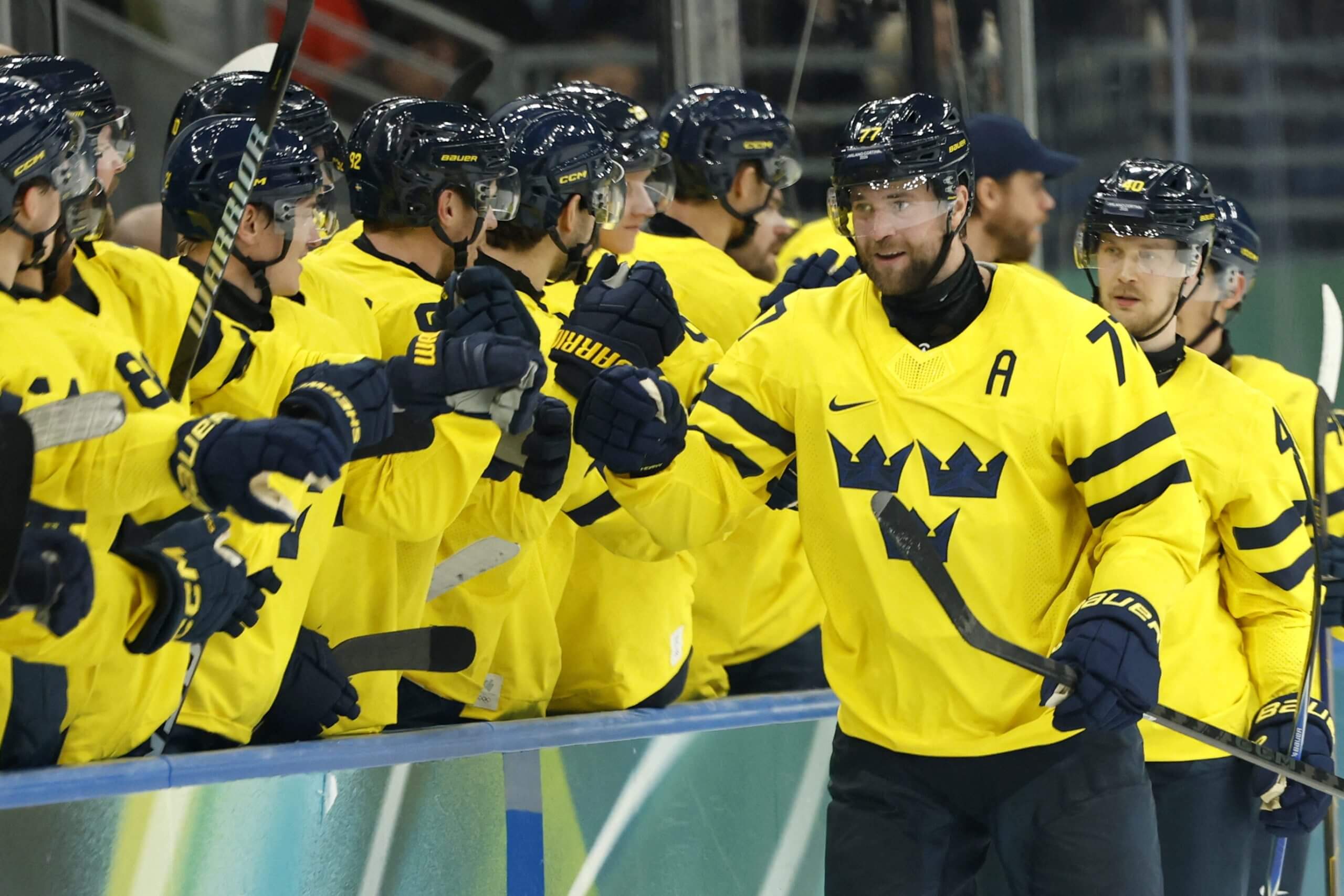
Victor Hedman still will play an important role for Sweden. (Geoff Burke / Imagn Images)
For the USA, if they do meet Sweden in the quarterfinals, there’s no question that they’re a different beast than the competition the USA has faced so far. That lineup is all NHL players, they’ve got a system and we’ll see how their goaltending holds up. They’re a real threat.
The one thing Sweden doesn’t have is a stud center like Team USA has. That Leo Carlsson injury really killed them there. They don’t have the centers with the sort of size and skill to really lean on opponents, and I think that’s a deficit that’ll matter against a team like the United States.
This is where you have to be careful making bold predictions about how the tournament will go based off of the round robin. Canada and the United States look like the best teams, sure, and we should give them their flowers, but we need to temper our expectations just a little bit because they haven’t played anybody of substance yet. They haven’t played anybody with a roster that’s filled with NHL players, and that’s going to be the gauge of how ready for prime time they really are.
At this stage of the tournament, teams can switch up their lineup and find another gear. Or teams can get too sloppy.
When you have a blowout game like the one Canada had against France, for example, I have mixed emotions. A game like that can build your confidence, because you get to go into the elimination round having run over an opponent.
Nothing is guaranteed, though. Those games can also make you a bit loose, a bit too comfortable, and you can get away from playing your system.
Canada hasn’t been tested yet. So as great as they’ve looked, we have to be honest that we don’t have answers to some of the questions we had before this tournament started. How good is their defense corps, really? How good is their goaltending?
One thing I think we do know is that Canada’s top line — when Nathan MacKinnon gets stacked with Macklin Celebrini and Connor McDavid — is going to be a brutal matchup for anybody. I mean, that’s just crazy. That line is the personification of speed and skill.
I have been blown away by what we’re seeing from Celebrini right now. For a 19-year-old — who was eligible to compete for Canada at the World Juniors this year — to play at that pace and with that doggedness and that level of skill, it’s very impressive. He’s not getting caught up in the moment or the spectacle of the Olympics. Maybe after the game he can be in awe of the environment around him, but when he’s playing, he’s just so dialed.
He’s so quick that he’s making something happen almost every shift with effort, and with how agile and creative he is in the corners. He’s taking the puck to the dirty areas and his competitive motor and drive is through the roof.
If you notice, Celebrini is always in motion. If he doesn’t have the puck, he’s working to get it back. Or he’s working to find quiet ice, and that makes space for his linemates because suddenly he’s a decoy. Man, I love watching how unselfish his game is.
There’s two things I want to say about Celebrini’s performance at this Olympics. The first is that this isn’t an “emergence.”
Maybe he was emerging last year in his rookie campaign, but now he’s showing everybody that he has arrived. He’s fourth in the NHL in scoring and is already performing like one of the best players in the game. Maybe we need to start thinking of him in that regard. He is a superstar now!
The second thing is that he may be young and humble and he might carry himself like he’s just a likable young player, but you have to be a killer to play the way he plays.
He plays like a guy that wants to win every shift, who wants to impose his will on you every time he’s on the ice. That sort of mentality, it doesn’t just happen. He’s clearly working tirelessly in the offseason to hone his craft. It’s obvious that he’s willing to do whatever it takes, in the gym and on the ice. To match that elite skill level with an elite work ethic, that doesn’t come around very often. When it does, you’ve got a recipe for greatness.
From Celebrini’s play — not his “emergence” — to getting the No. 1 seed, for Canada this tournament has gone as well as you could’ve hoped for so far.
The biggest question mark is their health and their goaltending. I don’t know how Josh Morrissey is doing, but his absence means that Canada can’t afford to lose another defenseman. Then there’s the big goalie question, one that remains even though the play of the Canadian goaltenders wasn’t really a story for them at all in the round robin.
I think it should stay that way. For me, Canada has come this far with Jordan Binnington. At this point, you’ve pretty much already said that we’re going to live and die by this guy. He was able to rise to the challenge last year, so why would he not be able to do that now? The guy is a Stanley Cup champion. He’s the 4 Nations-winning goaltender. That should be enough.
I know what the data and the analytics say, but it’s not as if Canada’s other goaltenders have taken the net with a Vezina- or MVP-level season. If that were the case, maybe it would be different. Since it isn’t, you’ve got to stick with the Cup winner who won the 4 Nations for you. I mean, what are we even talking about here?
The truth is, there’s five teams that I think have a path to winning gold: Canada, the United States, Sweden, Finland and Slovakia. All of these teams have some question marks between the pipes.
Canadian fans aren’t going to feel comfortable with their goaltending until they win, or they don’t. That’s just how it goes. The Slovakian goaltender has had a couple of great games, but he’s untested. I’m not even sure who Sweden will start once the elimination round begins. Juuse Saaros and Connor Hellebuyck haven’t been their normal selves for their NHL teams this season.
What it boils down to is how these teams perform when the stakes are highest and when the elite players start to elevate in that elimination-game environment — when one soft goal at the wrong time can kill you.
To this point, we’ve had a chance to watch some fun hockey. Watching Italy and Denmark and Latvia, playing for their countries and for the opportunity they’re getting at the Olympics, I love that part of this tournament.
Now we get to the games that really matter. The United States will probably play the toughest quarterfinal game in these Olympics, and we’ll see if they can continue to be the physical aggressor and keep running teams over when opponents are stacked with NHL players.
We’ll see if Canada just has too much depth and too much speed with their dump and chase, forecheck, grinding style, even for a team as good as Finland to handle in the semifinal — should that be the inevitable matchup.
Anything can happen in single-game elimination, but the two North American giants have been head and shoulders above the other teams thus far.
I think, for the good of the sport, we’re hoping we get to see the United States and Canada play with gold on the line. As the real tournament begins, however, Finland, Slovakia and Sweden are still lurking out there, and they’re still real threats.