
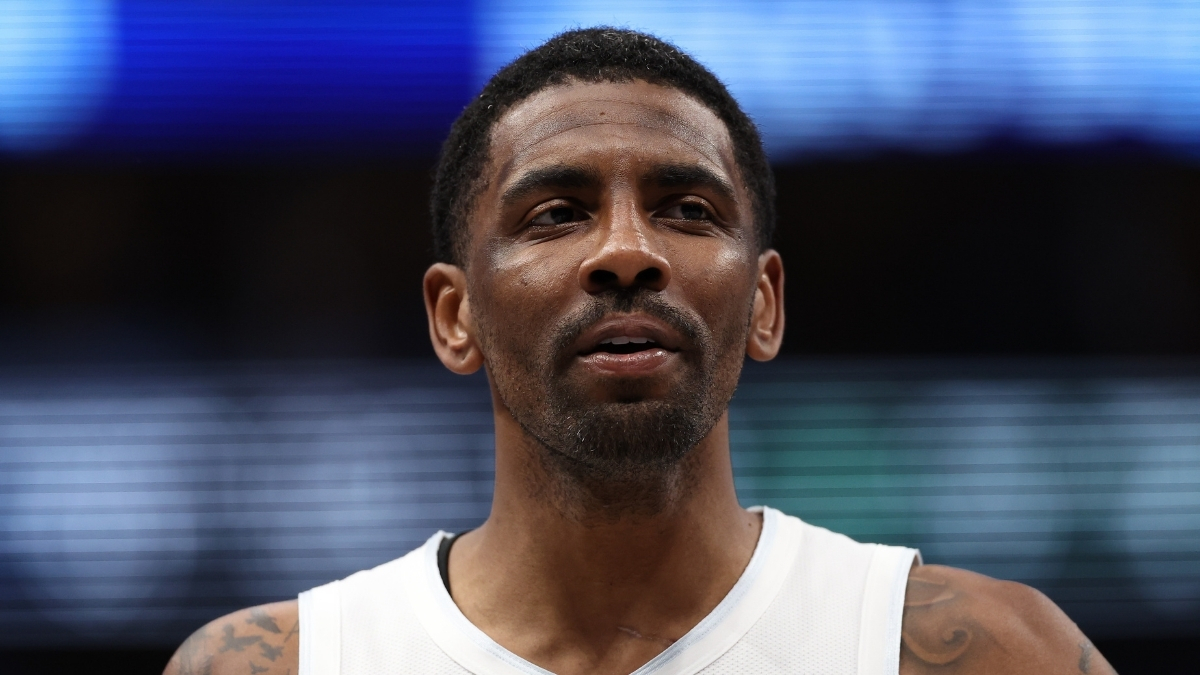
The Dallas Mavericks announced Wednesday that guard Kyrie Irving will not return to play during the 2025-26 NBA season as he continues his recovery from ACL reconstruction surgery performed in 2025.
Irving tore the ACL in his left knee on March 3, 2025. After months of steady rehabilitation progress and intermittent on-court work, the organization has opted for a long-term approach, formally ending any possibility of a late-season return.
Irving will remain actively engaged with the team for the remainder of the season while continuing rehabilitation under the supervision of the Mavericks’ medical and performance staff.
Irving’s agent, Shetellia Riley Irving, underscored that long-term focus in comments to ESPN.
“This is about Kyrie being 1000% when he comes back and giving himself the best chance to chase a championship next season,” Riley Irving told ESPN.
Irving echoed that sentiment in the team’s release.
“This decision wasn’t easy, but it’s the right one,” Irving said. “I am grateful for the Mavericks organization, my teammates and our fans for their continued support throughout the process. I am looking forward to coming back stronger next season. The belief and drive I have inside only grows. And I wanted to send a huge shoutout to ALL of my brothers and sisters out there who’ve torn their ACL or gotten injured doing what they love to do every day. THANK YOU for the inspiration. No fear!”
Kyrie Irving’s Season-Long Absence Ends Any 2025-26 Return
The decision comes after months of cautious optimism that Irving might return following the All-Star break. The Mavericks did not apply for a disabled player exception for Irving before the Jan. 15 deadline — a notable contrast to their applications for Dereck Lively II and Danté Exum, both of whom were ruled out for the season.
That procedural choice signaled that Irving and the organization had at least entertained the possibility of a return.
Before dispersing for the All-Star break, Irving was frequently working in 1-on-1 and 1-on-0 settings with assistant coach Phil Handy and other members of the coaching staff. From workouts observed by DallasHoopsJournal.com, Irving appeared explosive and sharp, creating separation on jump shots and finishing fluidly. However, he had not yet progressed to sustained five-on-five competition — a critical step in the return-to-play process.
Throughout rehabilitation, Irving refrained from establishing a firm timetable, emphasizing responsiveness to his body rather than external benchmarks. That approach ultimately aligned with the franchise’s decision to prioritize full recovery over a late-season push.
When he returns next season, it will have been nearly 600 days — approximately 19.5 months — between NBA games.
Kyrie Irving Contract Structure Reinforces Dallas Mavericks’ Long-Term Commitment
Irving is in the first season of a three-year, $118.5 million fully guaranteed contract extension with the Mavericks, averaging $39.5 million annually.
For 2025-26, he is earning approximately $36.6 million. His salary increases to roughly $39.5 million in 2026-27 and $42.4 million in 2027-28.
The 2027-28 season includes a player option (decision deadline June 29, 2027) and a 15% trade bonus.
The structure reinforces that this decision is rooted in long-term planning rather than short-term positioning. Preserving Irving’s full recovery protects a multiyear financial and competitive investment tied directly to the franchise’s championship timeline.
Dallas Mavericks Shift Focus to 2026–27 Around Kyrie Irving and Cooper Flagg
As Dallas sits at 19-35 and 12th in the Western Conference entering the All-Star break, the organization is positioned to focus beyond this season rather than chase short-term results.
The conversation is no longer centered on salvaging 2025-26. It is about shaping 2026-27 — and whether Irving and Cooper Flagg can begin building on-court chemistry when he returns next fall.
Irving has been explicit in how he views the rookie.
“Cooper is just an amazing player, and that’s not even just gassing it,” Irving said. “At 19 years old, doing the things that he’s doing within our league is very special… I don’t want to mince my words either. He’s doing things that some of the greats, even before him, didn’t do. He’s chasing history.”
For a nine-time All-Star entering his 15th season, that endorsement carries weight beyond routine praise.
Flagg has averaged 20.4 points, 6.6 rebounds, and 4.1 assists in 49 games while shooting 48.2% from the field and logging 34.1 minutes per night. His 49-point, 10-rebound performance earlier this season underscored the scoring ceiling. More importantly, his expanded playmaking responsibilities — initiating sets, controlling tempo, and absorbing decision-making duties amid injuries — have validated internal projections.
Since Irving’s injury on March 3, 2025, Dallas has gone 26-48 in regular-season games. The record reflects not only his absence, but the instability that followed.
League sources told DallasHoopsJournal.com that the Mavericks continue to see strong long-term potential in pairing Irving with Flagg once healthy, viewing the backcourt as complementary in both structure and timeline.
Dallas Mavericks’ On-Court Context Without Kyrie Irving
Before the injury, Irving was playing at an All-Star level. In 50 games during the 2024-25 season, he averaged 24.7 points, 4.8 rebounds, and 4.6 assists while shooting 47.3% from the field, 40.1% from three-point range, and 91.6% from the free-throw line. He earned his ninth All-Star selection.
For his career, Irving has averaged 23.7 points and 5.6 assists across 779 games, shooting 47.4% overall and 39.4% from three.
Following the trade of Anthony Davis — a move that reset roster structure and long-term salary commitments — Dallas pivoted more cleanly toward Flagg’s timeline. The deal brought back Khris Middleton, AJ Johnson, Malaki Branham, Marvin Bagley III, and multiple draft assets, reinforcing financial flexibility.
Internally, Irving is regarded as a score-first guard who is most efficient when not required to organize every possession. Flagg’s ability to initiate offense, make early reads and dictate pace is viewed as the mechanism to unlock those advantages, sources told DallasHoopsJournal.com.
Head coach Jason Kidd articulated that vision earlier in the season in Mexico City.
“Kai is going to be a perfect fit with Cooper Flagg, when you talk about his skillset of being able to dribble and score,” Kidd said. “He also creates space on the floor for Cooper, and vice versa. We just can’t wait to get Kai back, at some point. Hopefully it’s in the year of ’25 — not ’26. We’ll see what happens, but I think those two will be a perfect match in the backcourt.”
That optimism now shifts to 2026-27.
Dallas Mavericks Adjust Backcourt Rotation Without Kyrie Irving
With Irving sidelined for the entire season, Dallas must continue redistributing point guard responsibilities.
Tyus Jones, acquired in the three-team trade that sent Davis to Washington, provides a steady veteran capable of organizing offense and limiting turnovers.
The Mavericks can also lean on Brandon Williams, who has provided energy and shot creation in spurts, as well as Ryan Nembhard, though Nembhard is approaching the 50-game participation limit tied to two-way contract restrictions barring a conversion.
In addition, Dallas has increasingly embraced positionless lineups, leaning on Cooper Flagg and Naji Marshall to initiate offense. Both have handled primary ball-handling duties in stretches, allowing the Mavericks to operate through size and versatility rather than traditional positional structure.
The rotation now operates more by committee — a structural contrast from the star-driven backcourt Dallas envisioned entering the season.
Kyrie Irving ACL Recovery Timeline Shapes Dallas Mavericks’ Outlook
Irving has consistently emphasized patience.
“I’ll give you guys an update after the All-Star break,” Irving said during a recent Twitch livestream. “Whether it’s this year or next year, it doesn’t really matter. I’ll speak when the time is right.”
He has acknowledged the mental and physical demands of ACL rehabilitation.
“It’s not easy,” Irving said. “It’s not easy to come back from any injury, but you gotta be mentally, spiritually, physically ready. And the frustrating portion has been not being able to push myself to that brink, where you’re just dog tired.”
He has also reiterated the advice guiding his approach.
“For me, my advice, the best advice I got is just take your time. No timeline is going to be perfect. Don’t compare it to anyone else and just enjoy the process.”
With Dallas holding full control of its 2026 first-round pick — the only year through 2031 that it does so — the organization enters the offseason with both flexibility and lottery positioning.
Shared minutes between Irving and Flagg will have to wait.
Irving’s absence will define the remainder of 2025-26. His return next season will define what comes next — not as a midseason rescue, but as the foundation for a more stable and competitive 2026-27 campaign.
Latest Dallas Mavericks News & Trade Rumors