
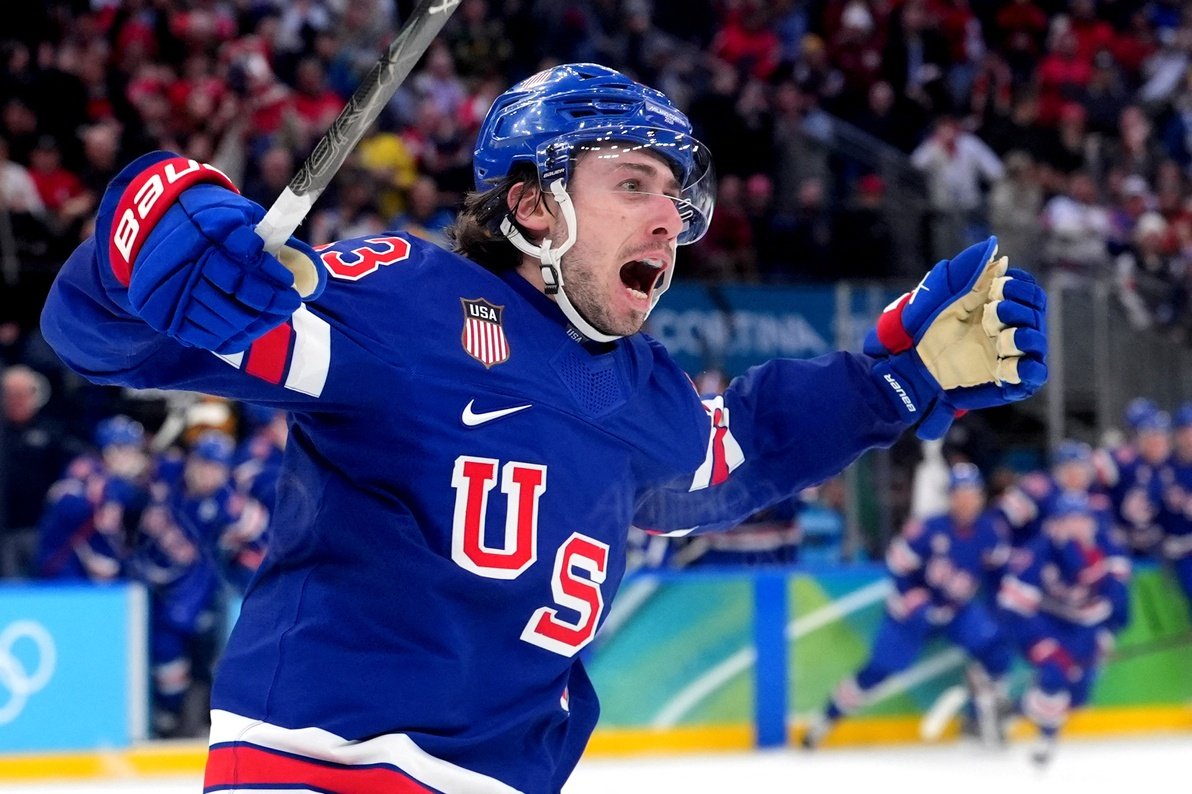
Bill Guerin is starting to look like one of the best general managers in the NHL, and the Quinn Hughes blockbuster might end up being the move that cements that reputation. The price, the timing, and now Hughes’ Olympic heroics against Sweden indicate Guerin understands risk and upside at an elite level.
It stunned the league when Hughes landed in Minnesota in mid-December. The Wild were never considered favorites to land him because it seemed unlikely that the Vancouver Canucks would trade him to a Western Conference team. Still, Guerin quietly outbid everyone by sending Vancouver a massive package: Marco Rossi, Liam Ohgren, Zeev Buium, and a 2026 first-round pick. That’s three former first-rounders, plus another first for a single player, who only has one year left on his deal.
Trading for Hughes screams “all in” and could have backfired badly if he didn’t fit or if the Wild slid out of contention. Instead, he arrived as a 26-year-old, Norris Trophy-level defenseman, who has won the Norris with a 92-point season. He’s Vancouver’s all-time scoring lead among defensemen on his resume. Guerin didn’t just add talent; he added a legitimate franchise pillar on the back end at the exact moment the worst of the Zach Parise and Ryan Suter buyout penalties had eased.
The structure behind the trade separates it from a desperation deal. Minnesota has cap flexibility over the next two years, a rising salary cap to work with, and the unique ability to offer Hughes an eight-year, front-loaded extension that no other team can match when he becomes eligible on July 1. Guerin paid a premium, but he also bought what amounts to an exclusive long negotiating window with one of the best defensemen in the world.
If anyone needed a reminder of why Guerin bet so big on Hughes, they got it yesterday. In the Olympic quarterfinals in Milan, Hughes took over in 3-on-3 overtime against Sweden and buried the game-winner at 3:27, sending Team USA to the semifinals with a 2-1 win. He waved off a change, stayed out after an already long shift, circled in the offensive zone, created space for himself, and snapped a shot from the high slot that beat Jacob Markstrom just inside the post.
Hughes’ goal came after Mike Zibanejad had tied the game with 1:31 left in regulation on a one-timer with the goalie pulled, a sequence that could have rattled a lesser team. Instead, Hughes delivered the kind of calm, takeover moment that wins tournaments and sticks in everyone’s memory.
Teammates and observers immediately framed it as proof he’s one of the best defensemen in the world. Brady Tkachuk called it “one of the best feelings” to see Hughes be the one to end it. For Minnesota, that matters. This is their guy doing that on the biggest stage, with “Minnesota Wild defenseman” attached to every highlight and headline. It reinforces that Guerin didn’t just trade for star name value. He traded for a true game-breaker who delivers when everything is on the line.
Right now, the Hughes deal is already being called a massive, gutsy win for Minnesota. National outlets have noted how dramatically it boosts the Wild’s ceiling and Stanley Cup odds. But if Guerin closes the loop and signs Hughes to that long-term extension this summer, the narrative shifts from “bold gamble” to “trade of the year” and maybe the signature move of his tenure.
An eight-year deal would:
Lock in a 26-year-old Norris winner through his prime, giving Minnesota a blue-line cornerstone to pair with Kirill Kaprizov up front as one of the league’s most dangerous skater duos.
Retroactively turn the steep cost in prospects, and a first into the kind of price GMs happily pay for a decade of elite, playoff-tilting impact instead of a short window.
Send a league-wide message that Minnesota is no longer just hanging around the playoff bubble; it’s a serious destination for star talent and a team that expects to contend.
Combine that with Guerin’s broader body of work, navigating brutal buyout dead money, keeping the Wild competitive, stockpiling enough assets to even be in position for this trade, and now building around a player who’s winning Olympic overtime games. It’s not hard to see why he’s being talked about as one of the best GMs in the NHL.
Think you could write a story like this? Hockey Wilderness wants you to develop your voice, find an audience, and we’ll pay you to do it. Just fill out this form.