
As the NHL trade deadline approaches on March 6, 2026, the Philadelphia Flyers are reportedly taking offers for defenseman Rasmus Ristolainen, with the Edmonton Oilers and Boston Bruins as two of the five or six teams kicking tires.
Reports indicate the Flyers are using last year’s Brandon Carlo acquisition by the Toronto Maple Leafs as a benchmark for their asking price. Anyone showing interest should be cautious about how much they’re willing to spend.
Looking back, the Carlo trade was a misstep for the Maple Leafs. The organization is already rumored to be open to a move that would send the blueliner elsewhere. And, while Ristolainen and Carlo are different players, there are red flags here.
Recapping the Carlo Trade: High Cost, Low Return for Toronto
The trade, executed just before the 2025 deadline on March 7, saw the Maple Leafs acquire Carlo from the Bruins with salary retention (dropping his cap hit to $3.485MM through 2026-27). In exchange, Toronto parted with:
Prospect Fraser Minten (a 2022 second-round pick, then one of their top young centers).
A top-five protected 2026 first-round pick.
A 2025 fourth-round pick.
At the time, Carlo was valued for his defensive reliability: he led Boston in blocks (119) and shorthanded ice time (2:49 per game) in 2024-25, while adding nine points in 63 games. The Leafs hoped he’d stabilize their blue line as a shutdown right-shot defender capable of top-four minutes.
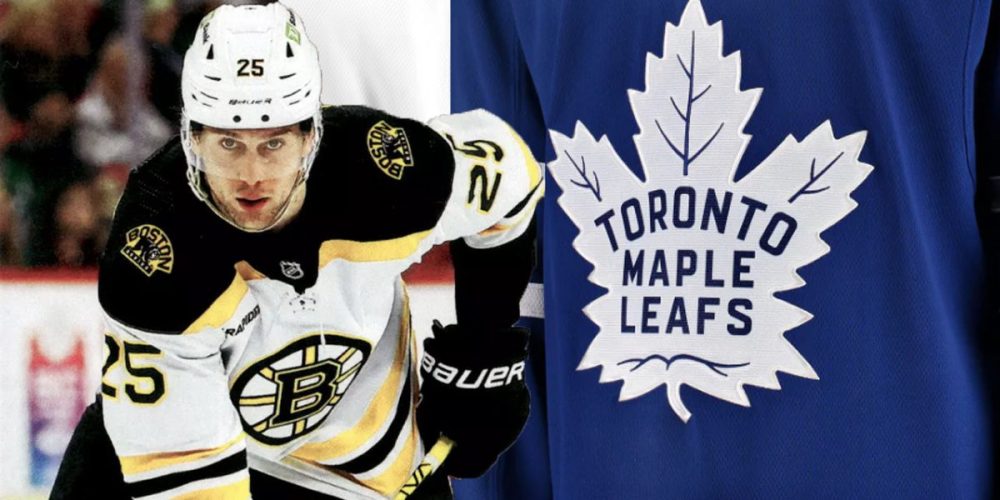 Brandon Carlo Maple Leafs trade
Fast forward a year, and the results have been ugly. Carlo has appeared in just 34 games, injury setbacks have limited his impact, and his production?… a meager five points (all assists). Advanced metrics paint an even grimmer picture:
Corsi For percentage (CF%) and Goals For percentage (GF%) are all below 50%
His blocks (49 and hits (29) are significantly down from Boston levels
Toronto’s defense has actually improved in his absence
Boston hit a “home run”. Minten has become a solid contributor for the Bruins, on pace for 40-plus points in his first full NHL season. Meanwhile, Toronto’s struggles could see them missing the playoffs. The deal now looked like an “overpay” then and a “massive blunder” now.
This was a classic case of buyer’s remorse that a team could make with Ristolainen, who himself has had some injury concerns.
Buyer Beware on Ristolainen
On paper, parallels exist between Carlo and Ristolainen that should have any team weary of spending too much. Both are right-shot, physical defensemen (Carlo 6’5″, Ristolainen 6’4″) valued for shutdown potential. Ristolainen has bounced back with the Philadelphia Flyers after a rougher go with the Buffalo Sabres. That doesn’t make him a sure thing.
He’s averaged 19:55 TOI in 19 games this year, with six points and a -4 rating. One difference is the contract. Ristolainen has one year left after this season at a full $5.1MM cap hit. It’s higher than Carlo’s (which is risky), but it’s shorter than Carlo’s (which makes him a cheaper rental if salary is retained).
 Ristolainen Carlo comparisons
Ristolainen’s career -183 plus/minus in 795 games highlights defensive inconsistencies, worse than Carlo’s pre-trade history.
Ristolainen has missed time this year with an upper-body ailment.
It’s one thing if teams are ‘checking in” or can dump a bad contract in the process. But if someone is giving up a prospect and a first-rounder, that could be trouble.
Positioning the Caution for Edmonton and Boston
For the Oilers—seeking right-side depth behind Evan Bouchard, where lefty Jake Walman has struggled on his off-side—a Ristolainen addition could provide short-term stability. But matching the Carlo price (e.g., a first plus a prospect like a Minten equivalent) risks repeating Toronto’s error. Edmonton’s cap crunch means any deal likely involves dumping salary like Mangiapane, but overpaying for a player with Ristolainen’s injury history and defensive warts could hamstring their Cup run, especially if he underperforms like Carlo.
The Bruins, seeking right-shot options beyond Charlie McAvoy, view Ristolainen as a backup after missing on Rasmus Andersson. They have first-round picks to spare, but they’re reportedly “not especially high on” him. That’s a good sign they might not make a mistake here. Having already profited from the Carlo flip, Boston should avoid the buyer’s side of a similar overvaluation.
In summary, the Carlo trade stands as a textbook example of deadline desperation leading to regret: Toronto overpaid for perceived stability that never materialized. The Bruins and Oilers, both in win-now modes, must weigh if Ristolainen’s fit justifies a comparable cost.
Next: Insider: Oilers Setting Up Trade With Andrew Mangiapane Deal
Discover more from NHL Trade Talk
Subscribe to get the latest posts sent to your email.