
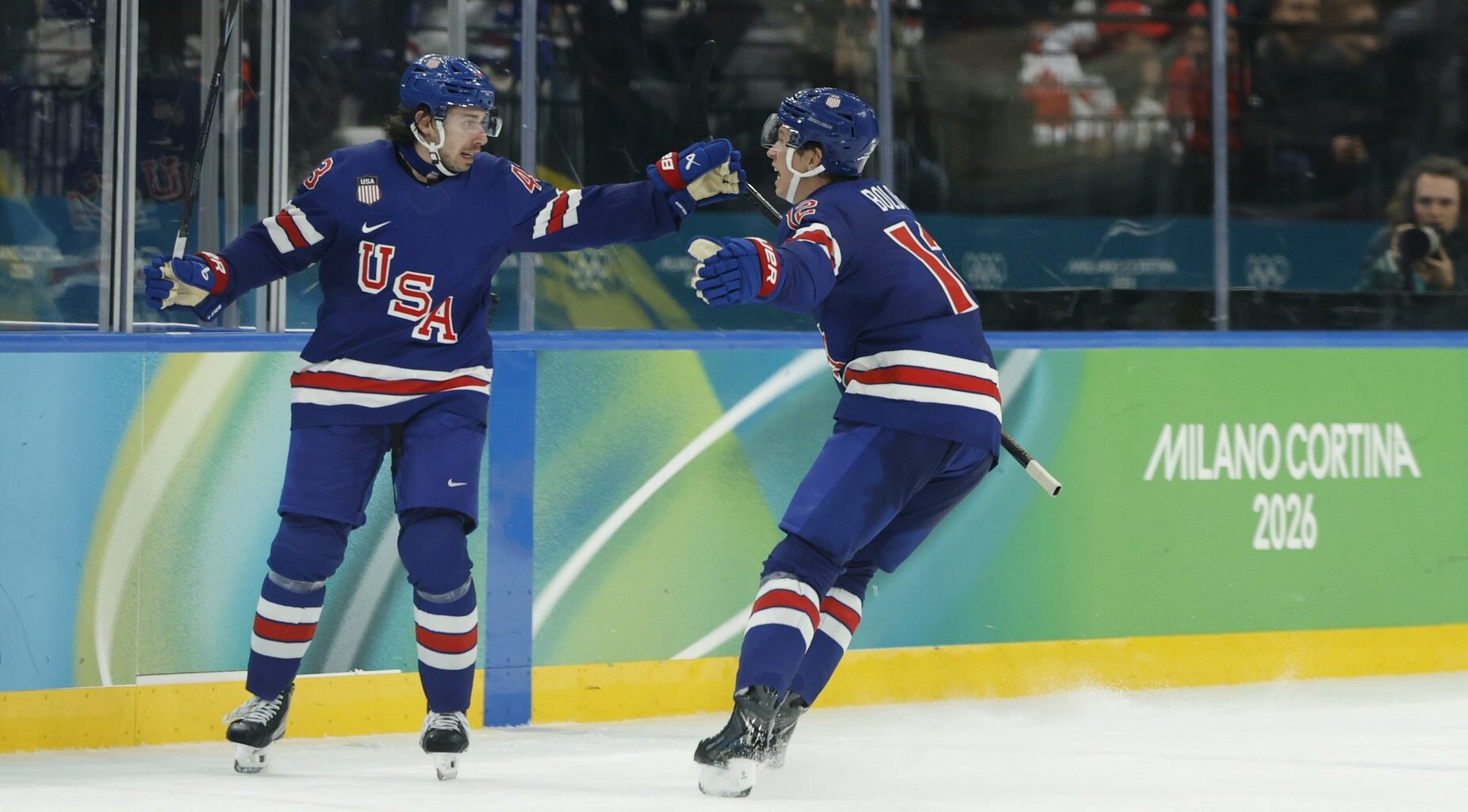
Team USA’s Olympic Gold Medal victory over Canada feels like the biggest moment for hockey in the United States since the Miracle on Ice. While it may not have reached the lofty unifying sociopolitical status of the 1980 Olympics, 2026 proved that America could come out on top in a best-on-best tournament.
Minnesota Wild and Team USA general manager Bill Guerin is at the center of that accomplishment. While the players did the most critical work on the ice, Guerin was the team’s architect, making crucial roster decisions that ultimately prepared the team to reach the pinnacle of the hockey universe.
While we can all congratulate Guerin on a job well done, it’s vital to recognize that the process of putting the United States hockey team together wasn’t always smooth. Putting together a team of the 25 best American hockey players was inevitably going to result in snubs. Still, the discussion around Guerin and his staff’s decisions was particularly volatile this year.
Guerin left off some of the nation’s best offensive talents like Jason Robertson and Cole Caulfield. The choices for Team USA were so controversial that even Lane Hutson‘s father threatened that his son might have to use the Canadian part of his dual citizenship in the future, after Guerin didn’t invite Lane to the Olympic orientation camp.
Through all the criticism, Guerin remained steadfast that he was building a team based on chemistry and the roles the chosen players could play rather than pure talent or scoring ability.
Whether choosing the “right” players over the “best” players is the optimal approach is still a worthwhile debate, but not this year. Not right now. The victors write history, and the results have vindicated Bill Guerin’s approach.
“I’m sure,” forward Matt Boldy said after the gold-medal game when speaking about Guerin, “he feels a lot better now.”
The USA’s gold medal justifies Guerin’s choices on its own. Still, the role players he brought to Milan validated his decisions, who made significant contributions to the victory.
Players like Vincent Trochek and J.T. Miller played key roles on a penalty kill that went a perfect 18-for-18 in Italy, including a stunning 5-on-3 disadvantage against the Canadians. Trochek was also excellent in the faceoff dot. He won 66.7% of his draws, with one notable win being a defensive-zone draw moments before Jack Hughes’ golden goal.
The other players on Team USA have also thrown their support behind the inclusion of role players like Miller and Trochek.
“People can say what they want, and most don’t know what they’re talking about,” Brock Faber said about their defensive contributions to the tournament victory.
“Billy has to make the hard decisions, and we just go out and play. But J.T., Vince, those two were unbelievable on the kill. I loved every time I was on the ice with those guys. We didn’t get scored on, and they’re a huge part of that.”
Guerin and Hockey USA’s accomplishments in Milan will be a major talking point for years, possibly generations, to come. Still, the lightning rod GM’s job isn’t done. Guerin still has the chance to show that his team-building philosophy translates to his tenure in Minnesota.
Like with Team USA, Guerin’s decisions during his time with the Wild have occasionally been controversial. One of his first major moves included buying out the contracts of long-time Wild players Ryan Suter and Zach Parise. It felt like the Wild would inevitably have to move off those players, but the league implemented a significant cap penalty that hampered Minnesota’s roster construction for years.
From that time on, Guerin showed that he was willing to be aggressive and build the team that he wanted. Some of Guerin’s bold moves have worked, like trading Kevin Fiala for now-franchise cornerstone Brock Faber and a first-round pick. Meanwhile, others didn’t go quite as well, like trading for Ryan Reaves.
The Wild have taken an indirect route to becoming a contender, but Guerin has produced results. The Wild are arguably the most relevant they’ve ever been as a team.
Kirill Kaprizov’s contract extension was one of the biggest stories of last offseason. The Quinn Hughes trade has been the most significant acquisition of this season. Minnesota sits near the top of the league in the standings and is poised to buy even more at the deadline. Has there ever been a better time to follow the Wild?
Things for Guerin are about to get even more interesting when he decides what to do at this year’s deadline. He’ll clearly be aggressive and busy, but there are no easy choices. He’s already mortgaged the team’s future for the present in the Quinn Hughes package. Does he go all-in and trade the possible goalie of the future, Jesper Wallstedt?
We can debate the pros and cons of making that move. Still, no matter what anyone else thinks, Guerin is clearly ready to do whatever it takes to build the team in his image. He’s earned some latitude and trust with his performance this year. For years, Guerin has operated with a high level of confidence, seeing a path more clearly than the noise that surrounds his decisions.
That narrative could change this year. Guerin engineered American history and built a Minnesota team that seems genuinely ready to contend. If the Wild can hoist the Stanley Cup or even make a deep run, it’ll be difficult to deny that Guerin didn’t have the right vision for this team.
Think you could write a story like this? Hockey Wilderness wants you to develop your voice, find an audience, and we’ll pay you to do it. Just fill out this form.