
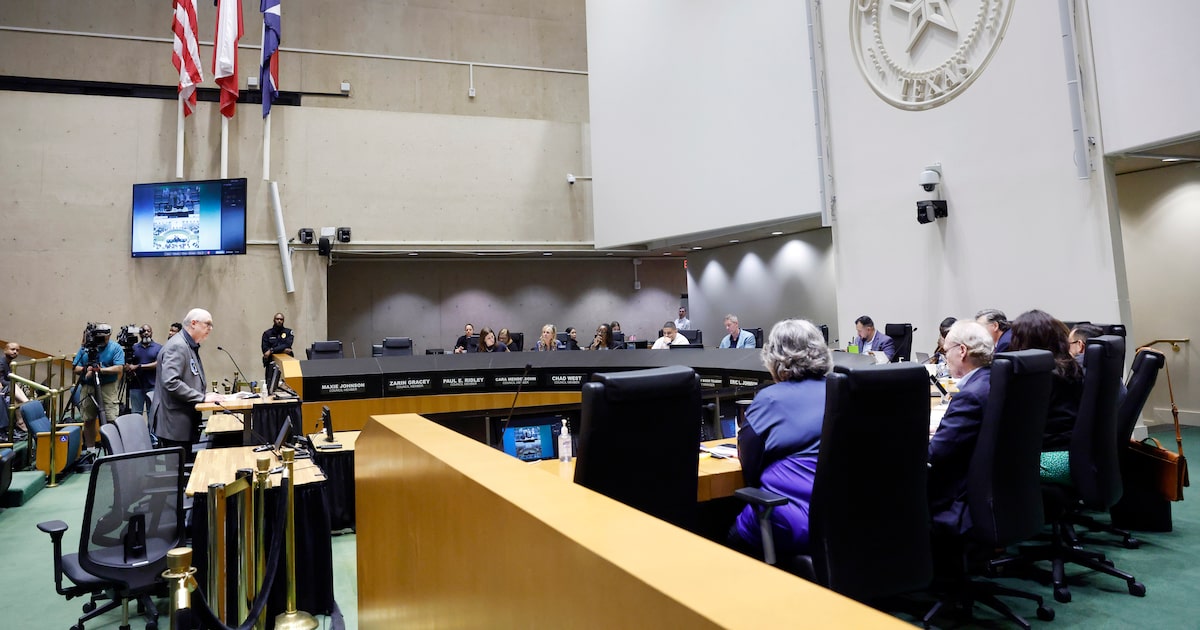
Toward the end of my 20-year career as a newspaper reporter, I wrote extensively about the shenanigans that took place in the mid-1990s during the American Airlines Center negotiations. Back then, City Manager John Ware was the one negotiating the deal, misleading and shutting out the City Council in an effort to keep the Dallas Mavericks and Dallas Stars downtown. He then promptly resigned to go to work for the arena’s developer and Stars owner Tom Hicks. When the City Council determined that its ethics code didn’t prevent such an odious occurrence, my new council colleagues and I promptly strengthened the code and created the Dallas Ethics Commission to avoid it ever happening again.
So, yes, I’ve seen this movie before.
A transparent, public conversation about whether, and where, we should build the Mavericks a new arena is one thing. Ginning up a story about an impending financial apocalypse if we don’t tear down one of our city’s most iconic buildings is the most recent argument for jettisoning the city manager form of government.
Here are four reasons why demolishing City Hall is a grave mistake – and the speed by which it’s happening is madness.
First, city staff are not qualified to negotiate a real estate deal of this magnitude and complexity. There are countless examples of this, including when Ware agreed to a 30-year lease on the AAC with Hicks and Mavericks owner Ross Perot Jr. At a Dallas Regional Chamber meeting recently, Perot said he built the arena to last 50 years, not 30, and the city should slow down and ask the teams to stay another 10 years. If Dallas had negotiated a 50-year deal with Perot to begin with, the teams would be there another 20 years and City Hall would not be in jeopardy.
Opinion
A more telling example of staff incompetence: The city spent over $14 million in 2022 buying an office building on Stemmons Freeway to relocate its Permitting and Inspections Department. City staff members believed what listing agent JLL told them about the building’s condition and never did adequate permitting and inspections. After employees started moving in, dozens of code violations and safety issues forced them to vacate, and the building was put up for sale. A year later, it’s still on the market.
Second, there is no transparency. No reporters have pierced the secrecy veil that city staff have created. The council members who oppose what’s happening say they are completely in the dark, as is the public.
D magazine freelance reporter Steven Monacelli told me he filed an open records request on Jan. 20 seeking all emails from the past year between key city staff, area landowners, developers and both sports teams. The city responded that more than 5,500 emails exist and demanded $2,025 to release them. D then narrowed its request, paying $243.75 for 800 emails. None have been released. Why wouldn’t council members want to see the 5,500 private conversations that reveal what’s really going on before the vote this week to start moving employees out of the building? And why haven’t they asked for such information already?
Third, we all see through the math. The city-appointed Dallas Economic Development Corp. was tasked three months ago with retaining consultants to determine which was a better deal – abandoning City Hall or fixing it up. The answer came last week in a briefing to the City Council’s Finance Committee: $329 million for repairs and up to $1.1 billion to modernize City Hall (an increase from $19 million to $93 million in an analysis performed six years ago) versus cost savings if the city seized the moment and started moving people out.
“Our initial conclusion is that the market has provided a number of compelling solutions where the city could save hundreds of millions of dollars, and now is an excellent time to be in the market,” Peter Jansen with CBRE, the world’s largest commercial real estate firm, told the committee.
Fourth, private financial self-interest in this truly monumental decision is not being disclosed. What Jansen failed to tell council members is that CBRE stands ready to provide all of the space the city needs right now. It currently markets 24 office properties in and around downtown totaling almost 1.8 million square feet — more than two to three times what is needed. A quick scroll through CBRE’s website showcases four high rises capable of housing everybody: 561,459 square feet at Renaissance Tower; 679,544 in Fountain Place; 151,269 at 300 Pearl; and 182,000 at 2626 McKinney.
The high probability of consultants making recommendations from which they could potentially profit did not go unnoticed by council member Adam Bazaldua, who asked several times during the committee meeting if there was anyone who worked on the analysis who didn’t have a potential financial interest in the sale of Dallas City Hall. The response was a promise that everybody involved was a professional — and a patronizing trust-me lecture from the city manager.
But trust has collapsed. Because there is no transparency. It’s the AAC debacle all over again. It’s time for council members to demand to see the 5,500 emails staff hasn’t released to the public, evaluate the obvious conflicts of interest in what they’re being told and be the fiscal stewards they were elected by us to be. This is not hard. This is the job.
Laura Miller represented Oak Cliff on the Dallas City Council from 1998 to 2001 and was mayor of Dallas from 2002 to 2007.
We welcome your thoughts in a letter to the editor. See the guidelines and submit your letter here.
If you have problems with the form, you can submit via email at letters@dallasnews.com