
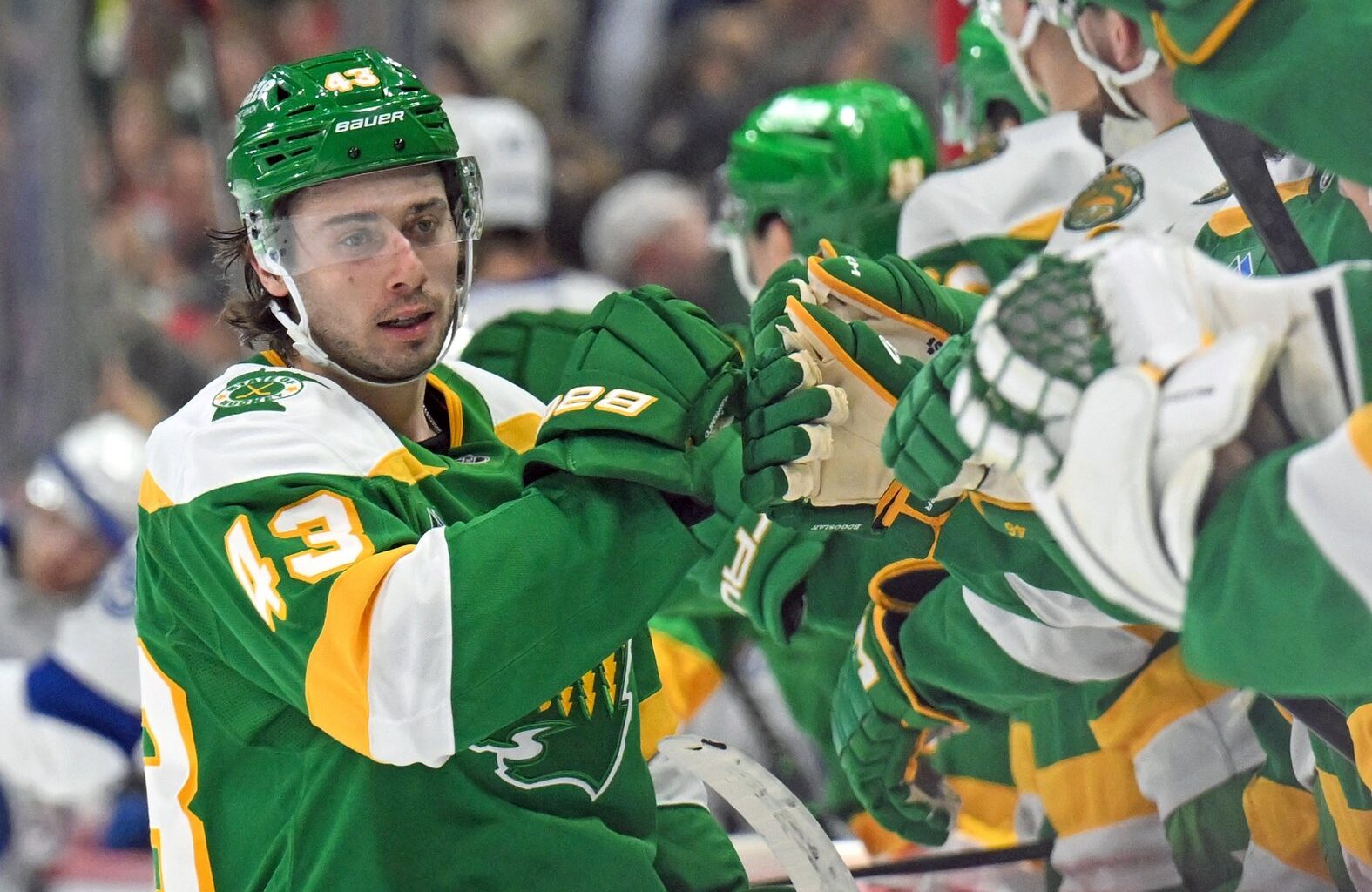
Quinn Hughes is redefining what it means to be an NHL defenseman, and his latest milestone, 60 assists in 60 games, is the clearest evidence yet that he belongs at the top of the league’s blue line hierarchy. By matching Hall of Famer Paul Coffey’s pace from the early 1990s, Hughes is staking a claim as the best defenseman in hockey today.
Against the Philadelphia Flyers, Hughes picked up his 60th assist in his 60th game of the season, becoming the first defenseman to hit the 60-in-60 mark since the great Paul Coffey. Coffey did it in 1992-93. Multiple outlets and league trackers have noted that, over more than three decades, no defenseman has matched that level of sustained playmaking from the back end.
This isn’t a one-off for Hughes, either. It marks his fifth straight season with at least 60 assists, including a career-high 75 in his Norris Trophy-winning 2023-34 season. When you combine this year’s blistering pace with that multi-year consistency, he lands in the kind of statistical neighborhood once reserved for Coffey, Bobby Orr, and a few other all-time greats.
Hughes’ production isn’t padded by empty numbers; it drives his team’s offense in real time. In the game where he hit 60, he set up Matt Boldy for his 59th assist and then added a secondary helper on Kirill Kaprizov’s goal to reach the milestone.
Those plays are typical Hughes: walk the blue line, pull forecheckers out of position, then slide a perfectly timed pass into a shooting lane that didn’t exist a second earlier. He has now recorded 60 or more assists in each of the last five seasons, a feat that underscores both his vision and his ability to read the game one or two moves ahead of everyone else. Today’s NHL emphasizes tighter systems, better goaltending, and more emphasis on defensive structure. Therefore, maintaining that kind of assist pace is an even stronger argument for his status as the league’s most impactful offensive defenseman.
What truly separates Hughes from most of his peers is how often he’s on the ice and how much of that time his team spends with the puck. Recently, he has regularly logged north of 24 minutes a night, including an average of 24:41 per game in 2023-24 with the Vancouver Canucks before his move to Minnesota.
That workload puts him squarely in top-pair, all-situations territory. John Hynes trusts him to run the power play, handle key five-on-five matchups, and contribute in late-game scenarios. With that kind of tice time, it’s not enough to be flashy in spurts; you have to be steady.
Hughes accomplishes this by consistently presenting as a clean outlet, retrieving pucks under pressure, then exiting the zone with control rather than ceding possession with dumpouts. Shift after shift, he turns routine defensive touches into controlled breakouts and zone entries, which extend offensive possessions and inflate his team’s shot and chance numbers even when he doesn’t get on the scoresheet himself.
The case for Hughes as the best defenseman in the league rests on three pillars: unprecedented modern production, massive minutes, and a unique ability to dictate pace. His 60 assists in 60 games, something no defenseman has done since Coffey in 1992-93, shows he can drive offense at a historic rate from the blue line.
Hughes’ multi-year run of 60-plus assist seasons and a Norris Trophy on his resume demonstrate that this isn’t a hot streak; it’s his standard. Layer that on top of heavy usage and elite puck control, and you get a player who doesn’t just contribute to his team’s attack; he orchestrates it.
In an era where transition, possession, and blue line playmaking are at a premium, Quinn Hughes checks every box. His latest record only reinforces that he stands alone at the top of the NHL’s defensive pyramid.
Think you could write a story like this? Hockey Wilderness wants you to develop your voice, find an audience, and we’ll pay you to do it. Just fill out this form.