
On Wednesday, the NHL announced the three host cities for the 2028 World Cup of Hockey, an eight-team international tournament wholly owned and operated by the league. Calgary, Edmonton, and Prague will serve as the venues for the 2028 edition of what is planned to be a biennial affair.
While the eight countries competing in the event are not yet confirmed, it’s safe to assume the United States and Canada, who recently faced off in the gold medal game of the Milan-Cortina Olympics, will be part of the field.
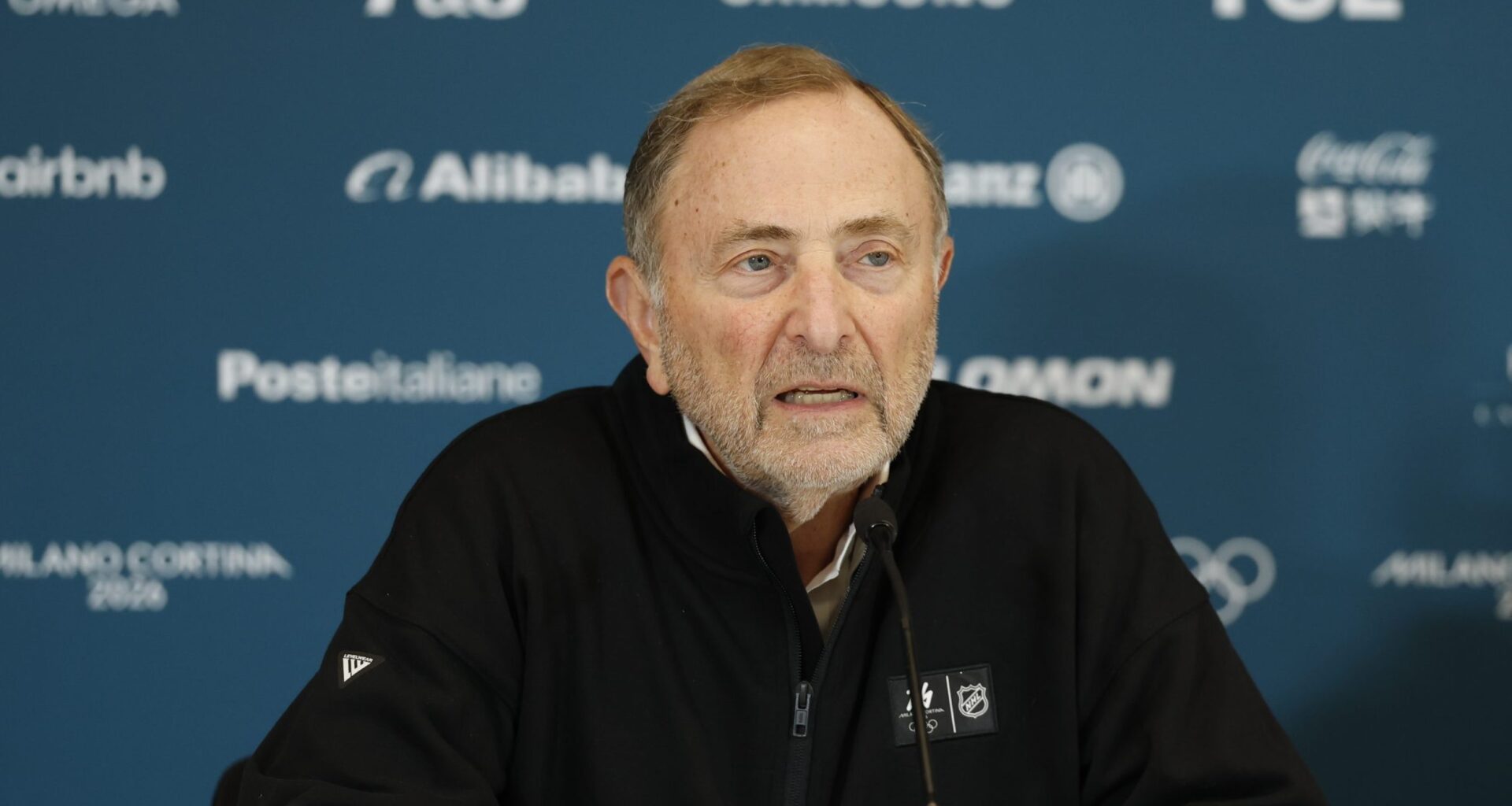
NHL commissioner Gary Bettman also provided some insight as to how the league plans to sell the event to broadcast partners. Per a report by Michael Russo and Pierre LeBrun in The Athletic, the World Cup will not be sold as part of the league’s full media rights packages with ESPN and TNT Sports in the United States, Rogers Communications (beginning next year) in Canada, or its European partners. Instead, the tournament will be sold separately, allowing for numerous possibilities.
“Bettman said the league and union plan to take the broadcast rights for the tournament to market immediately to start a bidding process,” The Athletic reports.
On the heels of several successful international competitions in multiple sports, from the Olympics to the World Baseball Classic to the 4 Nations Face-Off last year, interest in country v. country athletics is at an all-time high.
“We think there will be robust interest, and hopefully robust bidding,” for the package, Bettman said.
One could easily see this tournament going to a streamer, like Netflix, that values marquee, one-off events such as this. It could also be a great fit for a traditional broadcaster, too, like Fox just saw with its massive WBC audiences.
Given the timing of the tournament in February 2028, the World Cup could serve as a gauge of sorts for which broadcasters might be interested in a more wide-ranging deal with the NHL in the United States. The league’s current deals with ESPN and TNT expire following the 2027-28 season, and it will likely already have its next set of deals signed by the time the World Cup comes around. But whichever broadcasters nibble at World Cup rights could very well also be interested in a broader deal with the league. It gives the NHL an opportunity to establish connections that aren’t already there.
And at the end of the day, having more inventory to sell, especially in the form of best-on-best international competition, is quite a good thing for the league.