
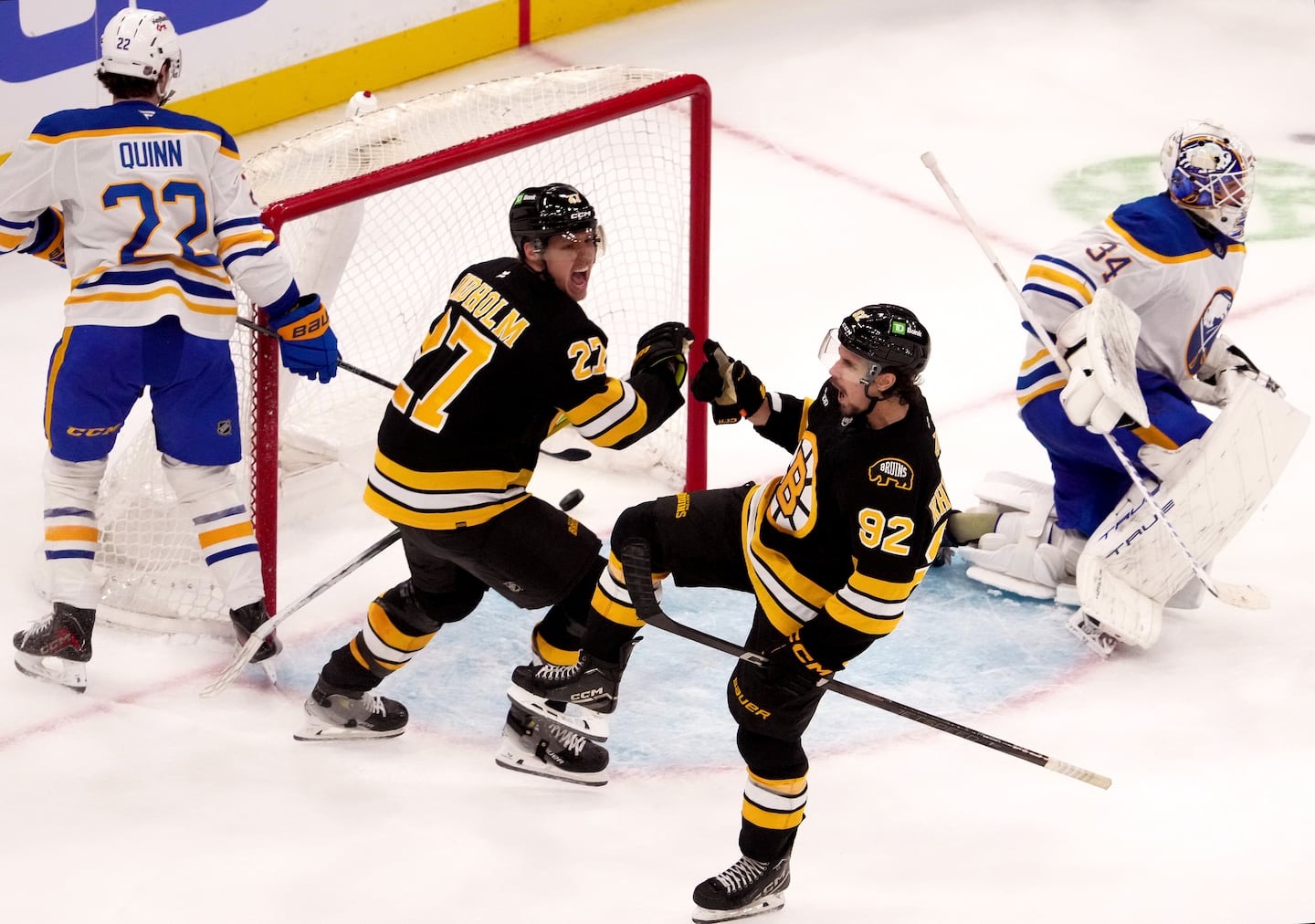
Today, upward of two generations of Bruins fans have zero connection to what was once a rollicking Boston-Buffalo Adams Division rivalry. How things have turned around, and with an old school coach, Lindy Ruff, behind the Sabres bench.
Get Starting Point
A guide through the most important stories of the morning, delivered Monday through Friday.
It has been some 35 years, back to Ruff’s playing days on the Buffalo blue line, since we last saw Mike Foligno, with the strap of that oversized white bucket helmet laced under his protruding jaw, leaping high at the Garden to celebrate one of his goals. Likewise, it’s three decades-plus since the Gallery Gods and friends droned their Causeway chants of “POO-pahhh, POO-pahhh!” to taunt Sabres goalie Daren Puppa.
The date April 24 serves as a prominent marker in the rivalry. On that day in 1983, Brad Park stepped into his own rebound and hammered home a follow-up slapper, the Bruins clinching Game 7 of the Adams Division Final in a Garden gone berserk. An exhausted “Parkie,” cold beverage in hand and a raspberry beret atop his soaked mane, lingered long in a corner of the dressing room and talked with reporters after notching the overtime winner.
Exactly 10 years to the day later, 1993, a Brad of another color was the hero. Brad May, sprung into the Boston zone on a pass from a fallen Pat LaFontaine, dipsy-doodled around Ray Bourque and slid home the Game 4 OT clincher in Round 1. Legendary Sabres broadcaster Rick Jeanneret bellowed “May day! … May day! … May dayyyyyy!”, the old Aud’s roof quaking in the chaos.
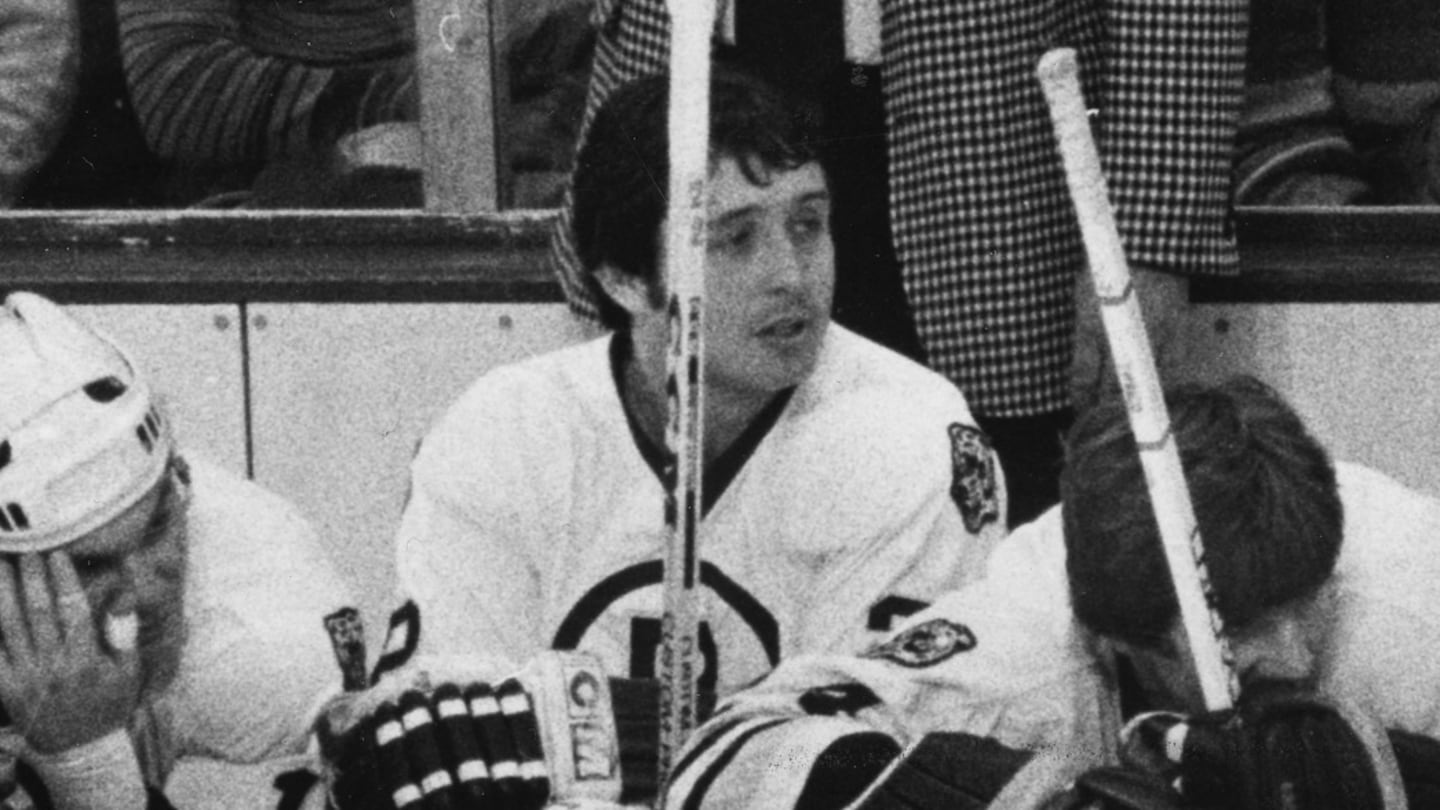 Brad Park broke Sabres fans’ hearts with the overtime clincher for the Bruins in the 1983 playoffs.O’Brien, Frank Globe Library
May’s goal completed a four-game sweep for the underdog Sabres. Bruins general manager Harry Sinden, irate over the officiating throughout the series, kicked and banged on the door of the on-ice officials’ dressing room, conveniently located steps away from the somber visitors’ room. Give ‘em Hell Harry sure gave it to ‘em, but the result stood.
It’s likely we’ll never feel emotions run that hot again in today’s NHL, for reasons as plentiful as there are pucks. But the Sabres finally are back and should be a serious threat in the playoffs. Depending on the decimal points in the final standings, they might face the Bruins in the postseason for the first time since 2010.
After opening this season with one of their standard moribund starts, losing 15 of 25 games (10-11-4) through November, the Sabres entered the weekend with more wins (33), more points (68), and a better points percentage (.773) than anyone else in the Original 32 since Dec. 1.
The next five teams over that span, based on points and points percentage: Carolina (58/.674); Dallas (58/.690); Minnesota (57/.648) Colorado (56/.667) and Detroit (56/651). The Bruins, by the way, ranked 12th (54/.643) across that stretch of nearly 16 weeks.
Former Bruins prospect Kevyn Adams — he of the fans’ “Fire Adams!” demands — finally was shown the door by Pegula on Dec. 15. In his five years as general manager, Adams did not move the needle, until the hours leading up to his exit.
The day Adams was canned, replaced by former Bruin Jarmo Kekalainen, the Sabres were dead last in the Eastern Conference, despite having won three games in a row. The turnaround actually was underway with those wins in Edmonton, Vancouver, and Seattle, handing Kekalainen, ex-GM of the Blue Jackets, a juggernaut in progress.
The Sabres finished out the month with another seven consecutive wins and by early January were 10-1-0 from the day Kekalainen took over the gig.
Rarely do franchises, in whatever the sport, rally so convincingly around a change in the corner office. Players’ main point of contact is with the coaching staff. Meetings with ownership are rare, to the point of virtually nonexistent. Other than contract talks with player agents, GMs typically are more seen than heard. They hire coaches to teach and talk, though it’s often abundantly clear their point of view shapes the messaging and, often, game-to-game lineup decisions.
Adams, whether liked or not by the players, deserves ample credit. He provided key clumps of clay that have helped Ruff finally shape into a very competitive team.
A couple of deals by Adams in just over three months last spring/summer were critical, beginning with the March 2025 deadline deal with Ottawa that brought in Josh Norris, the skilled 6-foot-2-inch center, for Dylan Cozens. Then came another around the June draft that added right winger Josh Doan from Utah in exchange for JJ Peterka.
The son of Coyotes legend Shane Doan, 24-year-old Josh (with a career best 46 points in 69 games) has provided the roster with long-needed character and backbone, high-value traits in the Ruff model of team building and getting the job done.
This is the most buzz around the Sabres since the June 2015 draft when they landed North Chelmsford’s Jack Eichel with the No. 2 pick. Finally, everyone thought, fortunes were on the upswing. Fans paraded around proudly in Eichel’s No. 15 sweater, pinned with “I Like Eich” buttons.
Good fortune indeed followed Eichel, but not until Adams was forced to deal him to Vegas. Eichel and Sabres ownership reached an impasse over what many considered a risky neck/spine surgery that the center felt was essential to continue his career. He was proven correct, undergoing the surgery after Adams dished him to the Golden Knights in November 2021 for Alex Tuch, Peyton Krebs, and a ’22 first-round pick (Noah Ostlund, an increasingly impressive rookie center).
It’s good again at the best little hockey house aside Lake Erie. The joint will be sold out with the Bruins in town, an old rivalry rekindled, and hints of the teams dancing again in the playoffs.
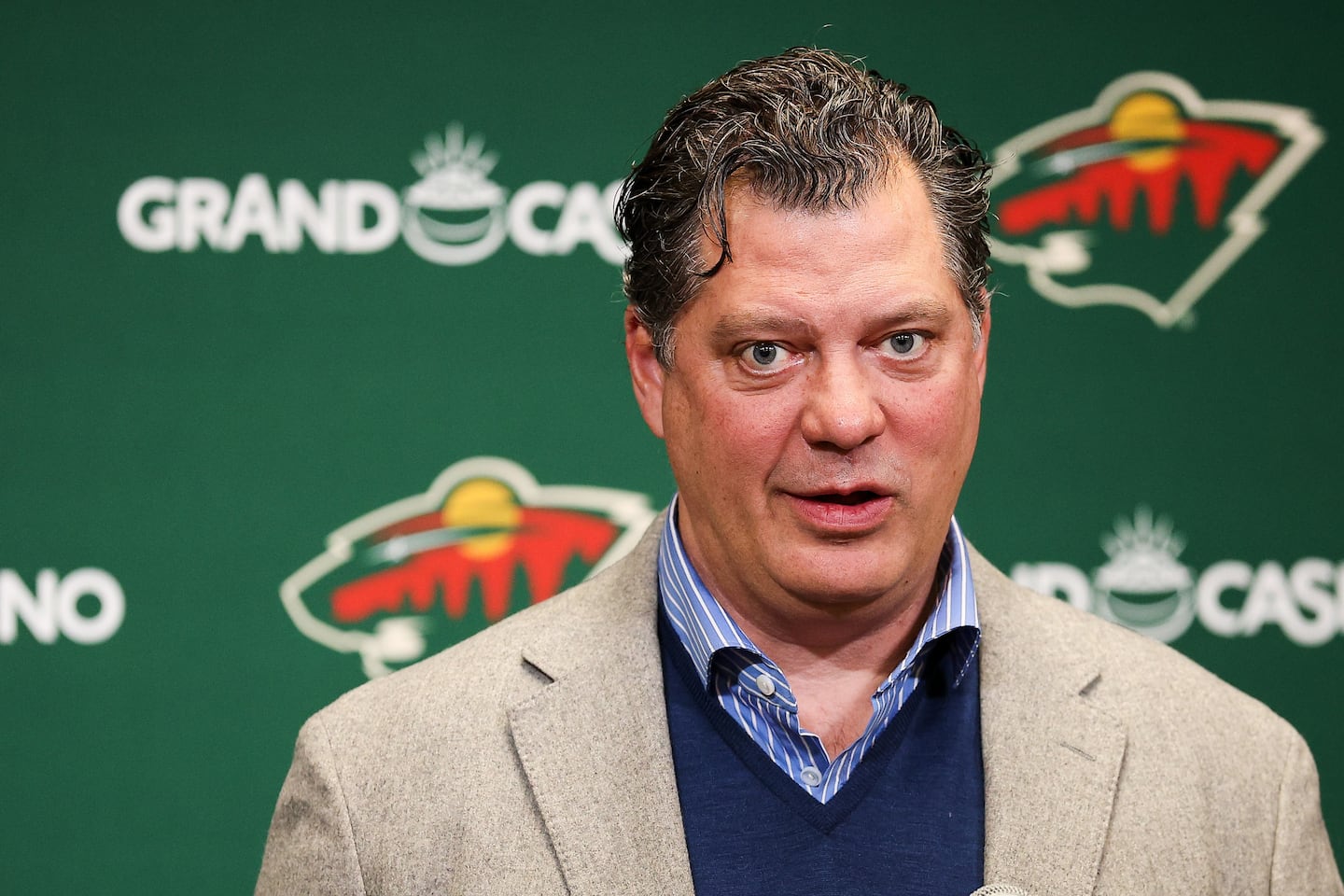 General manager Bill Guerin has the Wild with the fifth most points in the NHL, yet Minnesota sits in third place in the vaunted Central Division.Matt Krohn/Associated Press
FAULTY FORMAT
Guerin dislikes playoff structure
Bill Guerin, general manager of the Wild, recently brought up a familiar point about the NHL playoff structure. The former Bruin doesn’t like it.
In turn, commissioner Gary Bettman also brought up a point, noting that he doesn’t like to hear the criticism.
“You can always pick at certain situations in any given year,” said Bettman, adding that the current structure, with its emphasis skewed on divisional play, “works extraordinarily well.”
Truth is, they are both right, and because it’s Bettman’s primary duty to assist owners in growing franchise value (with seats filled and TV revenue increasing), the chance of the format changing is only slightly less than a Wiffle ball replacing the puck.
Those on Guerin’s side (including many in the media) would prefer to see the eight qualifying teams in each conference seeded 1-8. Easy theory: strongest vs. weakest. Not always the case, however, because the state of a team’s play after 82 games often is not a reflection of how points were amassed over the course of six months. The season is a marathon, and many teams hit the finish line with legs wobbly and souls drained.
Long ago, for a brief time, the 16 teams were seeded 1-16, with no regard for division or conference. It led to some fun, novel matchups, but in some cases it led to challenging commutes, increased cost of air travel and added player wear and tear for Round 1. For those reasons and more, intraconference play makes abundant sense for the first three rounds.
In the Western Conference, it looks like Colorado, Dallas, and Minnesota will sort out seed Nos. 1-2-3 in the Central. The sticky point here is, as Guerin underscored, the same three teams will finish 1-2-3 in the conference.
In the current playoff structure, two of those three teams will face each other in Round 1, guaranteeing one of the best three teams in the West will go home after playing possibly as few as four postseason games.
By Bettman’s eye, objecting to that is picking at “certain situations in any given year.” It really isn’t picking, especially this year with the three top teams in the Pacific Division barely able to fog the glass that rims the boards. It’s outright lopsided.
The best support for accepting the case made by Bettman and his Lords of the Boards is the intense level of play in Round 1. Perennially, the entertainment value is off the charts right off the hop, and that’s in part due to scenarios like this year when at least one, and possibly two, of the top three teams in the Central will be booted out the Zamboni door.
Such drama certainly fills seats. Also, from a TV ratings standpoint, it serves as a chance to hook viewers and keep them engaged for the full eight-week viewing experience — a real trick in today’s broadcasting/streaming world. That could be true in the 1-8 format, but why settle for “could” when the design of the current system guarantees both joy and sorrow right from jump street?
Yes, Round 1 is cruel. Every year. And that’s the point.
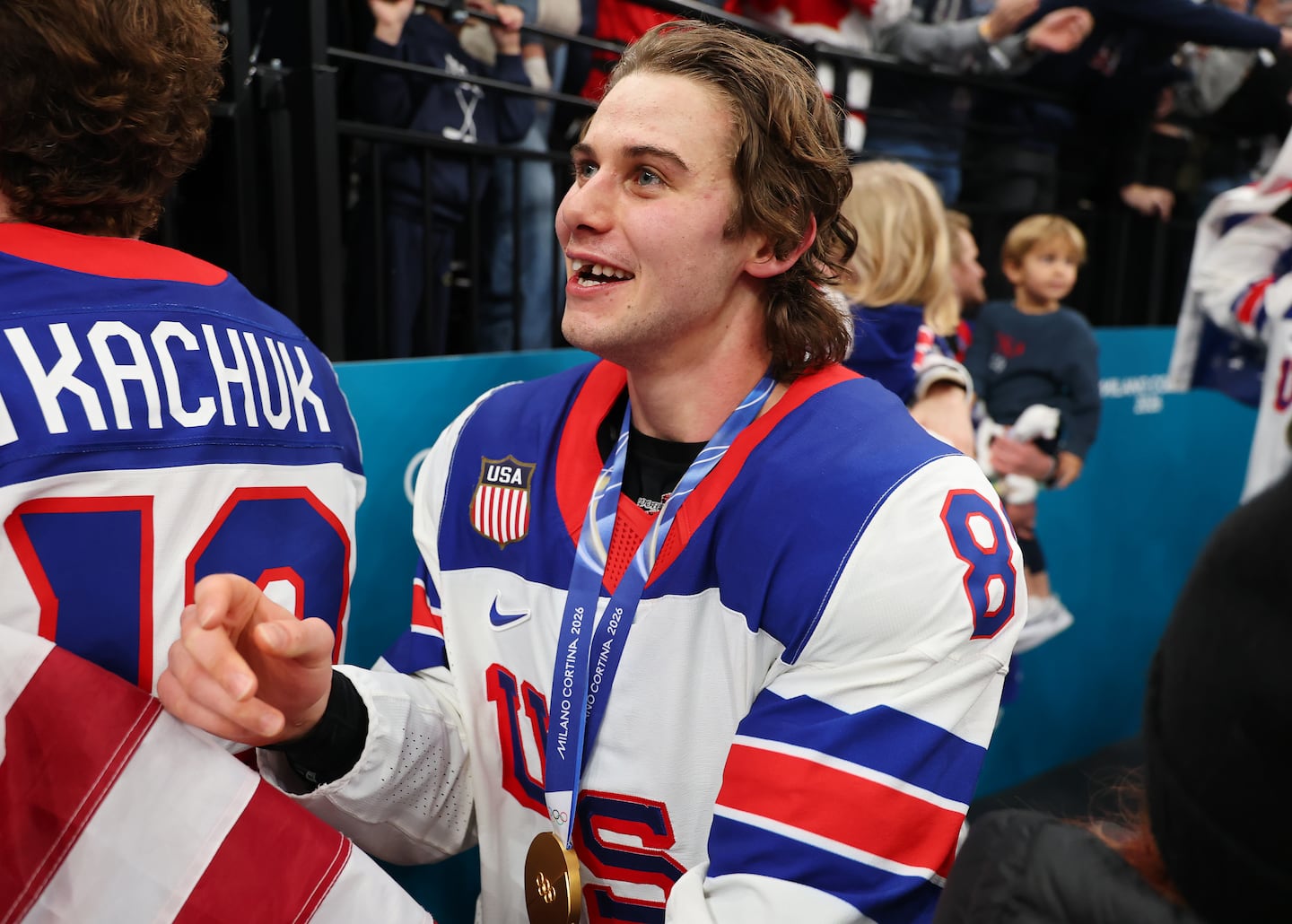 Olympic hero Jack Hughes stirred up a puck controversy involving the Hockey Hall of Fame collecting the gold medal souvenir.Gregory Shamus/Getty
ETC.
Hughes loses puck battle to HHOF
By week’s end, Jack Hughes better understood the rules of ownership, finally realizing he wasn’t entitled to keep the “golden goal” puck he fired home to clinch the Olympic gold medal for Team USA last month in Milan.
Both the IIHF and the IOC agreed, prior to the tournament, that all the Games goodies would be collected, and enshrined in perpetuity by the Hockey Hall of Fame in Toronto.
“Unfortunately,” said HHOF resources center vice president curator Phil Pritchard, amid the kerfuffle caused by Hughes at the start of the week, “in the nicest words, it was never Jack’s to own.”
Earlier, a frustrated Hughes told ESPN that he was endeavoring to get the puck back. He later explained that his dad, Jimmy, a former Providence College Friar and Bruins assistant coach, was a “monster collector” and wanted to include the puck among his cherished keepsakes.
“Like, that’s [expletive], that the Hockey Hall of Fame has it, in my opinion,” Jack, the 24-year-old Devils pivot, first told ESPN. “Why would they have that puck?”
“We have a paper trail,” noted Pritchard, “and signed paperwork.”
The HHOF has been harvesting Olympic mementoes for decades, including artifacts from the 1998 Games in Nagano, Japan, when NHLers first entered Olympic play. Sidney Crosby’s golden goal puck from 2010 Vancouver likewise is in the Hall’s hands.
A calmer, more collected Hughes sounded far more understanding only some hours after his initial comments. He said he was “honored” the puck is at the HHOF, which he called “the most special place in hockey.”
“I think things were taken crazy,” he explained. “That’s the way I felt. I didn’t know where the puck was, so it is what it is.”
Some striking similarities between the Ducks acquiring John Carlson from the Capitals at this month’s trade deadline and the Red Wings adding Larry Murphy from the Maple Leafs at the deadline in 1997.
The Ducks should be so lucky to get a similar boost from Carlson.
In ’97, Murphy had just turned 36 and was in his 17th NHL season. He already had two Stanley Cup rings (1991 and ‘92) from his years with the Penguins. He promptly helped the Red Wings win the Cup in ‘97, some 100 days after his arrival, and then helped them clinch it again the following spring.
“I was just part of a rising tide,” a humble Murphy once told me. “Lifts all ships, right?”
Maybe. But without his deft hand and experience, no telling if the Red Wings would have won either Cup. The Maple Leafs, for their part, were happy to receive only payroll relief for letting him go.
Carlson likewise just turned 36 and is in his 17th NHL season. He was an essential part of why the Capitals won their lone Cup in 2018, His playoff production (5-15–20) topped all of the team’s defensemen and ranked No. 5 on the club (still hard to believe that Evgeny Kuznetsov led the way with 12-20–32).
The Ducks surrendered a first-round draft pick to acquire Carlson, who remains on target to reach unrestricted free agency July 1. He went 0-0–0 in his first two games, albeit with the Ducks figuring out how best to utilize him in a backline group minus Radko Gudas, their captain who was tagged with a five-game suspension for his predatory hit on Maple Leafs star Auston Mathews. Gudas is due back in the lineup Tuesday when the Ducks play in Vancouver.
The Carlson swap was the biggest surprise of this year’s deadline. Murphy’s move to Detroit nearly 30 years ago was largely unheralded at the time. In fact, many Toronto fans were eager to bid him farewell. A reminder, yet again, that rating trade day winners and losers often comes with some unexpected bounces.
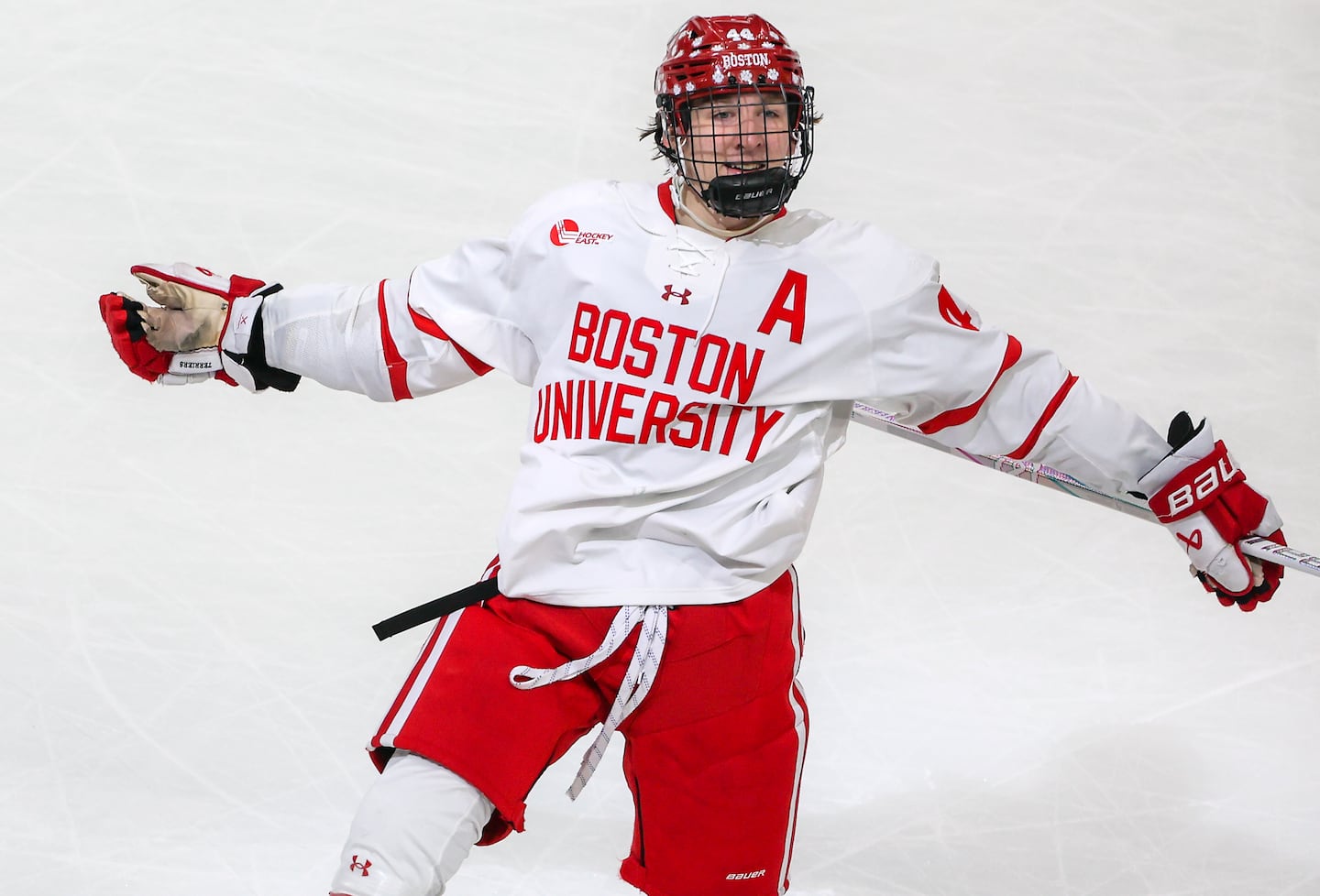 Cole Hutson has traded his red-and-whites from Boston University for the red-white-and-blues of the Capitals.Matthew J. Lee/Globe Staff
It’s a good time to be Cole mining. In a span of some 72 hours, prospect draftees Cole Knuble (Flyers), Cole Hutson (Capitals), and Cole Eiserman (Islanders) all signed NHL entry level contracts, leaving college to begin their professional journeys. Knuble, a right-shot center at Notre Dame, is the son of former Bruin Mike Knuble (part of the 700 Pound Line with Glen Murray and Joe Thornton). Hutson, brother of superb Canadiens defenseman/former Boston University teammate Lane Hutson and a left-shot D, scored an empty-net goal in his NHL debut. Eiserman, from Newburyport, is a left winger who scored 43 goals across two seasons at BU. Both Knuble (Lehigh Valley) and Eiserman (Bridgeport) were assigned to AHL club … From the idle-chat-on-the-road-trip file: Bruins winger Morgan Geekie is known by teammates as “Geeks,” a nickname he has carried since his youth hockey days in rural Manitoba. Geeks refers to David Pastrnak as Dave, which makes sense, although the latter is known far and wide as “Pasta.” When Geeks talks postgame about Dave helping to set up a goal, it can lead to a confused media corps, because no one other than Geeks refers to Pasta as Dave. Upon reporting to work in September, Geekie was pleasantly surprised when new assistant coach Steve Spott (“Spotter”) addressed him as “Mo” on the first day of training camp. “Not really sure where that came from,” said a smiling Mo. “I hadn’t heard that since I was a little kid — my grandparents always called me Mo. I liked it. Kinda cool, y’know, a little bit of nostalgia.”
Kevin Paul Dupont can be reached at kevin.dupont@globe.com.