
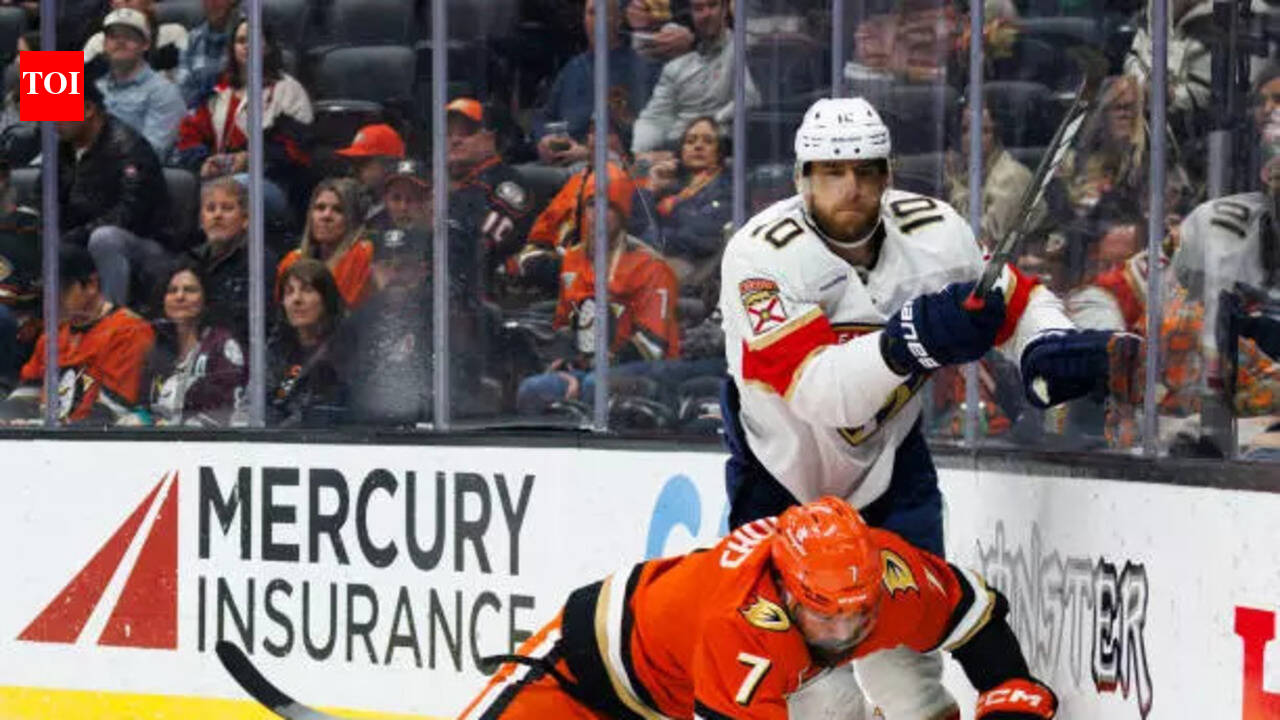
 Radko Gudas #7 of the Anaheim Ducks attempts to check A.J. Greer #10 of the Florida Panthers during the first period at Honda Center on January 21, 2025 in Anaheim, California. (Photo by Ric Tapia/Getty Images) The Department of Player Safety in the league has been faced with a lot of criticism in the latest NHL news roundup. It has puzzled fans and analysts why in serious on-ice incidents there are comparatively light suspensions despite the presence of injuries.The backlash was aggravated by two recent cases. Anaheim Ducks defenseman Radko Gudas was fined five games when a knee-on-knee strike hurt Toronto Maple Leafs captain Auston Matthews. Several days later, the Florida Panthers forward A.J. Greer received three games after a dangerous hit on a Calgary Flames forward called Connor Zary.
Elliotte Friedman explains Radko Gudas and A.J. Greer’s NHL suspension decisions
NHL insider Elliotte Friedman says that the problem is not just about disciplinary actions. On his podcast, Friedman disclosed that the league is very reluctant to apply more severe suspensions because of the fear of appeals.The NHL Players Association also appeals penalty actions often, and disciplinary actions have been overturned or lightened by arbitrators. Thus, the league favors handing down shorter bans that have a lesser chance of being appealed or reinstated.Friedman stated that legal factors are significant. It has been reported that the league is afraid of embarrassment and the complexity of unsuccessful appeals, and this has quietly influenced the determination of punishments.The fans have, however, been annoyed by this method, where they feel that the safety of the players is being compromised. Heavy-handed critics hold that the lighter suspensions cannot discourage dangerous plays, particularly in high-intensity match situations in the NHL today.Friedman also indicated that the players themselves will most probably have to change something meaningful. In case the NHL Players Association demands more disciplinary regulations, it might make the league rethink its strategy.Nevertheless, that is a complex solution. Any amendments would probably become included in larger collective bargaining agreements, which might provide the league with leverage to provide trade-offs in exchange.At the moment, the scandal is still evolving and has turned out to be one of the most widely discussed NHL updates. The discussion of disciplining, fairness, and accountability issues is by no means limited to as long as the issue of player safety is on the agenda.