
The Calgary Flames have transformed in three important ways since Craig Conroy took the big chair in 2023.
The first, and most obvious, is the roster.
After two major veteran purges in Years 1 and 3, the team on the ice looks nothing like the last club that Brad Treliving put together.
The first purge was the mass exodus of pending free agents. Purge No. 2 was the organization leaning into the inevitability of their position and embracing the rebuild by cashing in Rasmus Andersson, MacKenzie Weegar and Nazem Kadri this year.
The second, related change is the vast improvement in the club’s stock of futures. At the end of the Treliving era, the Flames had one of the lesser collections of picks and prospects in the league. Now, the team is positioned to boast perhaps the best prospect system in the NHL over the next few years.
The third transformation isn’t as practical and utilitarian as roster construction or asset management, but it might be just as important: It’s the complete change to the attitude and vibes surrounding the team.
Not too long ago, entire swaths of this roster were miserable and visibly checked out. The last few weeks of Darry Sutter’s second coaching stint here were absolutely dire. Everyone knew by then that the experiment had failed, that Treliving’s gambit to reopen the contention window hadn’t worked.
Their play on the ice was resigned, defeated. The entire project had collapsed in on itself. There was talk of open rebellion against the coach during exit interviews, which is why Sutter had to be fired.
But even with a new coach and GM entering the 2023-24 season, all of the pending UFAs eagerly were looking for the exits. While the direction and the future were, at best, unsure, it was clear that the Flames wouldn’t be winning anything anytime soon.
The truth is that Calgary’s culture needed some major repair work at the onset of the rebuild, just as much as the roster and futures did. Spectres of disappointment, frustration and failure left over from the prior regime haunted the dressing room.
For this transition period to work, for it to result in something worthwhile, the front office and coaching staff had to make this a team that guys wanted to play for again. A place to show up and take pride in, even if the possibility of a cup is currently a distant dream.
Calgary’s near-Cinderella turn last year, narrowly missing the playoffs, was a good indication that the culture had begun to heal. This year, though, has proven to be the real test. It’s one thing to celebrate a dressing room when a team is exceeding expectations, but much more difficult when the results are disappointing.
How did deadline trades impact team’s vibe?
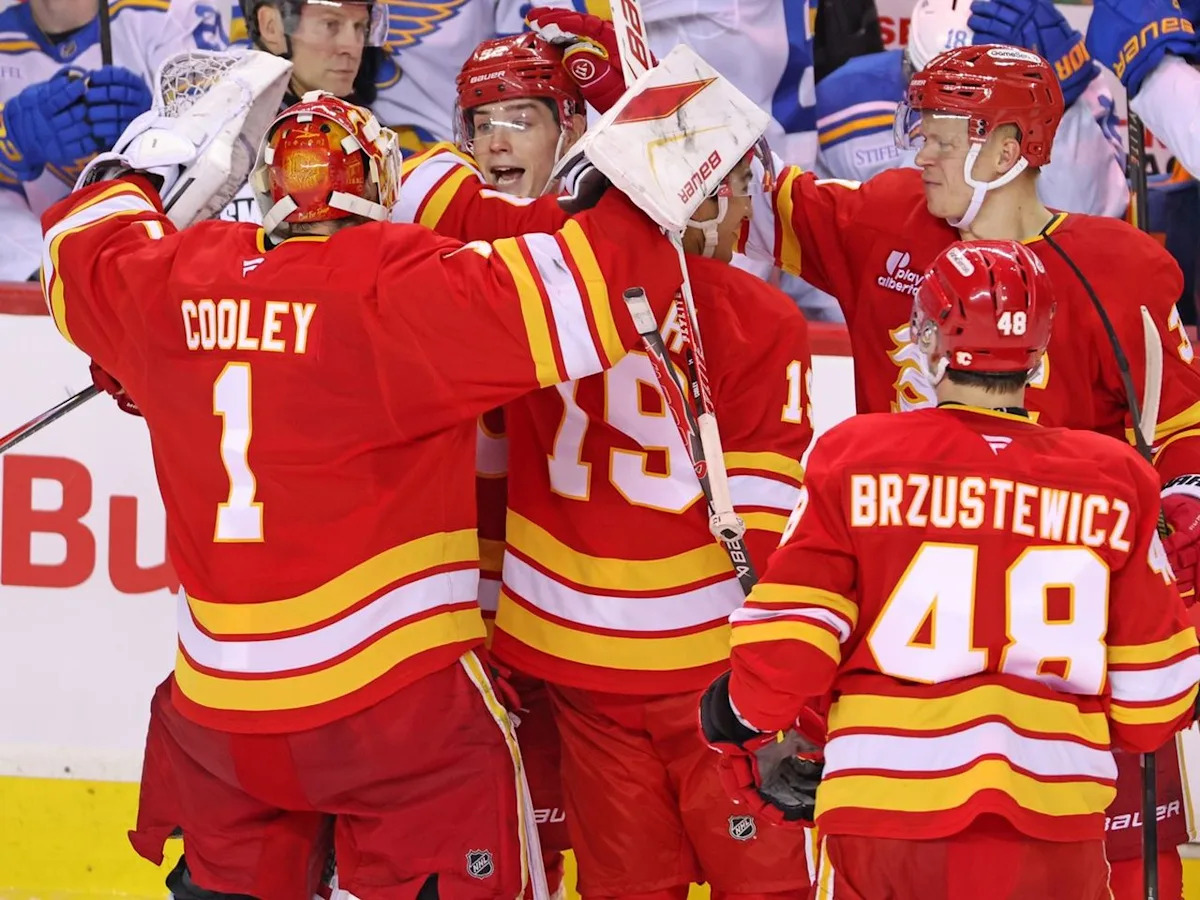
But the good vibes have endured the lacklustre record and the trades of popular veterans. Calgary’s strong fundamentals on the ice haven’t wavered since the trade deadline. The resignation and defeat we saw at the end of Treliving’s tenure are entirely absent now. Those left, and even those newly joined, seem to have bought into the project completely.
One of the main fears expressed by rebuild-skeptical NHL fans and management alike is the establishment of a “losing culture.” One where the most ambitious and competitive players leave and everyone else becomes inured to sitting at the bottom of the standings.
The risk in this kind of environment is the degradation of standards, one where players show up to collect a paycheque or pump their personal stats, even at the cost of the broader team.
But that’s not evident here.
To the credit of everyone involved, no one has checked out on the season and there’s no apparent dysfunction or animus.
Quite the opposite, in fact, with Blake Coleman recently noting in a post-game interview the team is focused on playing well and having fun down the stretch (paraphrased).
With three straight home wins against notable opponents recently, Calgary is actively pushing back the anxieties about a “loser culture” setting in here.
It won’t get as much attention as high draft picks or flashy trades, but the cultural repair initiated by Conroy and the coaching staff will have just as much impact on the success or failure of the rebuild.
So far, so good.