
At 9am on Carabao Cup final day, it went live. It was 61 seconds long and, like so many of Arsenal’s social media videos, it hit the spot. Barber shop repartee? Check. Orchestral soundtrack? Check. Statements of intent? Check, check, check: “We’re made for days like this”, “This is the first big step”, “Show them who we are and why we’re here”.
Arsenal’s players have spent all season — much of the past four years, in fact — showing us who they are. They have consistently been the second-best team in England for the past three seasons, one of the best in Europe throughout that period, and are strong favourites to win their first Premier League title in 22 years. They are resilient, uncompromising, so far removed from the flaky image of modern Arsenal caricature.
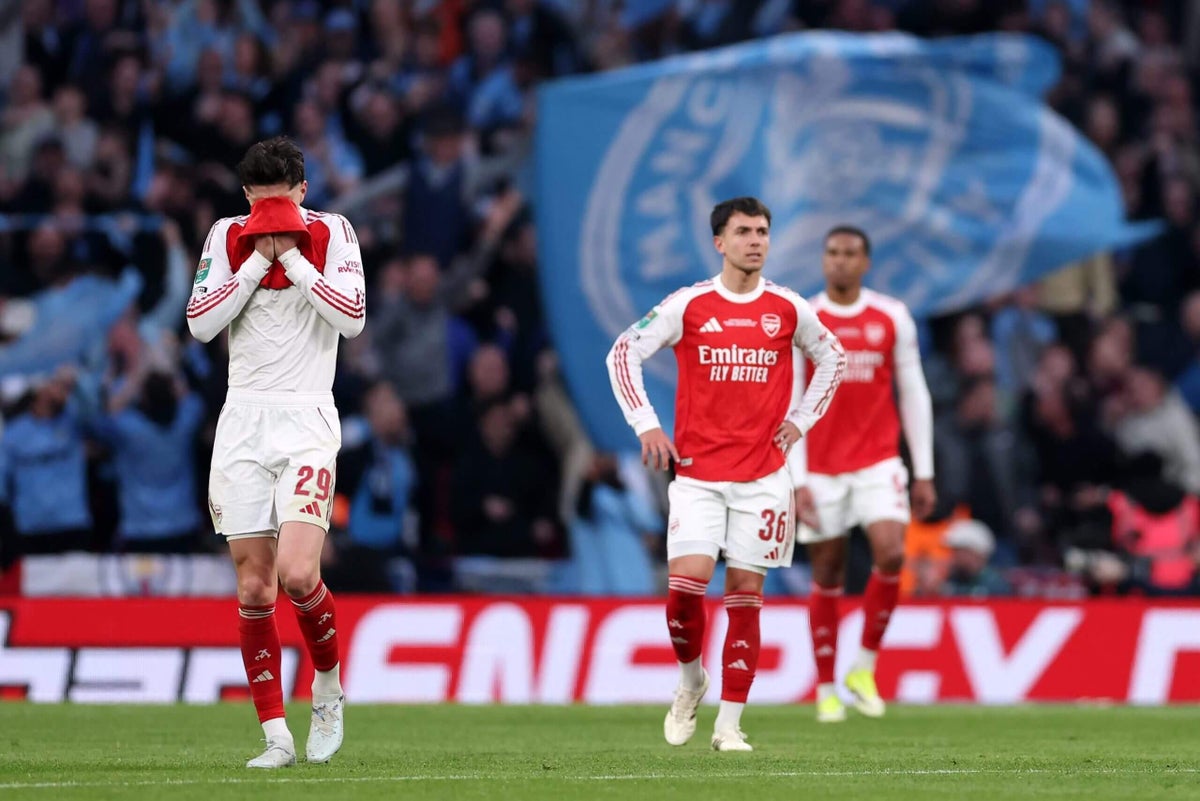
And yet here we are again, reflecting on another “nearly” moment for Mikel Arteta’s team. The anguish of defeat by Manchester City in the Carabao Cup final was compounded by the manner of it: a miserable performance in which so many players fell so far short of their usual standards. If you have spent the past few months waiting for a performance to strengthen a certain portrayal of Arsenal, this was it: passive, uncertain, hesitant. Second again, ole, ole.
If those sound like the words of an Arsenal-sceptic, they are not; what has defined them this season is a strong, almost unyielding approach. Sunday’s defeat was only their fourth in 50 games in all competitions this term and their first in seven meetings with City since a bruising 4-1 loss in April 2023. To put that into context, City, their conquerors at Wembley, have lost 9 of 49 this season, having also lost 16 of 61 last term. Liverpool have lost 14 of 47 this season. Chelsea have lost 15 of 49, including the last four on the run. As for Tottenham Hotspur, they have lost 19 out of 45, including seven of the last nine.
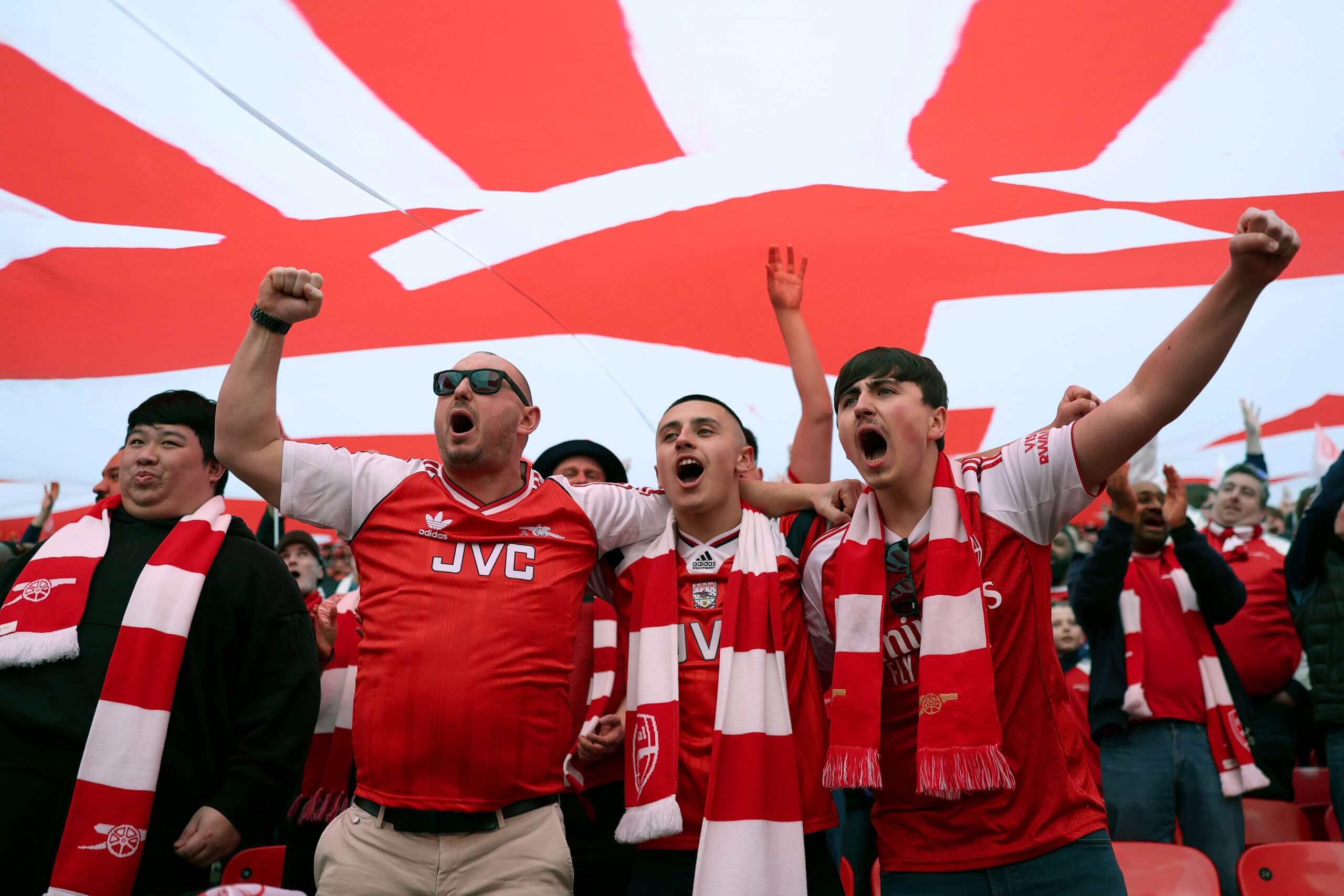
Arsenal fans had reason to be confident ahead of the Carabao Cup final (Justin Setterfield/Getty Images)
So, yes, the “losers” talk from rival fans carries more than a hint of wishful thinking. But for all their undoubted progress under Arteta, Arsenal have still to prove they can be winners — because winners end up with trophies to show for it. They are nine points clear at the top of the Premier League, with appealing games to come in the quarter-finals of the Champions League (against Sporting CP) and FA Cup (against Southampton), but the pressure on that trip to Manchester to face City on April 19 will now be felt even more acutely.
In the build-up to Sunday, the mind drifted back to the 2011 League Cup final, when, like now, Arsenal were coming up to six years without winning a major trophy.
Two days before they faced Birmingham City at Wembley, Bacary Sagna, one of Arsenal’s full-backs at the time, told reporters about the insecurities and mental fragilities that had undermined them in previous seasons.
“At some stage, when we have got close to winning something, we have got scared and stopped playing,” Sagna said. “We have not reacted in the right way. We have just waited for the result to happen and this is not a good way. We were scared. But not anymore. We are now ready to win something.”
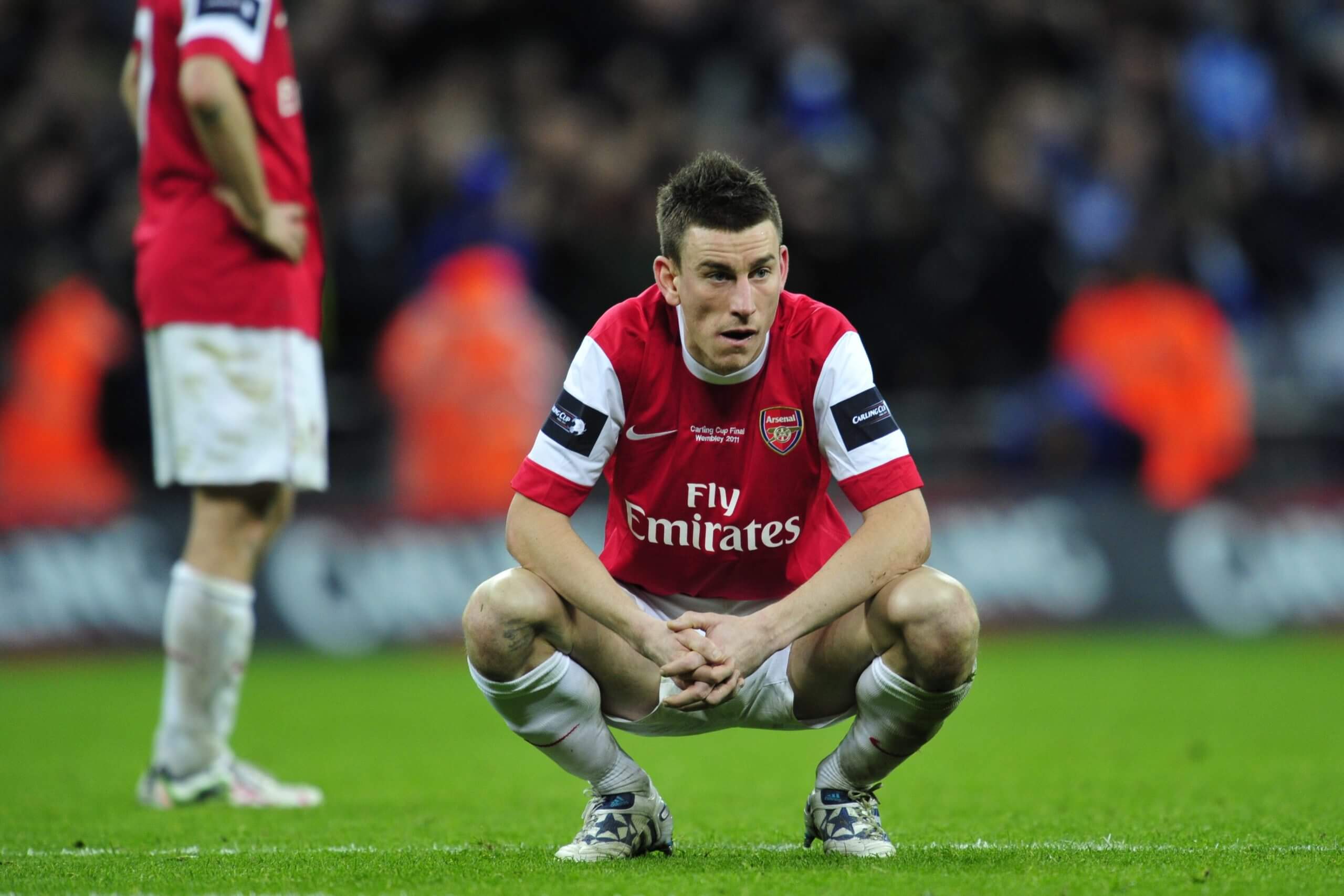
This Arsenal side are nothing like the one that lost the 2011 final (Glyn Kirk/Getty Images)
Those comments made it all the more fascinating when Arsenal choked in the closing stages of that final, a mix-up between goalkeeper Wojciech Szczesny and defender Laurent Koscielny allowing substitute Obafemi Martins to win it for Birmingham in the 89th minute. That setback destroyed the fragile confidence and momentum of a young Arsenal team, with captain Cesc Fabregas and midfielder Samir Nasri leaving for Barcelona and Manchester City respectively that summer.
It was another three years before Arsenal ended their trophy drought, recovering from a calamitous start, 2-0 down inside eight minutes, to beat Hull City 3-2 after extra time in one of the most dramatic FA Cup finals of modern times.
Looking back a few years ago, Arteta, who was captain in that 2014 final, told reporters that winning the FA Cup had helped them “really to believe and to feel, ‘Wow, I want to experience more of these moments’”.
That was a team whose weaknesses, physical as well as mental, shaped perceptions of Arsenal for many years — and perhaps still do — but they ended with three FA Cup successes to show for their efforts during Arsene Wenger’s difficult final years in charge.
This Arsenal team are made of much stronger stuff: built on that formidable central defensive partnership of William Saliba and Gabriel, and more likely to be accused of winning ugly than ignoring a fatal flaw in their make-up. Little wonder that Arteta called for “perspective” on Sunday evening and emphasised that “what this team has done in the last eight months has been incredible”.
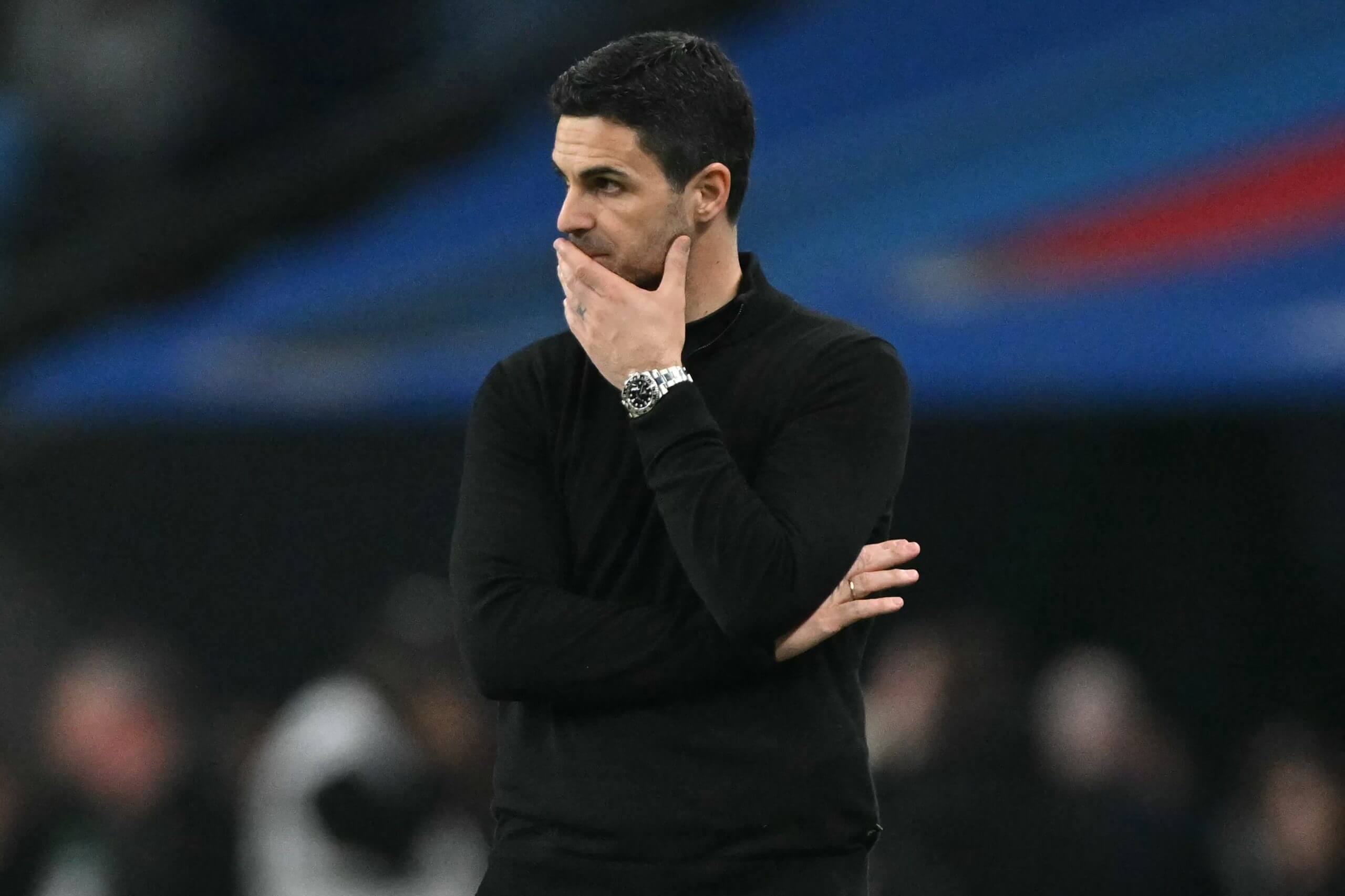
Mikel Arteta called for perspective after Arsenal’s Wembley defeat (Glyn Kirk/Getty Images)
“We are going to use this disappointment and this fire in the belly to have the most amazing two months that we have ever had together, and we’ll manage that energy in the right way,” the manager said. “Now we have to go through that pain and disappointment. That is normal and it is a part of football.”
But there was something disconcerting in their second-half display at Wembley. It wasn’t what Sagna identified as fear in a previous Arsenal team, but neither was it a brave performance. Instead, it followed a pattern that has cropped up in some of their tougher matches since the start of the year: a strong, upbeat start followed by a loss of momentum, and then, almost inexplicably, a retreat as thoughts turn to containment.
For all the justifiable focus on the selection of backup goalkeeper Kepa Arrizabalaga and the absences of both captain Martin Odegaard and Eberechi Eze, what will really concern Arteta — and encourage City manager Pep Guardiola — is the way Arsenal failed to rise to the challenge City set them in the second half.
For the first time in three years, City looked too clever for them — not just in the intelligence of Bernardo Silva and Rodri or the guile of Rayan Cherki further forward, but in the way they threw Arsenal into confusion at times by refusing to press them, preferring to give Kepa and his defenders time and space on the ball, having shut off all the passing lanes.
In some ways, it called to mind last season’s Carabao Cup final, when Liverpool, on course for the Premier League title, were comprehensively outplayed by Newcastle United. That didn’t stop Liverpool winning the bigger prize, but it was certainly a jolt and can now be seen as a harbinger for some of this season’s struggles.
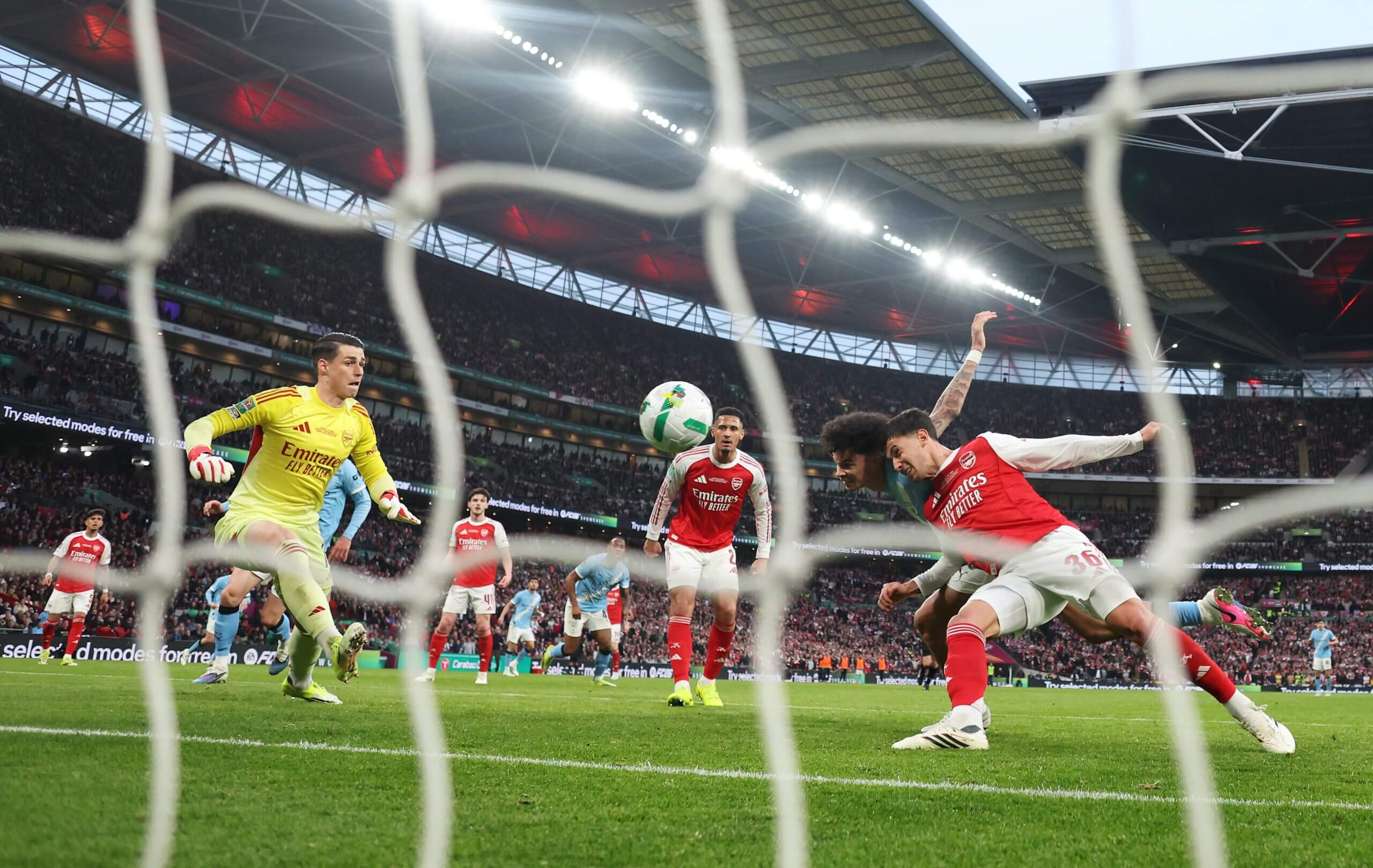
Nico O’Reilly heads in Manchester City’s opening goal (Julian Finney/Getty Images)
This Arsenal team are at a different phase of their development, still building towards that first trophy. When asked afterwards whether there might have been a mental aspect to his team’s disappointing performance, Arteta replied it was “too easy” an assessment. He praised City’s display and said he drew comfort from the way his players have responded to their previous defeats this season: 18 games unbeaten after losing to Liverpool in August, 12 games unbeaten after losing to Aston Villa in December, 14 games unbeaten after losing to Manchester United in January.
By contrast, City have suffered back-to-back defeats on three occasions this season and have had two other runs of three games without a win. It is those inconsistencies that led Guardiola to express surprise, as well as delight, at the way they performed on Sunday. “They (Arsenal) are the best so far (this season), no doubt about that,” he said. “I couldn’t believe we could do this against that Arsenal, but we did.”
The challenge for Arsenal is to ensure their resolve is stiffened rather than undermined by this setback. Arteta and some of his players spoke of using the bitter taste of defeat as “fuel” for the rest of the season, but we can also be sure that victory would have been talked about as some kind of springboard, the first trophy of many, easing the burden on his players and strengthening that winning feeling as they looked to build success upon success.
As it transpired, the Carabao Cup final brought nothing of the sort for Arsenal. Bold statements of intent were followed by expressions of regret. Higher goals and greater glories lie in prospect, but these opportunities must be seized when the pressure intensifies over the weeks ahead. After Sunday’s disappointment at Wembley, it has gone up another notch or two.