
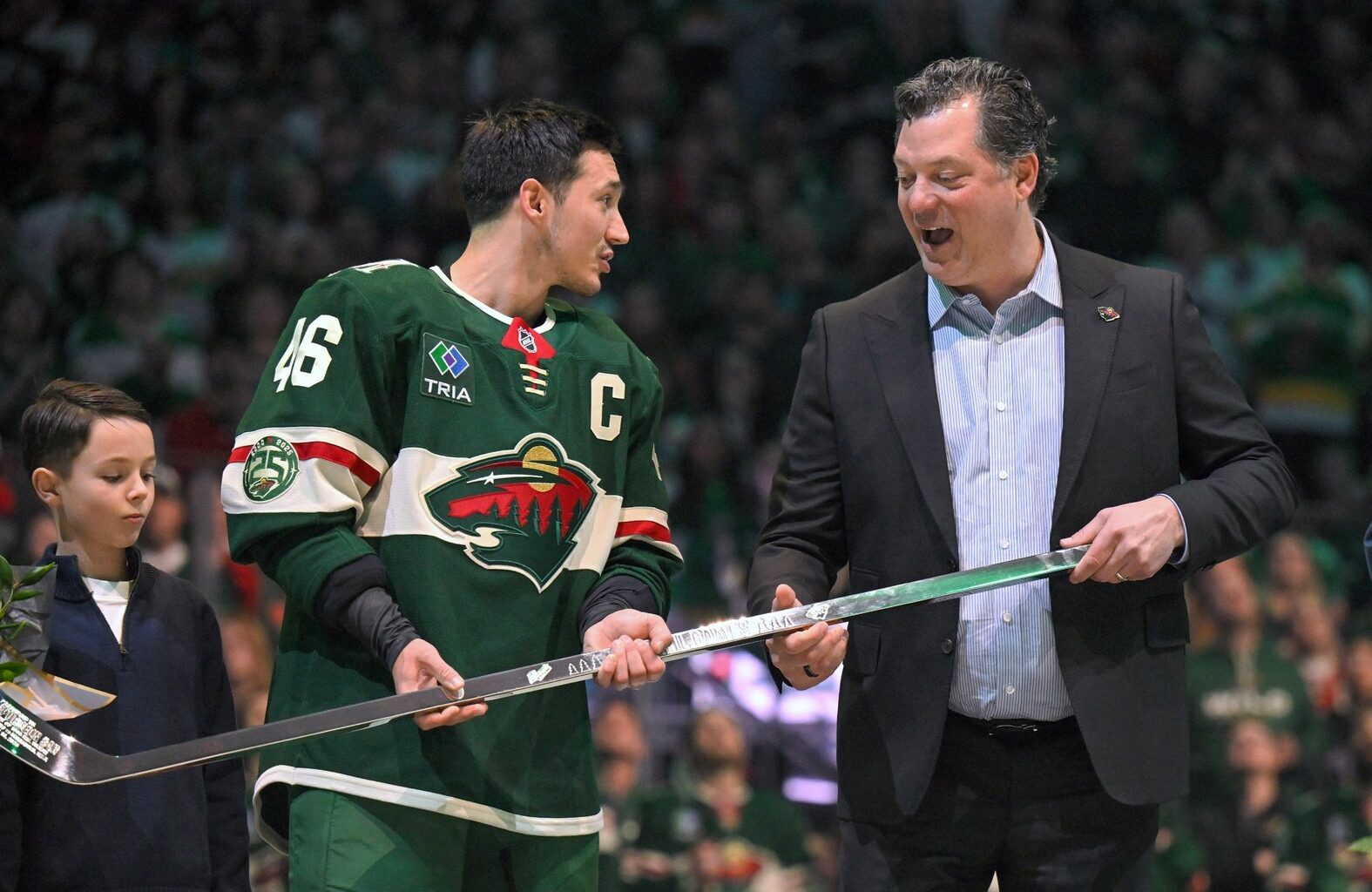
Leadership runs through every layer of the Minnesota Wild. From the front office to the locker room, it’s a major driver of the team’s consistency and competitiveness on the ice. Under President of Hockey Operations and General Manager Bill Guerin, the organization has intentionally built a culture where character, accountability, and shared responsibility matter as much as raw talent.
When Guerin took over, the Wild were known more for inconsistency than identity, despite having plenty of skill. He and the coaching staff made culture a priority, focusing on standards, buy-in, and how players handled adversity. The result has been a group that competes honestly every night, with the expectation that effort and preparation are non-negotiable, regardless of opponent or standing.
Guerin has also emphasized chemistry as a roster filter, openly valuing attitude and fit in the room when making trade and signing decisions. That emphasis shows in how quickly new faces seem to integrate, how veterans advocate for staying in Minnesota, and how the club has avoided the kind of internal noise that can derail a season.
On the ice, the Wild’s formal leadership group has set the tone for this shift. Captain Jared Spurgeon, along with alternate captains such as Marcus Foligno and Matt Dumba in recent seasons, has given the team a blend of calm, competitive edge, and community-minded presence that players rally around. Spurgeon leads by example with preparation and consistency, while Foligno brings energy, honesty, and a willingness to speak for the room in tough moments.
Around them is a layer of veterans who lead without necessarily wearing a letter. Players like Mats Zuccarello have played a major role in mentoring stars such as Kirill Kaprizov, modeling professionalism while helping young core pieces learn how to handle the spotlight. That mix of quiet pros and vocal emotional drivers has created a room where expectations are clear, and younger players know exactly what it takes to stick.
One of the biggest changes in the Wild’s identity is the idea that “everyone is a leader.’ They don’t treat rookies and depth players as passengers; they expect them to contribute, have a voice, and uphold team standards from Day 1. That approach manifests in the way the Wild roll four lines and trust their entire bench in key moments, rather than leaning on a small core and hoping they carry the load.
The payoff has been resilience. When injuries or slumps hit, the group doesn’t fracture. Instead, different players take turns driving games, and you see buy-in in details like backchecking, line changes, and shot blocking that don’t show up on the scoresheet but decide tight contests. The leadership culture has effectively raised the team’s floor; they might not dominate every night, but they rarely beat themselves.
Guerin’s trade history reinforces this leadership-first philosophy. The Wild have consistently targeted players who have worn letters or played leadership roles in previous organizations, betting on their ability to stabilize the room and model the habits the team wants. Even when acquiring players to fill depth roles, the front office has said it looks for “good pros” who can mentor and push internally, not just add goals or hits.
Bringing in players who have captained junior teams, served as alternates in the NHL, or been culture drivers elsewhere means the Wild effectively ice multiple leadership groups at once. It’s not unusual to see a player who wore a letter on a former team now slotted into a secondary role in Minnesota, adding to the leadership density without needing the title. That accumulation of experience matters during playoff pushes and in the grind of an 82-game season, when the message carries more weight because it comes from every corner of the room.
All of this leadership theory would ring hollow if it did not impact performance, but the Wild’s recent seasons show a clear link between culture and results. They have blended a core of emerging stars with a veteran backbone that understands what it takes to be ready every night, giving Minnesota a chance to compete regardless of lineup turnover.
The organization has also seen players take less money or choose extensions to stay, a sign that the environment is one they believe can help them win and grow. Ultimately, leadership for the Minnesota Wild is not just about who wears the “C” or “A,” it is about a shared standard that stretches from Guerin’s office to the last guy in the lineup.
By surrounding their young core with proven leaders, many of whom have worn letters before arriving, the Wild have built a group that expects to contend and knows how to carry itself like a contender, as shown in their structure, consistency, and ability to handle big moments.
Think you could write a story like this? Hockey Wilderness wants you to develop your voice, find an audience, and we’ll pay you to do it. Just fill out this form.