
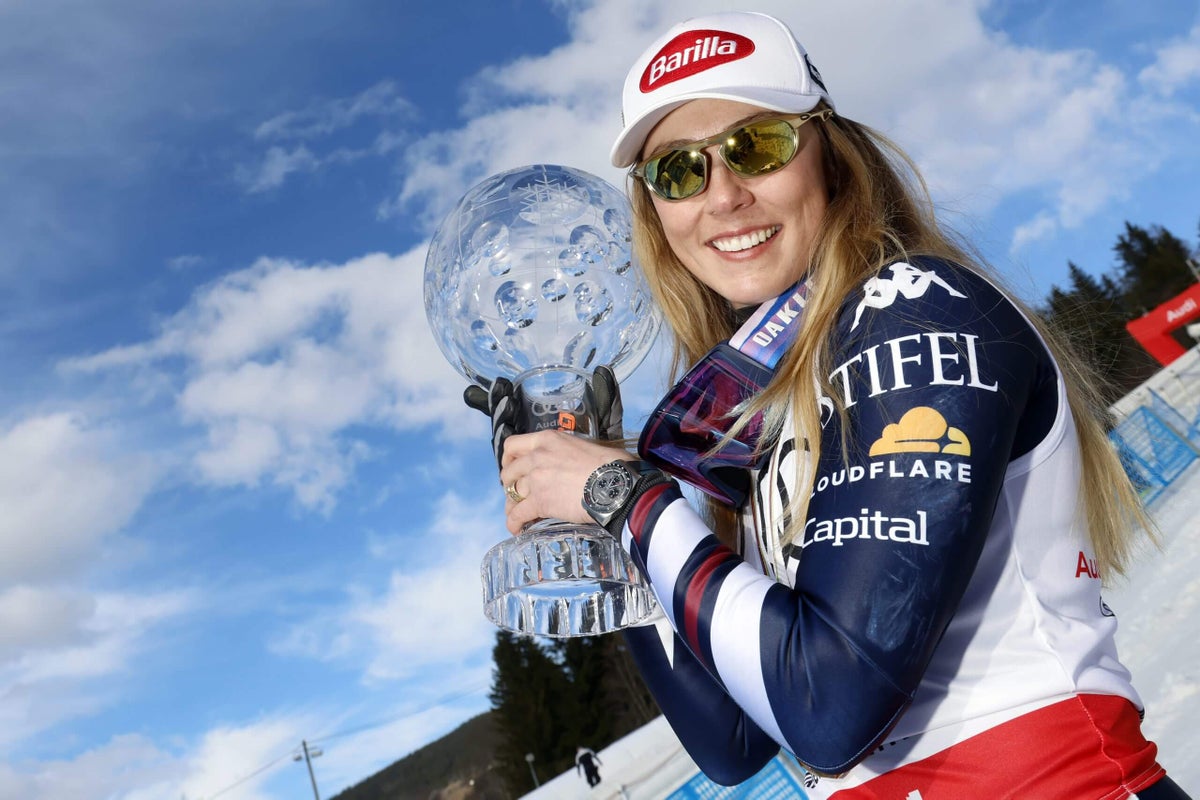
American Alpine skiing star Mikaela Shiffrin clinched the overall World Cup title in the final race of the season, finishing 11th in a giant slalom to secure the prize for a sixth time in her career.
Shiffrin entered the race on Wednesday at the World Cup finals in Lillehammer, Norway, needing only to hold off rising German star Emma Aicher, a top skier across all disciplines. Aicher, 22, needed a win, and for Shiffrin, 31, to finish no better than 16th.
After the first run, it was too close to call. Aicher was third, 0.26 seconds off the lead, and Shiffrin 17th.
In the second leg, Shiffrin finished a clean run in first place and was still there with fewer than 15 racers to go, clinching the crystal globe — the award given to the winners of each discipline and the overall title. With the title already decided by the time she pushed out of the gate, Aicher slipped and turned sideways early in her second run, crossing the line 0.02 seconds behind Shiffrin and finishing 12th.
Canada’s Valérie Grenier got her third career World Cup win, topping the field in 2 minutes, 16.79 seconds. Norway’s Mina Fuerst Holtmann was second, 0.43 behind. Austria’s Julia Scheib, the giant slalom crystal globe winner, finished third, 0.57 behind.
The day, though, belonged to Shiffrin, who also won the overall title between 2017-2019 and 2022-2023. The title capped a triumphant season for Shiffrin, one that brought unprecedented domination in slalom and Olympic gold in her best event.
“Yeah, it’s quite emotional,” Shiffrin said. “This thing sums up a whole season of work and fighting with the whole team.”
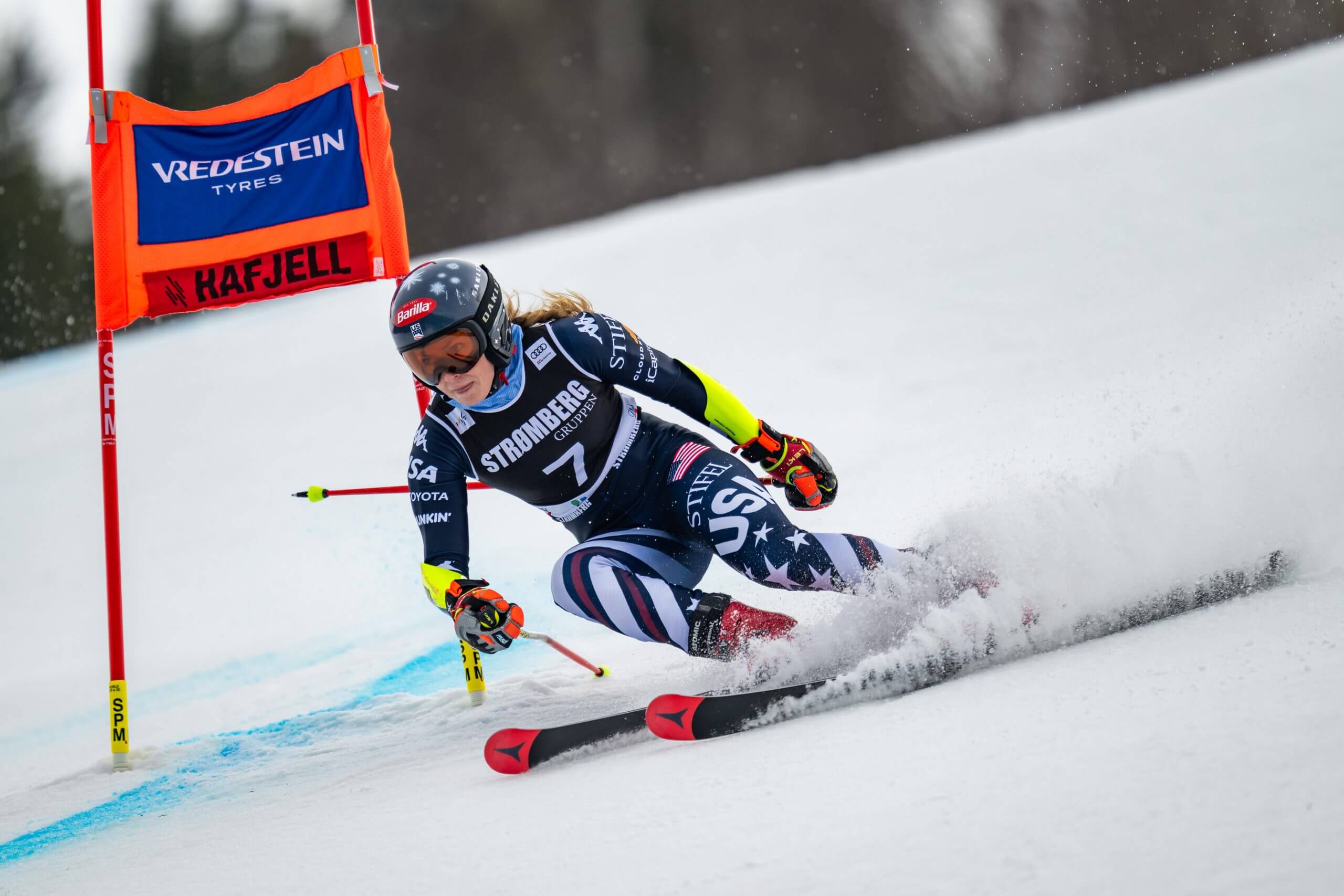
Mikaela Shiffrin skis during Wednesday’s first run of the giant slalom. Needing a top-15 finish to make sure of the overall title, she finished 11th. (Kevin Voigt / Getty Images)
In Wednesday’s final race of the men’s season, the slalom, Norway’s Atle Lie McGrath emerged as the globe winner from a pack of four skiers who had a shot at it. McGrath, leading the standings entering the race, finished eighth and opened the door for a challenger to surpass him. Brazil’s Lucas Pinheiro Braathen — who on Tuesday won the first crystal globe for South America — had the best shot at it, but he skied out during his second run. Switzerland’s Marco Odermatt clinched his fifth straight overall men’s title over a week ago.
The overall prize often goes to skiers who excel in three or more Alpine skiing disciplines (downhill, super-G, giant slalom and slalom).
Shiffrin, though, won it this year on the strength of a historically great slalom season. Shiffrin won a record nine of 10 World Cup races in the discipline and finished second in the other one. Combined with consistent top-six performances in giant slalom (and eight points from super-G), it was enough to hold off the all-around talent of Aicher, who finished second in the downhill, third in the super-G and sixth in the slalom.
The final points tally: Shiffrin 1,410, Aicher 1,323. It was close enough that a couple of positions gained or lost either way throughout the season could’ve changed the result, a fact not lost on Shiffrin.
“There’s a new era of the greatest overall skier,” Shiffrin said of Aicher after Tuesday’s slalom, “and I’m so excited to watch what she does in the future. But for now, we have one more race to decide this one.”
In the end, Shiffrin did enough to delay Aicher’s coronation at least another year.
“I think the outcome of this day is that (Aicher) can do this,” Shiffrin said Wednesday. “I think that’s the coolest thing about ski racing, that anything is possible. I’m really, really grateful to be in this position now. It’s really a big emotion. But I’m also grateful for the fight.”