
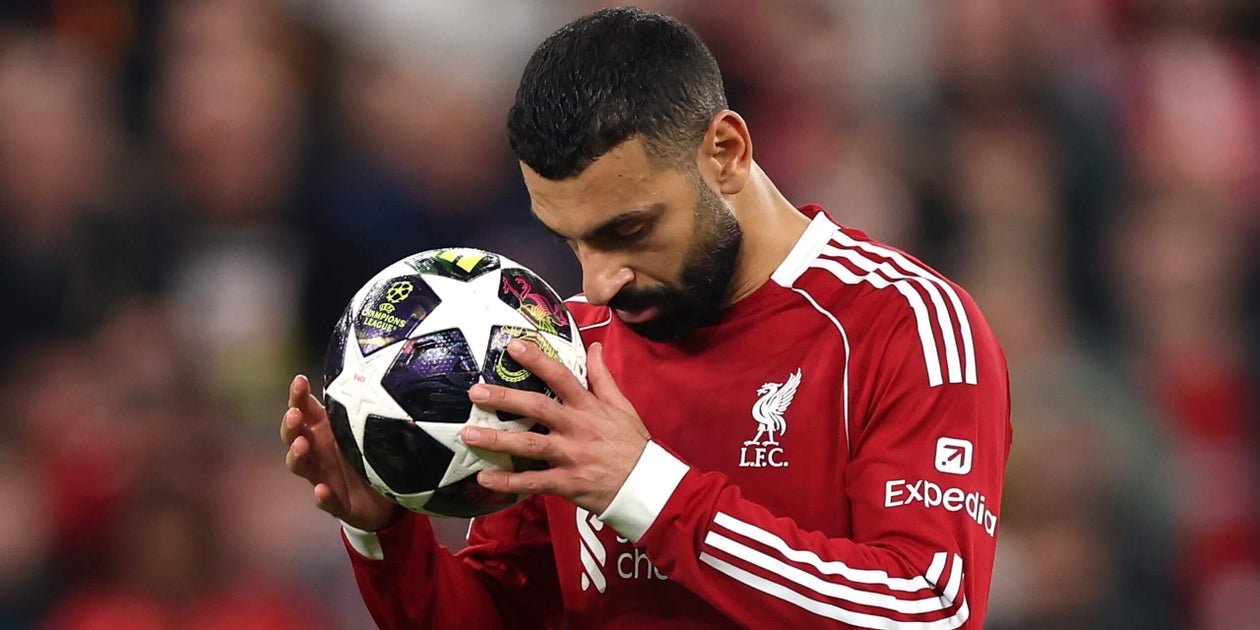
Three hundred and forty-eight days later, another chair, another camera, another momentous announcement from Mohamed Salah.
Last April, he addressed Liverpool’s supporters from inside their Anfield home, walking along a red carpet before sitting on a gilt-edged chair. After months of speculation and doubt about his future, the man known as the Egyptian King smiled and told the fans that “the story will continue”.
The video he posted for his 66million Instagram followers on Tuesday evening was sombre. He sat down in front of his trophy cabinet at home, let out a deep breath and gulped. “Unfortunately, the time has come,” he said. “I will be leaving Liverpool at the end of the season.”
It wasn’t what he envisioned when he signed that two-year contract last April, with Liverpool closing in on the Premier League title. But the goals that have flowed so freely during his nine years on Merseyside have dried up this season. Those bursts of acceleration that took him past opposition full-backs so often have become infrequent. At 33, in a season that has brought unimagined difficulties, he has looked jaded.
Time is the one opponent no athlete can beat. But the memories of Salah’s performances, goals and achievements will endure. He is the fourth-highest goalscorer of the Premier League era and, with 255 goals in 435 appearances in all competitions for Liverpool, the third-highest goalscorer in the club’s history behind Ian Rush and Roger Hunt. In the 52-year history of the Professional Footballers’ Association Players’ Player of the Year award, he is the only three-time winner. When he leaves in May, it will be not just as one of Liverpool’s all-time greats but as one of English football’s greatest imports.
There is something so captivating in the story of a boy from a small village in rural Egypt who defied overwhelming odds: first of all to make it to Europe, with Swiss club Basel, and then not just to make it to the Premier League but — after a brief and frustrating spell at Chelsea — to make such a profound, enduring impression at a club with Liverpool’s rich history and vast global appeal.
In a sport where so much business seems transactional these days, it has been one of those rare relationships that feels perfect: the right player at the right club at the right time.
“I never imagined how deeply this club, this city, these people would become part of my life,” he said in last night’s statement.
That feeling is more than reciprocated by the fans. Who imagined when Liverpool signed him from Roma in an initial £36.9million ($50m at current rates) transfer in June 2017 — less than Chelsea, Manchester United and Arsenal paid that summer for centre-forwards Alvaro Morata, Romelu Lukaku and Alexandre Lacazette — that the player who had struggled at Chelsea would be such a revelation on Merseyside, the spearhead of a team that has gone on to win two Premier League titles, one Champions League and much more besides?
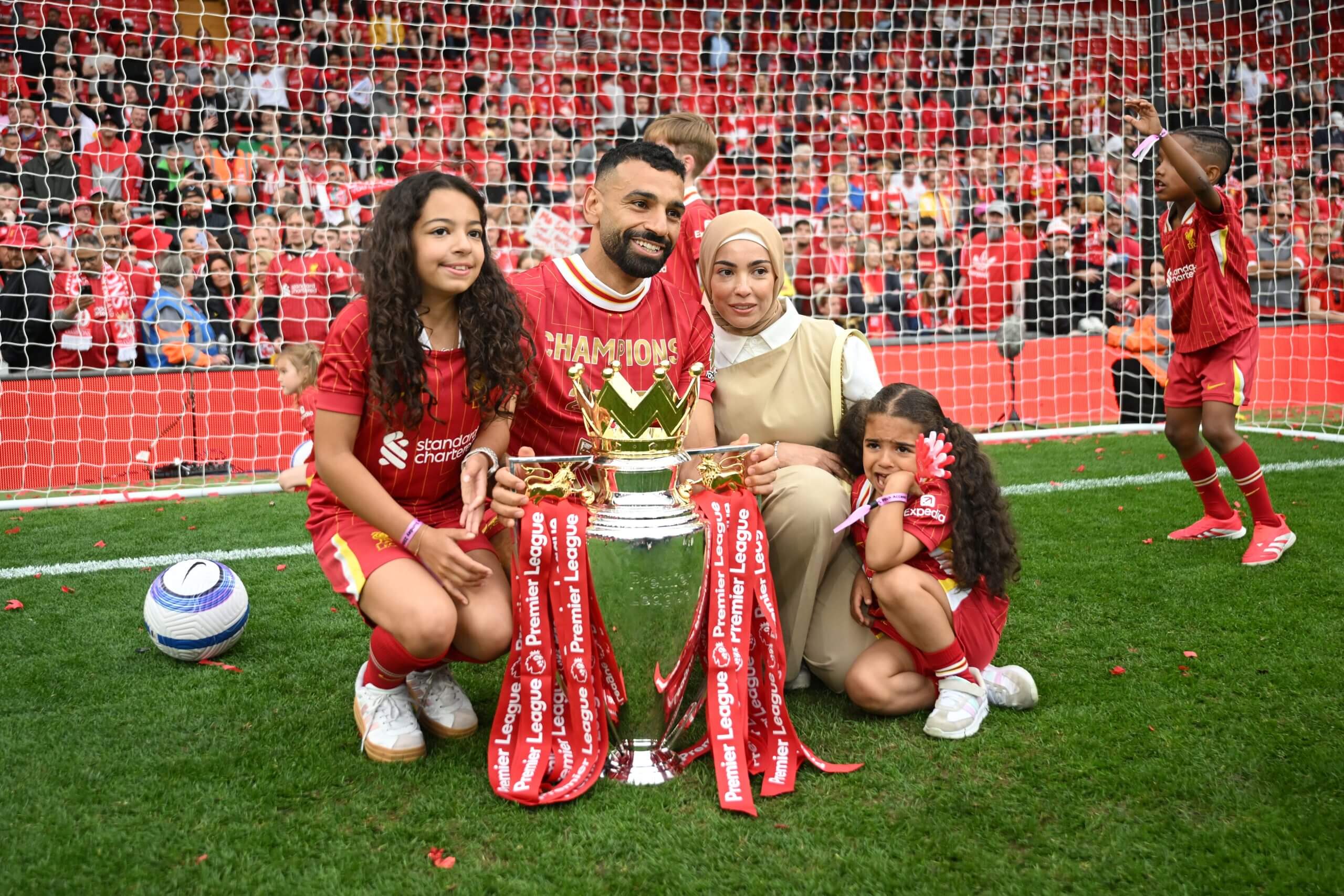
Mohamed Salah with his wife, Magi, and their children after Liverpool’s title win in 2025 (Michael Regan/Getty Images)
His first season at Liverpool was astonishing. In 52 appearances in all competitions, he scored 44 goals, 32 of them in the Premier League, 11 en route to the Champions League final. Some of them were extraordinary: lofting a shot over stranded goalkeeper Ederson from 36 yards in a 4-3 win over win over Manchester City; turning inside two Everton defenders to curl the ball beyond a despairing Jordan Pickford in the Merseyside derby; an even better solo effort against Tottenham Hotspur, twisting and wriggling his way through a series of challenges to score from a tight angle.
There have been so many more goals to remember, whether in terms of their brilliance, their significance, or both, but what really defines Salah’s impact at Liverpool is its sheer relentlessness. Until this campaign’s difficulties, he had averaged 30 goals a season at Liverpool (23 in the Premier League). For all that he has been accused of selfishness at times, only six players in the Premier League era have registered more assists. If you combine goals and assists for the ‘goal contributions’ metric, only Alan Shearer (324), Wayne Rooney (311) and Frank Lampard (289) in the Premier League era can beat his 284 — and all three of them did so in at least 100 more appearances than Salah has made.
His impact goes far beyond the numbers. He has become the first north African player to achieve global superstar status. As Simon Hughes writes in Chasing Salah, “he is now to Egypt what Lionel Messi is to Argentina and Cristiano Ronaldo is to Portugal. This is a country that has produced the most successful teams in the continent of Africa, and yet until Salah, it had not produced a superstar like the Ivory Coast’s Didier Drogba or Samuel Eto’o from Cameroon”.
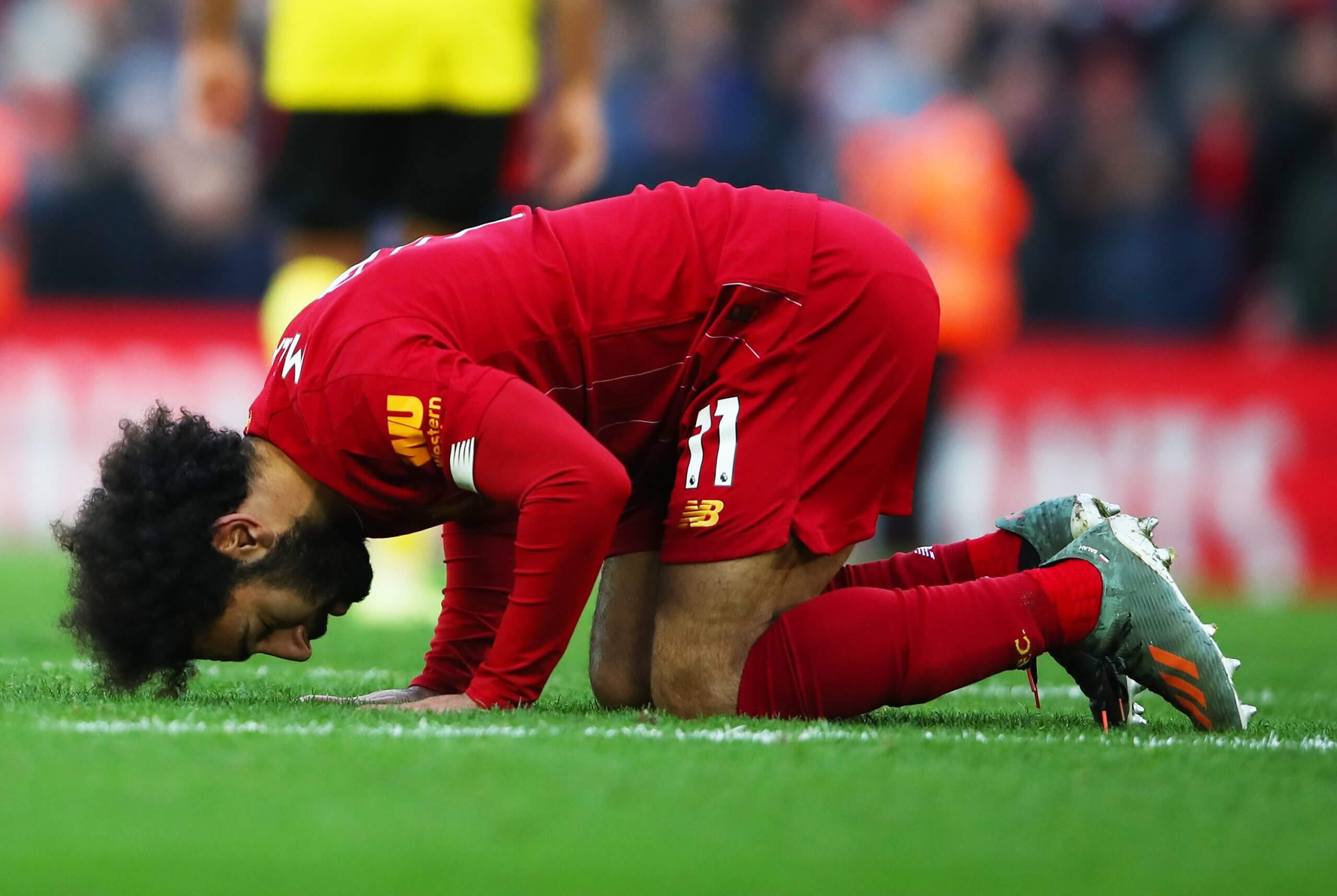
Salah is one of the most famous Muslim sportspeople on the planet (Clive Brunskill/Getty Images)
Salah has become a cultural icon not just in Egypt but throughout the Arab world. In 2019, he was named by Time magazine as one of the world’s 100 most influential people. In a rare interview, he said that football fans across the Middle East “feel like I’m their son”. He also said that “we need to change the way we treat women in our culture”, adding, “It’s not optional.”
His departure from Liverpool by mutual agreement, with a year left on his contract, raises the possibility of a lucrative move to the Saudi Pro League. Al Ittihad, one of several clubs owned by Saudi Arabia’s Public Investment Fund (PIF), tried to buy him in the summer of 2023 and there is little doubt the acquisition of such a high-profile Arabic player would appeal to the kingdom’s plans to invest in sport — particularly as Ronaldo, who has spent the past three years at Al Nassr, turned 41 last month.
For now, Salah’s focus will be on ending his Liverpool career on a high. This season has been by far his most difficult on Merseyside. When he was dropped from the starting line-up in November after a run of nine defeats in 12 games, he caused shockwaves by declaring he and coach Arne Slot “all of a sudden … don’t have any relationship” and that “it seems like the club has thrown me under the bus”. At one stage, it appeared his departure to play for Egypt at the Africa Cup of Nations in December would be the end of his Liverpool career.
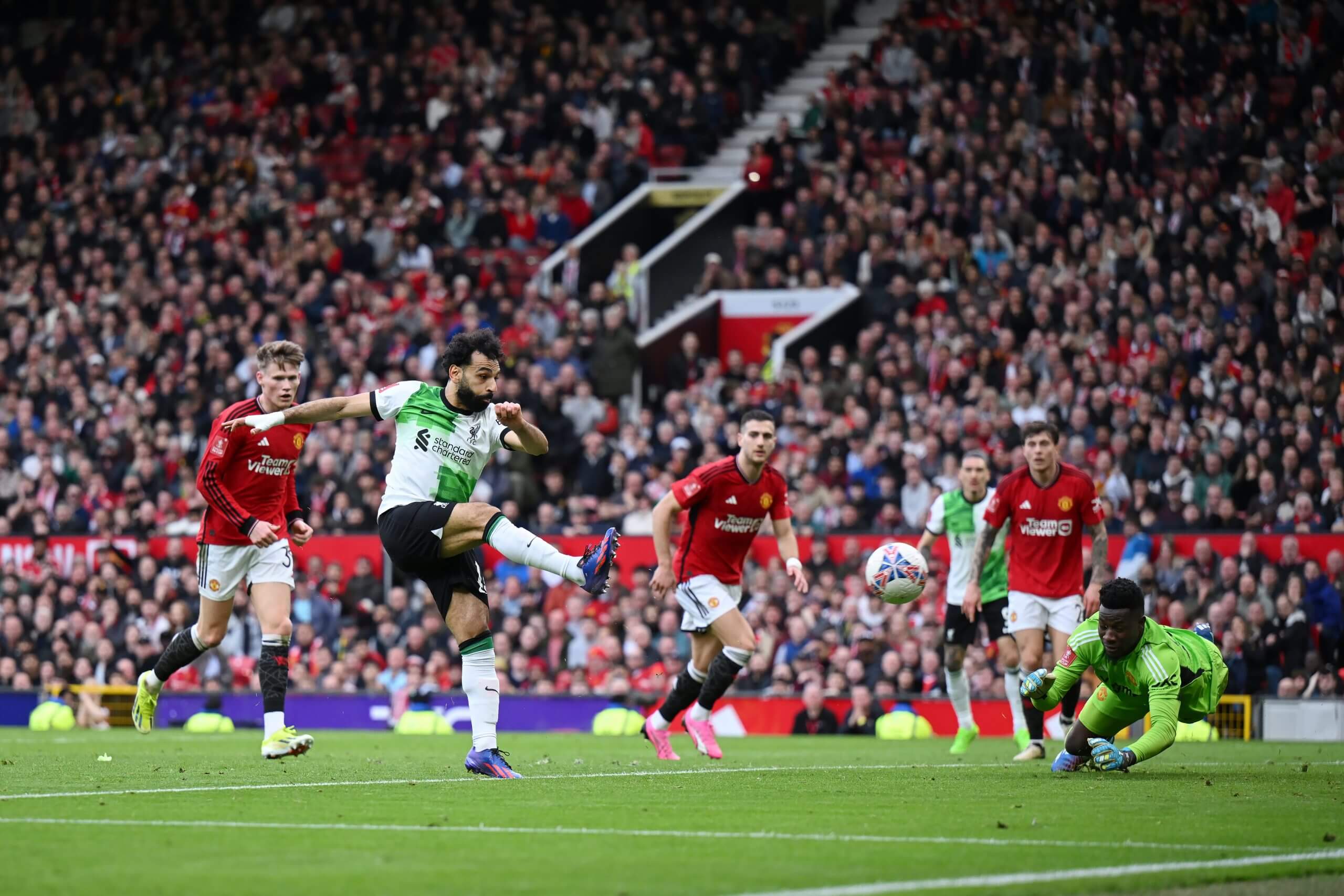
Salah’s goalscoring record alone makes him an all-time great (Michael Regan/Getty Images)
Instead, he came back to fight for and regain his place, but even in happier moments at Anfield, scoring wonderful goals against Brighton & Hove Albion in the FA Cup last month and Galatasaray in the Champions League, he has not looked like the Salah of old. The passing of time is one obvious reason for that, but it might not be the only one.
When his team-mate Diogo Jota died in a car crash last July, the tribute Salah posted on Instagram spoke of feeling “frightened” of returning to Liverpool, adding that “team-mates come and go, but not like this” and “it is going to be extremely difficult to accept that Diogo won’t be there when we go back”. After Liverpool’s opening game of the Premier League season against Bournemouth in August, he stood in front of the supporters at the Kop end, struggling to hold back the tears as they sang Jota’s name.
The mood will be different when Salah makes his final appearance at Anfield against Brentford on May 24. Quite how is unclear, given the uncertainty and unrest that surrounds Liverpool’s prospects and, potentially, Slot’s future as coach. Salah, whose application has been questioned at times this season, can be guaranteed to strive to ensure that his Liverpool career ends on a high — ideally by winning the FA Cup or the Champions League or, more realistically, by qualifying for next season’s Champions League.
Whatever the circumstances of those final weeks as a Liverpool player might be, Salah’s legacy will resonate for many years to come. There is a danger in recency bias when it comes to these evaluations, but there is no risk in suggesting he will go down as one of the club’s — and the Premier League’s — all-time greats.
The right player, in the right place, at the right time. Time after time after time.