
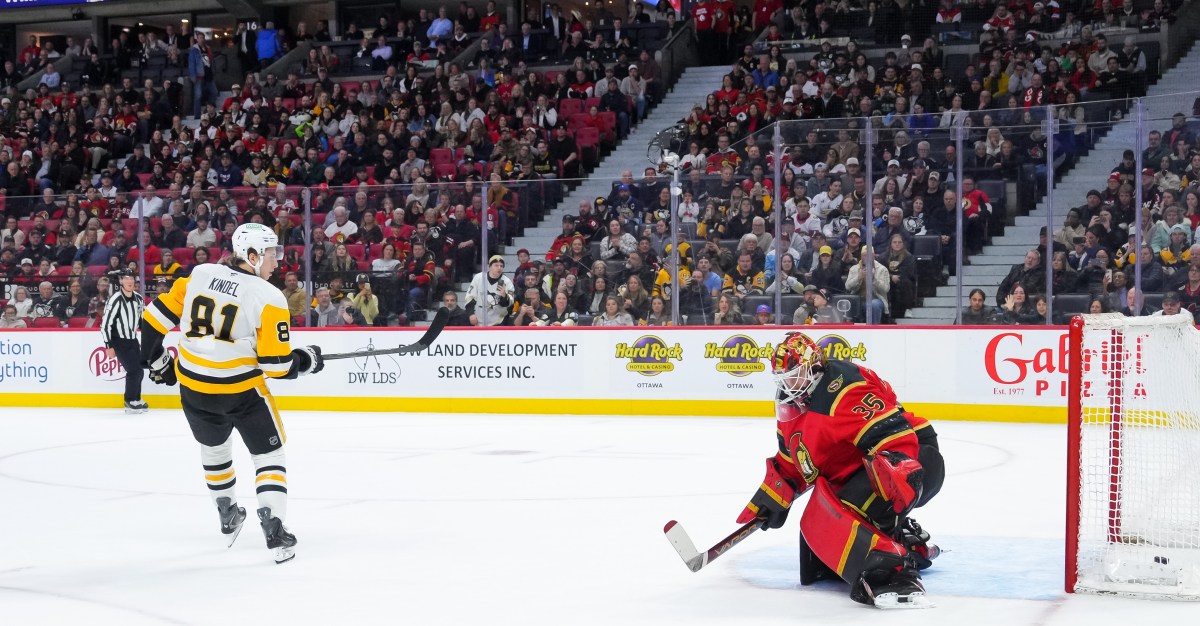
The Penguins have had their struggles this season with the shootout, though the worm has turned in the past week with two straight victories in the game deciding gimmick. The problem has been two-fold in that their goalies can’t keep the puck out of the net (opponents are scoring a dreadful 54.2% this season) and their shooters, as of a week ago were only scoring on 24.2% of their attempts. That’s a losing formula on both ends.
As we wrote before, it was as simple as expecting the shootout woes to continue until Pittsburgh found better shooters than they had. Sidney Crosby, Rickard Rakell and Bryan Rust are a combined 5-for-19 on the year (26.3%) and that low rate of converting isn’t going to lead to results, regardless of the goaltending woes on the other side. The last week has been aces, the Pens have scored four times on six attempts and only allowed one goal on five opponent tries. Much of the success has been in shaking up the shooters, Ben Kindel took only his second shootout try of the season last night. Newcomer Egor Chinakhov is 3-for-7 on the year with the Pens (42.8%) about doubling up the rest of the team’s percentage. They’ve found better players to take the shots and are now starting to win shootouts (it’s only two in a row, but hey that’s a start compared to the 1-10 record in shootouts at the start).
Kindel is now 2-for-2 this season on shootouts. The TSN feed caught him smiling as he took his attempt last night. This is the type of loose confidence and swagger you need from a shootout player. Pittsburgh should be using Kindel as a shooter every game at this point. He won’t score on all his attempts forever but he’s a lot better of an option than the veterans who have been coming up empty recently.
I don’t often use the Game Score impact card due to how it can be misconceived or analyzed but the one from last night was telling due to how it matched what I saw and how it ties into some ongoing trends. Rickard Rakell has been awesome lately with 14 points in his last 11 games. Erik Karlsson is pulling the wagon to a huge degree. The “fourth” line (even though they’re not deployed or given typical fourth line ice time) is making positive impacts. Bryan Rust is a reliable performer. Stuart Skinner had a great game keeping the team afloat. Kris Letang is struggling, Sam Girard is too while trying to find his way coming back from injury and still relatively new to the team and system. Tommy Novak didn’t grade well last night but has been better recently. All of this was on display last night and has been going that way for a while, reflected nicely by
At this point the team has to seriously question Ville Koivunen’s place in the lineup for this important stretch of the season. Out of 441 forwards across the NHL who have played at least 250 minutes, Koivunen ranks 439th in points/60 with a dreadful 0.45 rate that is below Ryan Reaves and just about everyone else in the league. On the rink Koivunen looks tentative, slow, is muscled off pucks regularly and barely supports play, often hinders it. He does little good away from the puck and has not been able to generate virtually anything with it, which ought to be his strength. The Penguins are in a tough spot given the injuries to Evgeni Malkin, Blake Lizotte and now maybe Sidney Crosby but it’s probably time (or past time even) to consider other options than Koivunen, who just doesn’t look the part right now of an NHL caliber player for a team pushing to make the postseason.
This ties into the above, but dropping Koivunen might make the Pens faster too, which they could probably stand to gain some team speed. Koivunen only has 11 bursts of 20+ mph in his 35 games this season, per NHL Edge. He plays on a line with Justin Brazeau, who himself only has 33 bursts of 20+ in his 54 games. That makes for one of the less explosive lines a team could create. Being fast doesn’t always mean being good and lacking burst doesn’t necessarily tie into an ineffective player, just a matter of all the pieces coming together in the big picture that present opportunities for the team to improve, especially seeing the Pens on the same rink as speedy teams like Carolina, Colorado and Ottawa in recent games. (And Rutger McGroarty, if you were wondering, has 24 bursts in his 20 NHL games).
Now shifting gears to an even worse topic, the dreaded goalie interference drama.
Friedman attempts to explain about how the league thought Karlsson lost a battle with Morgan Barron, creating the goalie contact and why that goal stood. That’s one interpretation, though as always application of rulings is ever inconsistent — for the Penguins and across the NHL.
Personally, I think the bigger issue is Justin Brazeau’s recently disallowed goal against Colorado versus Claude Giroux’s non-interference in last night’s Ottawa game. Both were similar, and if anything Giroux had less of a case of obstructing the goalie than Brazeau (who was dealing with some contact from a defender). It’s difficult if not impossible to make sense of the NHL’s conclusions.
One area worth taking notice about is the frequency of coach Dan Muse’s challenges. The Penguins’ nine goalie interference challenges lead the league by a wide margin, no other team has challenged for GI more than five times.
Is Muse, as a rookie, over-eager to try and reverse a call? He obviously sees things he thinks is interference, yet the league hasn’t agreed a single time. Not sure if the correction is to limit challenges to the most ‘obvious’ of cases, with the caveat being that it’s a major issue to know what even is ‘obvious’ these days. Credit Muse for having the conviction to keep challenging when he disagrees even though at some point internal choices might have to be adjusted given how it’s been going. Just some food for thought, since basically no one can provide logical answers at this point.