

Wrexham posted a loss of £14.85million in their League One promotion season, despite annual turnover representing a record for a third-tier club not in receipt of parachute payments at £33.35m.
The deficit for the year to June 30, 2025, takes total losses across the four full seasons with Ryan Reynolds and Rob Mac at the helm to more than £25 million.
A sizeable chunk of the latest operating loss is down to staff bonuses following promotion to the Championship and the club having £3.75 million in cash balances at the year end with UK-regulated currency brokerage company, Argentex Group Plc, which has since been placed in administration.
The wage bill for all 313 staff also rose significantly in 2024-25, up by 73.6 per cent from £11.1million in fourth-tier League Two to £19.9m in a season that ended with Phil Parkinson’s side finishing as runners-up in League One, the third rung of English football’s ladder, behind Birmingham City.
Wrexham’s record-breaking revenue was achieved on the back of banking £17.3million in sponsorship income (up 31.5 per cent from £13.1m in 2023-24), matchday income of £5.9m (up from £5m) and retail bringing in £5m (up from £4.45m). Broadcasting income also rose to £3.4m (up from £3m) to reflect Wrexham’s League One status.
These numbers will rise further this season, with annual turnover in 2025-26 expected to be in the £46million to £50m bracket. Should Wrexham qualify for the Championship’s promotion play-offs, this sum will increase again.

Wrexham fans celebrate on the pitch after a 3-0 victory over Charlton Athletic last April seals promotion to the Championship (Kya Banasko/Getty Images)
As with recent years, Wrexham’s growing worldwide fanbase is reflected in how 57.7 per cent of annual revenue comes from outside the UK and Europe (primarily North America). This stood at 52.1 per cent in 2023-24, when annual turnover was £26.7million.
The latest set of financial figures also reveal the total cost of the new Kop stand being built at The Racecourse Ground will be £69.29million, a contract having been signed with McLaren Construction on December 5 last year.
This sum includes a £17.35million grant from the Welsh government awarded in April 2023, when Wrexham were still a fifth-tier National League club. A desire to bring international sport back to north Wales partly explains the public funds, along with the wider remit of the Wrexham Gateway project designed to drive investment into the broader city.
Also outlined in the strategic financial report accompanying the accounts — seen by The Athletic before publication at Companies House — is how there are no shareholder loans on the books, either back on June 30 last year or today.
That’s thanks to a loan of £27.5million from The RR McReynolds Company — belonging to the two Hollywood stars and owner of the majority of the club’s shares — being paid off on December 8, when Apollo Sports Capital bought a minority shareholding in Wrexham.
That now-repaid loan helped fund last summer’s record-breaking transfer spending as Wrexham prepared to make the step up to the Championship by signing the likes of Nathan Broadhead, Callum Doyle and Ben Sheaf.
Here, The Athletic offers a detailed assessment of the figures, including what they mean going forward for a club currently seventh in the table and hoping to claim an unprecedented fourth straight promotion.
What period are we talking about?
The latest accounts cover the 2024-25 season, when Wrexham finished as runners-up in League One to clinch a third consecutive promotion. These 12 months saw the club’s transfer record fee broken three times, to sign Rotherham United midfielder Ollie Rathbone (£375,000), West Bromwich Albion striker Mo Faal (£590,000) and Reading striker Sam Smith (£2million).
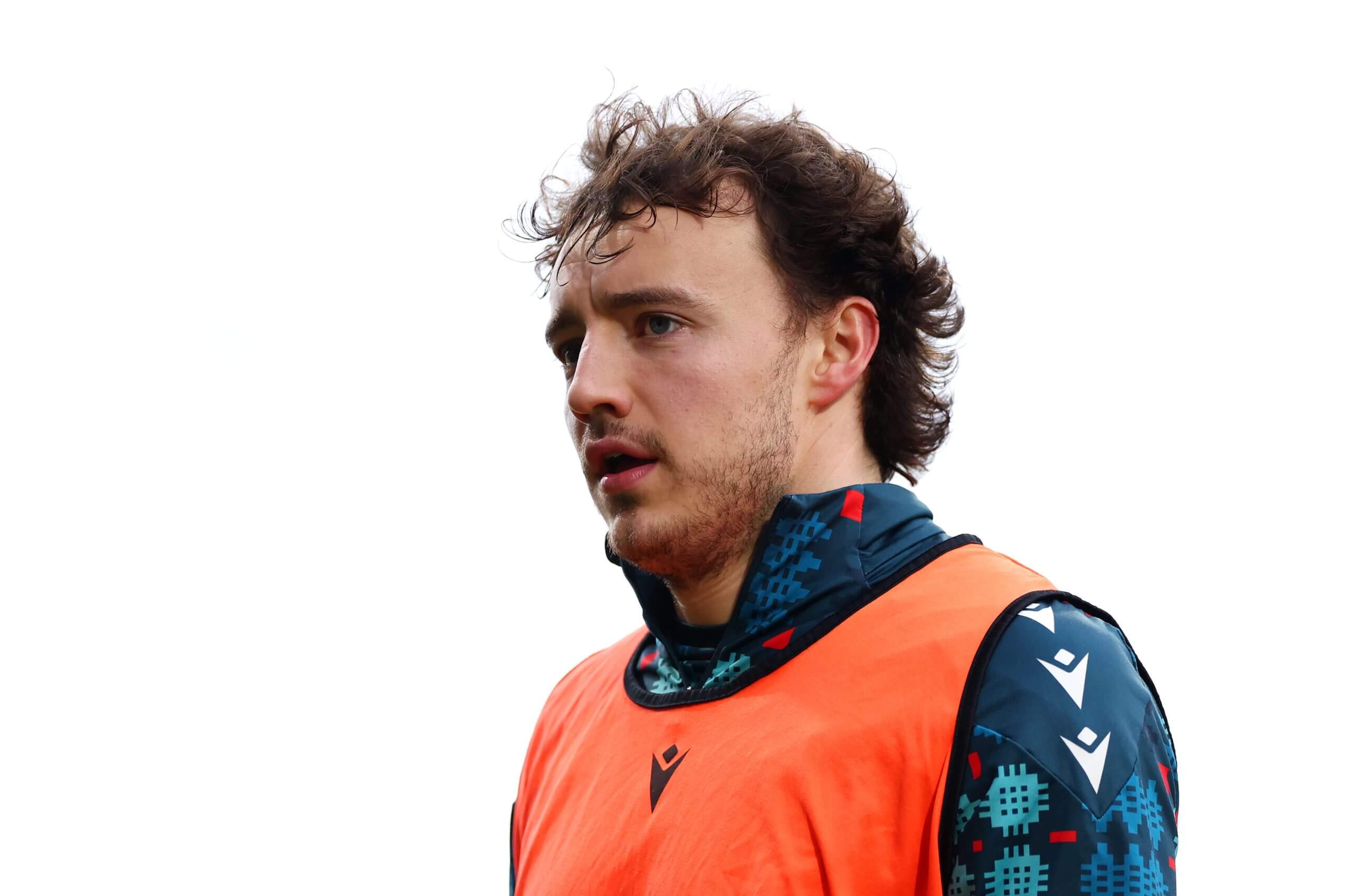
The accounting period covers the signing of Ollie Rathbone for a then club record £375,000 (Lewis Storey/Getty Images)
Also included are the £500,000 capture of Ryan Longman from Hull City and former England international Jay Rodriguez joining from Burnley of the Premier League for an undisclosed fee.
Perhaps the most momentous event covered by this latest accounting period, certainly in terms of off-field matters, was the New York-based Allyn family coming on board as minority investors. They were subsequently joined by Apollo Sports Capital in December, which, like the record-breaking transfer spending last summer, is not covered by this set of accounts.
So, turnover is up substantially again. How have Wrexham done it?
Success on the pitch and the global spotlight afforded by the success of the Welcome To Wrexham documentary series, basically.
Together, these have helped annual turnover soar, starting with the first full season of the Ryan Reynolds/Rob McElhenney (now Mac) era in 2021-22, when it rose by 404 per cent to almost £6million from £1.148m in the final year of the Supporters Trust running the club. This upwards trend has continued to £10.4m in 2022-23, £26.7m in 2023-24 and now £33.335m in the latest accounts.
Lucrative sponsorship deals and a growing worldwide fanbase — something Wrexham have developed via pre-season tours to the United States, Canada, Australia and New Zealand over the past three years — have played a big part in boosting revenues.
This switch from provincial football club to global sports entity helps explain how 40.5 per cent of the 2024-25 turnover came from the UK and the rest from overseas. With Europe also accounting for 1.8 per cent, that leaves 57.7 per cent from the rest of the world — again, primarily North America.
As for those all-important sponsors, United Airlines (front of shirt), Meta Quest (back of shirt), HP (sleeve) and SToK Cold Brew Coffee (stadium naming rights) once again helped drive revenue in 2024-25. A big part of their appeal to those blue-chip brands is the TV show, which first aired in 2022 and will return for a fifth series in May.
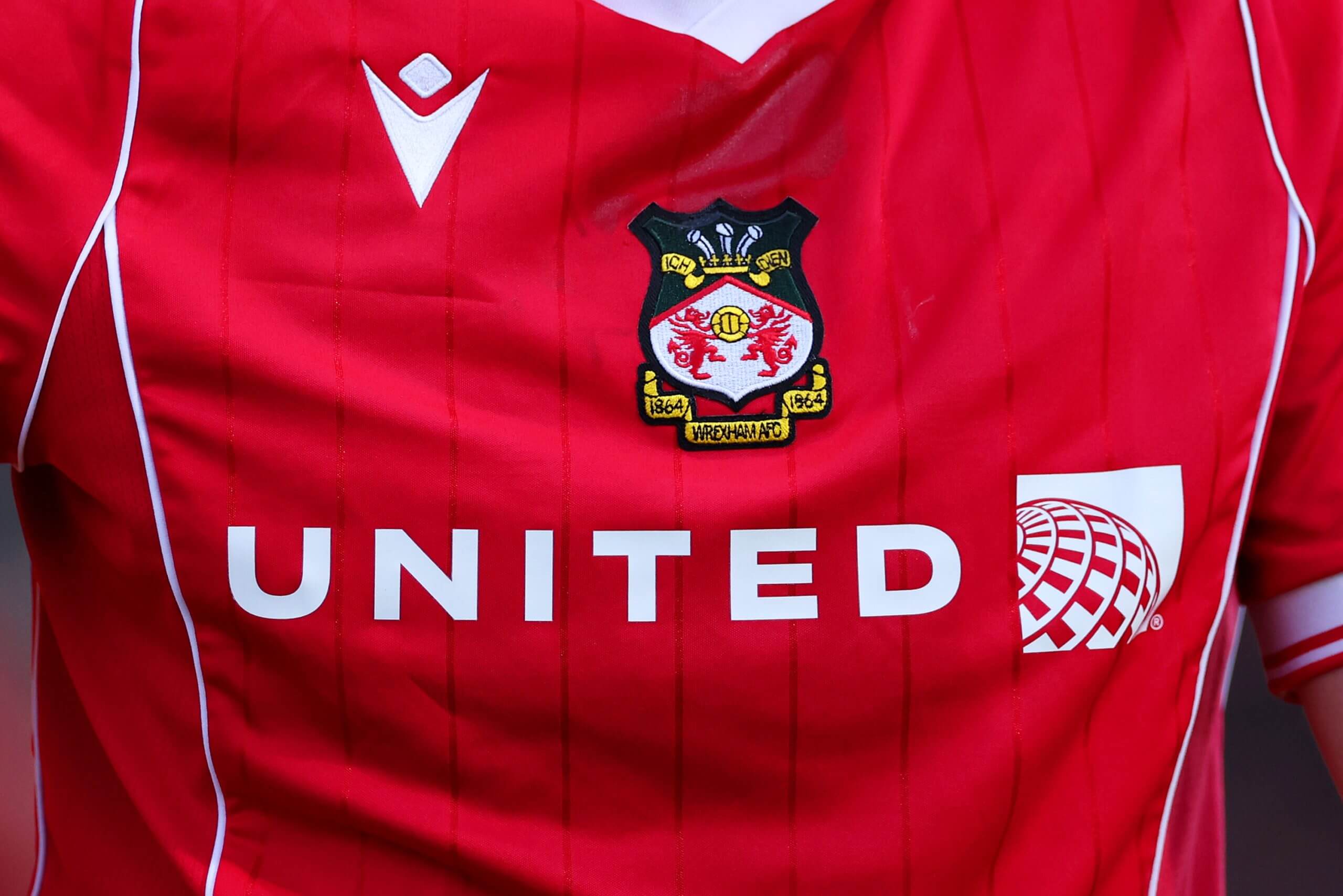
Sponsorship deals like the one with United Airlines helped drive revenue in 2024-25 (Lewis Storey/Getty Images)
How much does the documentary contribute to the balance sheet?
Not a penny or dime, at least not directly. Instead, the intention from the very beginning of Reynolds and Mac’s ownership has been to use the global exposure brought by Welcome To Wrexham to drive commercial operations, be that sponsorship, selling shirts or whatever.
So far, this has worked wonderfully well, as can be seen from how sponsorship revenue of £17.34million now accounts for more than half of annual turnover. This sum is up 31.5 per cent on 2023-24, which itself represented a colossal seven-fold increase on Wrexham’s final year in the National League (2022-23, when sponsorship brought in £1.8m).
No wonder the show has long been considered by Wrexham’s hierarchy as “the club’s biggest commercial asset” despite the Racecourse Ground’s coffers not benefiting directly.
Is Wrexham’s turnover a record for League One?
Yes, if we disregard teams benefitting from Premier League parachute payments (the payments that go to clubs relegated from the top flight in their first two or three years back down in the three-division EFL). The previous highest turnover for a League One club not in receipt of parachute payments was Leeds United’s in 2009-10, when the Elland Road club generated £27.4million in revenue while finishing as runners-up.
Since then, there have been bigger incomes, but only thanks to those parachute payments, with Sunderland’s annual turnover in 2018-19 standing at £57.8million. Wolverhampton Wanderers banked £32.5m in 2013-14, a figure again inflated by parachute payments following back-to-back relegations.
Luton Town’s own accounts for the current season in the third tier will be similarly boosted by around £40million from the Premier League following their relegation out of it in 2024, this being the second and final payment received at Kenilworth Road after getting £49m as a Championship club last season.

Wrexham’s 2024-25 turnover was the highest for a League One club without parachute payments since Leeds in 2009-10 (Michael Regan/Getty Images)
With turnover so high, how did Wrexham post such a significant loss?
Success doesn’t come cheap. Or, as the strategic report accompanying the accounts puts it, “the operating loss was £14.848million, reflecting the cost of achieving promotion to the EFL Championship and increased investment in both playing and non-playing staff”.
This “increased investment” is reflected in the wage bill rising to £19.948million on the back of employee numbers increasing from 255 to 313, a sum that includes those bonus payments to players and staff.
Further promotion-related expenditure in 2024-25 came via clauses included in some transfer deals, whereby the selling club were due a bonus.
Legal and professional costs were also up, including monies paid to Maximum Effort and More Better — other companies owned by Reynolds and Mac — for the considerable work that went into commercial growth, including the securing of big sponsorship deals and then maintaining those partnerships.
The value of this work has previously been underlined by how, in 2023-24, fourth-tier Wrexham’s commercial revenue out-stripped that of five Premier League clubs and was the 19th highest across the 92 teams in the top four divisions of English football.
With the latest set of accounts revealing £2.62million was paid to Maximum Effort (up from £1.88m) and £1.38m (up from £1.2m) to More Better, the strategic report adds, “The directors keep these under regular review to ensure they remain aligned with market norms, deliver appropriate value and support the long-term interests and sustainability of the club.” In other words, the market rate is being paid.
As with previous years, a marketing contribution to Welcome To Wrexham of £2.59million (up from £2.42m in 2023-24) was made via Wrexham Holdings LLC, the club’s parent company, in recognition of how important the show’s continued success is going forward.
One exceptional item included in the latest accounts relates to the collapse into insolvency of Argentex Group Plc last July.
Wrexham’s popularity in North America means a significant chunk of their business is done in both U.S. and Canadian dollars. As a result, the club used UK-regulated Argentex to protect against currency fluctuations.

Wrexham’s players with Mac on the club’s 2024 tour of the U.S. (Frazer Harrison/Getty Images)
When the last financial year ended on June 30, 2025, the club held cash balances with Argentex totalling £3,756,930. The currency-brokerage company subsequently collapsed and was placed in special administration, meaning all funds were frozen and inaccessible to customers such as Wrexham.
Creditors are expected to receive a part-repayment of their funds, but not until 2027. Exactly how much is unknown, so, for accounting purposes, the entire sum held on June 30 has been removed from Wrexham’s balance sheet, effectively adding £3,756,930 to the losses column. Any repayment received will be reflected in a subsequent set of accounts.
How does this year’s loss compare to their League One peers in 2024-25?
Several clubs are yet to file their respective accounts ahead of Tuesday’s deadline, including last season’s big-spending League One champions Birmingham.
But, of those already received at Companies House, Charlton Athletic, who were also promoted, via the play-offs last May, posted an operating loss of £16.8million, while Wycombe Wanderers, Wrexham’s rivals for second place during much of the run-in, lost £9.8m while finishing fifth. Losing play-off finalists Leyton Orient posted a £4.6m deficit over the same period.
Is there any indication yet as to what the picture is looking like for 2025-26?
Those speaking on the condition of anonymity to protect relationships estimate annual turnover for the current season, Wrexham’s first in the second tier since 1981-82, to be in the £46million to £50m bracket. Central payments from the EFL to cover broadcasting and sponsorship will represent a decent-sized chunk of this increase, with Championship clubs receiving £8million to £9m per year more than teams in League One.
Even then, though, this predicted figure points towards further substantial increases in sponsorship and retail income, especially in a season when matchday revenue will drop due to the removal of the temporary Kop stand to allow for building work at that end of the ground to get underway.
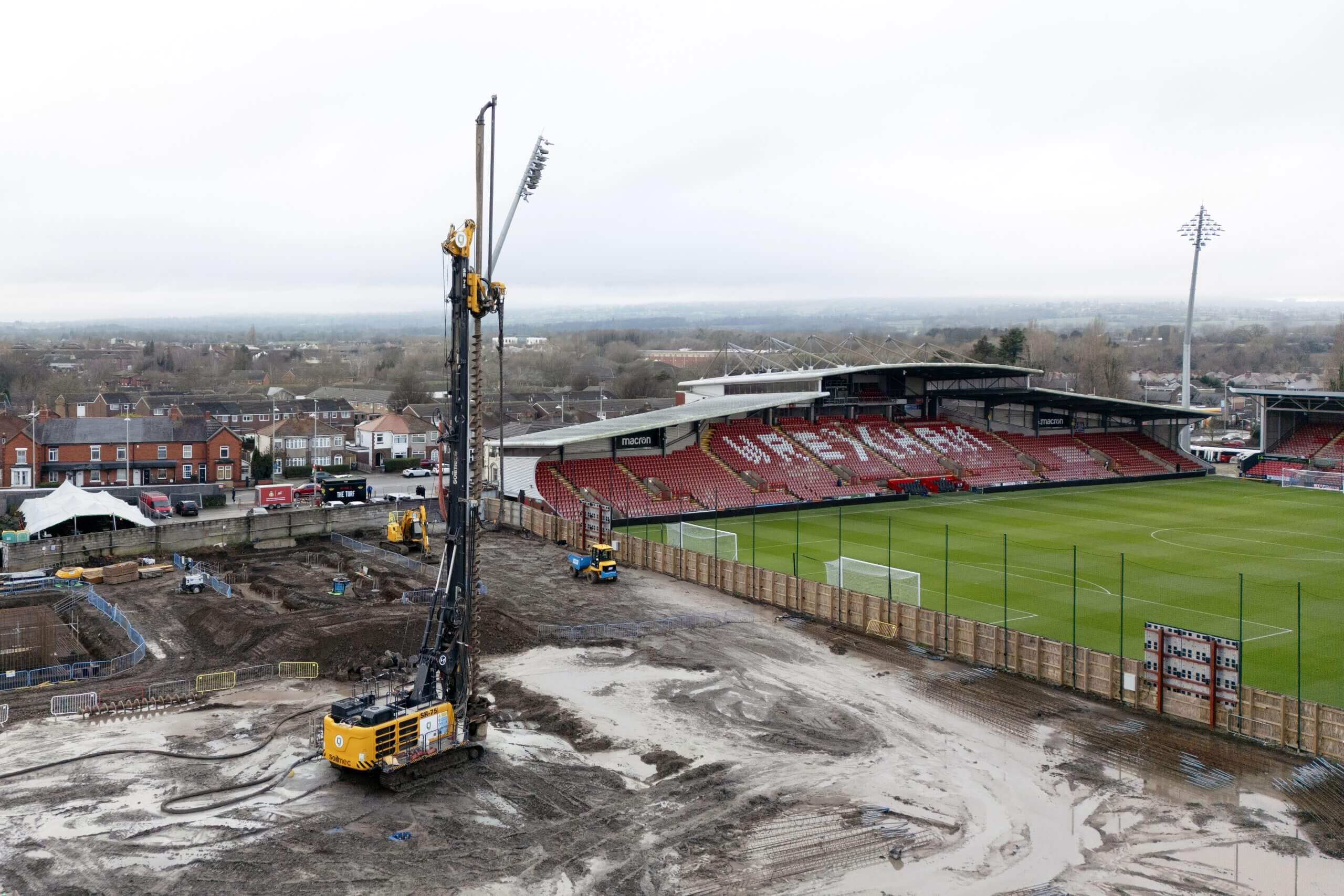
An aerial view of the Racecourse Ground as construction work on the Kop Stand redevelopment project continues (Lewis Storey/Getty Images)
As a result, the average attendance has dropped from 12,781 in League One to 10,609 with three home games of this regular-season remaining.
What will also have risen substantially are costs, and in particular the wage bill after last year’s record summer spending saw 13 new signings made, plus another two new faces arriving in the winter window.
In the ongoing financial year, Wrexham have also bought two patches of land required for the Kop development — paying £480,000 to Wrexham University for one in October, and agreeing heads of terms on another with Welsh Ministers (Government) for £525,000 the following month.
With that in mind, how are Wrexham shaping up with regards the EFL’s financial rules?
For the fourth consecutive year, Wrexham are this season subject to different financial rules, with the ‘anything goes’ approach of the National League having given way to salary caps in League Two (50 per cent of clubs’ turnover could be spent on wages) and League One (60 per cent).
Now in the Championship, profit and sustainability rules (PSR) relate to how much you can lose over a rolling three-year period, namely no more than a combined £39million.
Even this, though, isn’t the whole story, with a further cost-of-living allowance having been factored in last season that effectively raises this to a permitted £45million deficit over those three years. There’s also allowable expenditure on infrastructure, youth setup, community development and women’s football to factor in.
With combined operating losses at Wrexham for the past three seasons now standing at a little under £23million (plus those allowable expenses, and in particular the new Kop), this offers plenty of headroom for the current season and beyond.