
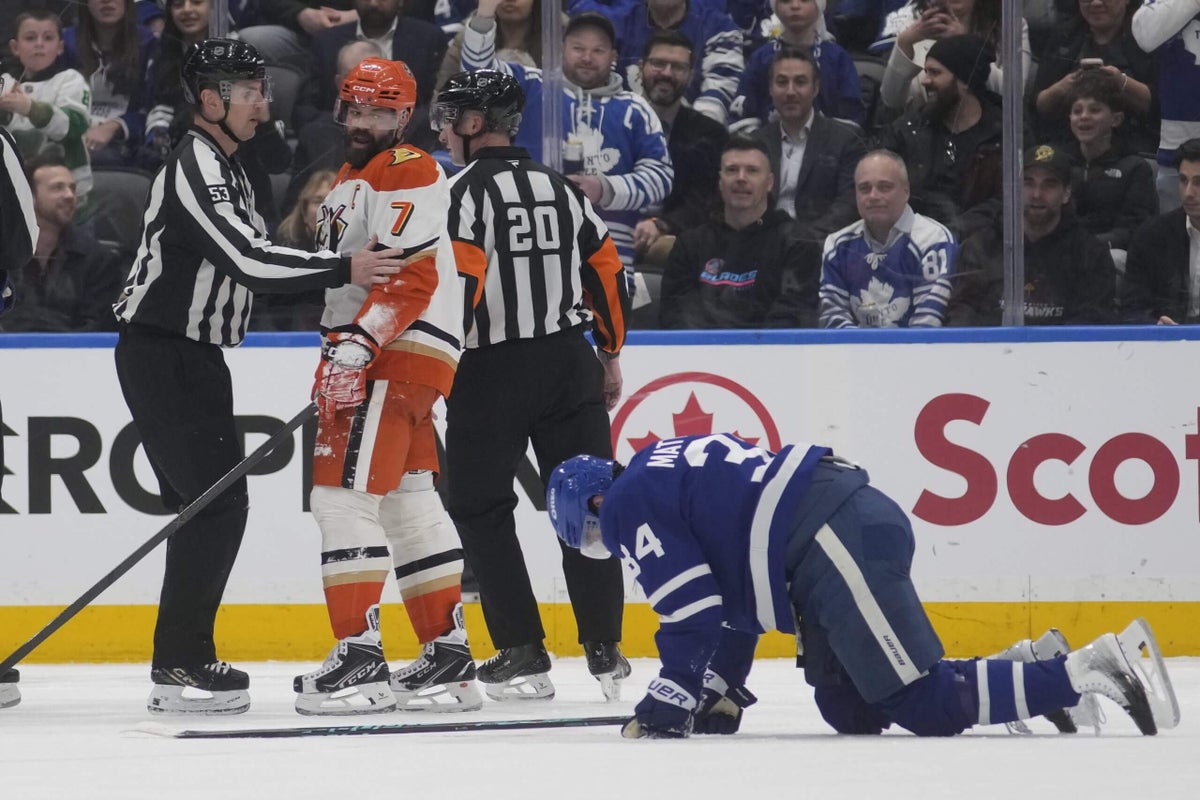
ANAHEIM, Calif. — The Toronto Maple Leafs are going to do something to avenge Auston Matthews when they visit Radko Gudas and the Anaheim Ducks on Monday night. There’s no doubt about that.
Whether that something means anything now is really the question. Is it too late, in other words? Was the absent initial response to the Gudas knee-on-knee that ended their captain’s season (and would later require MCL surgery) all that matters?
So much else has gone wrong for the Leafs in this nightmare of a season, but that was the image that will end up defining it, the moment everyone will remember years and years down the line.
The worst night in the worst season in a long, long time. Nothing that happens now will change that.
The backlash to the events of March 12, as well as Gudas’ lacklustre five-game suspension, rippled across the league, with everyone from Matthews’ agent to Chris Pronger to the Tkachuk brothers to Connor McDavid weighing in.
It wasn’t just an external backlash either, one of those controversies that bubbles and boils on the outside but is largely inconsequential to those on the inside of a team. There was internal backlash here — not just that night, in the intermission chat that followed the hit, but in the days and weeks since.
The Leafs — from management to coaches to players — were embarrassed by their failure to confront Gudas for his takedown of Matthews and have been trying desperately to make up for it ever since.
There was the fiery third-period response on the night of the incident, when William Nylander and Morgan Rielly — two of the four players on the ice at the time of Gudas’ knee, and in other words, two of the players who didn’t respond in the moment — got feisty with Ducks not named Gudas (who had been ejected). There was also, more memorably, rookie Easton Cowan (another of the four) fighting in Nick Robertson’s defence.
The efforts at making amends continued the next week when Rielly cross-checked New York Islanders forward Kyle MacLean right away for crashing into Joseph Woll. Moments later, Rielly got into a fight with MacLean for what was only his seventh career tilt.
Asked afterward whether he felt pressure to respond like that in the wake of what went down with Gudas only days earlier, Rielly said “pressure” wasn’t the right word.
“But we’ve talked about it, and it’s at the front of our minds, just in terms of playing hard,” Rielly said. “There’s no pressure on anyone to go out and do something that they’re not comfortable doing.”
Whether they’re comfortable or not, somebody in blue and white is going to confront Gudas — assuming the 35-year-old is indeed in the Ducks lineup after missing his previous game with an injury. If it’s to have even a chance at meaning, that somebody can’t be Michael Pezzetta, a scrapper by nature who has suited up in four meaningless games as a Leaf, or even a first-year Leaf like Dakota Joshua.
It really should be one of those four players on the ice when Matthews went down, and one of the three veterans in that bunch, not the 20-year-old Cowan.
It would mean the most if it were Rielly or Nylander standing up to Gudas. They are the two longest-serving players on the team, the two players with the most lasting ties to Matthews, the two players who spoke with regrets about their lack of response that night, and the two players who aren’t confrontational by nature. A response now would resonate so much more coming from one of them, as unlikely as it might seem with Nylander in particular.
“Obviously, it’s going to be a game that means a lot for our side,” Nylander told reporters in St. Louis over the weekend regarding the rematch with Gudas’ Ducks.
Still, will it actually mean something?
It certainly won’t make up for the absent response that night. That won’t go away no matter what. But doing something to avenge their fallen captain weeks later won’t mean nothing, either.
What a response now could do, especially if it’s Rielly or Nylander — or even Brandon Carlo, the fourth player on the ice at the time — is send a message internally, even if it’s far too late, that that kind of thing won’t ever happen again. That now and in the future, players on this team will have each other’s backs instinctively. It would lay the groundwork for next season that way, a step toward a team that shows more pushback, more resilience, more fire in the face of … well, everything.
Most of all, it would send a message to the player who matters most in all this: Matthews.
We haven’t heard from the Leafs captain yet, but there’s no question that when he does speak, among the questions about his desire to remain a Leaf and Gudas’ actions that night will be at least one about how his team didn’t respond while he lay crumpled on the ice at Scotiabank Arena.
How did he feel about that?
Even a response that came far too late, he might say, was better than one that didn’t come at all.
Is Bruce Cassidy the right choice to be the next coach?
We still don’t know yet whether the Leafs will keep Craig Berube as coach beyond this season, but it’s obviously hard to fathom given how badly things have gotten under his watch.
The desire to make a change should be that much more enticing now that Bruce Cassidy, fired by the Vegas Golden Knights on Sunday, is available. (Pete DeBoer remains another attractive option.)
Simply put: If he’s willing, Cassidy is a no-brainer for the Leafs. He has been among the most consistently successful coaches in the league for the last decade, ever since he replaced Claude Julien as the coach of the Boston Bruins during the 2016-17 season.
The only active NHL coaches with a better career points percentage than Cassidy (.630) are Rod Brind’Amour (.658), Jon Cooper (.640), and Jim Montgomery (.631).
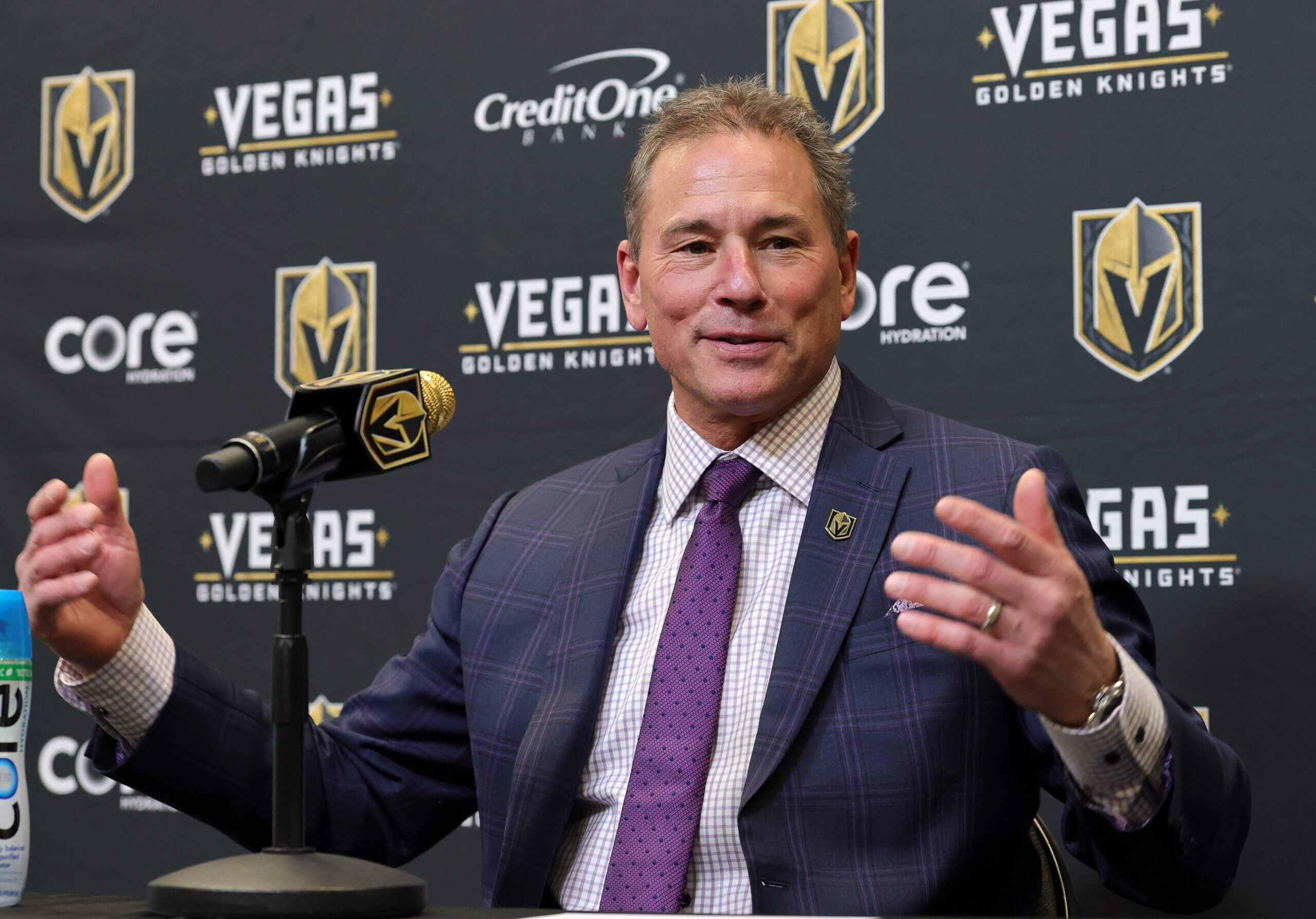
Bruce Cassidy is one of the most successful active coaches in the league. (Ethan Miller / Getty Images)
Cassidy has guided two teams to the Stanley Cup Final, losing once with the Bruins in 2019 (to Berube’s St. Louis Blues in Game 7, oddly enough) and winning once with Vegas in 2023. In other words, he is no one-hit wonder.
His teams with the Bruins and Golden Knights were generally good for 100-plus points every year, they never missed the playoffs, and they were typically among the NHL’s best defensively and at controlling the play as measured by expected goals (two big sore spots under Berube).
So what happened in Vegas this year? Well, as is often the case when a capable coach is fired, check the goaltending. And indeed, the Golden Knights have the worst five-on-five save percentage in the league this season, and fourth worst overall. They also struggled to score at times, even with you-know-who in the mix. Vegas still ranked fifth in the NHL with an expected goals mark of almost 53 percent under Cassidy and was second best league-wide in expected goal rate defensively.
Cassidy is thoughtful, methodical, creative and would bring stability back to the Toronto bench. He’s the kind of coach who, with some smart upgrades to the roster in the offseason, would be capable of guiding this team back into the playoffs next season.