
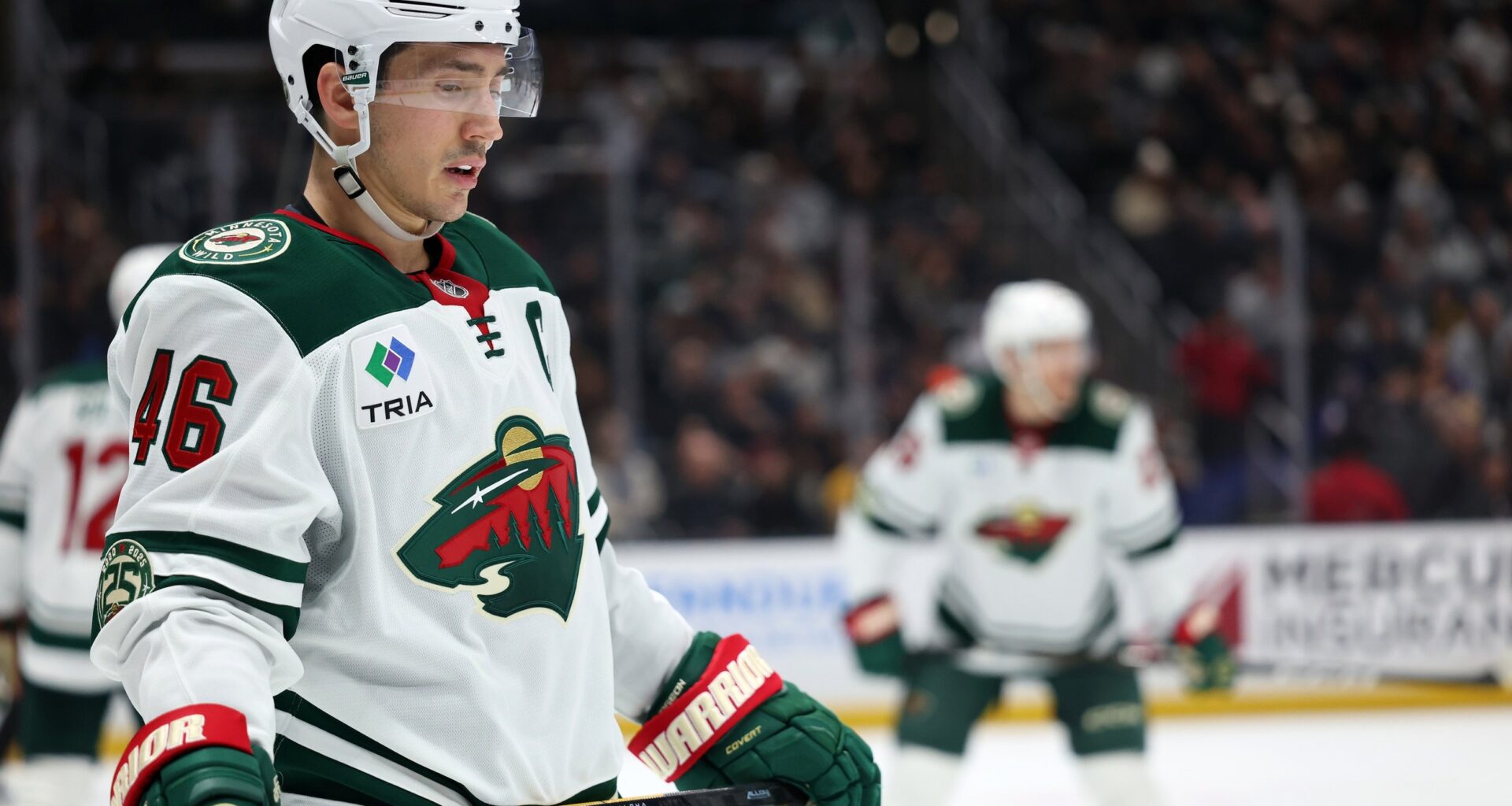
The Minnesota Wild took a tough blow against the Florida Panthers when captain Jared Spurgeon went down with an injury in the middle of a game that already had plenty of intensity. Spurgeon reportedly suffered an injury after crashing hard into the net and the goalpost, and he exited without returning. The team later described him as day-to-day, and they have treated the injury cautiously as the season enters a crucial stretch.
Spurgeon’s injury is significant because of his ability as a player and his leadership role. He’s more than a steady defenseman. He’s the Wild’s captain, one of the team’s most trusted leaders, and a veteran voice that younger players lean on. When a leader like that gets hurt, it can ripple through the locker room in ways that don’t always show up on the stat sheet.
A captain going down can affect team morale by shifting the emotional center of the group. Teammates often look to their leaders for calm during chaos, accountability during slumps, and confidence during pressure moments. When that person is suddenly out, even temporarily, the rest of the team has to adjust quickly and find a way to stay mentally sharp while also dealing with the reality that one of their anchors is missing.
That’s especially true at this stage of the season. The Wild are trying to push toward the playoffs, and every game matters more as the schedule tightens. Losing a player like Spurgeon can force the coaching staff to shuffle pairings and lean on depth pieces. It can also test the group’s emotional resilience.
Teams often talk about “next man up.” However, in practice, the absence of a respected leader can be felt in how a bench reacts, how a room handles adversity, and how players respond after the puck drops again. The good news for Minnesota is that the upcoming four-day break should come at a perfect time.
The Wild’s schedule features a midweek gap, giving the team a chance to recover, reset, and regroup before the next wave of games. That kind of break can be valuable at this point in the season because it gives injured players time to heal, tired legs a chance to bounce back, and the coaching staff a little extra room to prepare for the playoff push ahead.
For a veteran team, short rest can be just as important mentally as it is physically. A few days away from game action can help reduce the wear and tear that builds up over an 82-game season, especially for players who have been carrying heavy minutes or playing through nagging injuries.
It also gives the Wild a chance to refocus on the details that matter most in April hockey: structure, discipline, consistency. If Spurgeon can use that break to get healthy, it could make a real difference for Minnesota down the stretch.
Spurgeon offers the Wild more than just solid defensive play. He’s a calm, dependable presence on the blue line, a leader in the room, and a player whom the team can trust in big moments against top competition.
His puck movement, positioning, and ability to settle the game down make him valuable in every situation, especially when the pressure rises. While he’s out, the Wild will need to cover for him by leaning on their other defensemen to take on more minutes, simplifying their game, and getting strong play from their depth to keep the back end steady.
If the rest of the roster uses his absence as motivation to tighten up and play for one another, the team may be able to turn a setback into a source of energy. In a playoff race, adversity is unavoidable, but how a team responds to it often says more than the injury itself ever could.
Think you could write a story like this? Hockey Wilderness wants you to develop your voice, find an audience, and we’ll pay you to do it. Just fill out this form.