
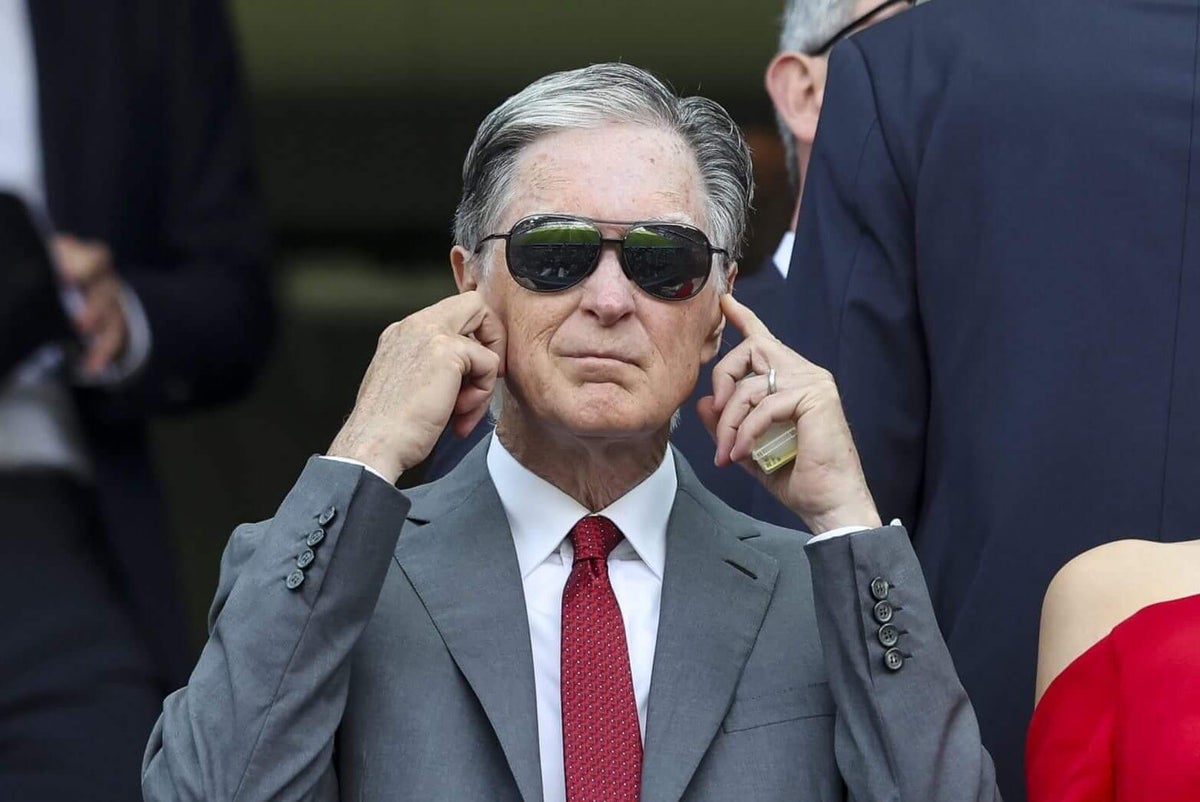
When Michael Edwards was Liverpool’s sporting director, he tried to sign Rodrygo from Santos.
Maybe it was understandable that the Brazilian winger instead found the lure of Real Madrid too great to resist in 2018. Yet Edwards concluded Liverpool would have had a better chance of getting the player had he been able to offer the option of a sunny destination in Europe where he could develop for a few years.
After officially leaving Liverpool in 2022, Edwards returned to the scene two years later as Fenway Sports Group’s CEO of football, keen to stress that he was an employee of the owners rather than the club he used to represent.
His motivation — as per his regret with Rodrygo — was well signposted. “One of the biggest factors in my decision is the commitment to acquire and oversee an additional club, growing this area of their organisation,” Edwards said in a press release.
The decision allowed FSG president Mike Gordon to step back from his role minding Liverpool from his home in Boston, Massachusetts. In an email sent to club staff, he confirmed that Edwards would “use every tool at his disposal” in acquiring another club that would help “drive our competitive ambitions”.
It hasn’t worked out that way. Two weeks ago, The Athletic broke the news that FSG has parked plans to add to their portfolio despite several options being presented to them, and that Edwards is frustrated with the lack of progress.
His contract with FSG runs until the summer of 2027, and it is reasonable to wonder whether he is minded to extend that stay if FSG’s position on multi-club ownership does not shift.
He is not alone. Richard Hughes, who Edwards appointed in his old sporting director role at Liverpool, is also on a deal that expires in a little over a year. So is Arne Slot, Hughes’ appointment as head coach.
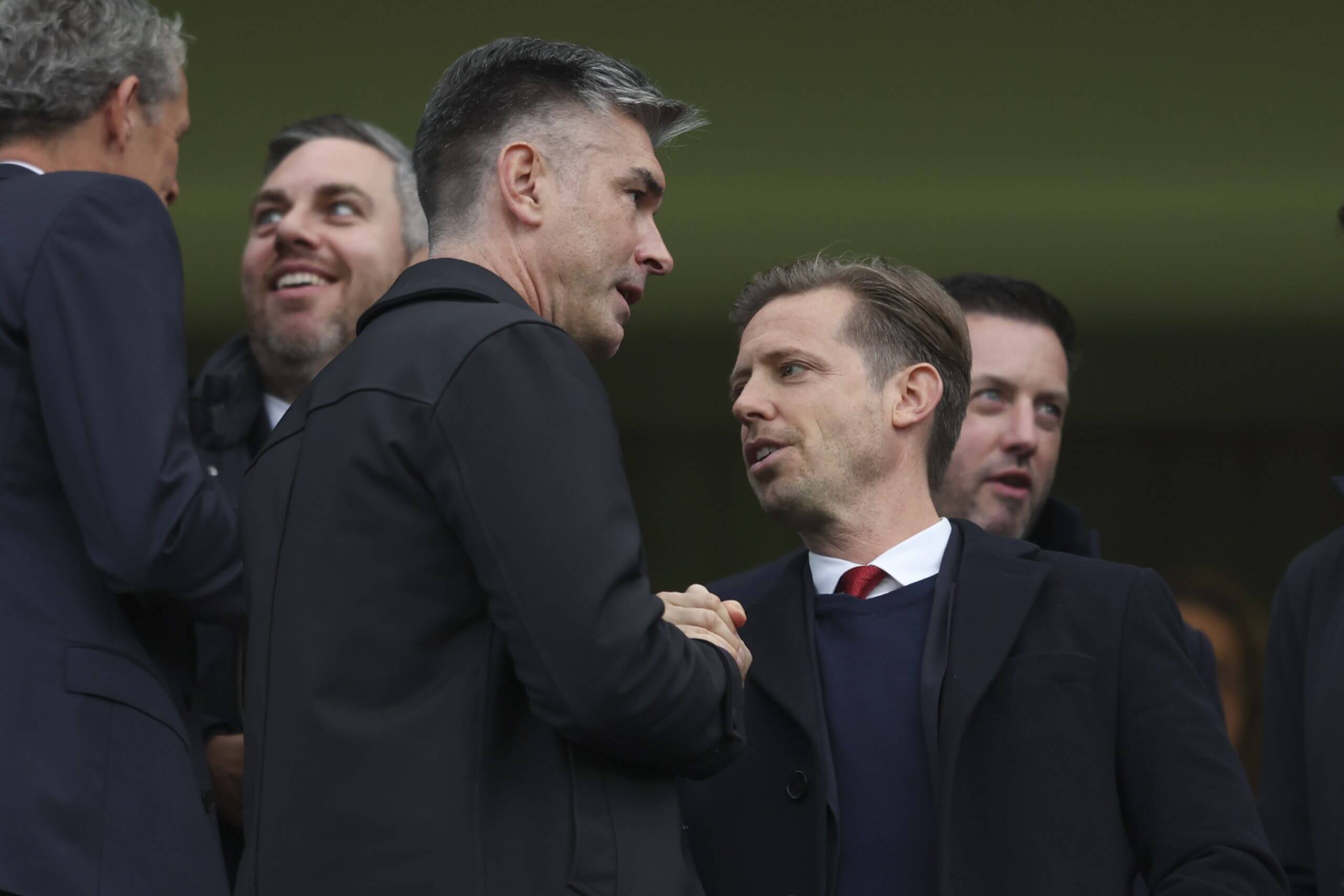
Richard Hughes (left) and Michael Edwards are both out of contract in 2027 (Robin Jones/Getty Images)
The Dutchman delivered the Premier League title in his first season at Anfield, but the calls for him to be removed are getting louder following a challenging second campaign.
For the time being, he has Hughes and Edwards’ backing; they think he has been dealt a rough hand for all sorts of reasons, and if he gets through this period, he should, in theory, be better equipped to take Liverpool forward. Whether that stance persists if Liverpool are knocked out of the FA Cup and the Champions League and fall away from the Premier League top five over the next few weeks remains to be seen.
There is an obsession with Slot and his future because, ultimately, he picks the team and has the most public-facing responsibilities at the club.
Yet potentially the macro problem at Liverpool relates to Edwards and, to a lesser extent, given they seem to come as a package, Hughes. If it is deemed that Slot has to go, might the longer-term executive uncertainty at Anfield affect conversations with potential replacements?
Perhaps the chance to lead Liverpool overrides all other considerations — many managers or head coaches have so much belief in themselves that they don’t really care for which highly paid directors they’ll have to communicate with on a daily basis.
Alternatively, if it is true that football’s smartest coaching brains choose their clubs based on the stability and effectiveness of the structure around them, then it stands to reason the ticking clock attached to FSG’s two most senior executives should be a cause for concern.
Not so long ago, it seemed as though things were chugging along nicely for FSG. For the first time in its ownership, it had the executive structure in place that it had long desired, allowing individuals such as Gordon to disappear from any public discussion. A combination of the team’s success and huge commercial revenues allowed record spending in the transfer market, reducing the criticisms about the economic strategy the organisation had always attracted.
Yet for all of the talk about men such as Edwards and Hughes taking care of longer-term interests, their existences are ultimately determined by their performance and their contracts, like any player or manager/head coach. And their willingness to extend those deals — again, just like players — will be shaped by their relations with employers who had sold them a promise and the offers they receive from elsewhere.
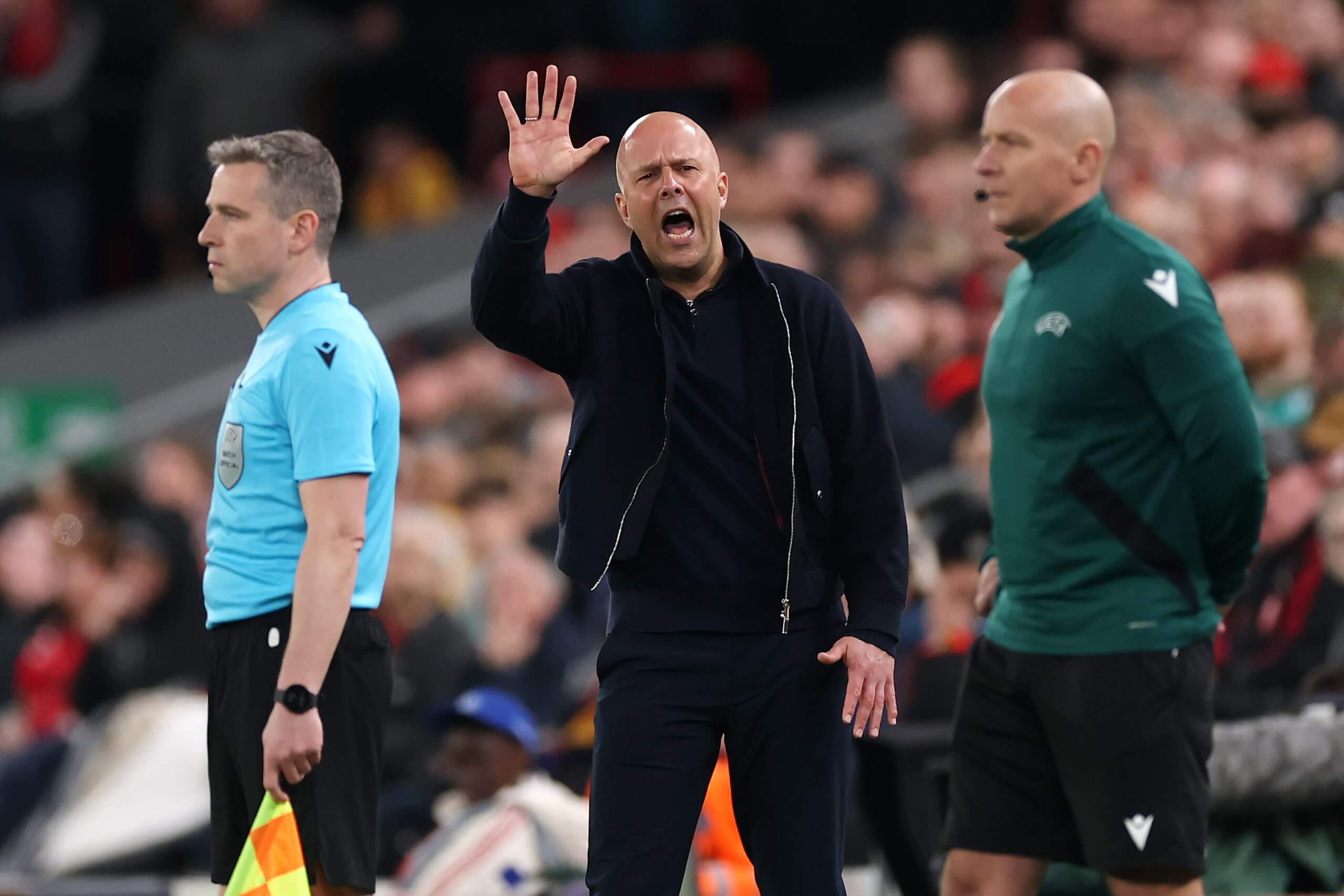
Arne Slot has come under scrutiny at Liverpool (Carl Recine/Getty Images)
The Athletic, like others, has reported that Hughes is the subject of interest from the Saudi Arabian club Al Hilal. Edwards, too, has his admirers in Saudi Arabia, as they try to extend their recruitment drive beyond players and coaches.
Having made such a big deal about rehiring Edwards because of unprecedented expansion plans, and given they knew exactly what he is like to work with — driven, ambitious, occasionally spiky — it seems incredible how clumsily FSG appears to be mishandling the central pillar of his second tenure. If things continue on this road, it is difficult to see him remaining beyond 2027.
Of course, there is the question of whether Edwards and, by extension, Hughes even merit a renewal. The latter was eulogised, reasonably so, for hiring Slot after the head coach delivered the Premier League title at the first time of asking. There was widespread praise, too, for last summer’s work in the transfer market.
But events since have demanded a reappraisal of that window, of the holes that were left in the squad, and whether that £440million ($580m) could have been used more sensibly. Some of the signings who have underdelivered so far may yet come good, but it is fair to say that Hughes has lost some of that goodwill among the fanbase.
As for Edwards, it feels harder to judge him simply on the basis that the key task set for him upon his return — expanding the FSG football empire, something he had never done before — has yet to happen.
Ultimately, FSG has not been persuaded by the options put in front of it. Yet it must also realise that if Edwards and Hughes do depart in the next 15 months or so, it would have to get its hands dirty again, either by sourcing able replacements, or by becoming more involved themselves day to day.
For several years, Gordon was above Edwards and Klopp, but he also stood between them, acting as a sounding board. He was needed then because of the strength of the personalities he was dealing with. The combination worked until Edwards felt Klopp’s power was greater than his own.
That careful balance does not necessarily mean Liverpool require a similar dynamic to be successful in the future. Yet FSG is also dealing with the issue of perception. Yes, it has proven itself as a responsible and successful Premier League owner, but without personnel on site, it will always face questions about whether it really cares unless it gets appointments right.
And even when it does, it does not really matter if things are allowed to drift thereafter.